Spécial Osaka
Eating and walking Osaka's Tsuruhashi and Ikuno Koreatown
A 1993 Korean gate, six arcades holding 800 shops, kimchi tubs stacked by the dozen and the grill house credited with inventing dipped yakiniku. Walked in order, with the hours and the prices.
Par Inês CarvalhoOsaka one neighbourhood at a time
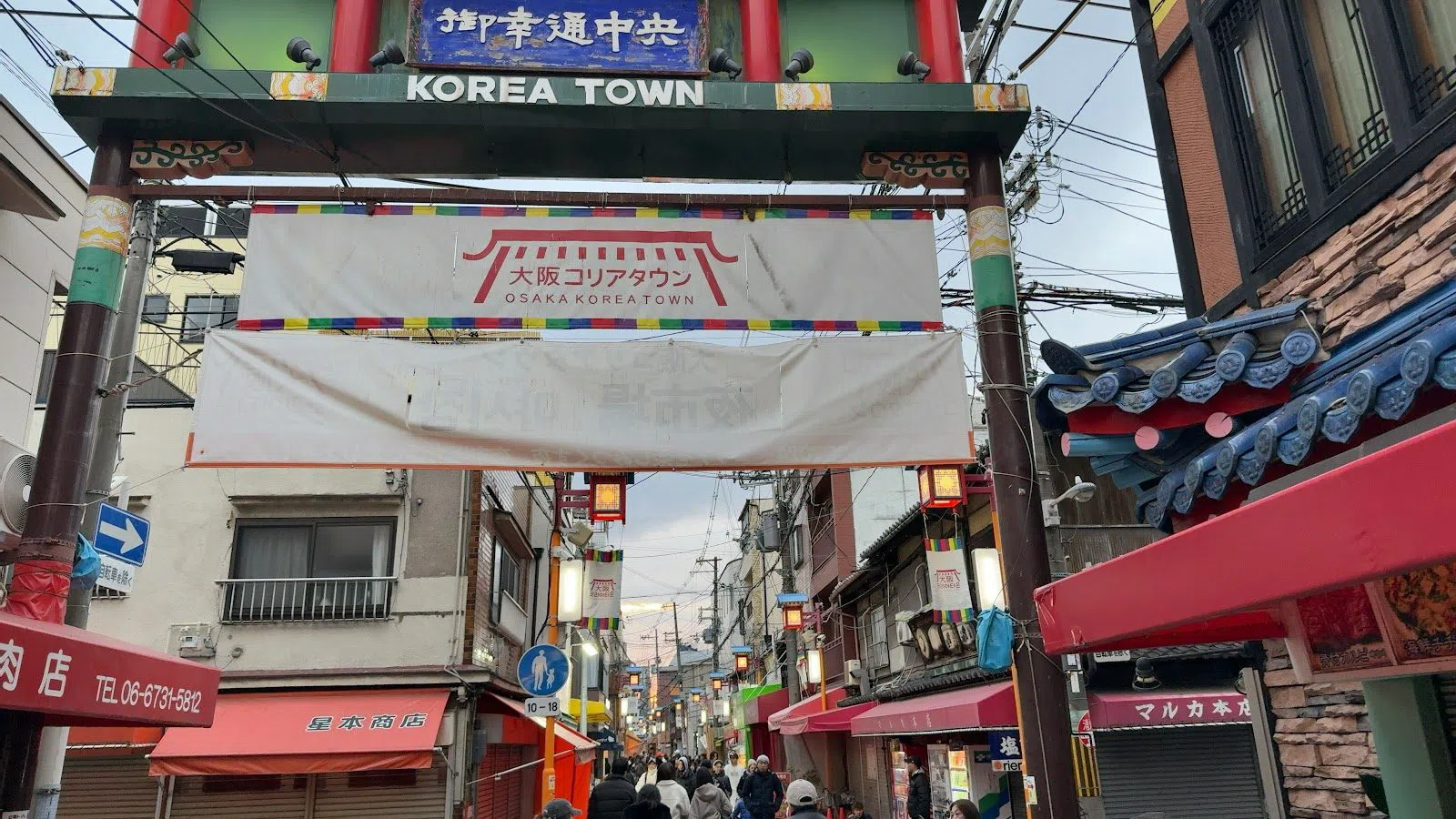
More than 170 businesses trade along the 500m of Miyukidori shopping street (Momodani), and more than 20 of them specialise in kimchi. The green-and-red tiled Baekje Gate arching over the entrance went up in 1993, and two million visitors a year walk under it.
The history museum first
The Osaka Korea Town History Museum (Momodani 4-4-11) opened in April 2023, a compact modern gallery with white walls. The photographs are of 1920s Jeju ferry migrants and of postwar black-market stalls, and the glass cases hold hanbok, household objects and old shop signage. Nothing else in the district explains how it came to be, so read it here before you start eating.
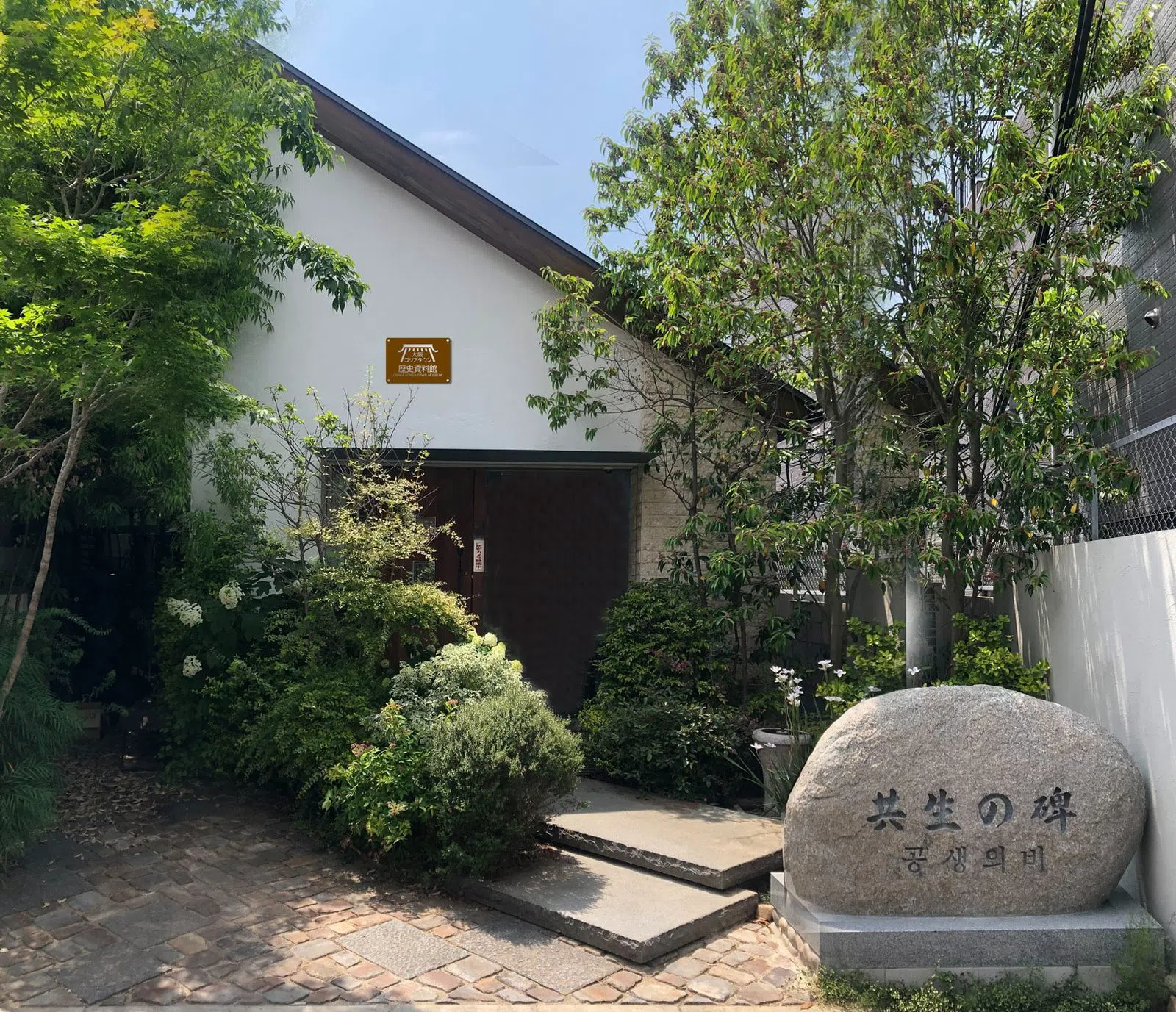
Entry is ¥300 for adults and ¥100 for students, with ¥200 a head for parties of 10 or more booked ahead through the museum's group page. Last admission is 16:00. The closing day is Sunday rather than Monday, and the museum also shuts from 28 December to 3 January.
Préparez votre voyage à Osaka
Prix en temps réel de nos partenaires de réservation.
Annulation gratuite sur de nombreuses chambres. Nous pouvons percevoir une commission lorsque vous réservez.
Miyukidori and the Baekje Gate
Hangul signs run the length of the street. Tubs of kimchi and trays of steamed pork sit out on the pavement, Korean lanterns hang from the streetlamps, and the crowd is young and eating from paper cups as it moves. The street is public and free, and there is no door policy anywhere along it.
It is best between late morning and dinner. On weekends and Korean holidays the crowd closes in shoulder to shoulder. The merchants' association runs guided area tours and kimchi-making sessions for school and tour groups, and its office is open on Monday, Wednesday and Friday, 10:00 to 16:00.
Jongno Yataimura and the kimchi tubs
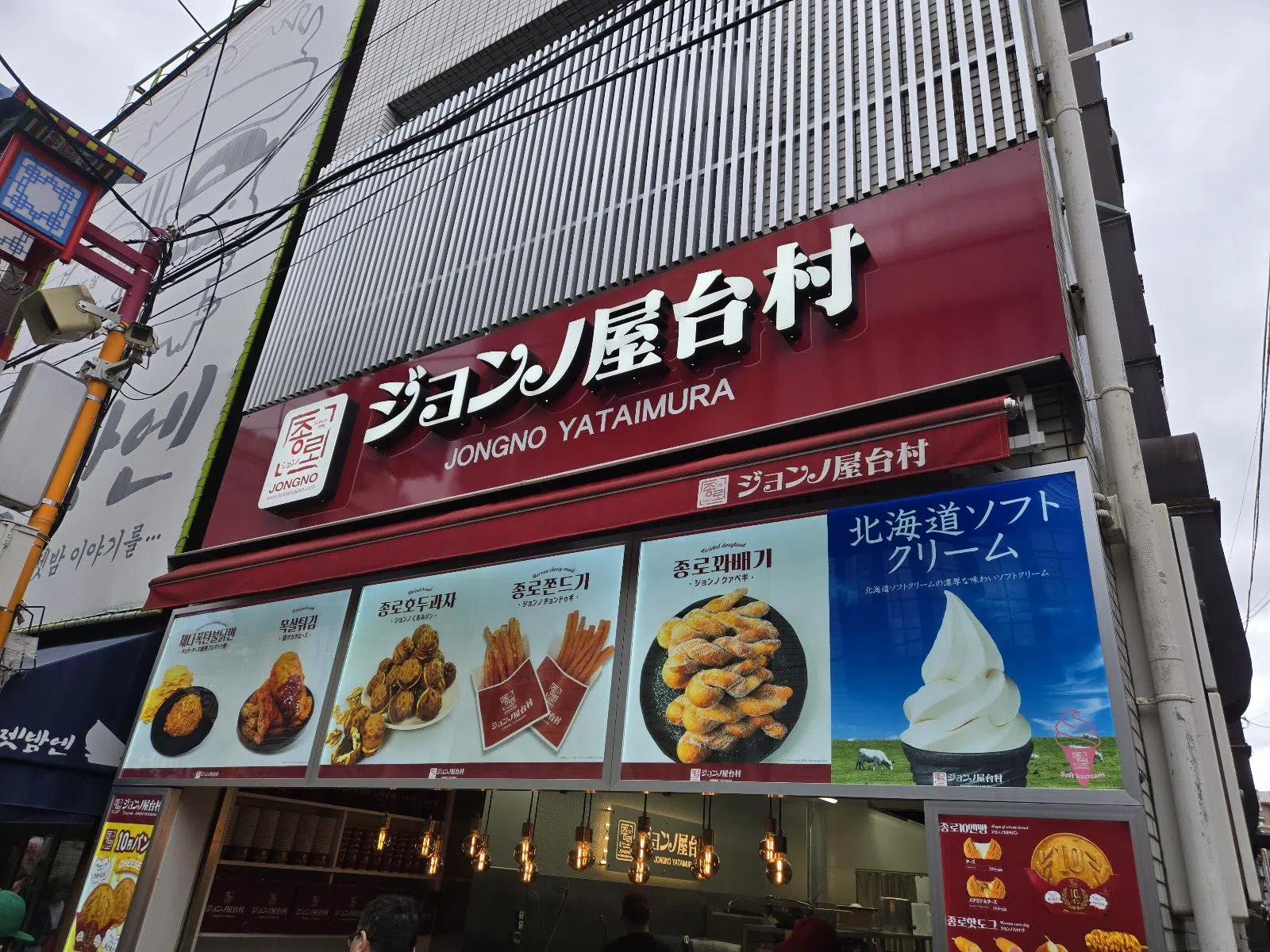
Jongno Yataimura (Momodani 5-7-1) is the takeaway hatch with the permanent queue: deep fryers behind the counter, cheese hotdogs pulled apart into long strings of mozzarella, tteokbokki in red sauce, cinnamon-sugar hotteok stacked in paper sleeves. A cheese hatdog is ¥600 and hotteok ¥300 to ¥400, with nothing on the counter above ¥700. There is nowhere to sit, and the hours are 10:00 to 19:00. One operator runs three shopfronts along the street, so the queue splits across them. At a weekend, go before 12:00.
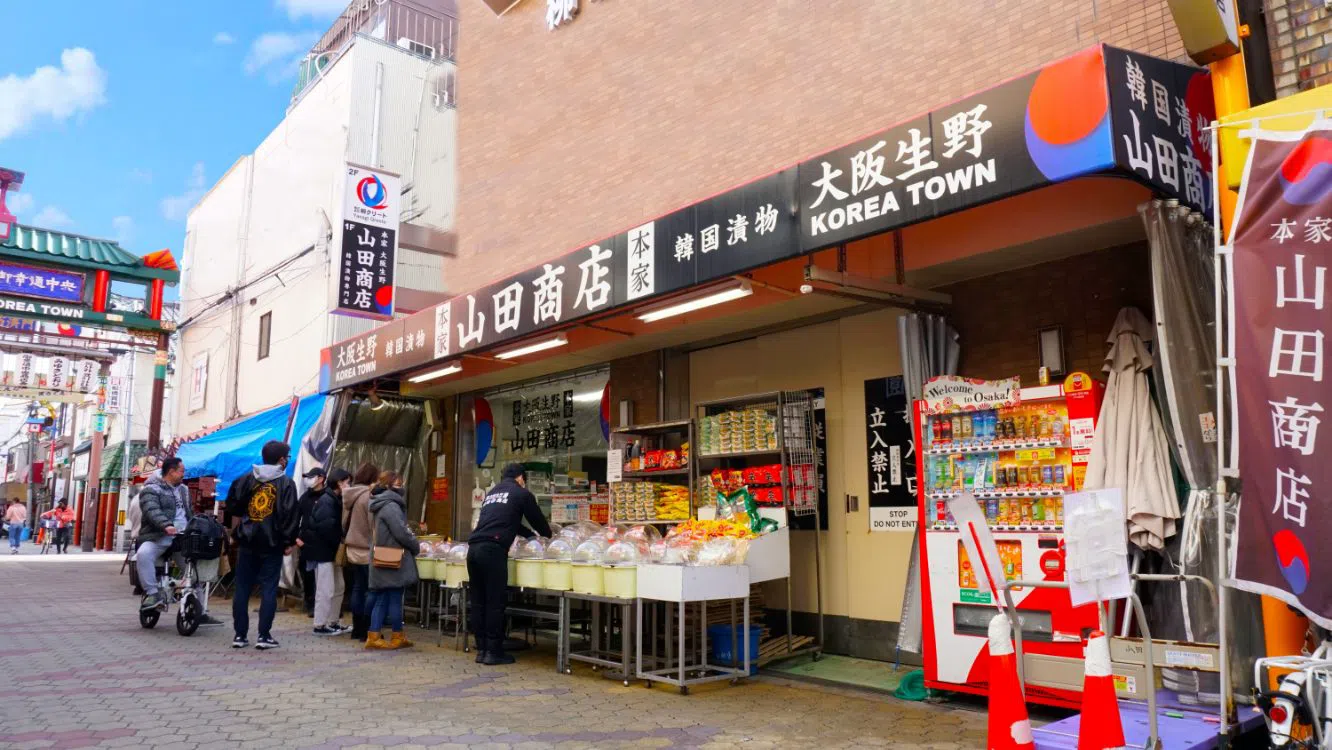
Kimchi no Yamada Shoten (Momodani 4-9-16) has been weighing kimchi into bags for more than 40 years, out of 80 open tubs: napa cabbage, squid-and-cucumber, daikon, chilli-dried whitebait. The pavement queue starts from early morning. The attached diner serves a ¥500 Korean breakfast set with all-you-can-eat kimchi. It is standing room, fills by opening time and sells out early. The shop trades 07:00 to 18:00 with no weekly closing day, and 07:00 is the hour to arrive.
Hanbok and groceries at Shunkashuto
The Shunkashuto Building (Momodani 4-6-13) opened in 2021 and runs four storeys. LEE MART fills the ground floor with walls of ramyeon and chilled banchan. The top floor hangs 40 rails of silk hanbok beside a Jeolla-style café and a Korean photo booth, and it pulls the youngest crowd on the street.
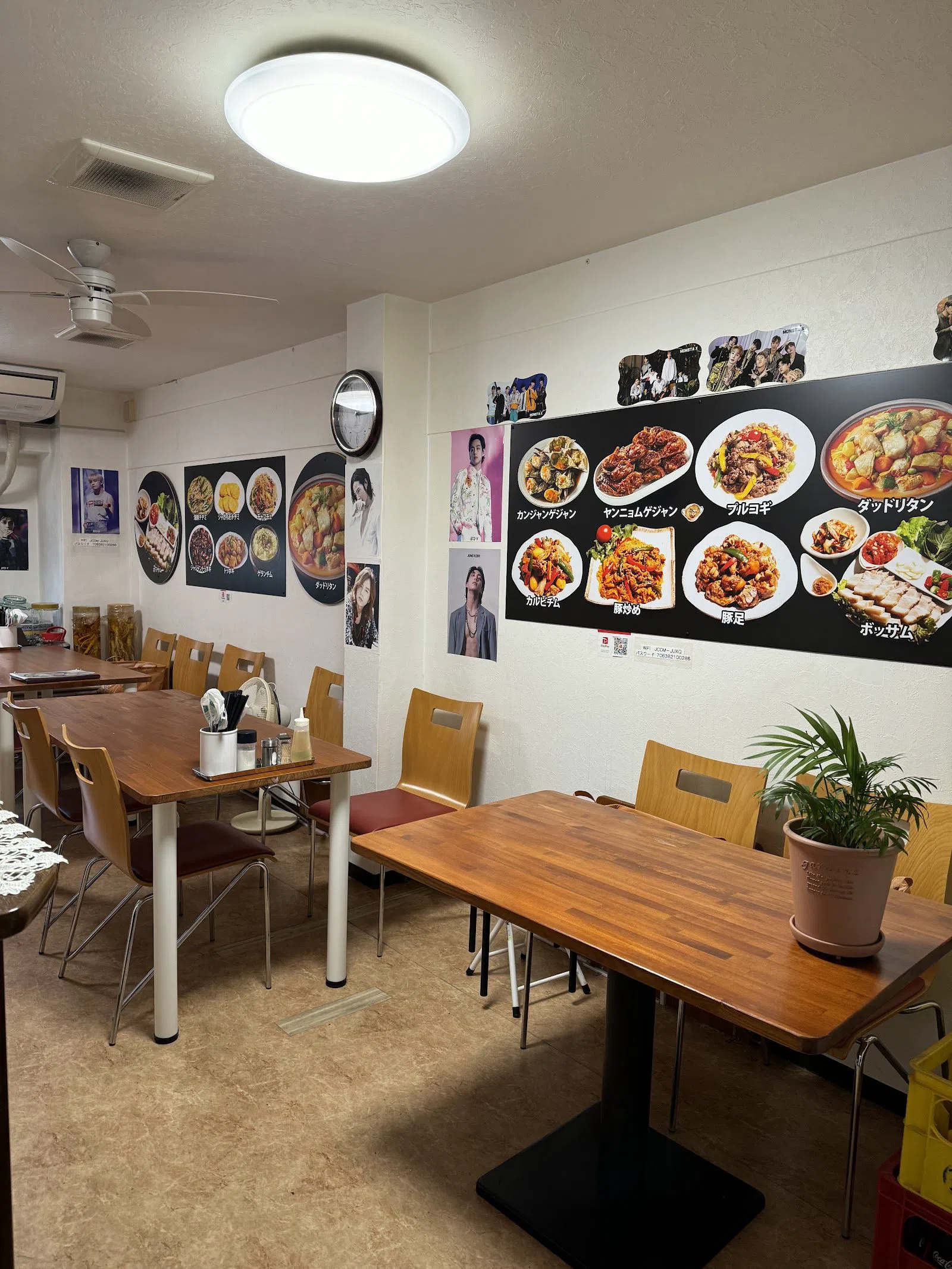
Rental starts at ¥2,000 for 60 minutes, with a short rental at ¥1,000. You can walk in, though the dressing room is small and a party should book ahead. Opening is 10:00 to 18:00, and to 18:30 at weekends and on holidays. Put the hanbok on, walk the Baekje Gate in it, then shop cosmetics and groceries downstairs before you hand it back.
Miyukimori Tenjingu at the west end
A stone torii opens straight onto the shopping street at its west end. Behind it, in a tree-shaded compound, stands the small wooden worship hall of Miyukimori Tenjingu Shrine (Momodani), built in 1930 under a copper roof. In the gravel is the 'Naniwazu no Uta' stone poem monument to the Korean scholar Wani.
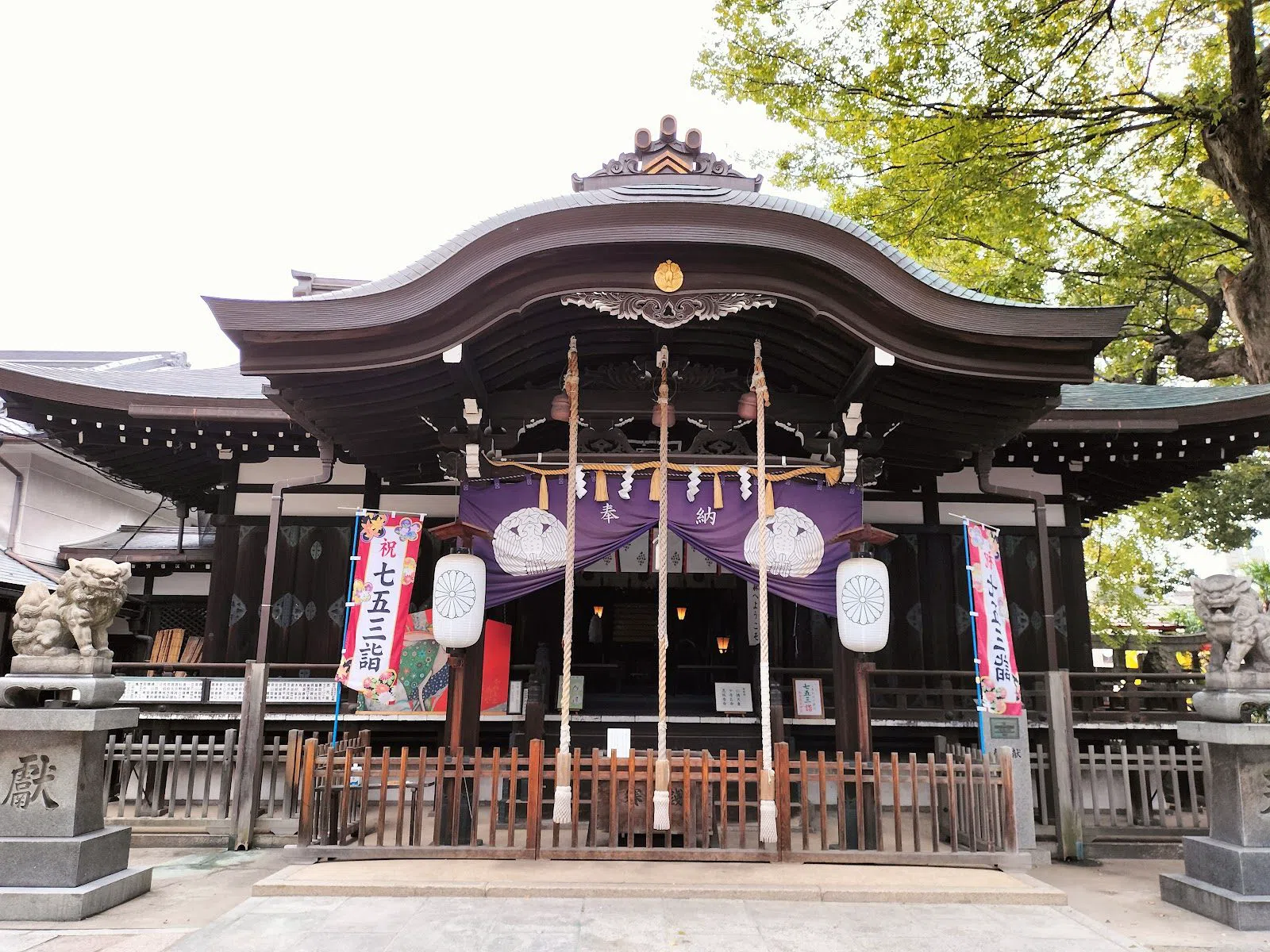
The shrine is dedicated to Emperor Nintoku, and Korean visitors come to it as a pilgrimage stop for the Wani monument. The compound is free and open from dawn to dusk. It serves the houses around it, so keep your voice down. Starting here leaves you walking east into the street.
Himekoso and Iyasaka
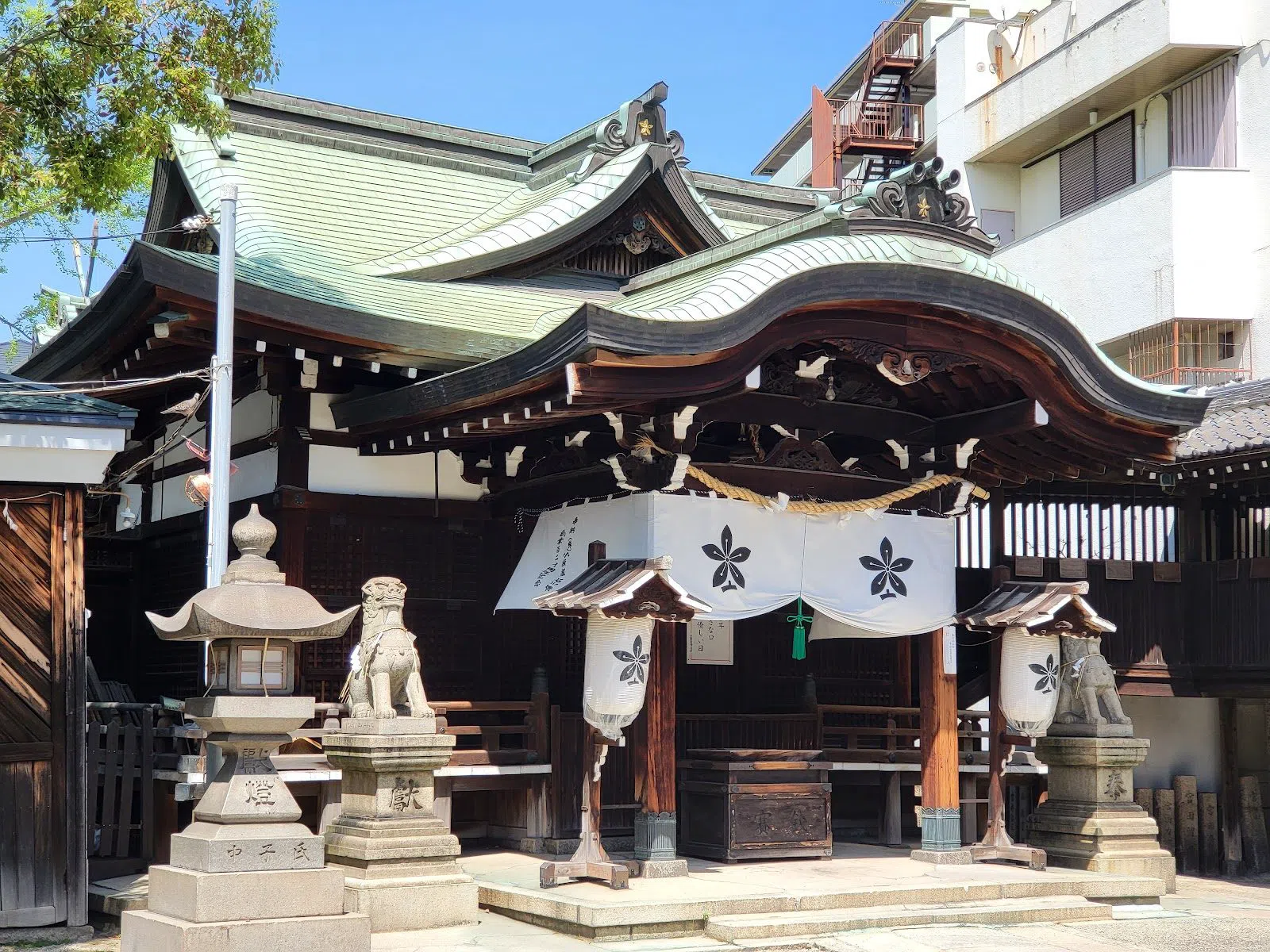
Himekoso Shrine (Tsuruhashi) stands 400m northeast of Tsuruhashi Station behind low houses, walled and quiet, its halls rebuilt in 1923 for the imperial enthronement, with stone lanterns and a pair of komainu guardian dogs. The Engishiki of the 10th century lists it as a major shrine of Settsu Province, dedicated to Shitateruhime. It is the oldest documented thing in the area, and evidence that Tsuruhashi was a landing point for the continent long before the 20th century. Entry is free and the compound is open. There are no facilities.
Iyasaka (Yaei) Shrine (Momodani 2-16-22) was founded in the Bunroku era of the 1590s and sits 10 minutes' walk from the station. Its broad gravel forecourt is where the Tsuruhashi danjiri is parked, a lacquered wooden cart carved with lions and ascending dragons, stored under a shutter beside the hall. The mid-July danjiri procession puts 100 children through lion dances and draws tens of thousands of people. Hours are 08:00 to 17:00, and entry is free. Plan a trip around mid-July for the procession, or come on a plain weekday and look at the float under its shutter.
The Tsuruhashi arcades
Osaka Tsuruhashi Market (Tsuruhashi Shotengai) began as a postwar black market and little about it has changed. Six linked arcades hold 800 shops across three wards. The alleys are two metres wide and roofed, running under and beside the JR viaduct: bare bulbs, hand-painted signs, hanging dried seafood, mountains of kimchi in plastic tubs, chima jeogori hanbok shops, and shafts of light coming down through a rusted corrugated roof. Most shops trade from 09:00 or 10:00 until 18:00, and wandering costs nothing.
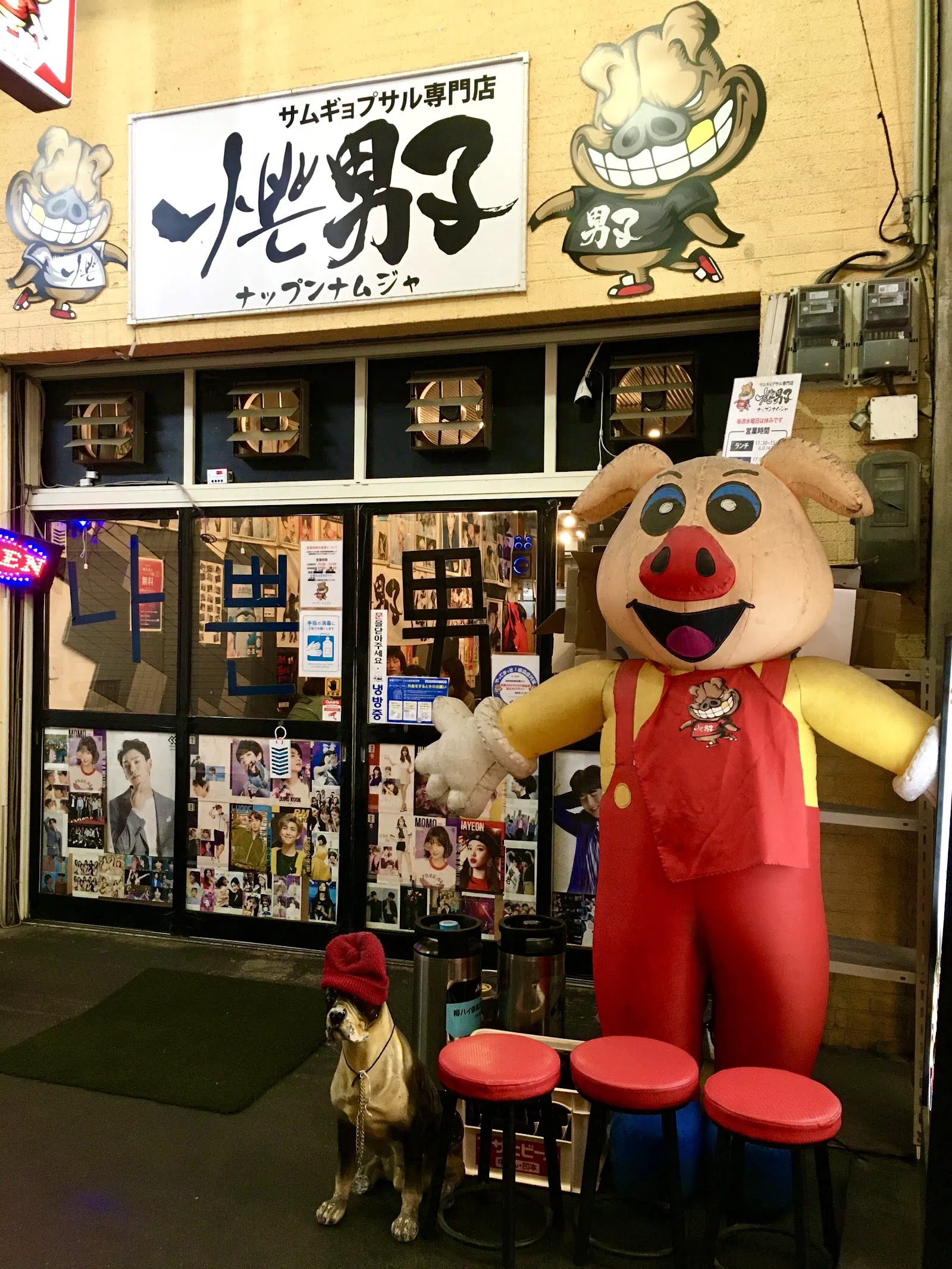
Split a big party into pairs at the entrance. The separate fresh-fish market was demolished in 2023 and reopened in November 2024 as a street-facing row of seven stalls.
Yakiniku at Tsuruichi and Ajiyoshi
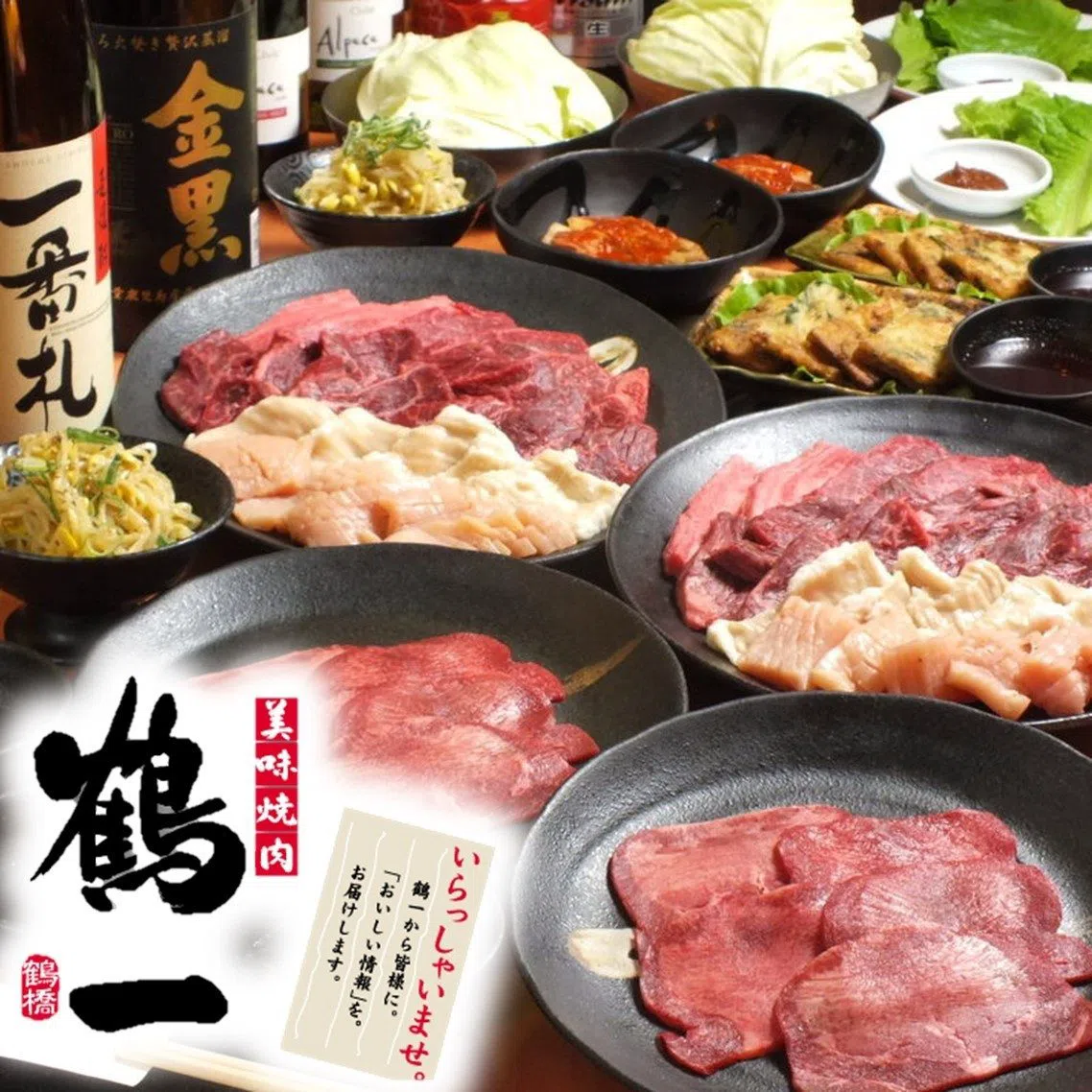
Yakiniku Tsuruichi Honten (Tsuruhashi) opened in 1948 a minute from the station and is credited with inventing the style of dipping grilled meat in tare that made Tsuruhashi the yakiniku capital of Japan. Charcoal smoke hazes over 152 seats of tiled tables, with battered tatami rooms upstairs and plates of marbled short rib beside bowls of the house dashi-based dipping sauce. Set courses start at ¥4,000 and dinner runs to ¥7,000. A 90-minute all-you-can-drink add-on and banquet rooms are both on the books. It closes on Mondays, and on the Tuesday when the Monday is a holiday.
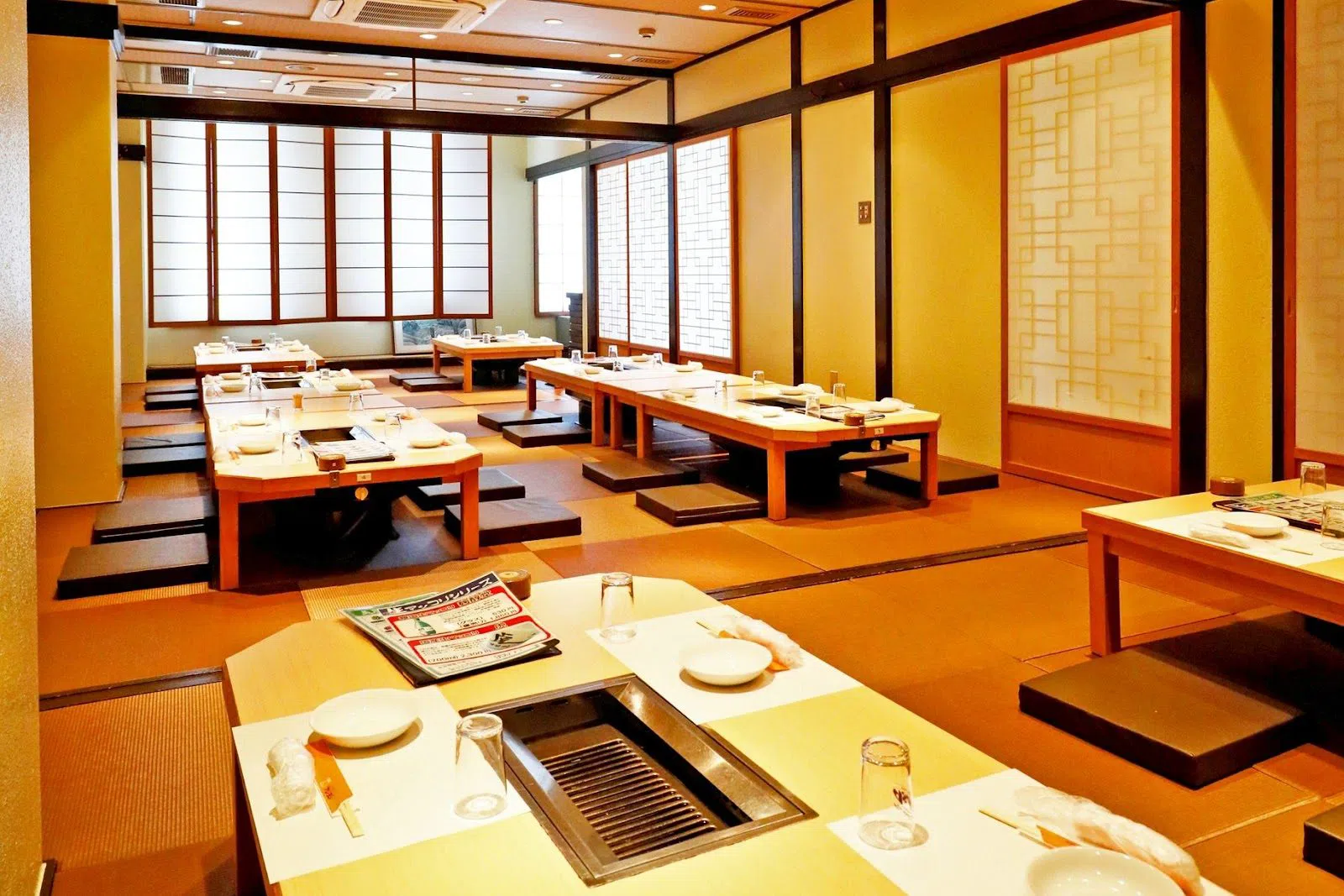
Ajiyoshi Sohonten (Tsuruhashi) sits 30 seconds from the Tsuruhashi ticket gates under a red-and-white corner sign: 155 seats, a long tatami hall of gas grills under extraction hoods, shared platters of kalbi and horumon. Half a century on, it takes private rooms of four to 30 and seated banquets up to 60, and it will do that at no notice. Courses start at ¥4,000. Lunch is ¥1,000 and dinner ¥3,000 to ¥4,000, which costs less than Tsuruichi. It opens every day of the year from 11:00 to 23:00, and to 23:30 on Friday and Saturday, which makes it the one table left once other kitchens have shut.
Hakuundai and Tsuruhashi Horumon Honpo
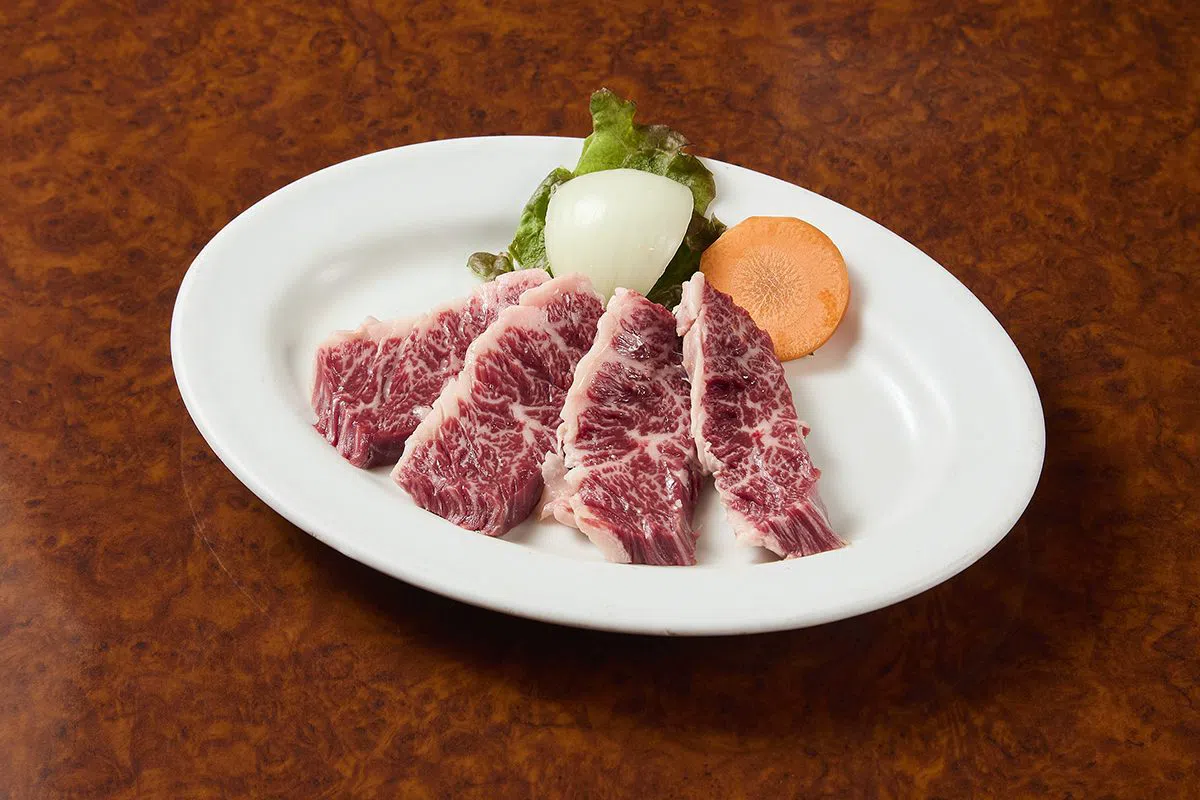
Hakuundai Tsuruhashi Ekimae (Shimoajihara 5-26) has worked this grill district for more than 40 years serving Korean court cuisine. Brass bowls of hand-pulled naengmyeon come in icy broth, slabs of samgyeopsal pork belly sizzle, and beef tartare arrives seared on a stone plate. Order the hand-made cold noodles. Lunch is ¥1,050 to ¥2,800 and courses run ¥3,500 to ¥10,000 a head. The room seats 88, with a 60-seat tatami floor and a private room for 20. Draft beer and highballs are half price on Mondays. Closing days are irregular, so phone before you walk over.
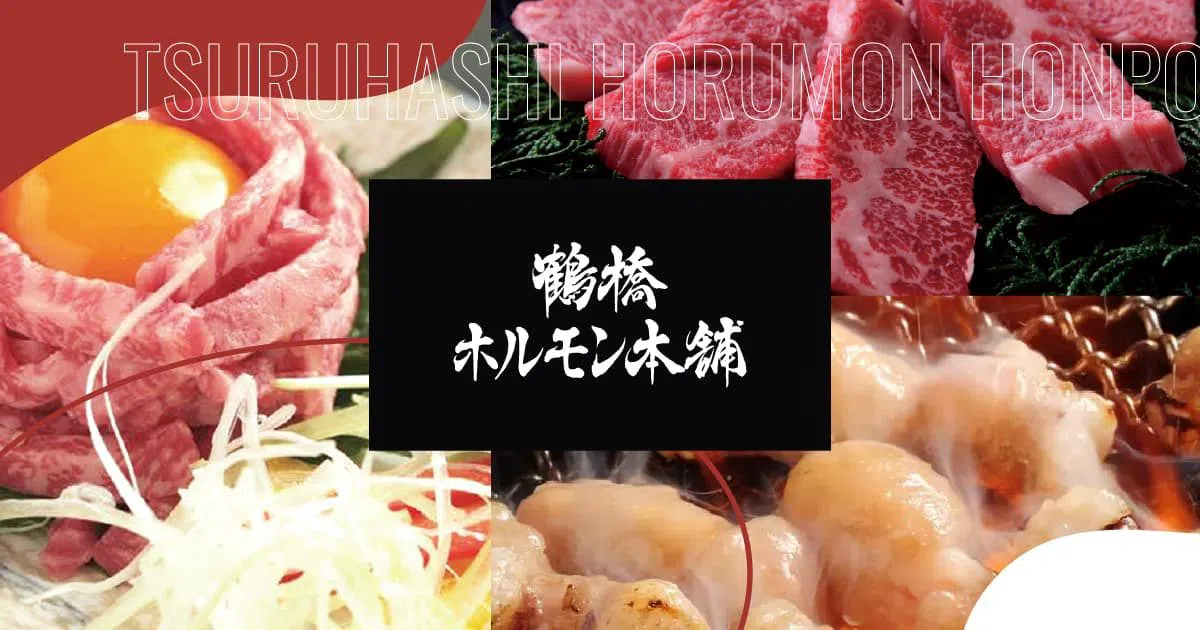
Tsuruhashi Horumon Honpo (Shimoajihara 5-20) buys whole cattle, and the offal cuts come out raw on white plates to tabletop grills in a loud ground-floor room. Glasses of Asahi Super Dry draft are ¥320, and a head spends ¥2,500 to ¥4,000. Walk in from 11:30 to 23:00, with last orders at 22:30, on any day of the year including New Year. Parties cannot hold a private room here. Come to drink your way through the horumon after the arcades shut.
The original Fugetsu teppan
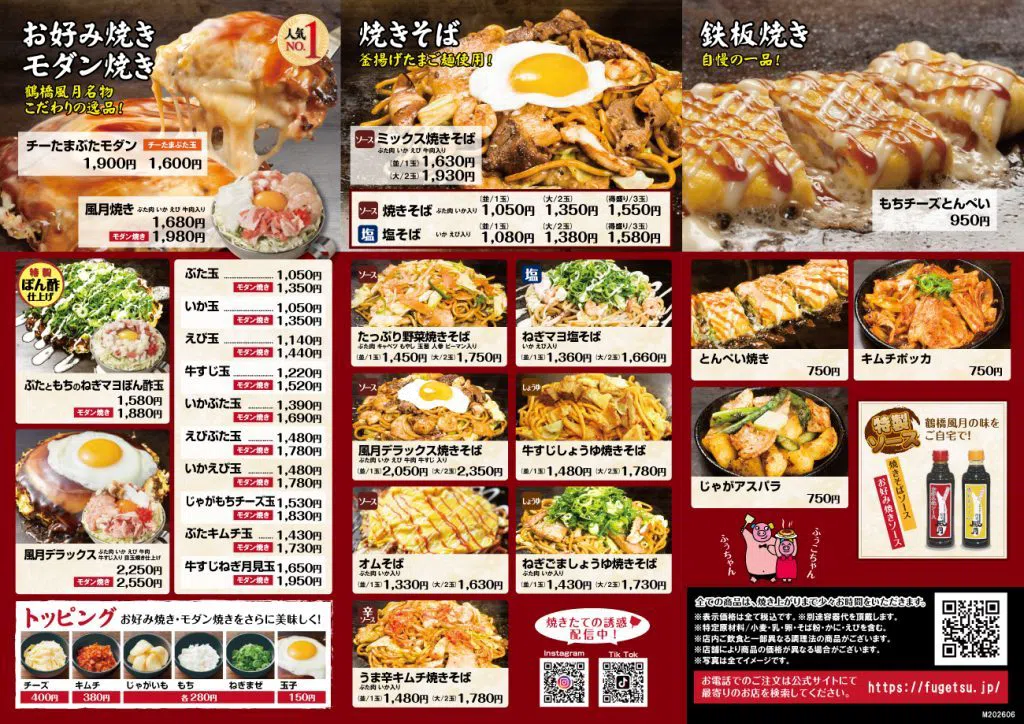
Tsuruhashi Fugetsu Honten (Shimoajihara 2-18) opened in 1950 a minute from the station and is the first shop of what is now a nationwide chain. Cooks flip thick cabbage-packed okonomiyaki along long steel teppan counters, brush the brown sauce on in stripes and finish with bonito flakes curling in the heat. A plate is ¥1,200 to ¥2,500. The shop trades 11:30 to 22:30 on weekdays and 11:00 to 23:00 at weekends, and closes only on 1 January. Book online.
Staying in Ikuno
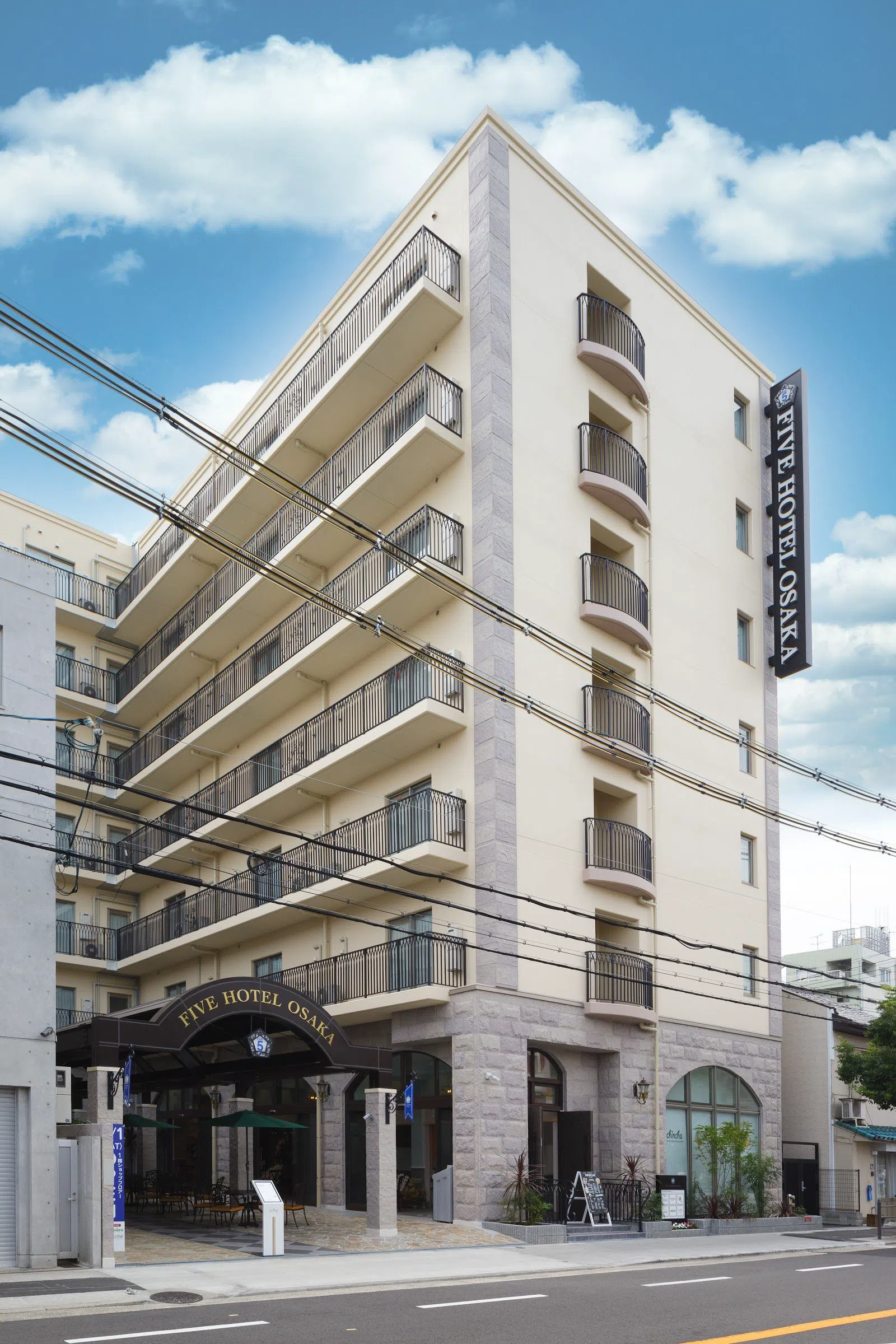
Five Hotel Osaka (Ikuno Ward) is the one hotel inside the neighbourhood worth the booking, a modern mid-rise 200m from the Koreatown street and the same distance from Miyukimori Tenjingu. Rooms are compact and bright, there are shops and a convenience store at street level, and the upper windows look over low-rise Osaka rooftops to the Hirano River. Several room types run ¥6,000 to ¥16,000 a night. It is a walk from the station. To sleep on the station instead, Toyoko Inn Osaka Tsuruhashi Ekimae is three to four minutes from the gates.
Planning the day
The museum closes on Sundays, Tsuruichi on Mondays, and Hakuundai's closing days move and need a phone call first. Book the museum's group rate, a hanbok at Shunkashuto and a Fugetsu table ahead of the day; the arcades, the stalls and the kimchi shops are walk-in.
See the Osaka guide and the Osaka hotel search.
Avant de partir
What time of day should I walk Tsuruhashi and Ikuno Koreatown?
Start late morning and finish at dinner and you will have time for the shops, the shrines and the grills. On weekends and Korean holidays Miyukidori gets very crowded, so reach Jongno Yataimura before 12:00. For Kimchi no Yamada Shoten's ¥500 breakfast set, arrive at 07:00: it is standing room only and sells out early.
Is the Osaka Korea Town History Museum open on Sundays?
No. Its closing day is Sunday, not Monday, and it also shuts from 28 December to 3 January. Last admission is 16:00. Entry is ¥300 for adults, ¥100 for students, and ¥200 a head for parties of 10 or more booked ahead through the museum's group page.
Where can a party of 10 or more eat without booking weeks ahead?
Ajiyoshi Sohonten, 30 seconds from the Tsuruhashi ticket gates. It has private rooms for four to 30 people and can seat banquets of up to 60 without notice. It opens every day of the year, 11:00 to 23:00, and until 23:30 on Friday and Saturday. Courses start at ¥4,000.
Can I rent a hanbok in Osaka Koreatown?
Yes, at the Shunkashuto Building, Momodani 4-6-13. The top floor holds 40 rails of silk hanbok. Rental is ¥2,000 for 60 minutes, or ¥1,000 for the shorter slot. It opens 10:00 to 18:00, and until 18:30 at weekends and on holidays. The dressing room is small, so groups should book ahead.
Is there anywhere to stay inside the neighbourhood?
Five Hotel Osaka, in Ikuno Ward, is 200m from the Koreatown street and the same from Miyukimori Tenjingu. Rooms are ¥6,000 to ¥16,000 a night, and the station is a walk away. If you would rather be next to the trains, Toyoko Inn Osaka Tsuruhashi Ekimae is three to four minutes from the gates.