 In this area
The Osaka issue
Dotonbori & Namba, Osaka: Neon, Noisy, and Deliciously Unsubtle
Osaka’s most famous canal district is all flashing signs, sizzling griddles and late-night energy, with Namba’s transport muscle just behind the spectacle.
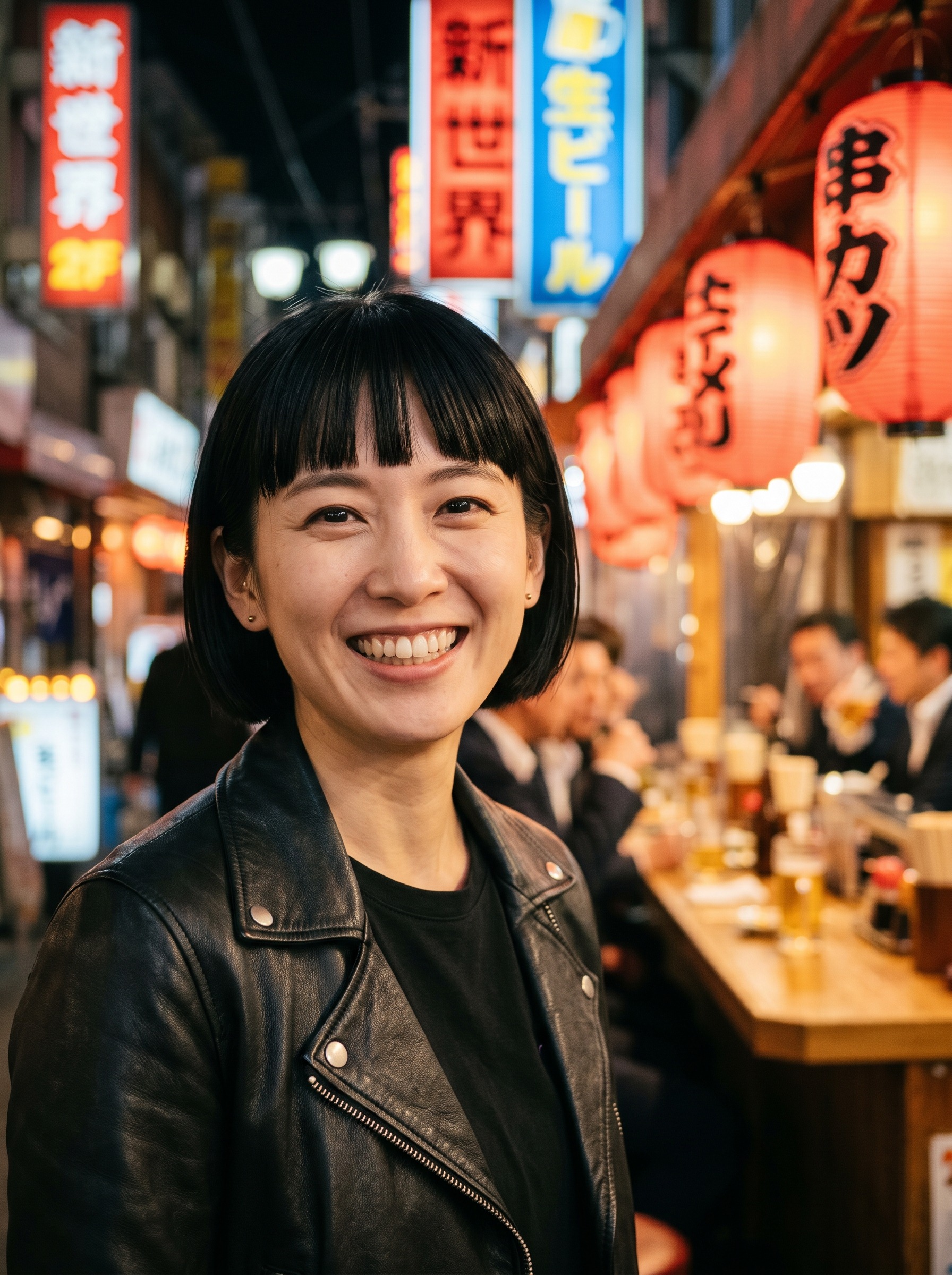
By Yui MorimotoShinsekai standing bars to Dotonbori neon
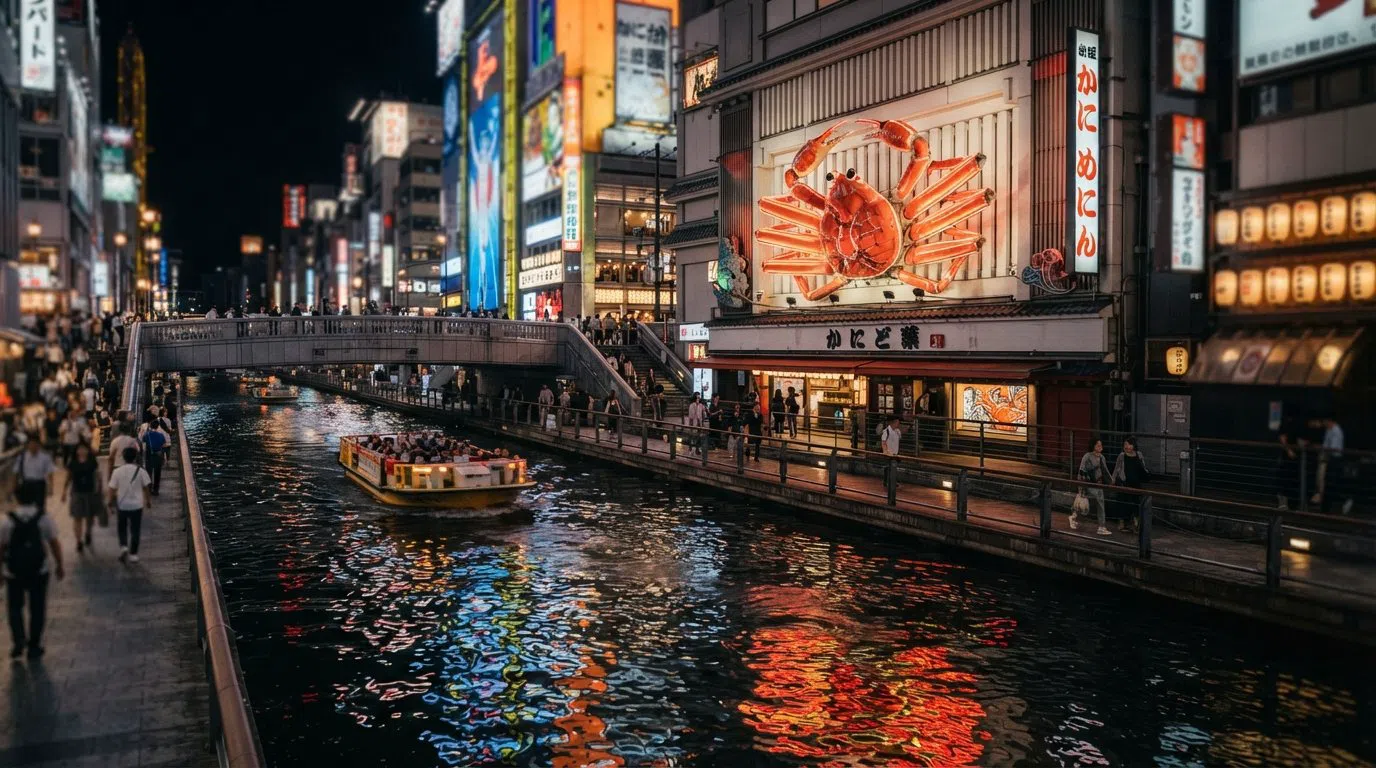
Cross Ebisubashi after dark and Dotonbori hits you all at once: the LED Glico Running Man frozen mid-stride above the canal, Kani Doraku’s giant crab flexing its claws a few doors down, and a crowd that seems to be eating, filming and laughing in the same breath. It is Osaka at its most shamelessly performative, and that is precisely why it works. The canal glows, the arcade hisses with frying oil, and the whole district feels like it has been turned up until the volume starts to rattle your ribs.
What Dotonbori & Namba is known for
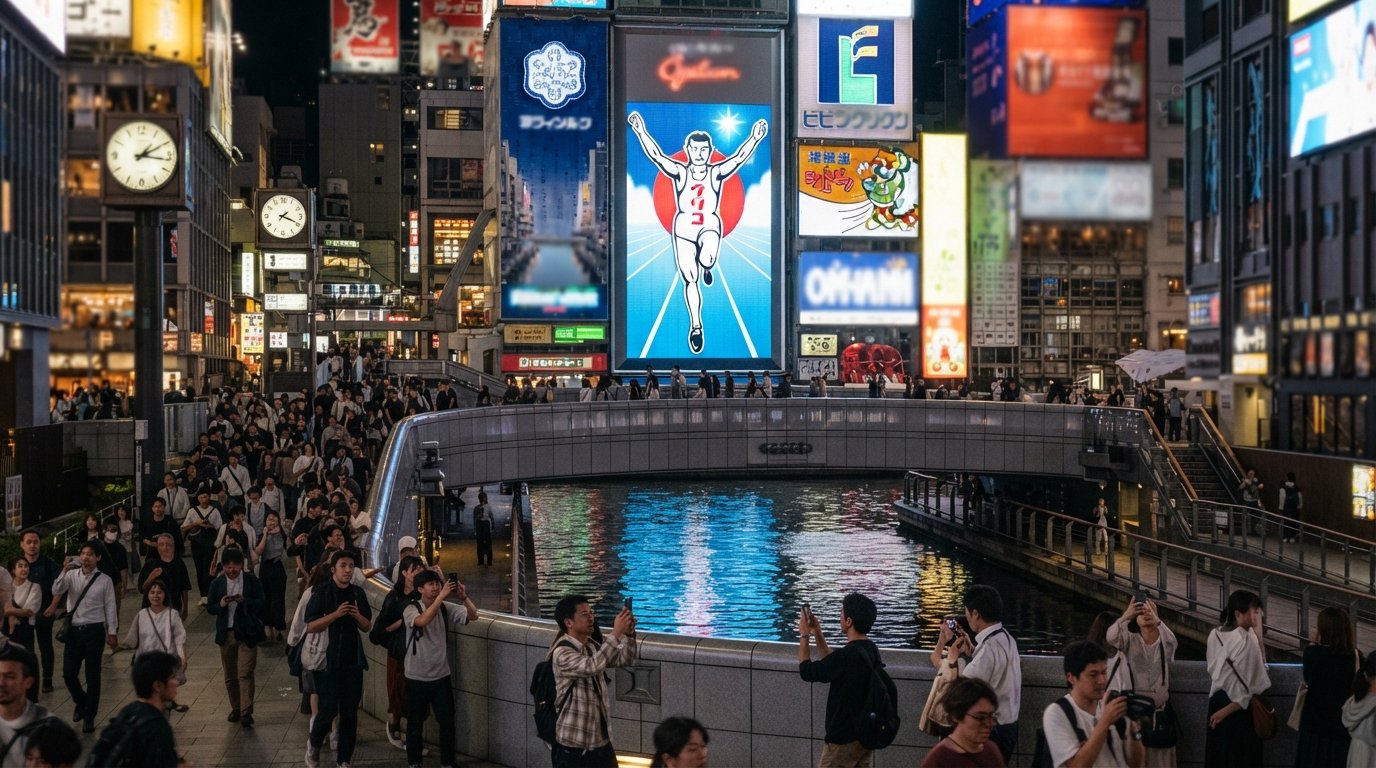
The first thing to understand is that Dotonbori is not subtle and never has been trying to be. The district’s spine is Dotonbori-dori, a covered pedestrian arcade running along the south bank of a narrow canal dug in the early 1600s. It is a corridor of three-storey signage, where the Glico man, the mechanical crab, Kinryu’s coiling green dragon and the steam rising off takoyaki griddles all compete for your attention at once. The Glico Running Man has been glowing over the south bank just west of Ebisubashi since 1935; the current billboard, unveiled in 2014, is the sixth generation and the first LED version, the athlete still locked in that absurdly triumphant pose. People copy him on the bridge because, frankly, what else are you going to do here?
A short walk east, Kani Doraku Dotonbori Honten hangs the district’s other icon — a six-metre animatronic snow crab, claws slowly working above the restaurant that opened here in 1960. It is the sort of thing you think will feel cheesy until you see it in motion and realise Dotonbori has never been interested in irony. The whole scene is more honest than chic: a food street built to be looked at, eaten in, and looked at again.
But Dotonbori is only half the story. Namba — also written Nanba — is the practical machine behind it, one of Osaka’s great transport hubs, where subway lines, the Nankai line to Kansai Airport and long-distance trains all converge. If Dotonbori is the fireworks, Namba is the wiring. It is ringed by department stores and covered shopping arcades, and most first-timers end up here because they must pass through it anyway. One block south of the arcade, the mood changes completely in Hozenji Yokocho, a lantern-lit stone alley beside a 17th-century temple. A few minutes farther on, Kuromon Ichiba reminds you that Osaka still likes to eat in daylight too.
Plan your Osaka trip
Live prices from our booking partners.
Guests & rooms
Free cancellation on many rooms. We may earn a commission when you book.
Where to eat & drink
Osaka’s nickname is tenka no daidokoro — the nation’s kitchen — and this corner of the city takes that title personally. The food here is not a side note to the neon. It is the point.
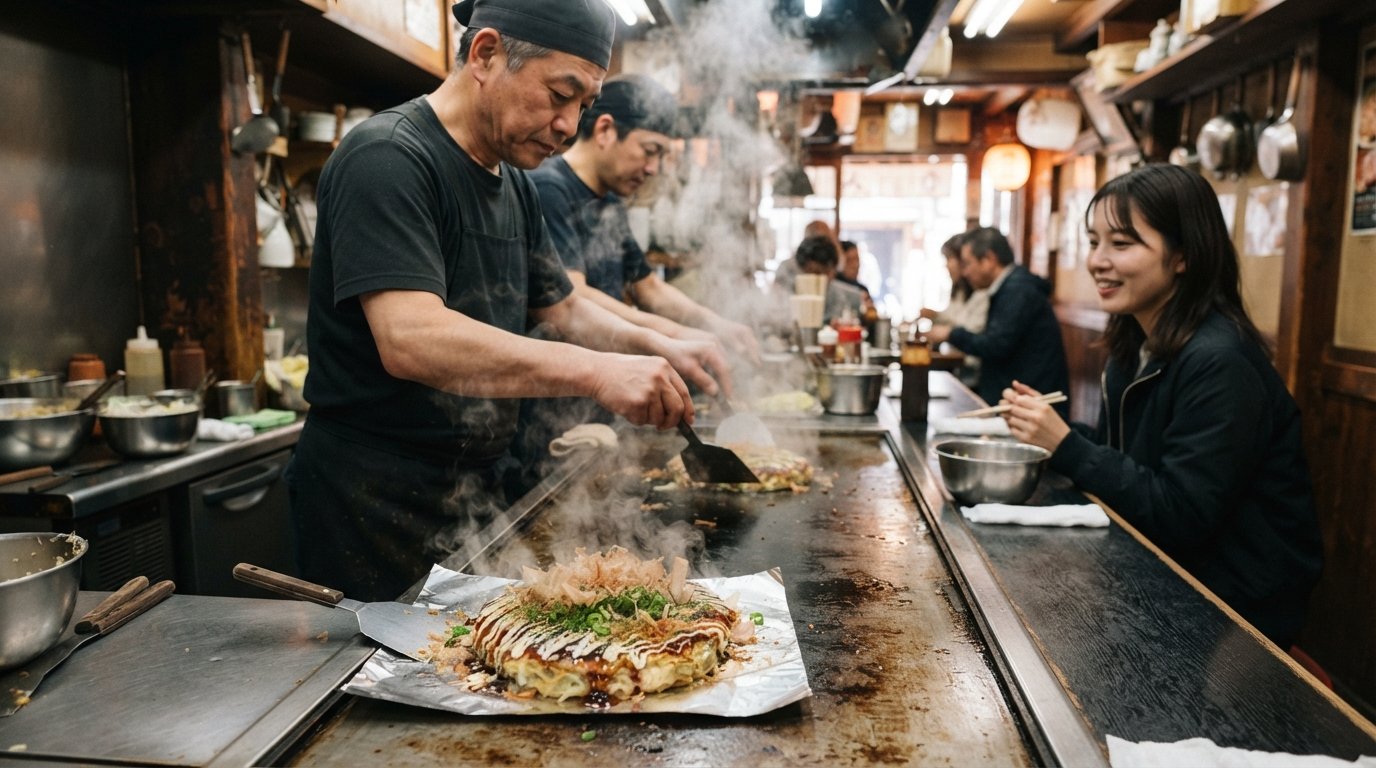
Start with okonomiyaki at Okonomiyaki Mizuno, on a side lane just off the arcade and cooking since 1945. It has held a Michelin Bib Gourmand for years, but the real charm is simpler than that: the room fills, the griddles hiss, and the Yamaimoyaki arrives with a custardy, almost soufflé interior because the batter is 100% grated mountain yam and no wheat flour at all. It is the kind of dish that makes you stop talking for a second. No reservations, daily queues, closed Thursdays — the usual Osaka test of patience, and worth passing.
If you want a slicker, English-friendly version of the same comfort, Chibo on the arcade at 1-5-5 Dotonbori serves its signature Dotonboriyaki loaded with beef, pork, scallop and prawn. It is the kind of place that understands the tourist rhythm and does not pretend otherwise, open late and built for the long, noisy evening crawl.
Takoyaki is the other essential Osaka fix, and Takoyaki Doraku Wanaka at Sennichimae is the move I’d make without hesitation. It is a fifty-year-old shop that has appeared in the Michelin Guide, near Kuromon Market, and the batter has the dashi depth that makes the balls taste complete even before the sauce goes on. Eat them plain-salted if you want to understand the batter, or go for mentaiko mayo if you want the richer, messier version.
For kushikatsu, the deep-fried skewer that Osaka can never quite leave alone, Kushikatsu Daruma has a Dotonbori branch of the Shinsekai original that set the cardinal rule in 1929: one dip in the shared sauce, never two. That rule is part hygiene, part theatre, and entirely Osaka. The skewers arrive crisp and cheap, and the whole thing feels like the city’s sense of humour rendered in breadcrumbs.
Then there is Kinryu Ramen beneath its green dragon, a 24-hour landmark with a single ¥800 chashu bowl and free help-yourself kimchi, garlic and chives. It is not precious. It is not trying to be a final word on ramen. It is trying to keep the lights on while the rest of the district stumbles home.
And if you want a proper splurge, Kani Doraku Dotonbori Honten is where the giant crab stops being a joke and becomes dinner. Crab kaiseki courses start from about ¥7,000, with cheaper set lunches if you want the spectacle without the full bill. It is the sort of place you book when you want one meal to say “yes, I came to Dotonbori and I committed.”
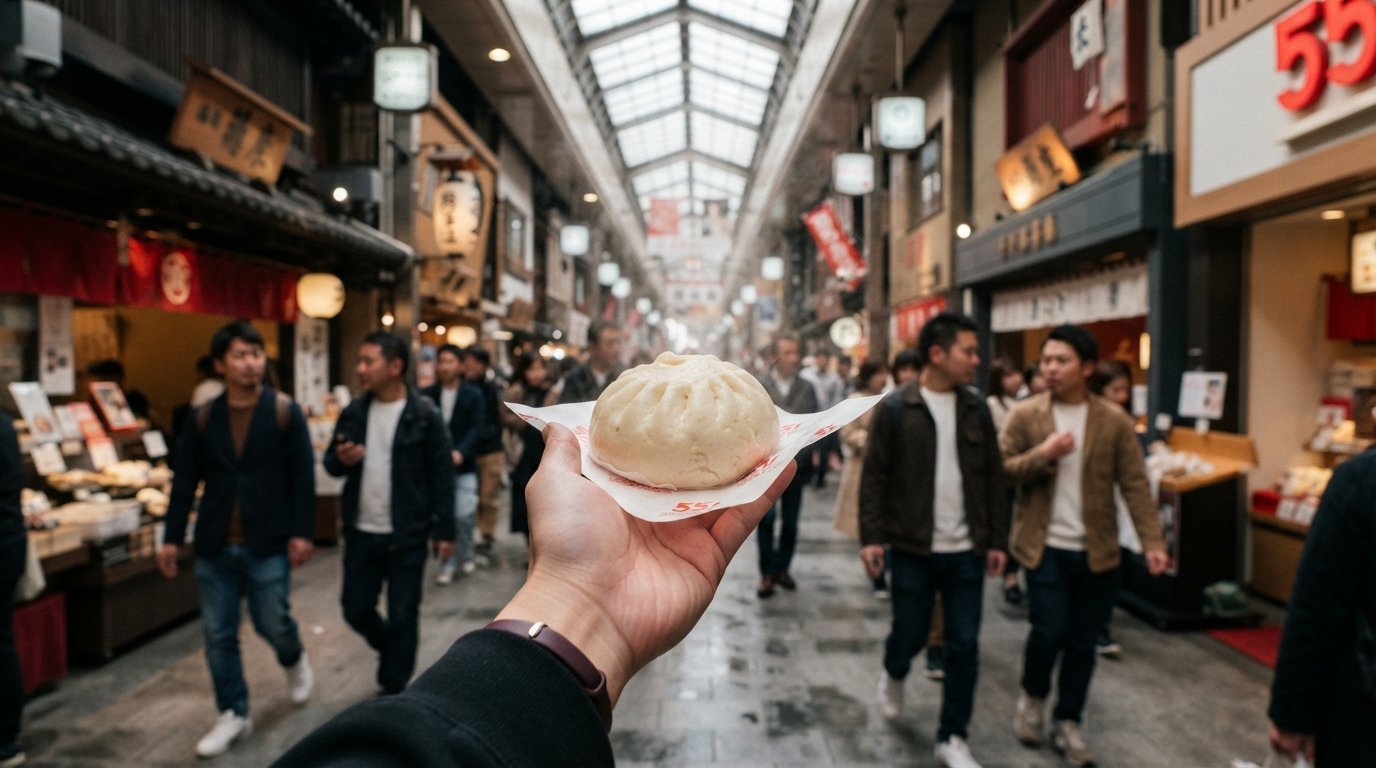
Finally, there is 551 Horai, Osaka’s most famous butaman pork bun, founded in Namba in 1945. The main store sits in Ebisubashi-suji arcade, and the right way to eat one is standing up, steam fogging your hands, with the crowd moving around you like a tide.
Going out
Nightlife here is less about the big-club fantasy and more about what happens when dinner refuses to end. The classic Dotonbori evening is a slow crawl down the arcade: a beer, a plate of kushikatsu, another beer, then a pause on Ebisubashi to watch the neon reflections settle into the canal once the daytime crowd thins after 11pm. That is when the district starts to feel less like a postcard and more like a living street, all slick pavement and reflected signage, the noise still there but no longer fighting for your attention.
The side streets do a lot of the heavy lifting. Hozenji Yokocho is the quieter drink, a lantern-lit stone alley one block south where intimate bars and counter restaurants sit in a passage that feels a century removed from the arcade fifty metres away. It is not silent — this is still Osaka — but the volume drops enough that you can hear your glass when it lands.
For a bigger night, Amerikamura, around Triangle Park, is the nearest proper nightlife quarter to Dotonbori. It is about a ten-minute walk northwest, and the crowd flips young, streetwear-clad and out for the night. Circus Osaka is the long-running club here, a late-night electronic music room that keeps the area moving into the small hours. If Dotonbori is the meal, Amerikamura is the afterparty.
Kinryu Ramen is the traditional last stop before bed, which is exactly the sort of sentence Osaka deserves. A bowl at 2am beneath a dragon sign is not a metaphor here; it is a plan.
Things to do / what to see
The single best thing to do in Dotonbori is still the simplest: walk the canal and cross Ebisubashi for the Glico photo. It is free, iconic and best late at night or early in the morning, when the crowds vanish and the district briefly remembers how to breathe. At those hours the reflections sharpen, the signs seem taller, and the whole canal looks less like a stage set and more like a city that stayed out too late.
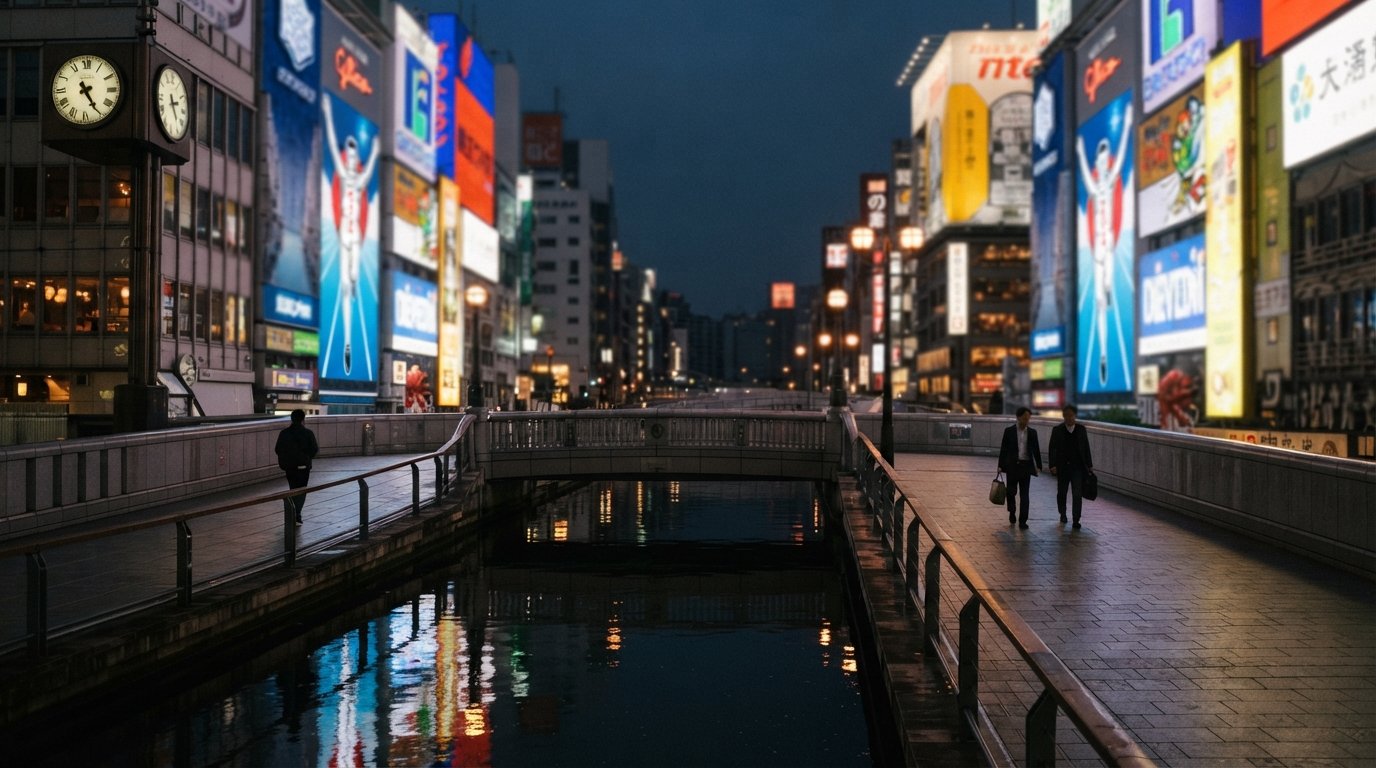
If you want to see the neon from water level, the Tombori River Cruise runs a 20-minute guided loop under nine of the district’s bridges, departing from Tazaemonbashi Pier beside the Don Quijote store. The oval yellow Ebisu Tower Ferris wheel is part of that same visual chaos, a useful landmark when you are trying to orient yourself in the bright mess.
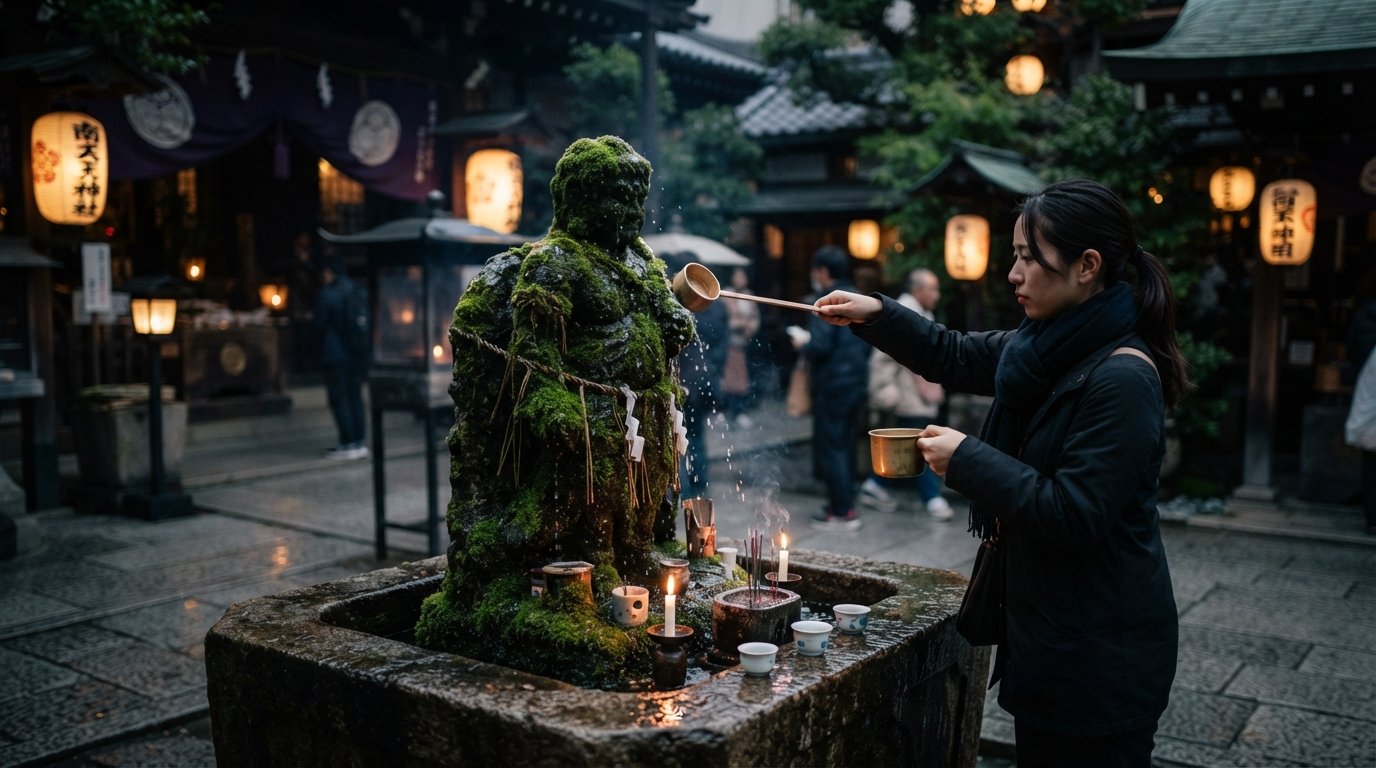
A block south, Hozen-ji Temple is the district’s quietest, most moving detour. Founded in 1637 and rebuilt after wartime bombing, it centres on the Mizukake Fudo, a Buddhist deity statue so thoroughly furred with green moss it looks upholstered. The ritual is simple: ladle water over it for luck, the way visitors have done for decades after one worshipper allegedly splashed water instead of making a proper offering. It is open around the clock and costs nothing, which makes the contrast with the arcade all the sharper.
If you want a morning that is not fried, Kuromon Ichiba is the right escape. The covered market has roughly 150 stalls near Nipponbashi station, and the best time is before 11am, when the seafood is freshest and the crowds are still manageable. Fishmongers grill scallops, torch fatty tuna and shuck oysters to eat on the spot, while nearby Doguyasuji tempts anyone who likes kitchen knives, moulds and the plastic food replicas that fill restaurant windows. It is a proper working market, not a theme park, and that makes it more satisfying.
Don’t miss in Dotonbori & Namba
The iconic Glico Running Man neon sign overlooking the Ebisubashi Bridge.
Hozenji Yokocho, a narrow, stone-paved alleyway that preserves a historic atmosphere with traditional lanterns and tiny eateries.
Shopping
Namba is one of Osaka’s densest shopping zones, and the best part is that so much of it is covered. In Kansai summer, that matters. In wet June, it matters even more. Shinsaibashi-suji, running north from the canal, is the main event: a long roofed shopping street of fashion, cosmetics, drugstores and cafés that connects Dotonbori to the Shinsaibashi department stores. It is a place to drift, not conquer.
Crossing it near the water is Ebisubashi-suji, the arcade where 551 Horai steams its pork buns and where the pace feels a little more local, a little less parade-like. For late-night browsing, Don Quijote on the canal — the one with the Ferris wheel — stacks everything from snacks and cosmetics to costumes and souvenirs, and stays open into the small hours. It is the sort of place that can rescue a lost charger, a midnight craving and a bad decision in one go.
South and east, the character changes again. Doguyasuji is a specialist arcade for professional kitchenware — knives, moulds, the plastic food replicas that fill restaurant windows — and it doubles as a souvenir hunt if you like your keepsakes practical. Push a little further southeast and you reach Den-Den Town in Nipponbashi, Osaka’s electronics-and-anime district, the local answer to Tokyo’s Akihabara. And for edible souvenirs, Kuromon Ichiba sells knives, tea, pickles and dried goods alongside its seafood, which is very Osaka of it.
Where to stay in Dotonbori & Namba
For a first trip to Osaka, this is the most convenient base in the city. You can walk out of your hotel into the food and be on a train to Kansai Airport, Kyoto or Nara within minutes. That convenience is real, and so is the trade-off: rooms directly on or beside the canal can be loud until 2 or 3am. If you sleep lightly, book a few blocks south of the canal, toward Namba and Nipponbashi stations, where the street buzz drops off noticeably within a five-minute walk while you keep the same walkability.
The area runs from capsule and business hotels up to polished towers linked straight into the station, so there is no single correct answer — only the question of how much noise you can live with after a long night of noodles and neon. One booking note worth knowing: Namba Station and Osaka-Namba Station are different stations a short walk apart on different lines, so check which one suits your itinerary before you reserve.
Hotels in Dotonbori & Namba
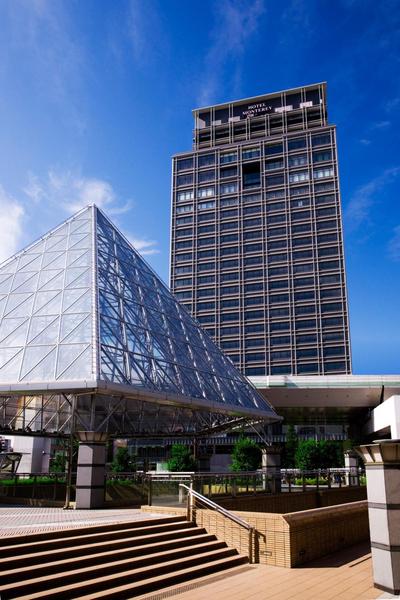
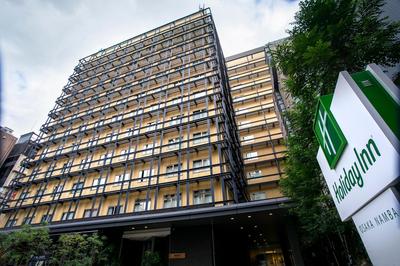
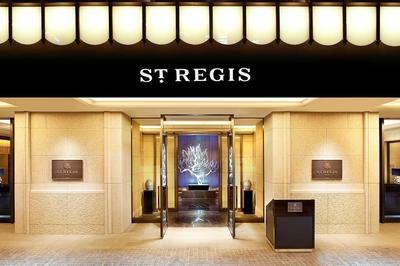
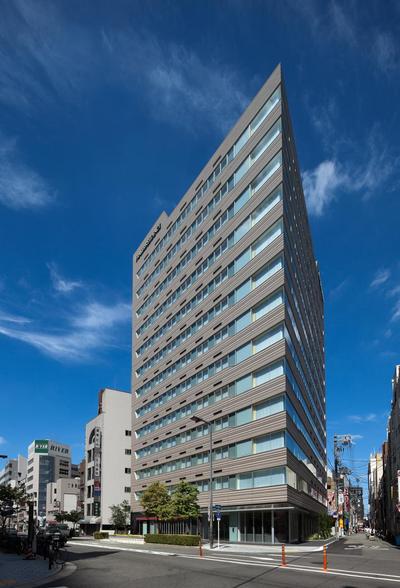
Our best-rated stays in this neighbourhood. Prices are approximate “from” rates — confirmed at the provider when you continue. We may earn a commission if you book through our partners — at no extra cost to you.
In this area In this area
 In this area
 In this area
 In this area
 In this area
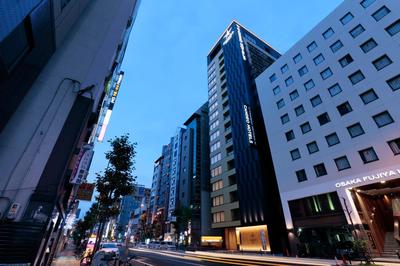 In this area
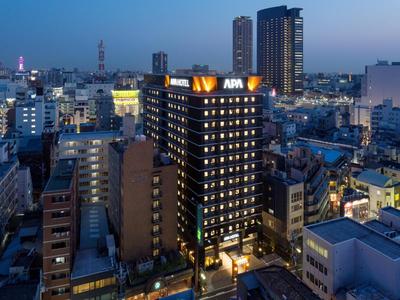 In this area
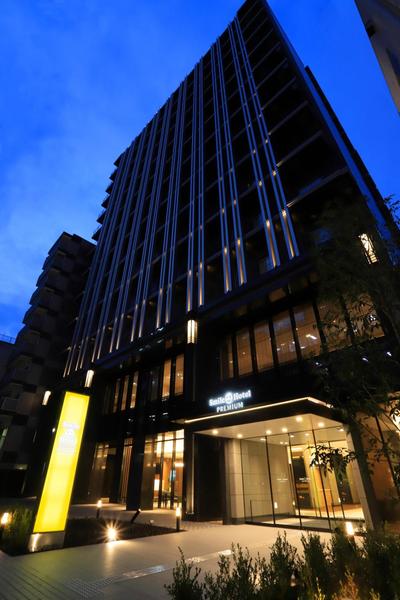 In this area
Dotonbori & Namba
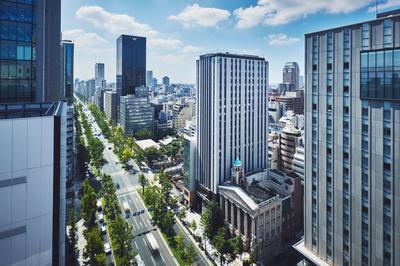
Smile Hotel Premium Osaka Hommachi
8.6· 753 reviews
approx. from£93 / nightSee prices
 In this area
 In this area
Dotonbori & Namba
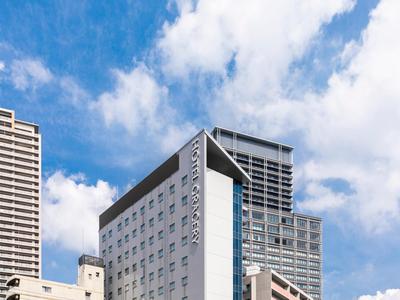
Holiday Inn Express Osaka City Centre- Midosuji by IHG
9.0· 1,211 reviews
approx. from£117 / nightSee prices
 In this area
Getting around
Dotonbori and Namba are made for walking. The canal, the arcades, Hozenji Yokocho and Kuromon Market all sit within a ten-minute stroll of each other, and much of the area is car-free covered arcade, which is a gift in bad weather and a mercy when the crowds are thick. The hub is Namba, one of Osaka’s biggest interchanges: the Midosuji subway line, the city’s spine, plus the Yotsubashi and Sennichimae lines all stop here, and Osaka-Namba Station a short walk away serves the Kintetsu and Hanshin lines.
The single most useful fact for arriving travellers is this: the Nankai line from Namba runs direct to Kansai International Airport in roughly 35–45 minutes, about ¥930 on the Airport Express, faster on the limited-express Rapi:t. Kuromon Market sits by Nipponbashi Station, one stop east. From here, Kyoto, Nara and Kobe are all easy day trips of 30–60 minutes by train.
The practical truth of Dotonbori and Namba is that they reward movement. Stay close enough to walk home, learn the side streets, and let the district reveal itself in layers: the neon first, then the food, then the quiet alley, then the train out in the morning. Osaka rarely asks to be admired from a distance. It wants you in the crowd, sauce on your sleeve, looking up at a crab that shouldn’t be that large and somehow is.
Gallery
Dotonbori & Namba in pictures
Dotonbori & Namba — your questions
Is Dotonbori & Namba a good area to stay in Osaka?
Yes — for most first-timers it’s the best base in the city. You’re surrounded by Osaka’s signature food, steps from the neon canal, and plugged into Namba’s transport hub with a direct airport train and easy day trips to Kyoto, Nara and Kobe. The catch is noise: the streets stay loud past 2am, so if you sleep lightly, book a few blocks south of the canal toward the stations rather than right on the water.
What food should I eat in Dotonbori, and where?
Hit Osaka’s big three. Takoyaki from Takoyaki Doraku Wanaka near Kuromon; okonomiyaki at Michelin-listed Mizuno, where the flourless Yamaimoyaki is the order; and kushikatsu at Kushikatsu Daruma, where you dip each skewer in the shared sauce exactly once and never twice. Add a 551 Horai pork bun and a 24-hour bowl at Kinryu Ramen, and you’ve done the essentials.
How do I avoid the crowds in Dotonbori?
Shift your hours. Ebisubashi and the arcade are a crush from late afternoon through mid-evening, but the same canal is calm and photogenic before about 9am and again after 11pm, when the neon reflections are at their best. For an escape mid-visit, duck one block south into the lantern-lit quiet of Hozenji Yokocho, or go early to Kuromon Market before 11am.
What’s the easiest way to get from Namba to Kansai Airport?
Take the Nankai line direct from Namba. It runs to Kansai International Airport in roughly 35–45 minutes, with the Airport Express around ¥930 and the limited-express Rapi:t faster.