The Osaka issue
Walking Kuromon Market and Nipponbashi in Osaka
One walk takes in the morning tuna counters, the kitchenware arcade, a moss-covered Fudo and a kilometre of neon shops.

By Inês CarvalhoOsaka one neighbourhood at a time
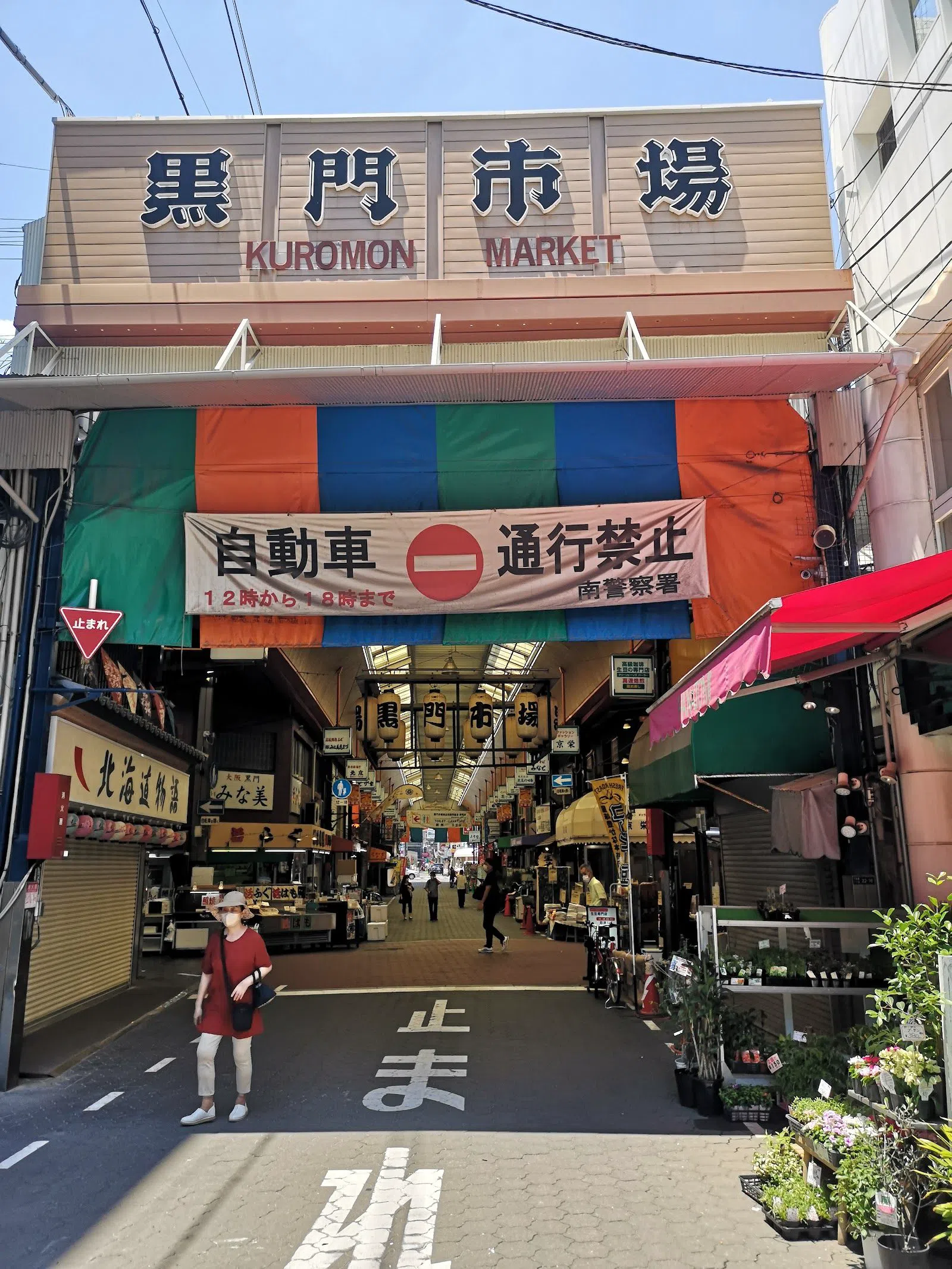
Kuromon Ichiba Market trades 150 stalls along 580m of covered arcade in Nipponbashi, and its seafood is freshest between 09:00 and 11:00. Many stalls pack up between 15:00 and 16:00, and five minutes' walk south the shops of Den-Den Town do not open until 11:00.
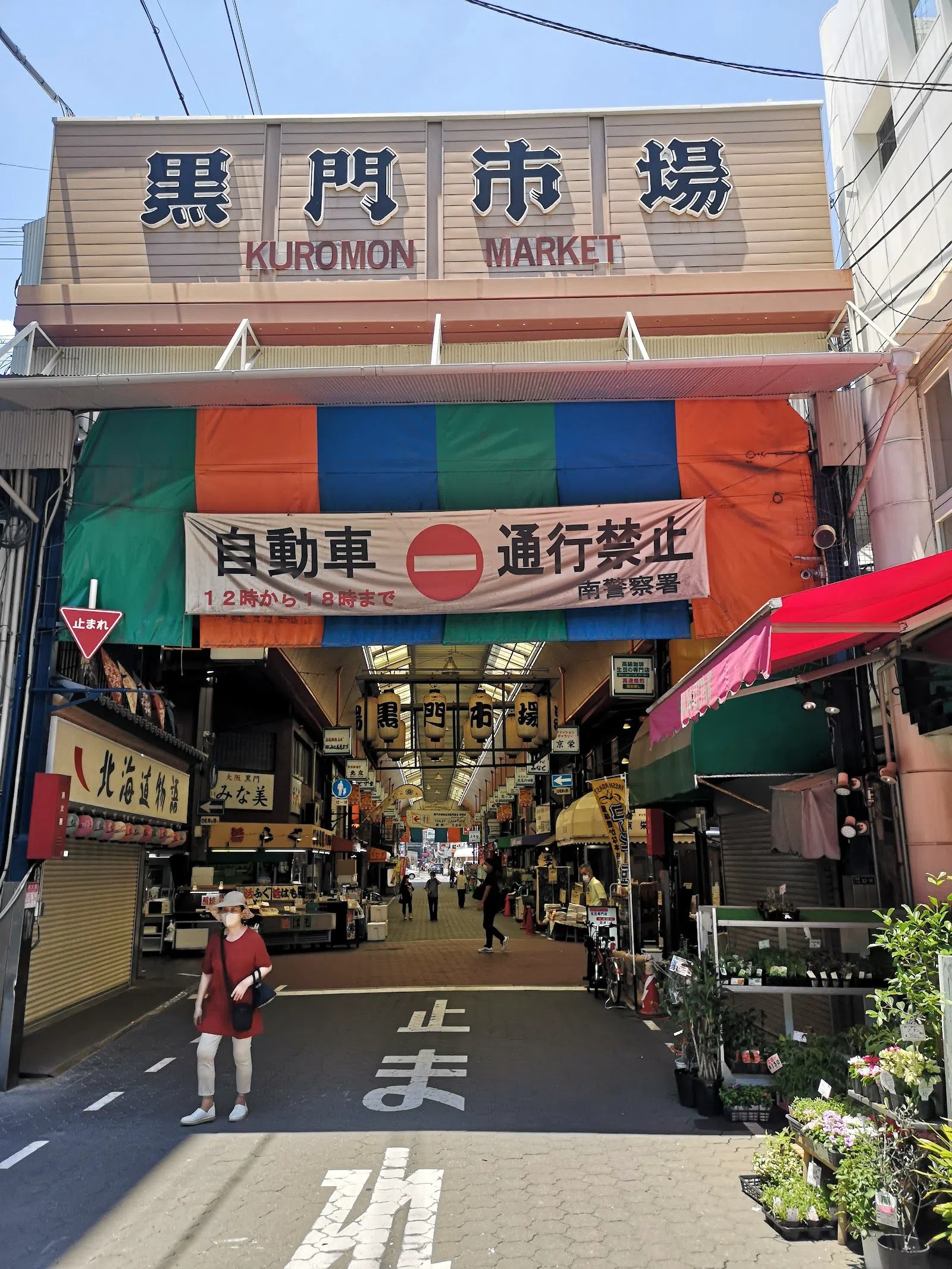
Kuromon Ichiba Market at opening
The canopy over the market is ribbed in yellow and black, with red-and-white shop banners hanging the length of it. Whole tuna, scallops and crab legs lie on trays of ice, crab going onto counter griddles as you pass, and most people eat standing at the stall ledges. Osaka calls this its kitchen, and the market trades 09:00 to 18:00 daily. Walking in costs nothing, and most snacks run ¥300 to ¥1,500 a plate.
Come in the morning, and split a group into pairs, because the aisles are tight. Guided market food tours run daily with small groups.
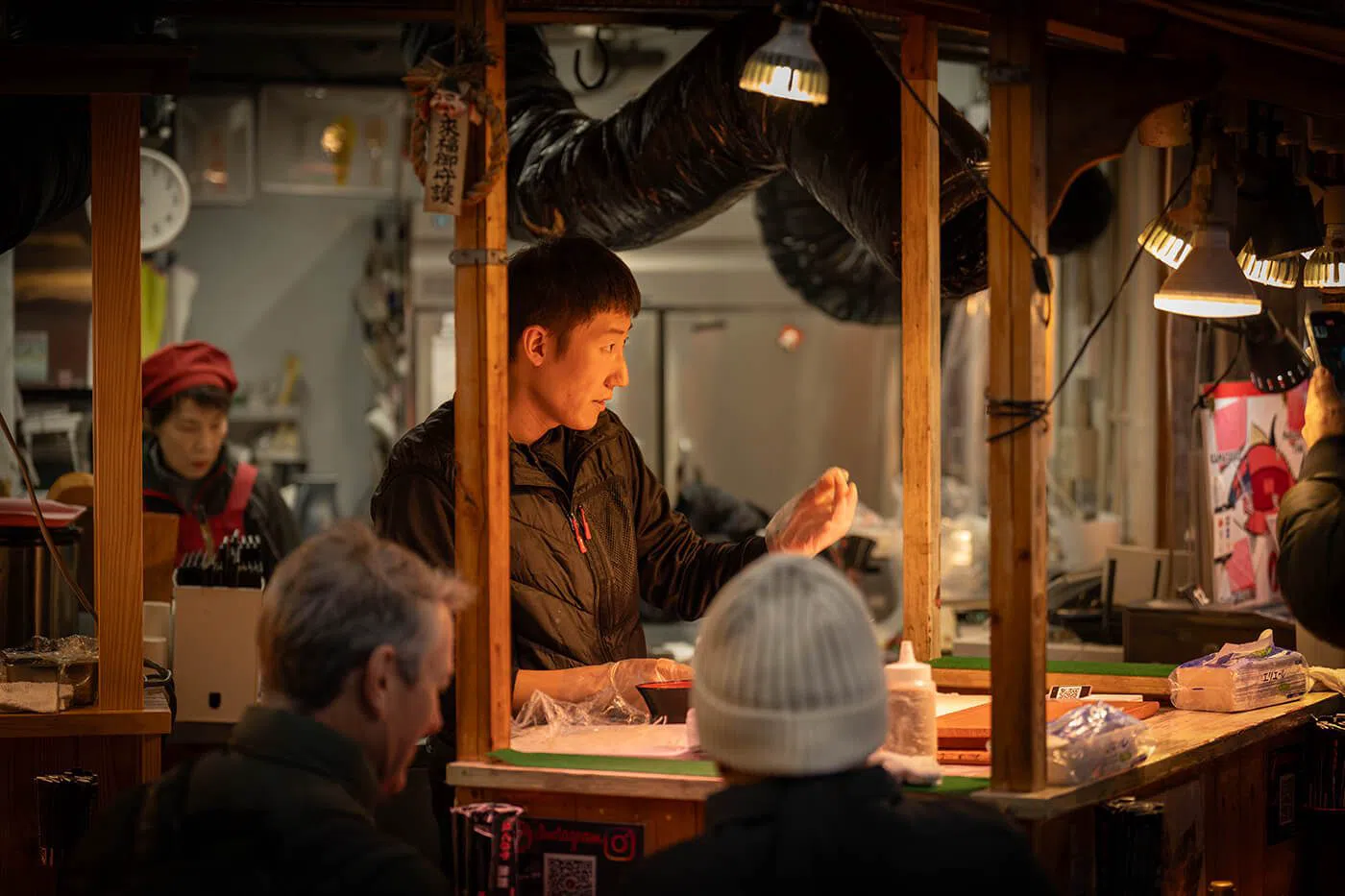
Maguroya Kurogin Kuromon Main Shop, in the market, cuts bluefin loins down behind a glass case, deep red akami beside pale marbled otoro. Order the three-colour bowl and compare the cuts across one plate. Bowls and sushi sets are ¥1,200 to ¥3,500, handed over a wooden counter with a few stools jammed against the aisle. The shop keeps 09:00 to 21:00, closes when it sells out and takes irregular rest days. Go early, because the good cuts go before mid-afternoon.
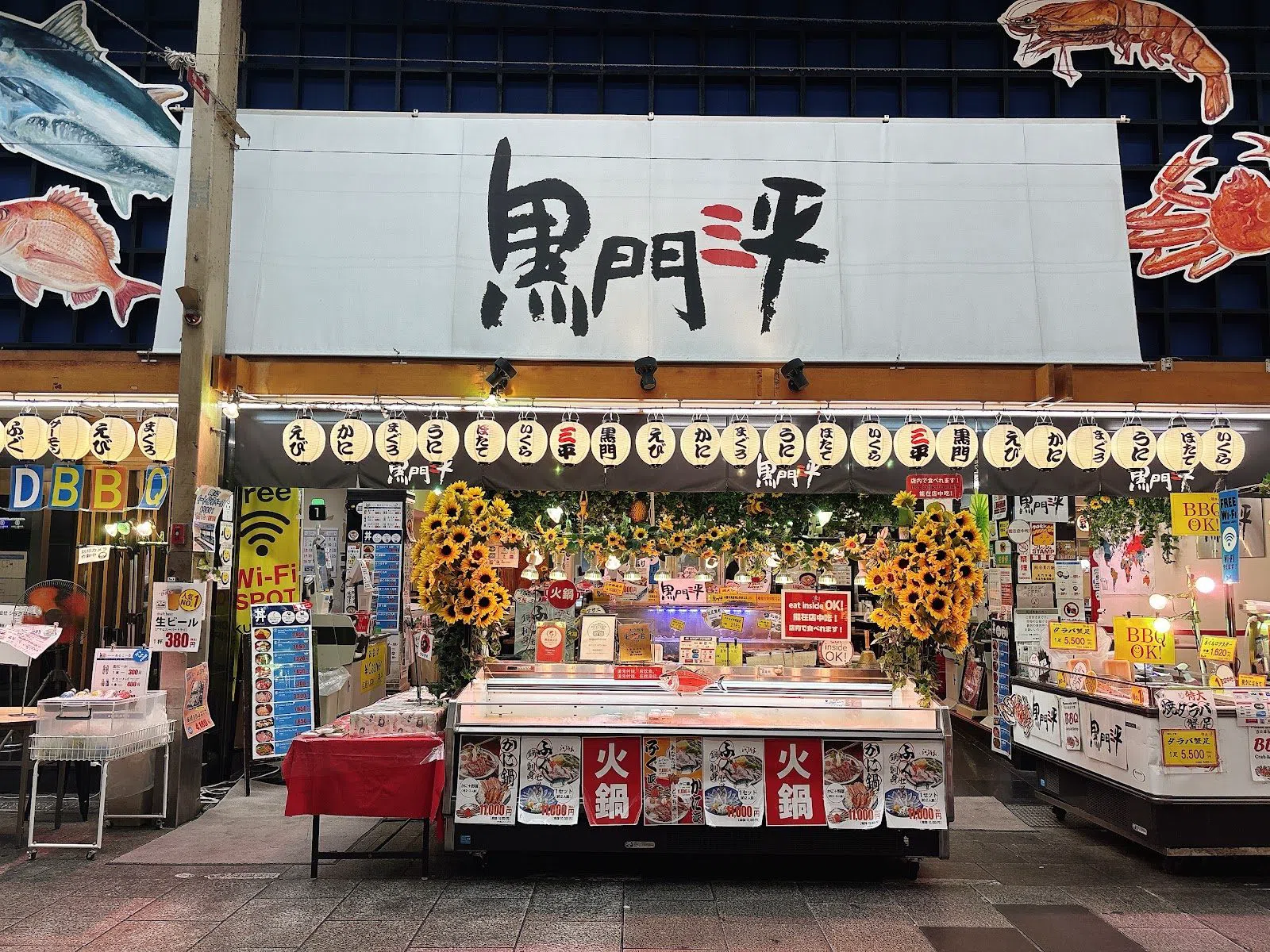
Kuromon Sanpei, a few doors into the same arcade, opens from 08:00 and sets out ice beds of sea urchin, scallops and live crab at the front. Pick your crab, prawn or shellfish, watch it go onto the charcoal grill that throws smoke into the arcade, then carry it through to a plain back room of wooden tables, where the same fish also arrives as a seafood rice bowl. Skewers and grills start at ¥500 and bowls are ¥1,500 to ¥3,000. The dine-in area takes no reservations and fills at lunch, so arrive before the peak.
Plan your Osaka trip
Live prices from our booking partners.
Free cancellation on many rooms. We may earn a commission when you book.
Doguyasuji and the takoyaki corner
A short walk west of Kuromon towards Namba, Sennichimae Doguyasuji Shopping Street runs 150m under cover, its entrance marked by a giant takoyaki-griddle sign. Shops stand stacked floor to ceiling with carbon-steel knives, bamboo steamers, cast-iron pots and glossy plastic food models. This is where the city's chefs buy their gear, and it is the best souvenir shopping in the area. Knives start at ¥3,000 and the street itself is free to walk.
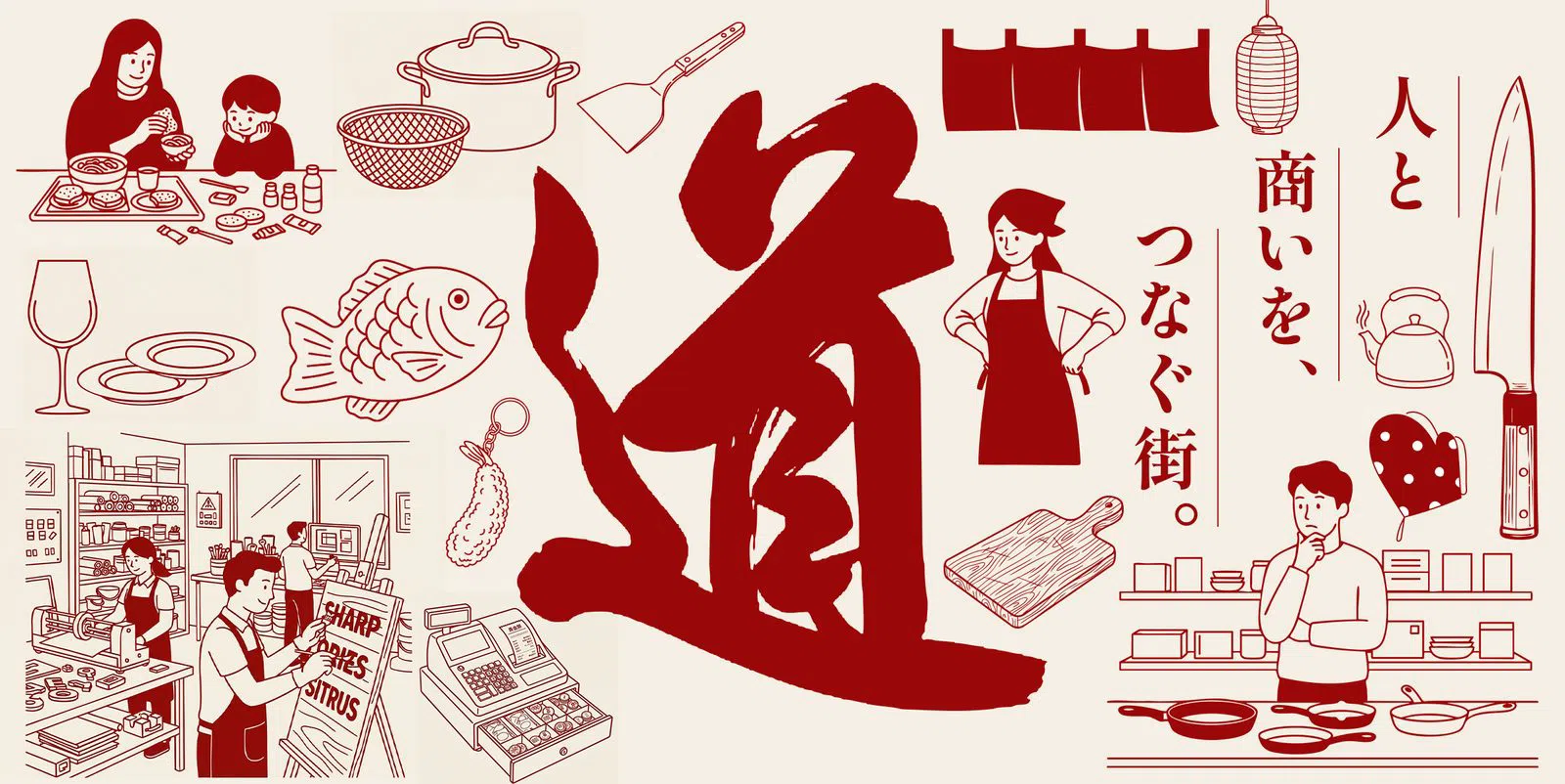
Prices tend to fall the deeper in you go, so browse the whole stretch before you buy anything. Several shops sell at wholesale prices, handle tax-free paperwork and will ship a knife home for you.
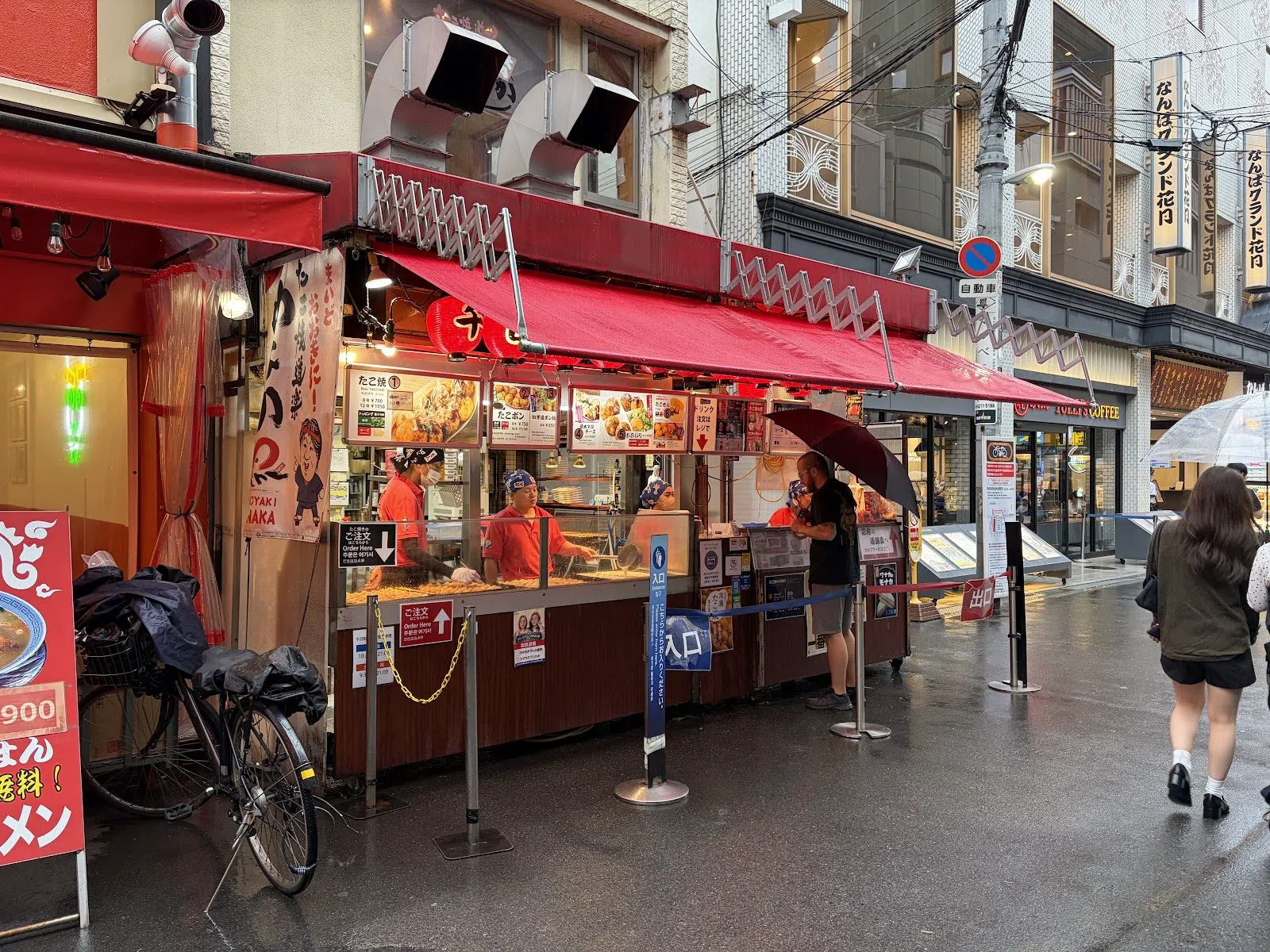
Takoyaki Doraku Wanaka Sennichimae Main Store sits on the Doguyasuji corner, five minutes from Kuromon, and has been an Osaka takoyaki institution for 70 years. Batter goes into dimpled cast-iron griddles at a street-facing hatch and gets turned with steel picks, then the finished balls are boxed, flooded with brown sauce, laced with mayonnaise and buried under dancing bonito flakes beneath the heat lamps. Eight cost ¥500 to ¥900. The hatch opens 10:30 to 21:00 daily, from 09:30 at weekends, and there is a small eat-in space upstairs if you would rather sit. Large orders go out fast. The outside is crisp and the inside is deliberately molten, so let them cool for a minute.
Hozenji Yokocho and the Kamigata prints
Ten minutes west of Kuromon by way of Sennichimae, Hozenji Temple and Hozenji Yokocho hold the corner of this quarter that works after dark. In a tiny shrine off the alley stands a Fudo Myo-o statue furred entirely in thick green moss, grown there over centuries of ladled water. Visitors ladle water over the Mizukake Fudo, as locals have for generations. The temple is free, unticketed and open around the clock.
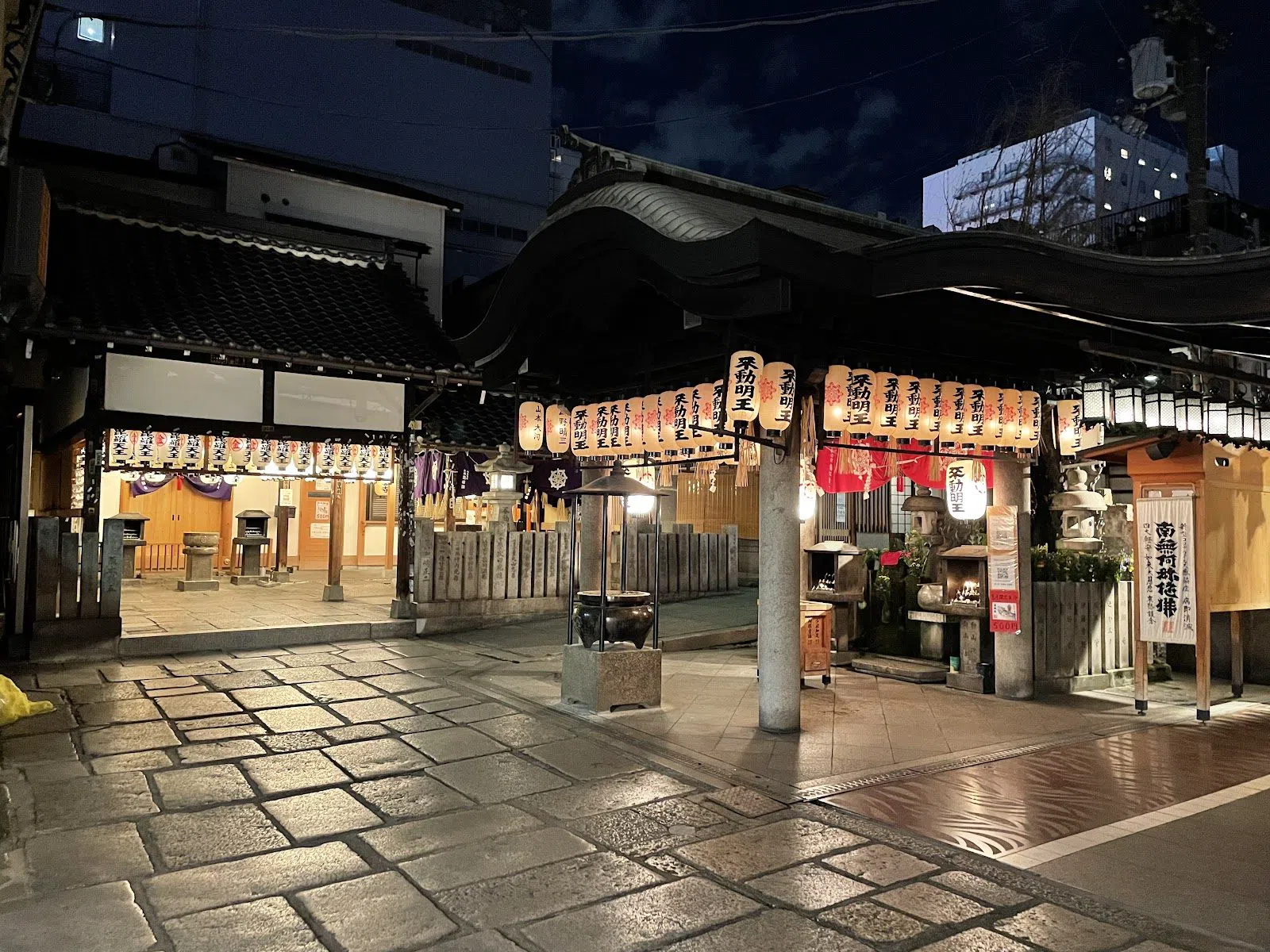
The alley runs 80m of stone paving between wooden shopfronts, paper lanterns and hand-painted signs. Its restaurants are tiny counter places, serving lunch from 11:30 and closing between 22:00 and 23:00. Alley meals are ¥¥ to ¥¥¥.
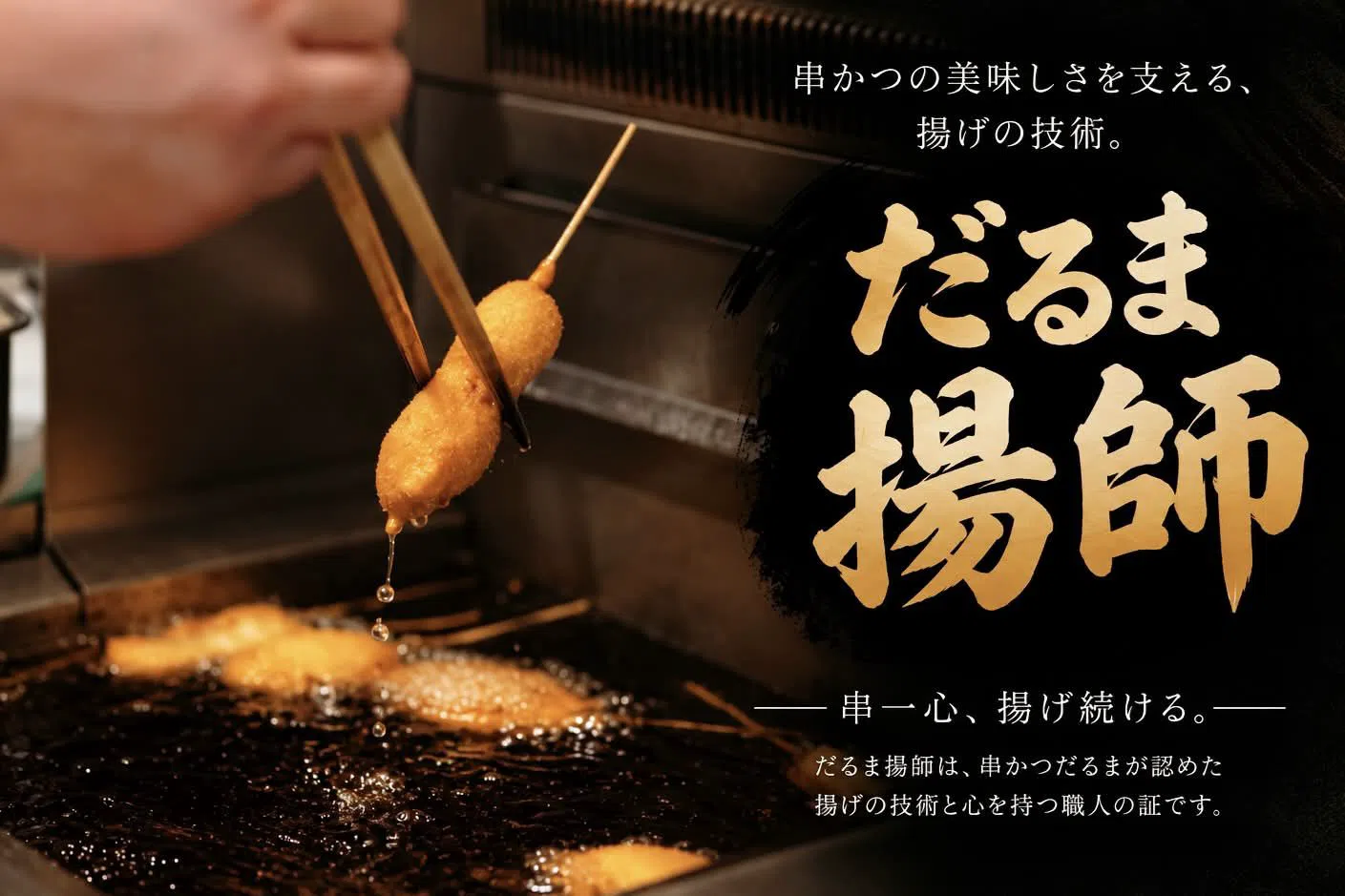
Ganso Kushikatsu Daruma Hozenji, in the Yokocho, carries a scowling moustachioed Daruma chef on the shopfront and counter seats facing bubbling fryers. Skewers arrive stood upright in a cup beside a communal stainless tub of thin brown sauce, at ¥150 to ¥300 each, with sets at ¥1,500 to ¥2,500. Beer and highballs come alongside, and it stays open into the night. Do not double-dip in the shared sauce. Book if you are six or more, or take the party to a larger Namba branch.
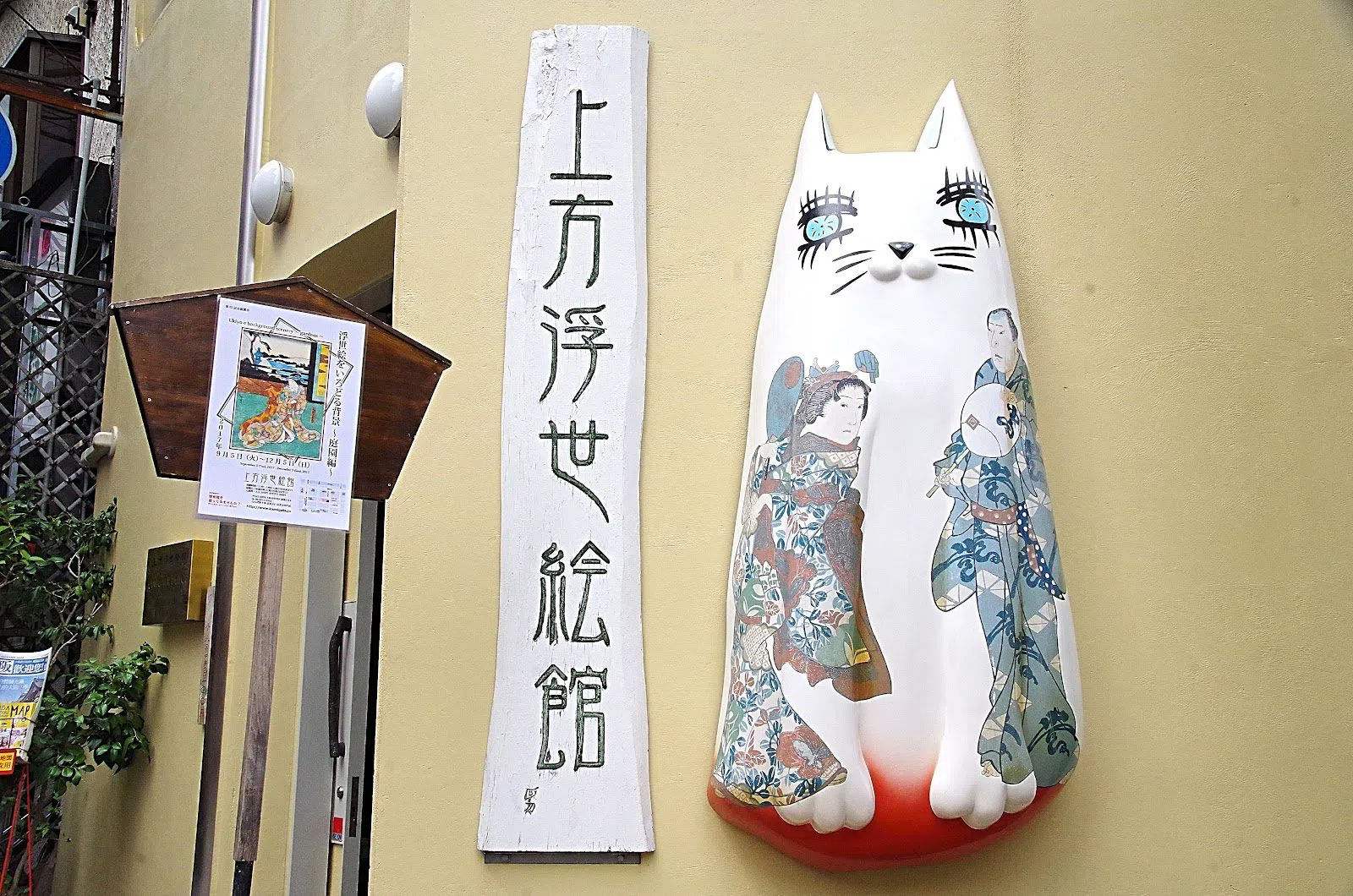
Kamigata Ukiyoe Museum, beside Hozenji, is a narrow four-storey townhouse and the only museum in the world devoted to Kamigata ukiyo-e, the woodblock prints made in Edo-period Osaka itself and mostly showing local kabuki actors. Small lit wall cases hold the prints in rich reds and blacks, actors caught in exaggerated poses, and a steep internal staircase links the floors. It opens 11:00 to 18:00 Tuesday to Sunday, closed Mondays, with last entry at 17:30. Entry is ¥500 for adults and ¥300 at school age, and it is free with the Osaka e-Pass.
The Bunraku theatre and Kōzu-gū Shrine
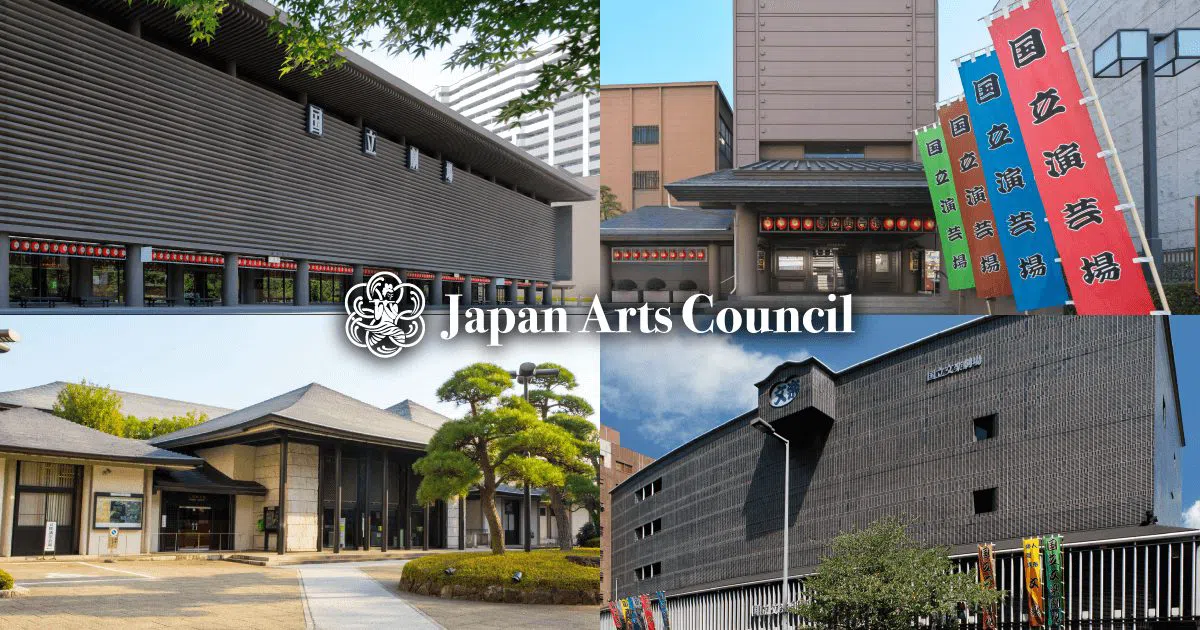
Two minutes from the market's east side, on the Nipponbashi crossing, the National Bunraku Theatre is a severe modern public building of concrete and glass with tall vertical performance banners outside. Inside, on a wide stage, three black-hooded puppeteers work a single waist-high puppet beside a shamisen player. Bunraku puppetry was born in Osaka and is UNESCO-listed, and this is its home theatre, the most serious cultural landmark in the quarter.
The hall seats 753. Tickets run ¥1,000 to ¥6,000 depending on seat and programme, and English audio guides and programmes are available. Single-act tickets suit a short attention span. The theatre runs in performance blocks, not continuously, so check the schedule before you build a day around it.
A nine-minute walk east of Nipponbashi, Kōzu-gū Shrine stands on a wooded rise above the city, reached by a steep flight of stone steps up to a stone torii. Founded in 866 and dedicated to Emperor Nintoku, it is a historic home of rakugo storytelling. Cherry trees overhang the approach to the vermilion-trimmed wooden hall, and Osaka rooftops show through the trees. The shrine holds a well-known cherry festival in early April. This is the quietest place in the quarter.
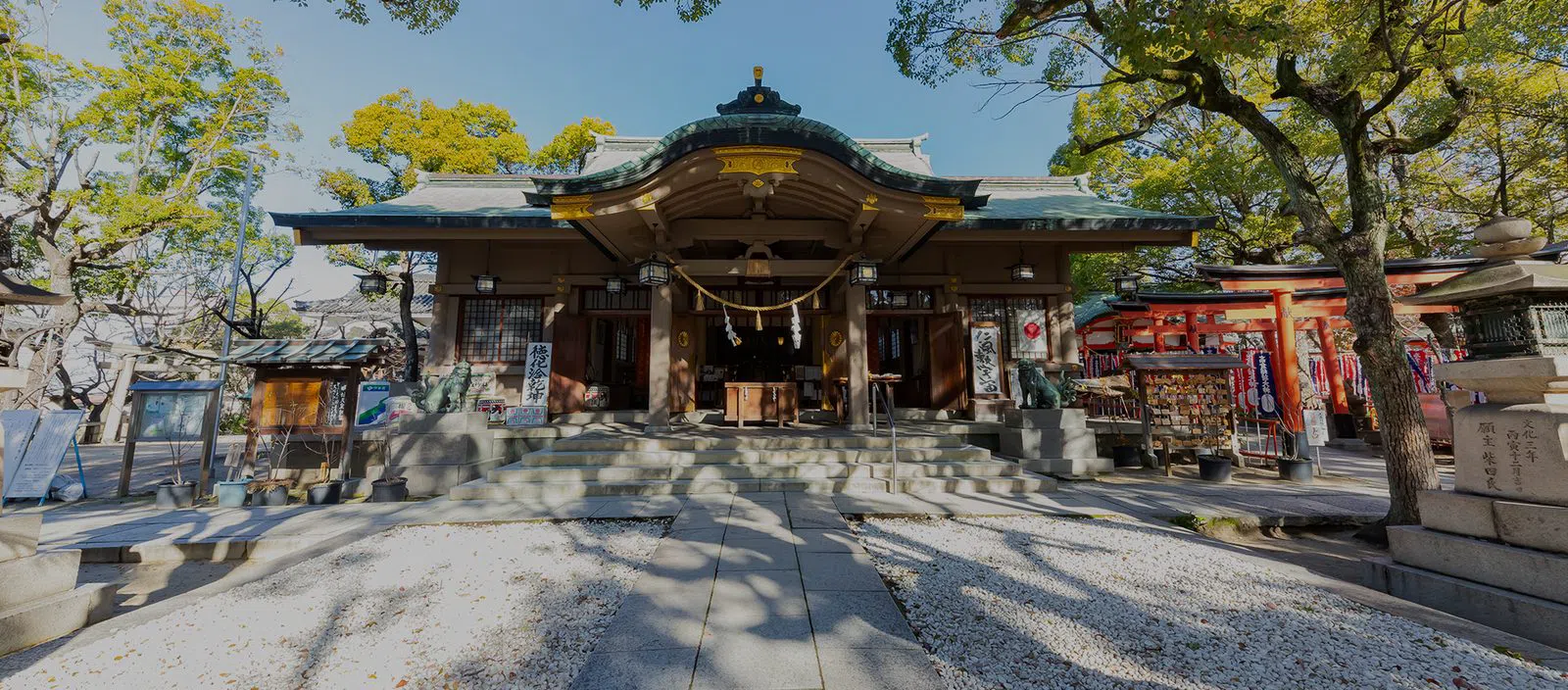
The grounds are free. The gate is open 06:00 to 18:00 and the sanctuary closes at 17:00, with the shrine office open 09:00 to 17:00 for charms and prayers.
Den-Den Town from 11:00
Nipponbashi Den-Den Town (Sakaisuji and Ota Road) is the main electronics and anime district of western Japan, five minutes' walk south of the market. A kilometre of narrow street carries vertical neon and character signage, gachapon machines spill onto the pavement, and glass vitrines stand full of figures. Go down Sakaisuji for electronics and back up Ota Road for anime, doujinshi, retro games and the cosplay shopfronts. Shops open at 11:00 and run to 20:00, which makes this the natural evening half of a Kuromon day. Walking it is free, and most larger stores handle tax-free for tourists.
On the main drag, Joshin Super Kids Land Main Store fills five floors with Gundam kit boxes shelved wall to ceiling, a running model-railway display layout and cabinets of painted figures under bright strip lighting. It is one of Japan's largest hobby stores. Entry is free and Gunpla kits start at ¥700. It opens 10:00 to 20:00 daily, and it has lifts, a tax-free counter and multilingual staff. If you are travelling with children, make this the one stop you plan.

Mandarake Grandchaos, a short way along the same streets, holds the deepest second-hand pop-culture stock in western Japan over six narrow floors, each one a different dense colour: used manga spines, vintage Showa-era toys in sealed boxes, idol photo-cards in binders and cosplay racks. Prices start at ¥100 for used manga and reach five figures for collector pieces. It opens 12:00 to 20:00 every day of the year. Allow an hour you had not budgeted.

Super Potato Retro-kan Ota Road tiles its walls with boxed Famicom and Super Famicom cartridges, keeps loose carts in plastic bins, and runs 8-bit demos on CRT monitors under pixel-art signage. Japan's best-known retro-game chain pulls in a good share of everyone who comes to Nipponbashi, and the shop is a single small floor, so browse in twos or threes. It opens 11:00 to 20:00 on weekdays and from 10:00 at weekends and holidays, daily. Bring cash, and check region compatibility before you buy hardware.
Maidreamin Osaka Nipponbashi Ota Road is the tourist-fluent way to try Japan's maid-café format, a big, slick chain branch on the anime lane. The room is pastel pink and white, staff wear frilled aprons, heart-shaped omurice is drawn in ketchup at your table, and LED wands come out for the routines on a tiny stage strung with fairy lights. Staff run those routines in English. Expect ¥1,500 to ¥3,000 a head, and the seating charge is per person and sits on top of the food. Photographs of staff are not allowed unless you pay for one. It opens 11:30 to 23:00 on weekdays and from 10:30 at weekends. Book ahead at weekends.

Staying beside the market
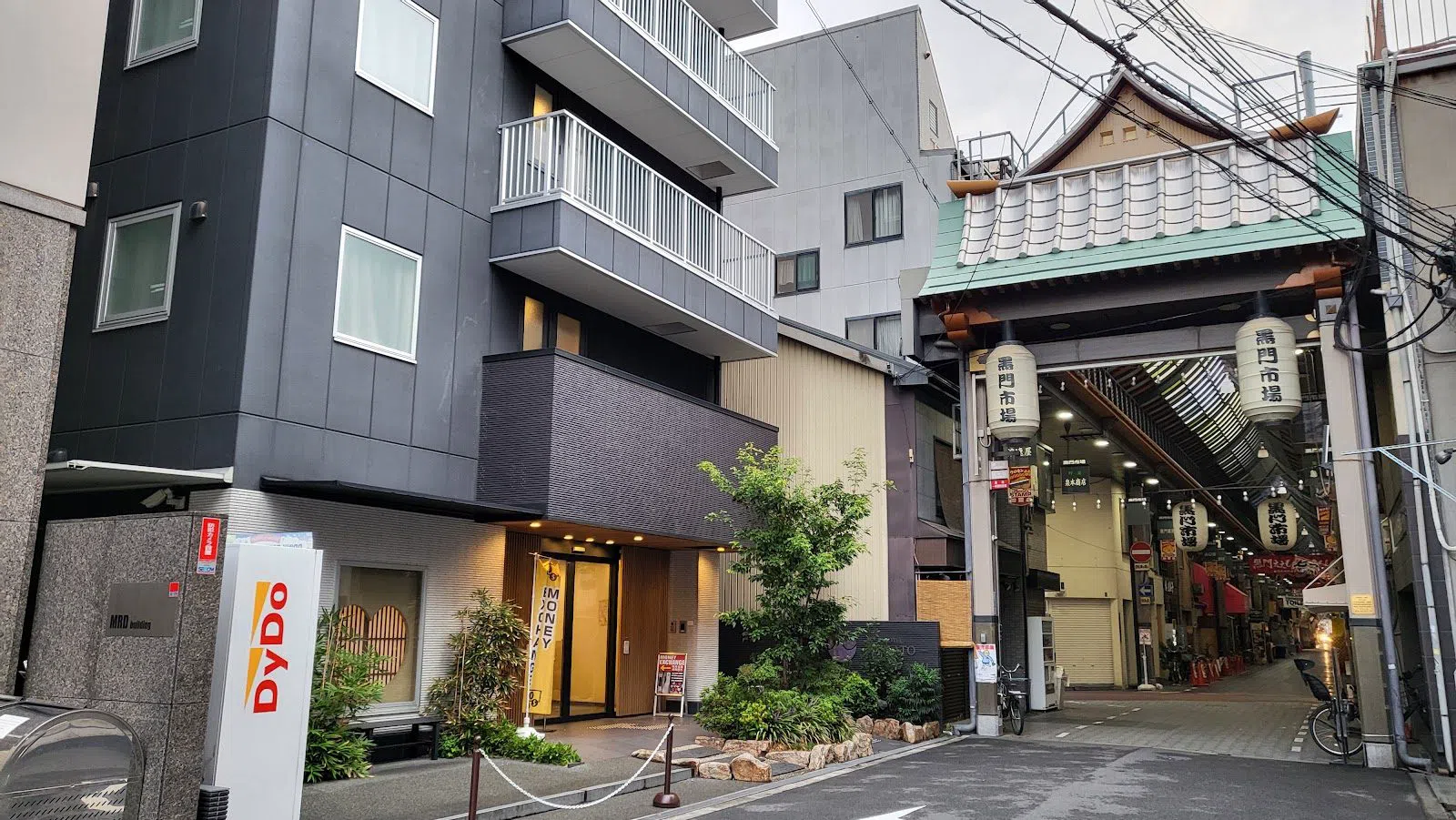
Hotel ASIATO Namba is effectively attached to Kuromon and five minutes from Nipponbashi station, so you can be at the seafood stalls at opening. Rooms are compact modern Japanese business-hotel rooms in pale wood and white with blackout blinds, and the small bright lobby has free coffee and a coin laundry. The market canopy is visible from the entrance. Two people pay ¥8,000 to ¥15,000 a night, and the hotel has twins and small family rooms, free luggage storage and English-speaking staff. Guests do flag the small rooms and noisy air-con, so pack earplugs.
Practical notes
The Kamigata Ukiyoe Museum closes on Mondays, Maguroya Kurogin takes irregular rest days, and the Bunraku theatre plays only during its performance blocks. Reserve a table at Daruma for six or more and at Maidreamin for a weekend, and keep cash for Ota Road. See the Osaka guide and the Osaka hotel search.
Before you go
What time should I get to Kuromon Ichiba Market?
The market trades 09:00 to 18:00 daily, though seafood is freshest between 09:00 and 11:00 and many stalls pack up between 15:00 and 16:00, which makes the morning the sensible slot. At Maguroya Kurogin the good tuna cuts go before mid-afternoon.
How far is Den-Den Town from Kuromon Market?
It is five minutes' walk south, and the two halves of the area fit one day: the market works from 09:00, and Den-Den Town's shops open at 11:00 and run to 20:00.
Where can I sit down to eat in the market instead of standing?
Kuromon Sanpei has a proper dine-in area, a plain back room of wooden tables, where the fish you picked at the front arrives grilled or as a rice bowl. It takes no reservations, so arrive before the lunch peak.
Do I need to book for kushikatsu at Hozenji Yokocho?
Ganso Kushikatsu Daruma Hozenji is small and mostly counter seating, so book for six or more, or use a larger Namba branch. The alley's other restaurants are tiny counter places, serving lunch from 11:30 and closing between 22:00 and 23:00.
Is anything in the area closed on certain days?
The Kamigata Ukiyoe Museum opens 11:00 to 18:00 Tuesday to Sunday, with last entry at 17:30. Maguroya Kurogin takes irregular rest days, and the National Bunraku Theatre runs in performance blocks, so check the theatre's schedule first.