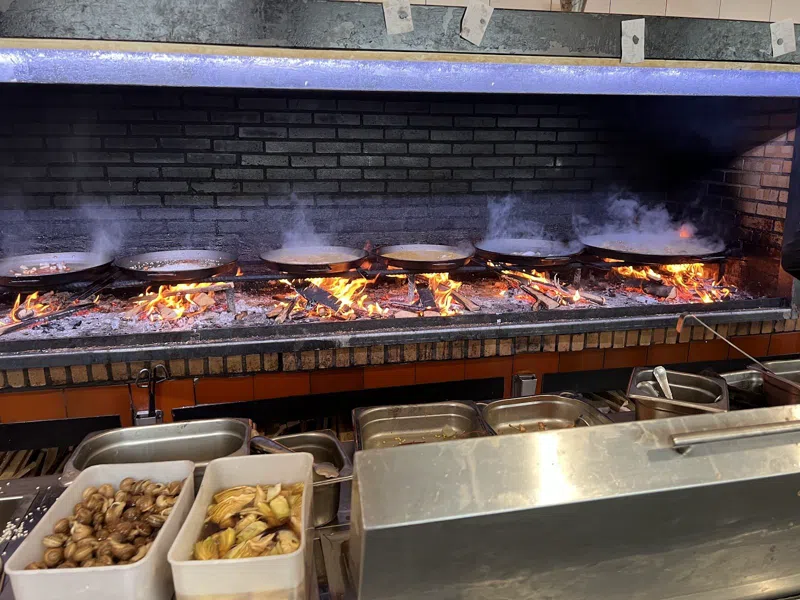
Follow the smell of grilling pork fat past Tenma's shuttered fishmongers around 9pm and you'll find the shotengai has changed shifts — daytime grocery runs give way to salarymen three-deep at standing counters, plates of raw horse and simmered pig's trotter passed hand to hand across the bar. Ten minutes south on the Loop Line, Kyobashi does the same trick under a different roof: yatai-style alleys packed shoulder to shoulder until the last trains stop running. Neither neighborhood makes it onto Dotonbori's postcards, and that's precisely the point — this is where Osaka actually eats after dark, and it barely bothers to notice tourists are watching.
Tenma's Standing-Bar Backbone
Tenma sits a few minutes north of Osaka Station on the JR Loop Line, and its shotengai — the covered shopping street running under Tenjinbashisuji — turns into a different animal once the fishmongers and greengrocers pull their shutters down. This is tachinomi country: standing bars where salarymen wedge in for one drink that becomes four, where groups spill onto the street between rounds, and where nobody expects a table or a chair. You order at the counter, you eat standing up, and you move on when you're done — that rhythm is the whole appeal.
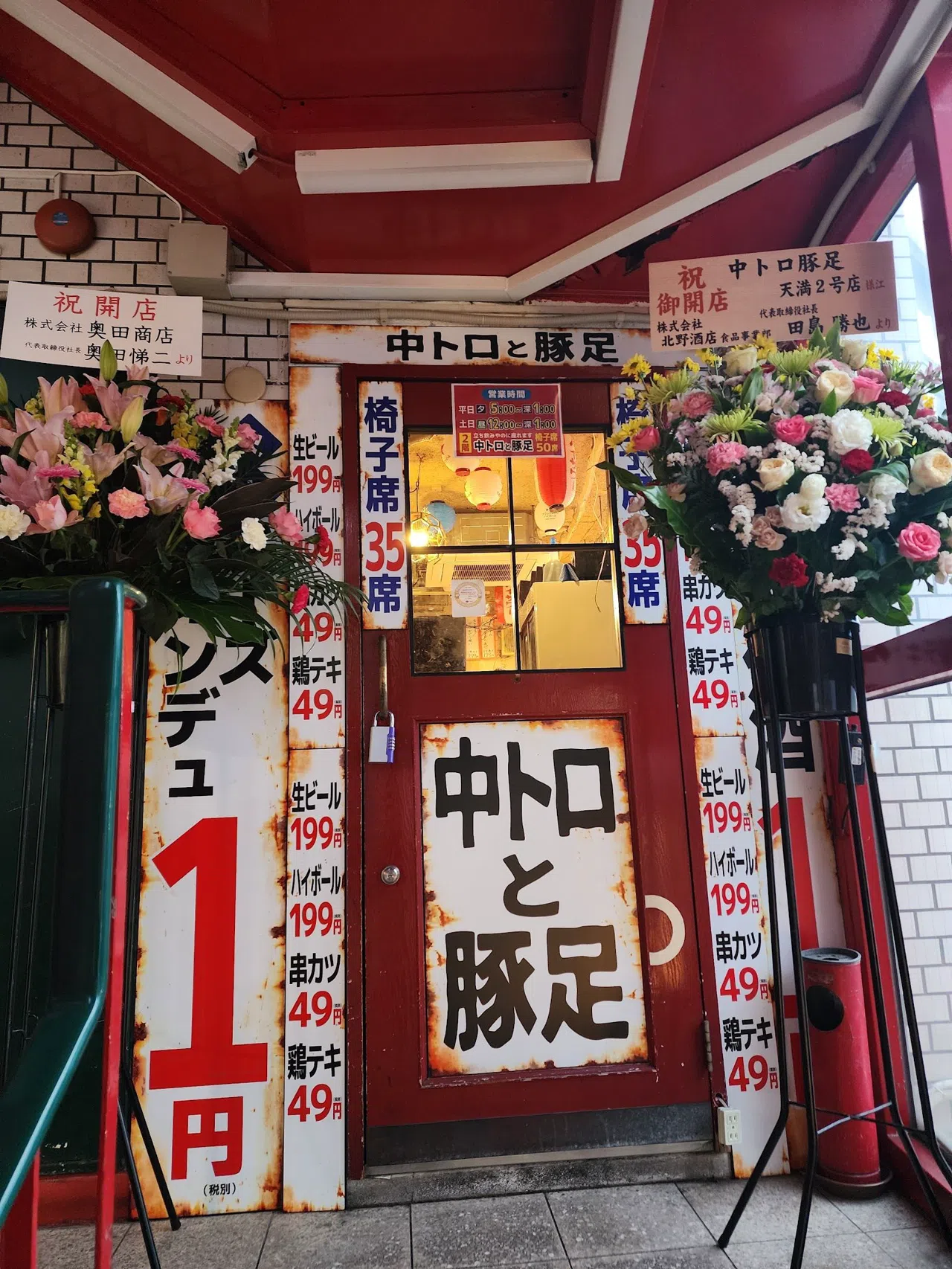
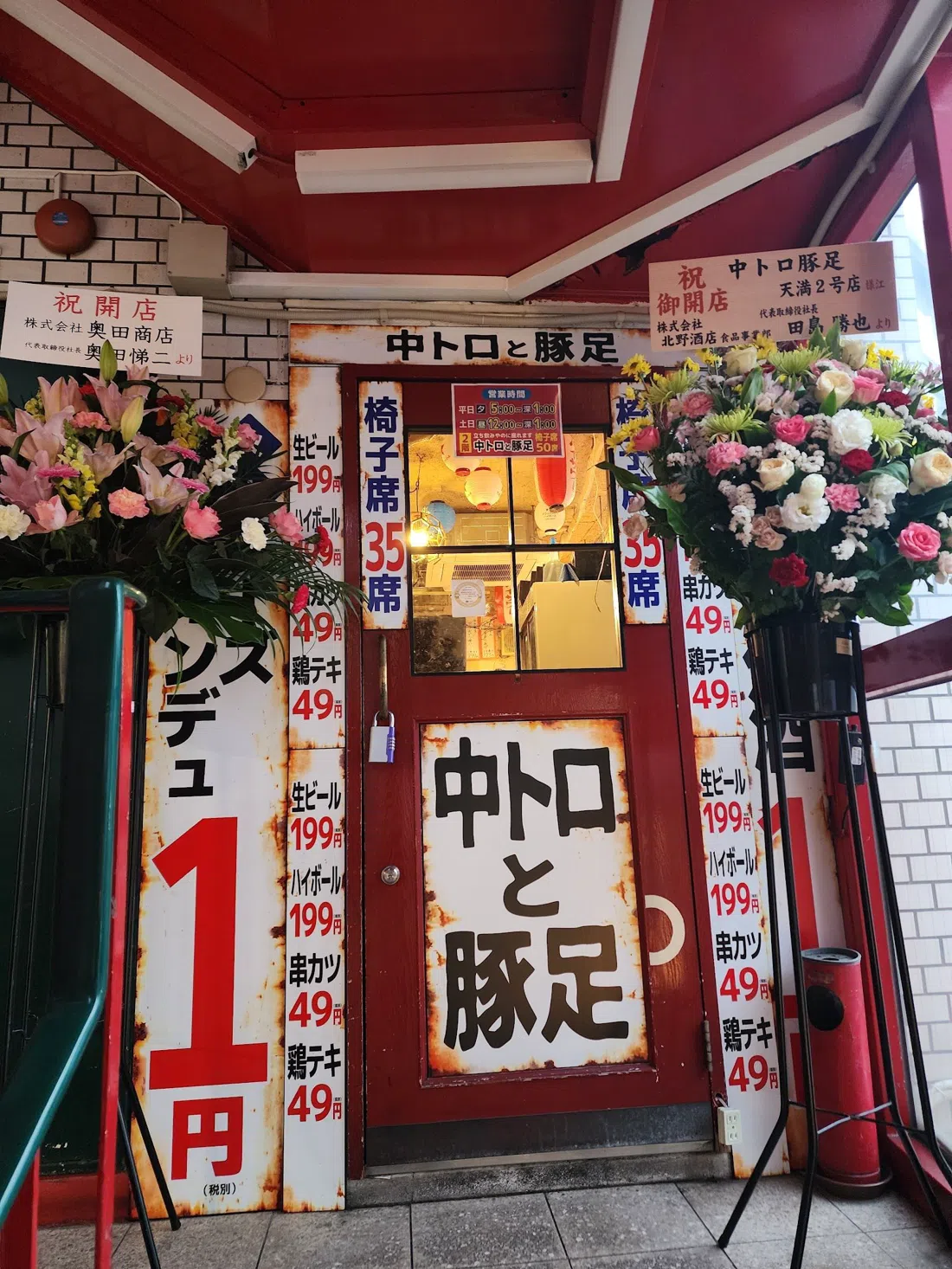
中トロと豚足 天満店 (Chu-Toro to Butaashi), Tenma, is the anchor for a reason: it runs close to around the clock, which matters more than the menu once you're planning a night that might start at 9pm or wind up here at 4am because everything else has closed. The open-plan standing layout swallows groups easily if you arrive before midnight — after that it thins out and tightens. Prices stay low across the board: most drinks come in under ¥200, and plates of the namesake chu-toro (fatty tuna) and simmered pig's trotter run ¥300-800. It's not a place to sit down and work through a menu; it's the place you end up.
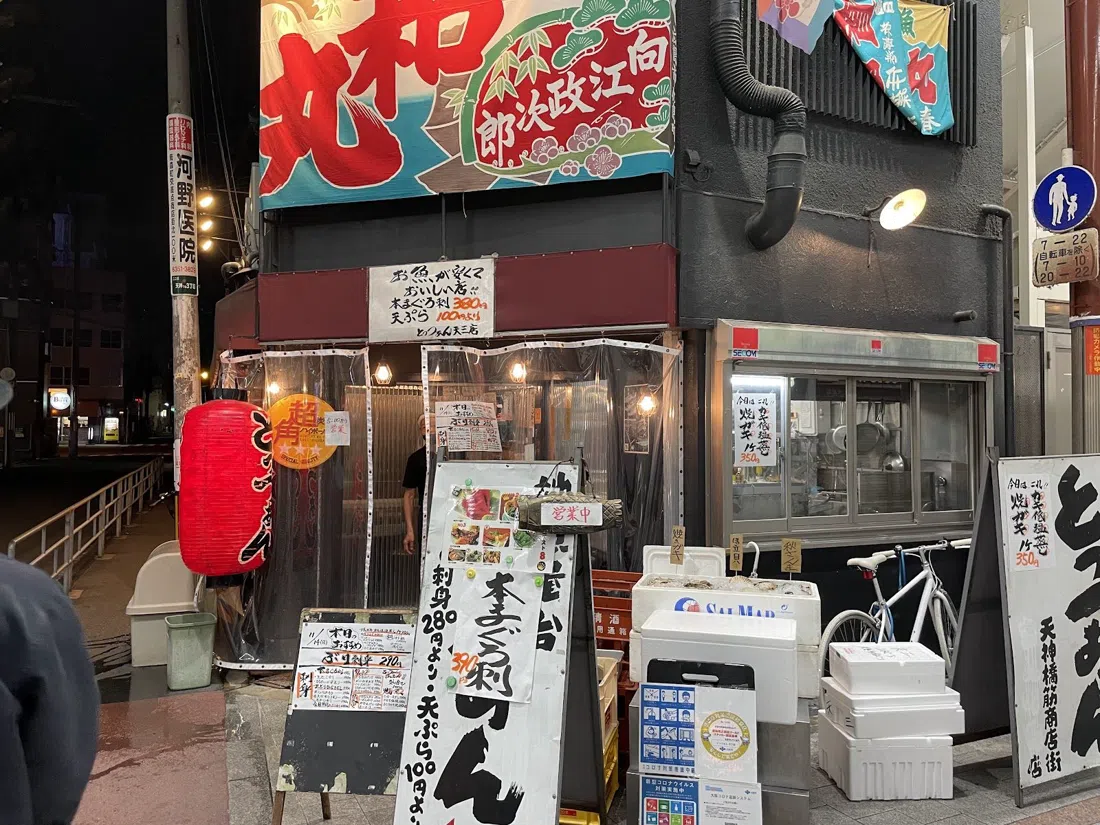
A few doors along, 地魚屋台とっつぁん 天満店 (Jizakana Yatai Tottsuan), Tenma, does what Kuromon Market promises tourists and rarely delivers at a fair price: genuinely fresh local seafood at yatai rates. It's a casual counter-and-table setup that handles small-to-mid-size groups comfortably, dishes start from ¥100, and sashimi bowls stay under ¥1,000 — real fishing-harbour seafood without the market mark-up. Order by pointing at what's on ice rather than working through a laminated menu; that's where the good stuff tends to sit.
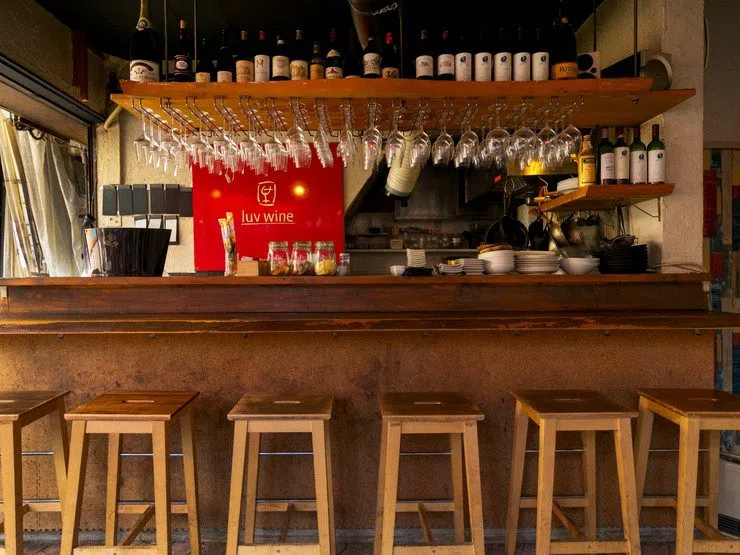
For something that isn't beer and highballs, luv wine 天満店 (Ura-Tenma), Tenma, proves Ura-Tenma has range beyond the standard izakaya pours. It's a small standing counter with a rotating by-the-glass wine list — glasses from ¥600, small plates from ¥380 — in a space that still looks and feels like a yatai stall rather than a wine bar dressed up to look casual. The catch is size: this works well for pairs or groups of three to four who don't mind standing for the duration. Turn up as a party of six and you'll be splitting up or moving on to Chu-Toro to Butaashi down the street.
Kyobashi's Big-Group Anchors
Kyobashi, one stop south of Tenma on the Loop Line and a transfer point for the Keihan Main Line and Osaka Metro's Tanimachi Line, is where the after-work crowds thicken and the yatai culture gets louder. It's a proper transport hub rather than a quiet backstreet, and unlike Tenma's open shotengai, a chunk of Kyobashi's yatai scene sits under cover.
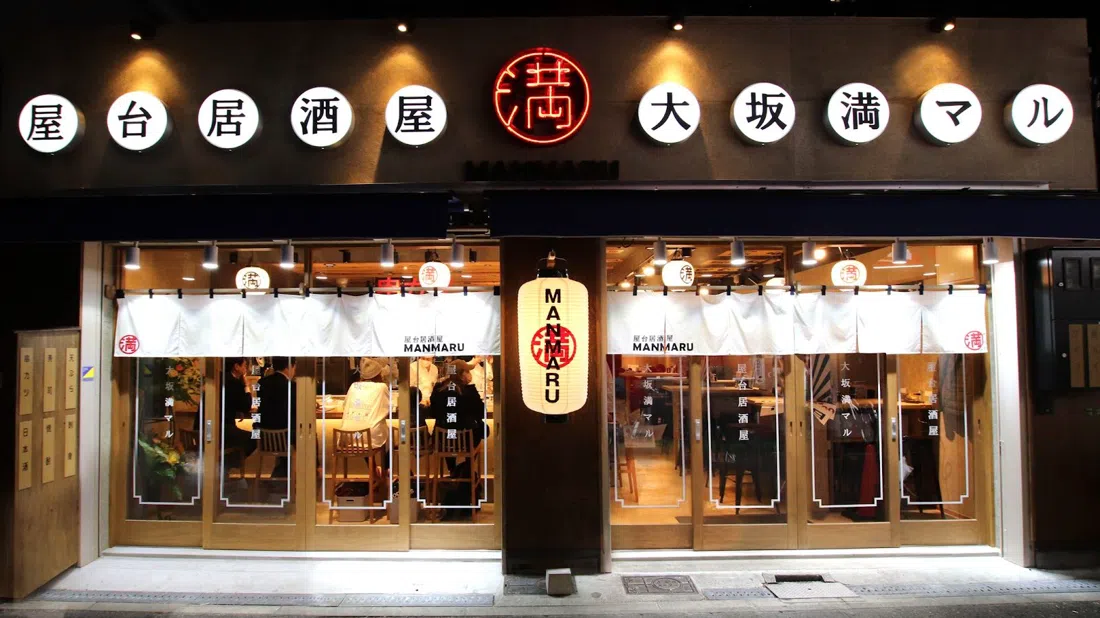
If you're traveling as a group of eight or more, 屋台居酒屋 大阪満マル 京橋店 (Yatai Izakaya Osaka Manmaru), Kyobashi, is the one place on this list actually built for you. It seats 122 and is explicitly designed around large-party bookings, which makes it the easiest reservation of the whole crawl — you get the yatai atmosphere (stalls-within-a-restaurant, shared plates, noise) without gambling on whether there's room to stand once you arrive. Budget around ¥6,930 for dinner for two as a benchmark, and book ahead if your group is genuinely large; walk-in space for eight-plus isn't guaranteed on a Friday night.
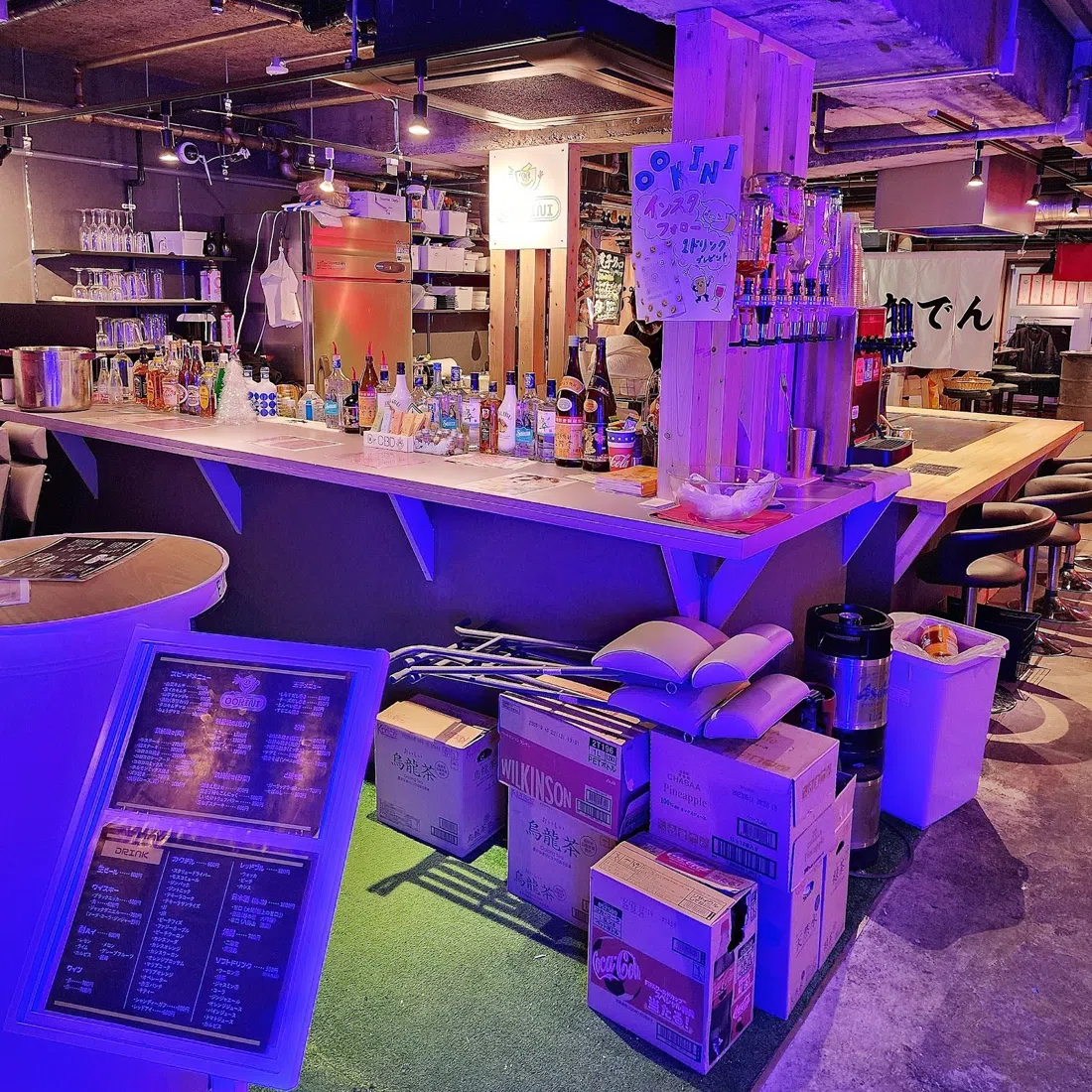
For a first taste of the format before committing to a night of alley-hopping, start at 京橋S6横丁 (Kyobashi S6 Yokocho), Kyobashi. It's an indoor yatai-mura — one covered floor holding a cluster of individual stalls — so groups can either camp at one stall or split up and bar-hop between them without ever leaving the building. Prices vary stall to stall (roughly ¥-¥¥) and entry itself is free. It's also, usefully, weatherproof, which none of Kyobashi's open-air alleys are — worth knowing if you're visiting during Osaka's rainy season or the thick of summer humidity. One real caveat: it's closed on Sundays and holidays, so it doesn't work as a fallback for a Sunday-night plan.
Kyobashi's Small-Format Standing Bars
The rest of Kyobashi's yatai scene runs on a smaller, more improvised scale — open-air standing bars that work best for pairs or tight groups of three or four, where the standing-room-only format is a feature of the night, not an inconvenience to route around.
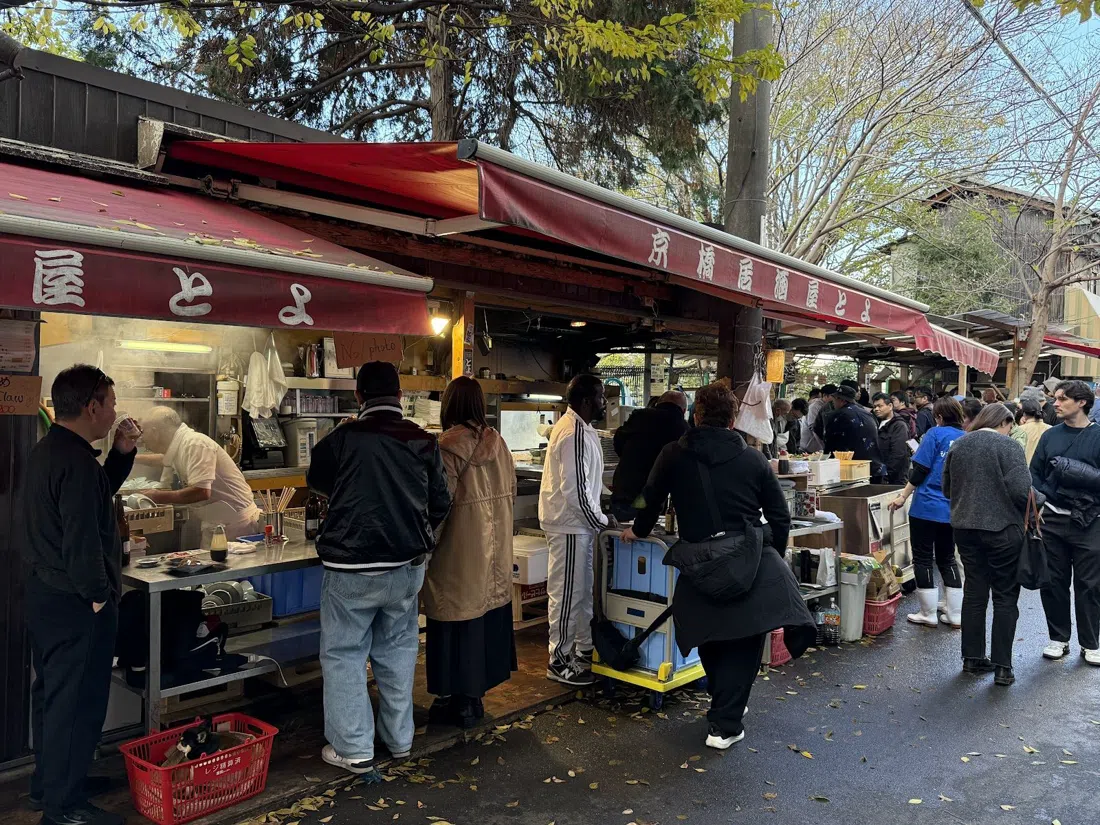
とよ (Toyo), Kyobashi, is the district's most storied address: a standing-only, no-seating seafood tachinomi that's been running since 1992. Worth flagging directly to anyone who's read older write-ups — the founding master retired and the shop changed hands to a new team in January 2026. It's still open and still slinging fish over the counter for cash only, but it's a genuinely new operation behind the same name, and the change is recent enough that expectations set by older reviews may not hold up. It works fine for two; a party of six will struggle to fit, let alone order together at the same time.
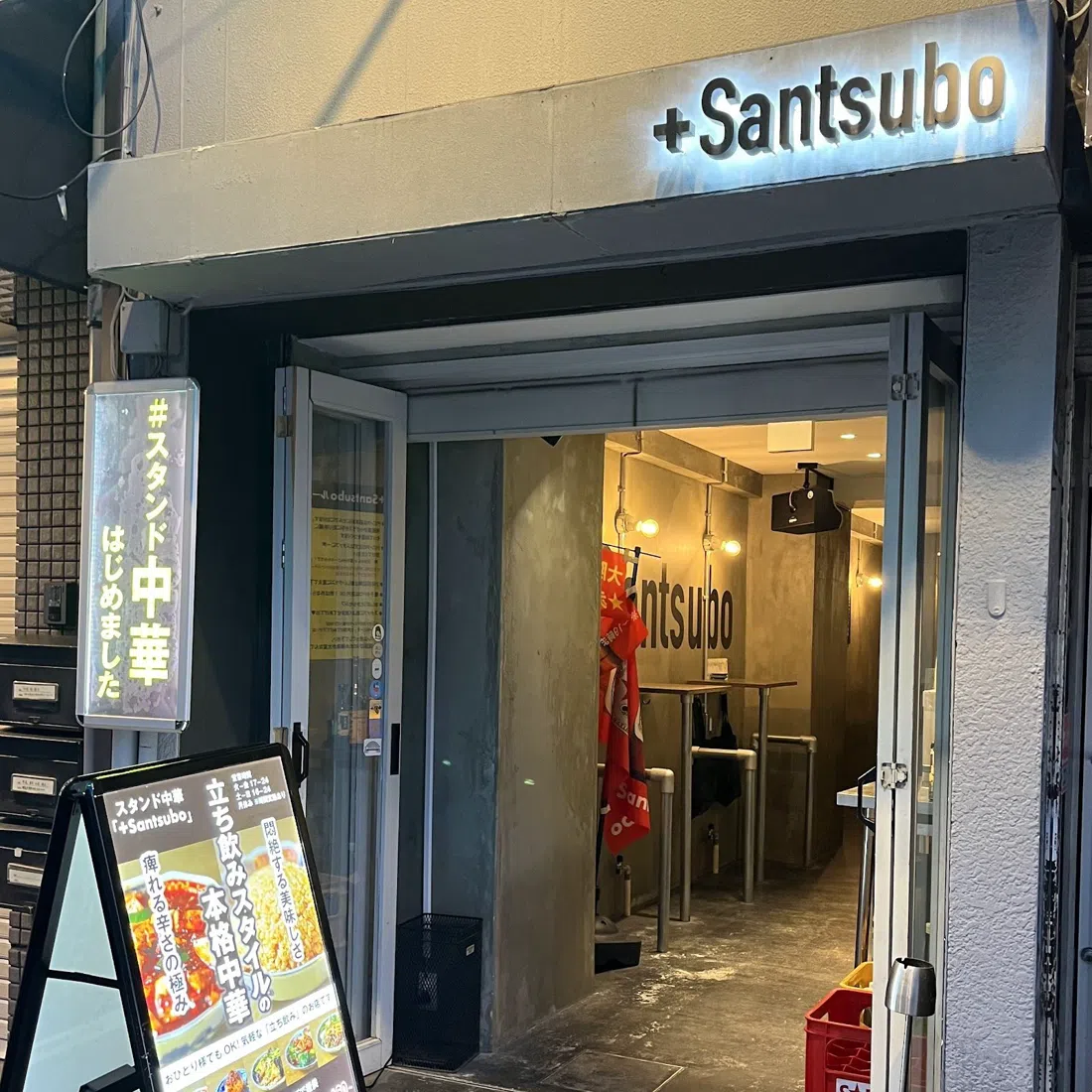
A few streets over, +Santsubo (十三坪), Kyobashi, breaks from the seafood-and-yakitori pattern with a Chinese-Osakan menu — spicy mapo tofu, fried rice — without leaving the standing-bar format behind. It has stools as well as standing space, which makes it workable for small groups of three to four rather than strictly pairs. The happy-hour window (17:00-19:00) is worth timing a visit around: big beers run just ¥310 in that stretch, and most dishes stay under ¥700 regardless of when you turn up.
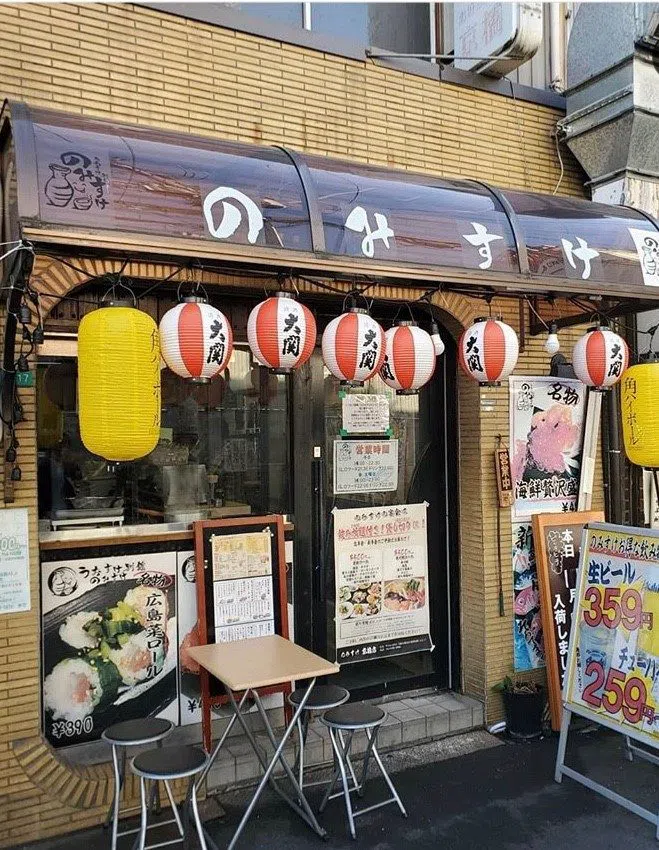
魚介別館のみすけ (Nomisuke), Kyobashi, is small enough that it's genuinely best kept to two to four people — go beyond that and the counter gets cramped fast. Expect to spend ¥1,000-3,000 per person on seafood plates. Its real value is timing: last order runs until 23:30, later than most of the crawl, which makes it the natural place to land once the bigger izakaya start clearing out and you still want one more round somewhere that isn't a convenience store.
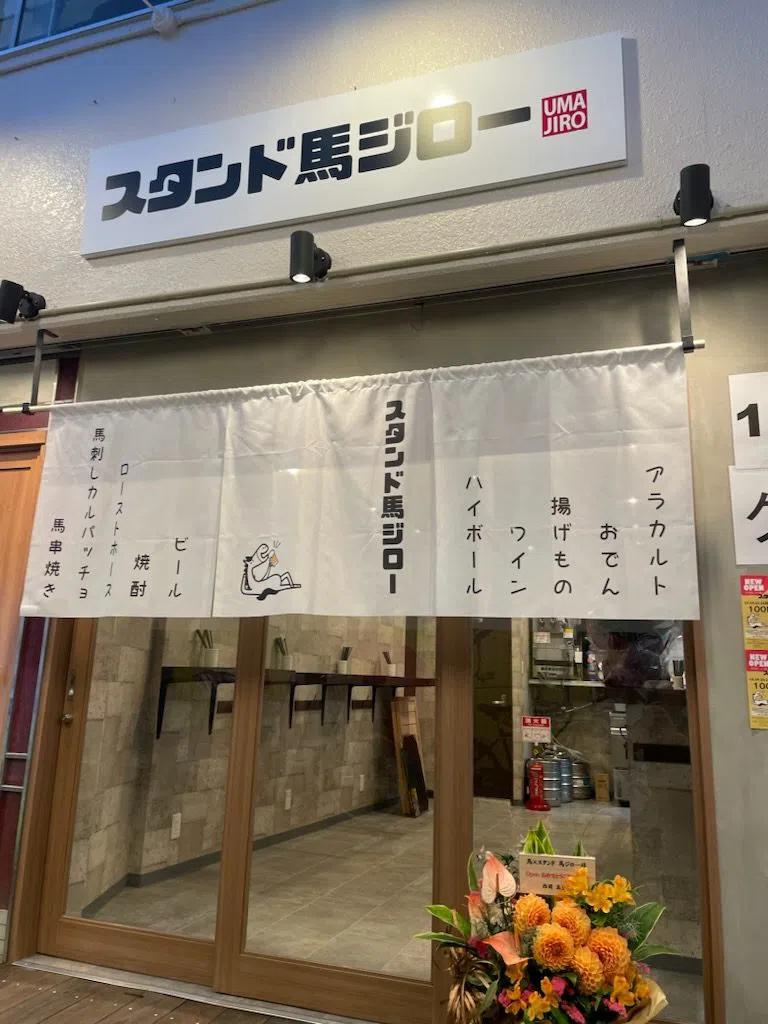
For something you won't find outside Osaka, 馬刺しと馬串焼き スタンド馬ジロー京橋店 (Stand Umajiro Kyobashi), Kyobashi, serves horse — raw as basashi, grilled on skewers — at a standing bar comfortable for small groups of two to four. Most glasses and skewers come in under ¥500, so it's an inexpensive detour for readers who've already worked through the standard Osaka rotation of yakitori and kushikatsu and want the one specialty most guidebooks skip entirely.
Planning the Crawl
None of these venues take large-party reservations except Manmaru, so the realistic way to run a Tenma-to-Kyobashi night is to treat it as a crawl rather than a booking. Start early at Chu-Toro to Butaashi or Jizakana Yatai Tottsuan while Tenma is still filling up, ride the one-stop Loop Line hop down to Kyobashi, orient yourselves at S6 Yokocho if it's a weekday and the weather's against you, then peel off into whichever standing bar has room — Umajiro or +Santsubo if you're still four or fewer, Nomisuke if it's getting late and you want one more plate. Groups of eight or more should just book Manmaru outright rather than gamble on splitting across standing counters that were never built to hold them.
Door policy across this list is really a size question, not an attitude one: nobody's turning away a well-behaved group, but a six-top trying to squeeze into a four-person counter at Toyo or luv wine is going to have a bad night regardless of how welcoming the staff are. Match your group size to the venue before you match your mood to the menu.
If you're building a longer stay around this side of the city rather than basing yourself near Dotonbori, it's worth checking Osaka hotel search for something within a few stops of the Loop Line — Tenma and Kyobashi both sit on it, which keeps the whole night within a 15-minute train ride in either direction. For more on getting around and what else the city covers beyond this crawl, the full Osaka guide has the rest.
The Practical Bit
Getting there. Temma Station and Kyobashi Station are both stops on the JR Osaka Loop Line, one stop apart — Kyobashi also connects to the Keihan Main Line and Osaka Metro's Tanimachi Line, so it's easy to reach from most of the city and easy to leave from late, since it's a major interchange rather than a single-line stop.
Cash. Several of these — Toyo explicitly, and standing bars generally — are cash-only or cash-preferred. Carry ¥5,000-10,000 in small notes; card machines are not a given at a counter built for a five-minute turnaround between customers.
Timing. Tenma's standing bars start filling from around 6-7pm with the after-work crowd and stay busy well past midnight; Chu-Toro to Butaashi's near-24-hour hours make it the fallback whenever the rest of the crawl runs dry. Kyobashi S6 Yokocho keeps more conventional hours and shuts on Sundays and holidays — plan around that if your trip only overlaps a Sunday night.
Budget. This is a low-cost crawl by design: most standing-bar drinks and small plates fall between ¥100 and ¥800, and even a proper sit-down dinner for two at Manmaru lands around ¥6,930. Budget ¥3,000-5,000 per person for a multi-stop night across three or four venues, cash in hand.
Groups. Manmaru (122 seats) and S6 Yokocho are the only two built to absorb genuinely large parties without a fight for space. Everything else on this list — Toyo, Nomisuke, Umajiro, +Santsubo, luv wine — tops out comfortably around four people; take a bigger group to those and expect to split up or wait outside.