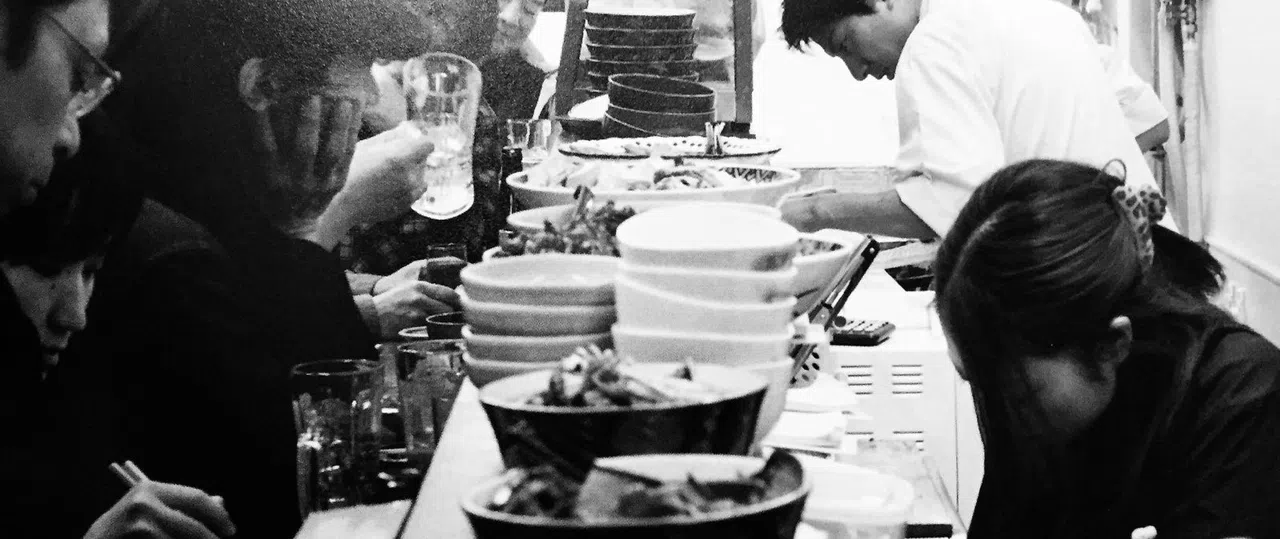

Osaka's best drinking rooms have no chairs in them. You step in off the pavement, claim a strip of counter wide enough for two glasses and a small plate, and the whole visit (beer, something hot, the bill) can be over in twenty minutes if that is all you want. Tachinomi here is ordinary rather than fashionable. It is the shape drinking took in a city where floor space was expensive and shifts ran late, and it still runs on exactly that logic.
How a standing bar works
The mechanics are simple enough that a language gap rarely matters. You find a gap at the counter, catch the eye of whoever is pouring, and order a drink first: draft beer, a highball, shochu with cold or hot water, sake by the glass. Food is usually written up on paper strips on the wall or chalked on a board rather than printed in a menu, and pointing at whatever the person beside you is eating is a completely normal way to order. Some rooms run a tab and settle at the end; some want paying round by round. You will know which kind you are in within ninety seconds.
What separates this from sitting down is the clock. Standing is the mechanism, not a hardship the room is working around. It keeps turnover high, it keeps prices low, and it makes it socially effortless to have one drink and leave, which is why Osakans treat these counters as stations rather than destinations. Forty minutes is a full visit. Two hours parked in one tachinomi, holding a metre of counter at 20:00 on a Friday, is the one behaviour that will actually mark you out.
The format has real limits. There are no seats, and you should assume none; a stool at the end of a counter is luck rather than a plan, so if standing for an hour is uncomfortable for you or someone in your party, this is not the way to drink in Osaka. Expect noise, elbows and a certain amount of shouting over a fryer. Expect to be close enough to strangers that eye contact happens whether you intended it or not, and that proximity is most of the appeal.
The city has hundreds of these rooms, and plenty of them are the backstreet one-offs of the fantasy. The four below are the ones I can stand behind as currently open and worth planning around, and between them they cover the full spread of what tachinomi now means in Osaka: ¥250 shochu poured for construction crews at midday at one end, allocation-only sake drunk standing up at the other.
The cheapest counter in Kyobashi
Tachinomi Shomin (Kyobashi) is where to calibrate your sense of price, because it is close to comic: draft beer ¥350, shochu and sake from ¥250, and a food list where most plates sit between ¥200 and ¥500. Three drinks and a few dishes can land under ¥1,500 a head without anyone rationing.
It is a small regional chain rather than a one-off shop with a single owner behind the counter, so nobody should sell it to you as a secret find. It earns its place another way: the Kyobashi branch is the volume anchor of the whole area, and its prices forced the bars around it to cut theirs. If Kyobashi reads as cheap to you when you walk it, this room is part of the reason.
Logistics are strict. Cash only, 11:00 to 22:00, closed Mondays, no reservations ever. A group of four or five only works if you come in the dead zone between 11:00 and 14:00; arrive at 19:00 with four people and you will be standing in three different parts of the room, assuming you get in at all. Daytime drinking here is unremarkable, and a beer at 11:30 draws no comment from anyone, staff included. It is also the most useful holding position in Kyobashi: cheap, open early, and a sane place to spend forty minutes while a queue somewhere else in the area thins out.
Natural wine where you expected rough shochu
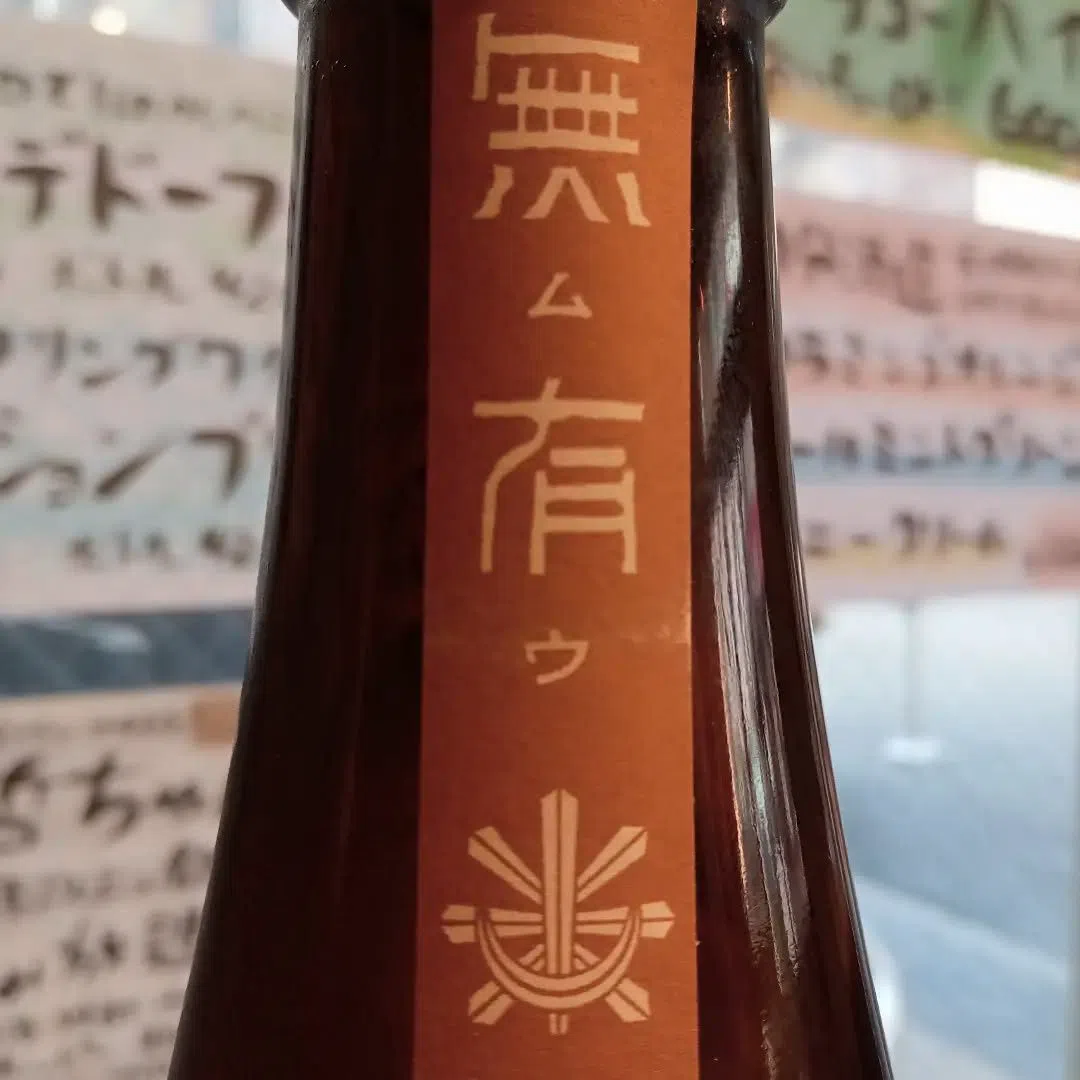
Tachinomi Tekken (near Namba) makes nonsense of the idea that standing up means cheap and rough. Run by Ono Cuisine Lab, it pours natural wine and allocation-only sake, bottles that normally arrive with a seated reservation and a service charge attached, to thirty people on their feet. It made Tabelog's hundred-best list for 2025. Budget ¥2,000 to ¥3,000 a head, which is fair value for what is in the glass.
Thirty standing spots and no reservations makes the group maths tight. Two or three is easy. Four is comfortable if you accept being a line along the counter rather than a circle. Above four you are relying on luck and on arriving at opening. This is the couples' pick of the list, and the one to send anyone who actually reads a wine list rather than ordering the first thing in the local idiom.
The hours are the part to circle. It opens at 17:00 on weekdays but 12:00 on Saturday and Sunday, and closes Mondays. A good glass of something genuinely interesting, drunk standing, on a Saturday at 13:00 within walking distance of Namba, is a scarce thing, because most of the city's serious drinking does not start until the evening.
The one to pick if there are six of you
Stand Tiger Lily (central Osaka) answers the question groups actually ask. Forty-seven places across the counter and standing tables make it the only room here that can absorb five or six people without splitting them across the floor, and it is another Tabelog hundred-best entry for 2025 rather than a compromise you make for the sake of capacity.
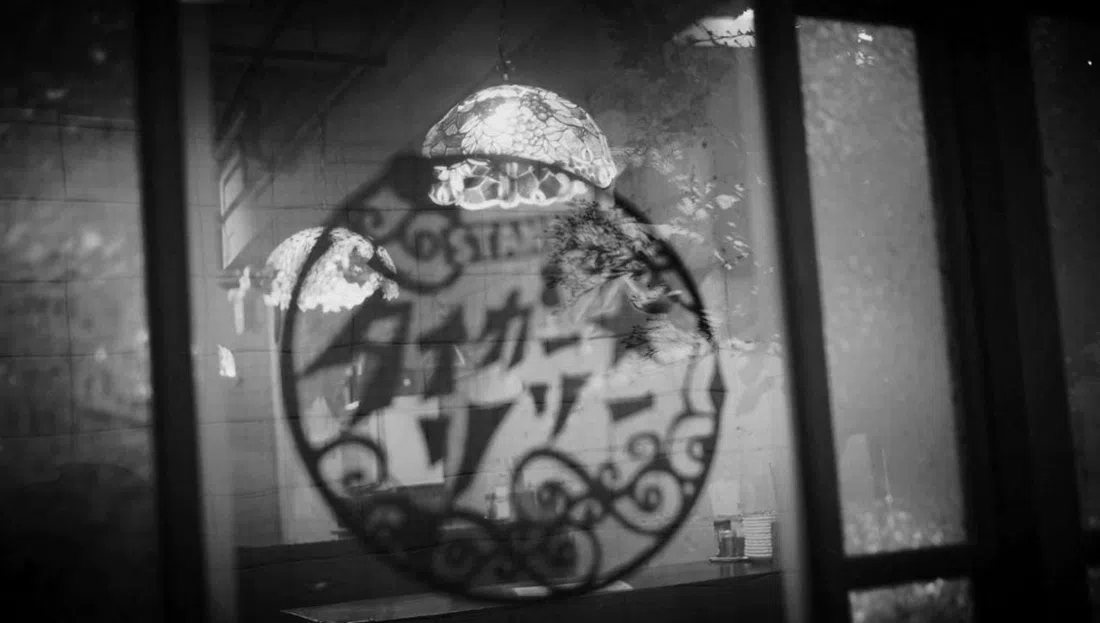
The cooking is teppan-led and more considered than the format suggests: tonpeiyaki, beef tongue tataki, chicken liver sashimi dressed in tamari and ginger, and a thick mini okonomiyaki strung through with three cheeses. Drinks follow the same instinct, and the cardamom-spiked highball is the one to order first. Most dishes come in under ¥1,000 and a full visit runs ¥2,000 to ¥3,000 a head.
Hours are generous by standing-bar standards: 15:00 to 23:00 on weekdays, 13:00 to 23:00 at weekends. If someone has one evening in Osaka and five friends in tow, this is where I send them, and the weekend 13:00 open makes it a workable first stop on a day of walking rather than a night-only option.
Twenty-five taps in Soemoncho
The name is where visitors lose an evening. The original Stand Umineko closed on 9 July 2026, and any listing, blog post or saved pin older than that will walk you to a shut door. The replacement is Stand Umineko 3tR (Soemoncho), the suffix pronounced mittera after the street, and it opened nearby as Derailleur Brew Works' first new Osaka bar in eight years.

Inside there is a big open standing floor and twenty-five taps of Japanese craft beer, including the brewery's own Nishinari Riot Ale, plus pork buns made with spent grain from their own brewing. No reservations, ¥2,000 to ¥3,000 a head, Monday to Friday 17:00 to 23:00 and 15:00 to 23:00 at weekends. The brewery is run as a social enterprise employing people in recovery. That is why the business exists, and it is worth knowing while you are drinking there.
Alongside Tiger Lily, this is the group-capable room: the floor plan is open enough that six people can actually stand together and hear each other, and twenty-five taps means nobody is stuck with a beer they did not want. It is also the best of the four for a slow second hour, if you are going to break the forty-minute convention anywhere.
Which room suits whom
For two people who care what is in the glass, Tekken, and go at opening. For a group of five to eight, Tiger Lily first and 3tR second, in that order, because Tiger Lily's food does more of the work early. For drinking cheaply, eating fast and being somewhere entirely unperformed, Shomin at midday. For beer specifically, there is no contest: 3tR.
None of them has a door policy in the way a cocktail bar does. There is no dress code, no list and no one assessing you on the way in. The only scarce resource is floor space, which is what the etiquette is really about: if a room looks full, it is full, and the move is to come back in forty minutes rather than to compress yourself into a gap. Do not send one person ahead to hold a metre of counter for four more who are still walking over. Standing bars work because the room clears steadily, and a party that arrives in pieces over twenty minutes blocks two spaces for the price of one.
None of the four takes bookings, which has a planning consequence worth absorbing: any evening that depends on a specific room at a specific hour is an evening that can fail at the door. Always have a second address, ideally within a few minutes' walk.
Stitching a night together
Monday is the trap. Shomin and Tekken are both closed, which leaves Tiger Lily from 15:00 and 3tR from 17:00, still a decent pair, but do not build a Monday around the other two.
The strongest run is a weekend afternoon: Tekken at 12:00 when the good bottles are still open and the room is quiet, Tiger Lily at 13:00 for the teppan, 3tR from 15:00 for beer. That is three excellent bars finished before most of Osaka's drinking has started, which also means you can eat a proper dinner afterwards rather than instead.
On a weekday, the sequence inverts: Tiger Lily from 15:00, Tekken from 17:00, 3tR to close. Shomin is the geographic outlier, because Kyobashi is a separate trip from the Namba and Soemoncho pair, so treat it as a daytime stop on a loop-line day rather than something to bolt onto an evening in the south of the city.
If you want to walk back to your room rather than catch a late train, base yourself around Namba or Shinsaibashi. That puts three of the four inside fifteen minutes on foot, and it is the sensible place to begin an Osaka hotel search. For how the rest of the city's districts and eating fit around a night like this, our Osaka guide covers the wider ground.
Practical notes
Kyobashi is a straightforward interchange on the loop-line network and signed in English, so Shomin needs no navigation beyond the station exit. Tekken, Tiger Lily and 3tR all sit in or near the central Minami drinking belt, which means subway to Namba or Shinsaibashi and then walking. The network winds down around midnight, so check your last train before committing to a third bar, and if you are relying on trains, build the evening from 17:00 rather than 20:00.
Shomin is cash only, full stop. Assume the same at the others and you will never have an awkward moment at the counter; small standing bars are the last place in Japan where cards are reliably accepted. Bring ¥10,000 per person in ¥1,000 notes and coins for a three-bar night, and more small change than feels necessary.
The sweet spot almost everywhere is 17:00 to 18:30: rooms open, staff unhurried, space to put a glass down. The crush is 19:00 to 21:00, and that is when groups of more than three start failing at the door. Weekend afternoons are the quiet secret, with Tekken from 12:00, Tiger Lily from 13:00 and 3tR from 15:00.
A cheap, genuinely satisfying night at Shomin runs ¥1,500 to ¥2,000 a head. The other three sit at ¥2,000 to ¥3,000 each, so a three-bar evening across Tekken, Tiger Lily and 3tR comes to roughly ¥6,000 to ¥8,000 with food included. There is no cover charge culture to worry about at this kind of bar and no tipping, so pay what the slip says and go.
One rule: drink standing, eat something at every stop, and leave while you still want to stay.