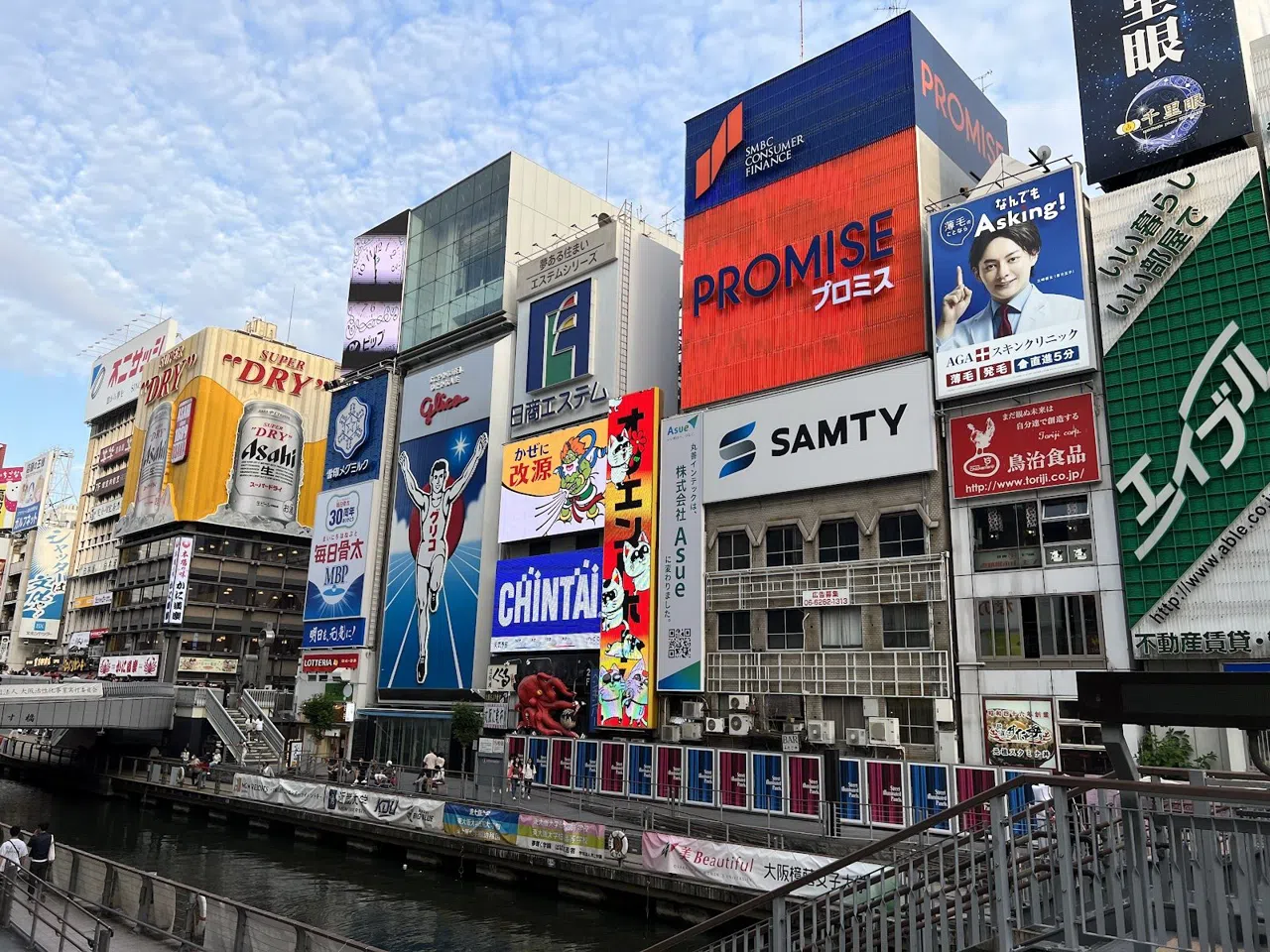

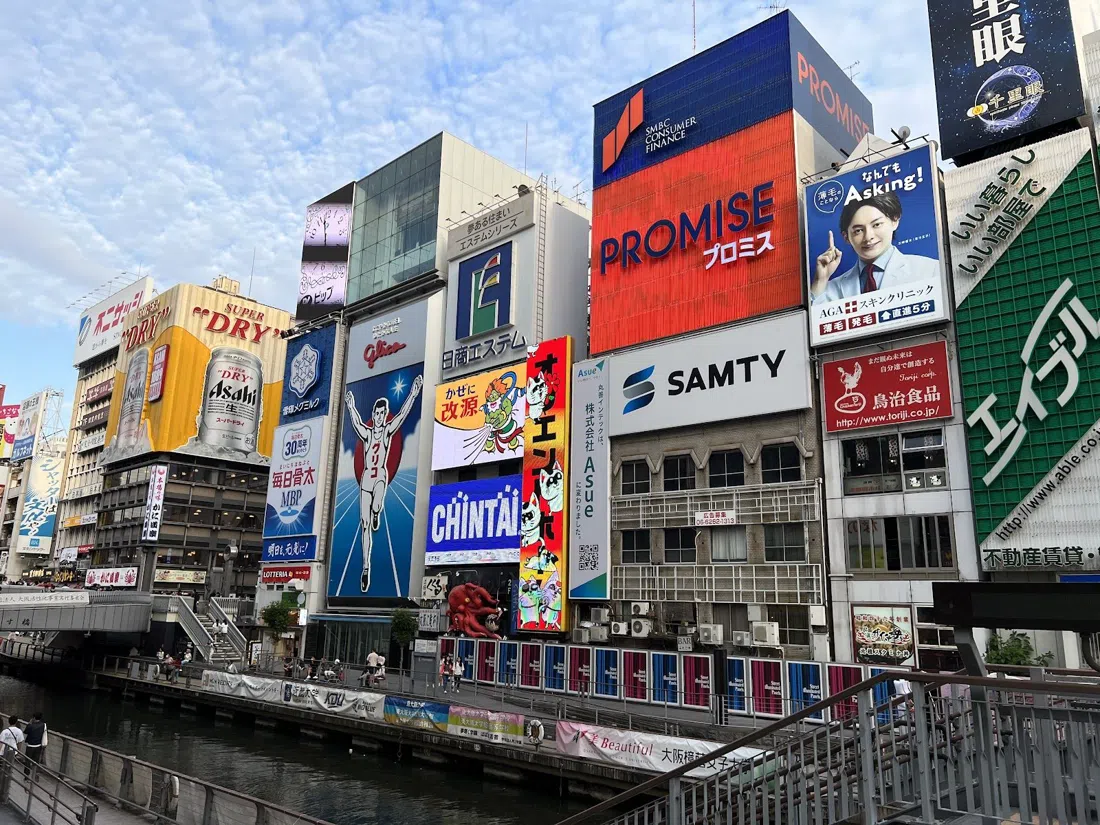
The Glico runner has crossed the same painted finish line above the Dotonbori canal through six generations of signage, and about half an hour after sunset the current LED version wakes up and the bridge beneath it becomes a slow jam of raised phones. Ninety seconds inland, down a stone-paved lane you could walk past twice in daylight, somebody ladles water over a moss-covered statue and nobody raises their voice. Minami holds both of those at once, which is why it works for a group of four or six and stops working for a group of ten.
What Minami actually covers
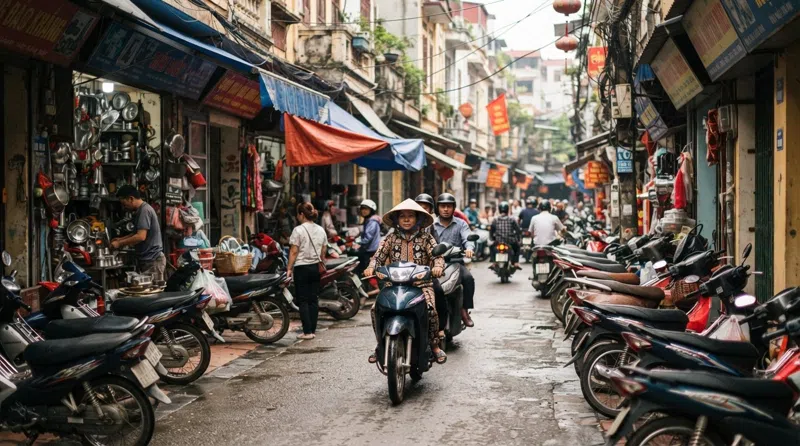
Minami means 'the south', and it is Osaka's southern downtown, the dense grid running from Shinsaibashi down through Dotonbori and Amerikamura to the Namba stations. End to end it is about a twenty-minute walk, which makes it deceptive. Everything looks close, but the streets change character every hundred metres: a covered arcade becomes a canal-side scrum, which becomes a backstreet of six-seat bars where your party size decides whether you get in at all.
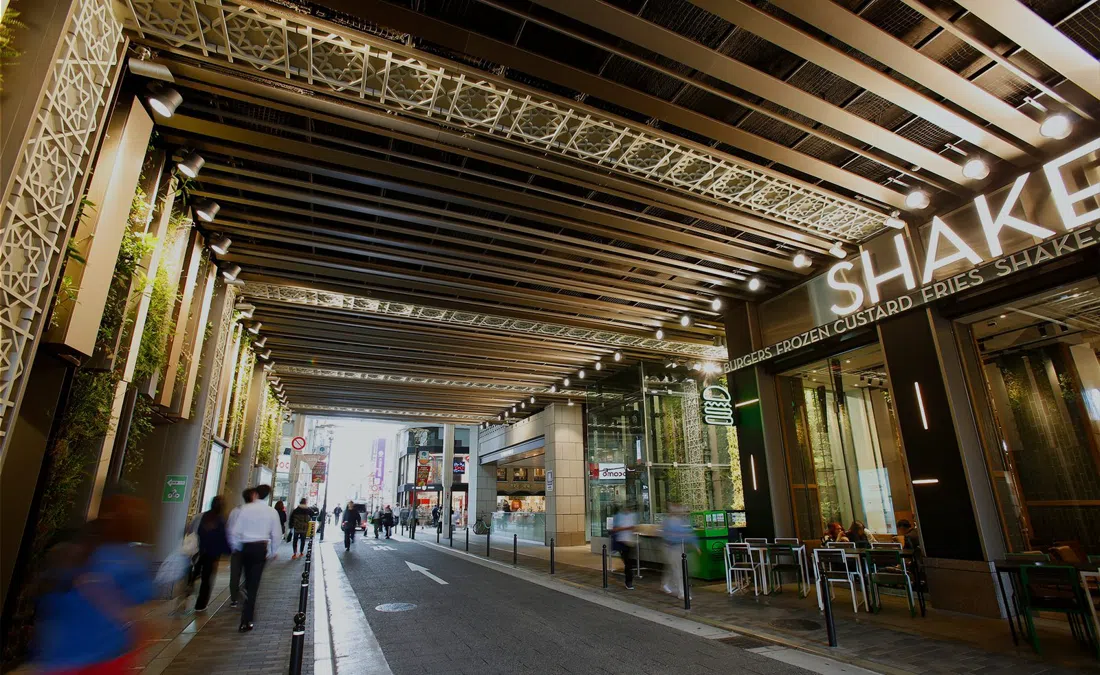
The spine of the whole thing is Shinsaibashi-suji Shopping Street (Shinsaibashi), a covered arcade of roughly 180 shops on a merchant street some 380 years old, open about 10:00 to 22:00. Residents use it for shopping. Visitors should use it as infrastructure, the weatherproof connector between Minami's two halves, which matters in June, when the rain here arrives hard rather than politely. For how this quarter sits against the rest of the city, the Osaka guide is the wider frame; this piece is about the six-hundred-odd metres where the noise lives.
The canal, the sign and the twenty minutes on the water
The Dotonbori Glico Sign (Ebisubashi Bridge) (Dotonbori) is free, permanently photographed and genuinely worth ten minutes. The sixth-generation sign has been LED since 2014 and lights from about thirty minutes after sunset until midnight. Between 19:00 and 21:00 the bridge is shoulder-to-shoulder, and a group of more than four standing on it becomes an obstruction rather than a group. The fix is one level down: shoot from the riverside walkway, where the sign reflects in the water and nobody is pushing past your elbow. Walking guides know this and tend to gather people on the north-bank promenade instead of on the bridge itself.
For twenty minutes on the water, the Tombori River Cruise (Dotonbori) is the best-value orientation in Minami: adults ¥2,000, students ¥1,000, children ¥500, departing every thirty minutes from Tazaemonbashi pier beside the big discount store, and running 11:00 to 21:00. Small open boats take groups readily, so this is one of the few things here that works as well for eight as for two. Web reservations close ten minutes before departure, the after-dark slots go first, and there are occasional annual suspension dates through the year. Book the specific slot rather than arriving and hoping.
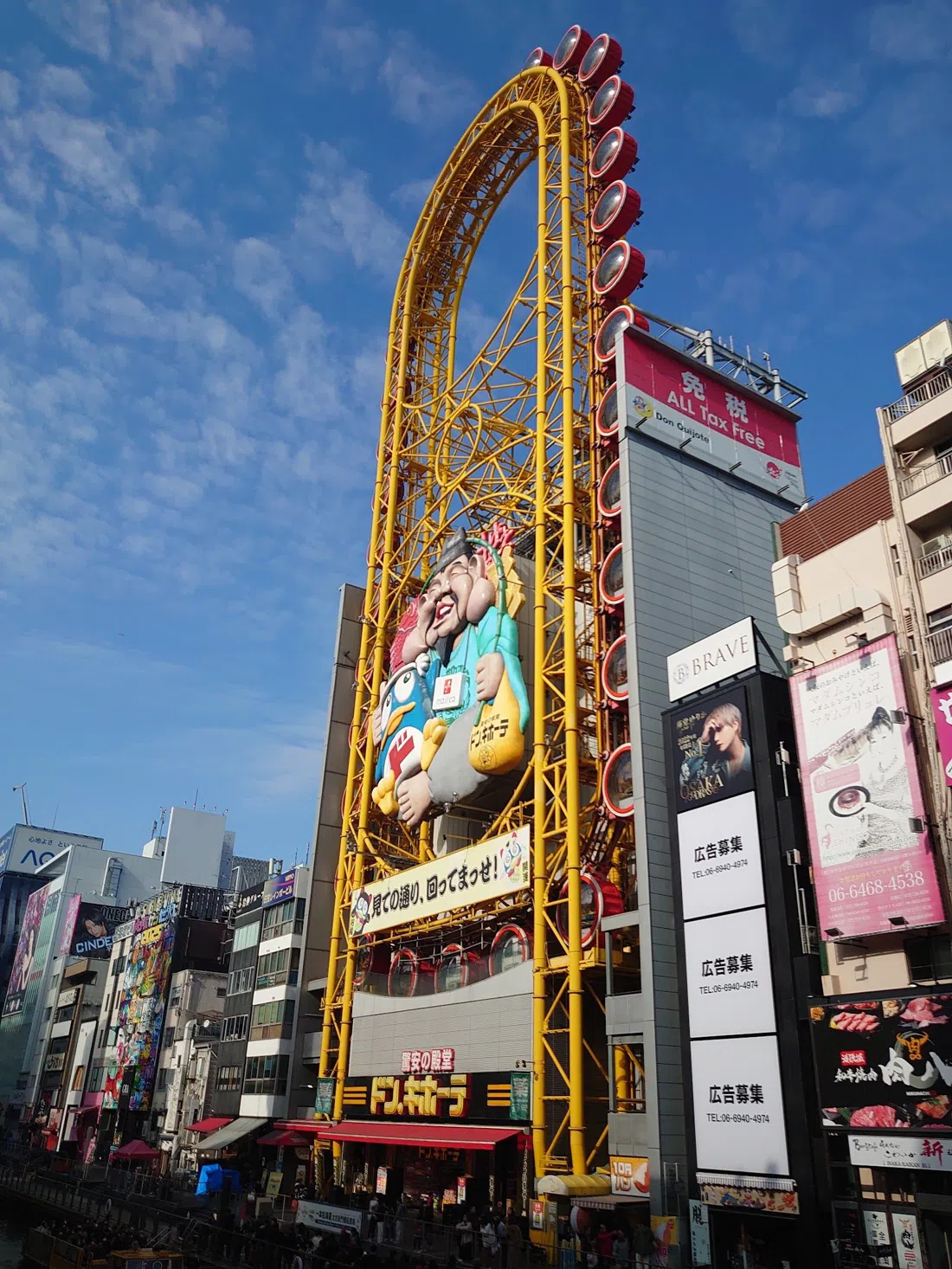
Above the same stretch, the Ebisu Tower Ferris Wheel (Don Quijote Dotonbori) (Dotonbori) is the cheapest neon view in the quarter at about ¥600 a head for a fifteen-minute turn. It is the world's first oval ferris wheel, it runs 11:00 to 22:00 and to 22:30 at weekends, and there is no advance booking, so you queue on the spot. Pods hold four, so a group of eight splits across two cabins and meets again on the stairs. Check the day first: maintenance takes it out of service from 13:00 on Tuesdays.
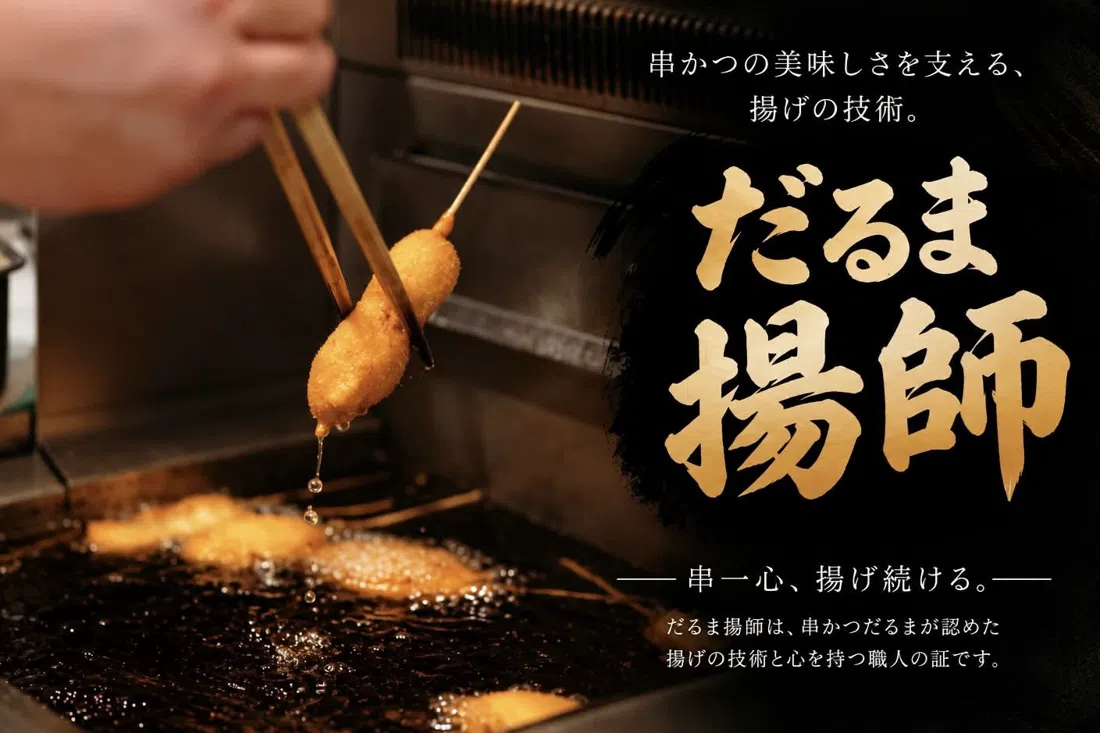
Eating in this half means queueing, not reserving. Kushikatsu Daruma Dotonbori (Dotonbori) sits ninety seconds from the sign and does the city's signature deep-fried skewers at ¥143 to ¥308 each, sets around ¥1,800, and roughly ¥1,500 a head at lunch or ¥2,500 at dinner. Counter and small tables mean two to six people, no more; expect to wait rather than book at this branch. The famous no-double-dipping commandment is more folklore than enforcement here these days, since the Dotonbori branch has moved to squeeze bottles and individual sauce cups.
A block inland, where the voices drop
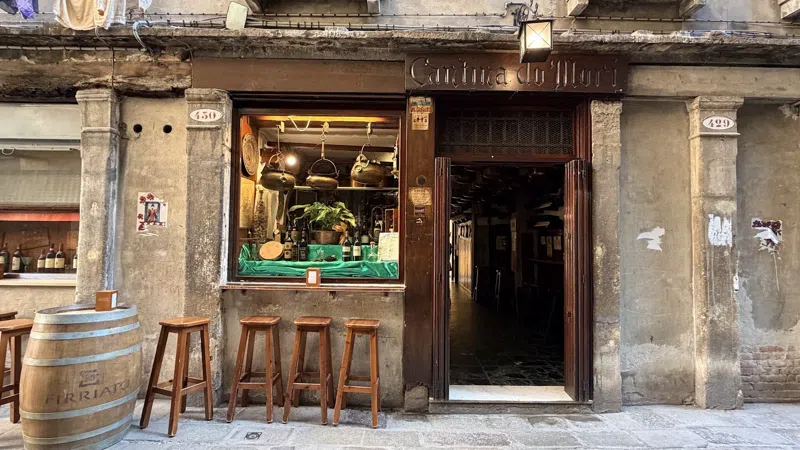
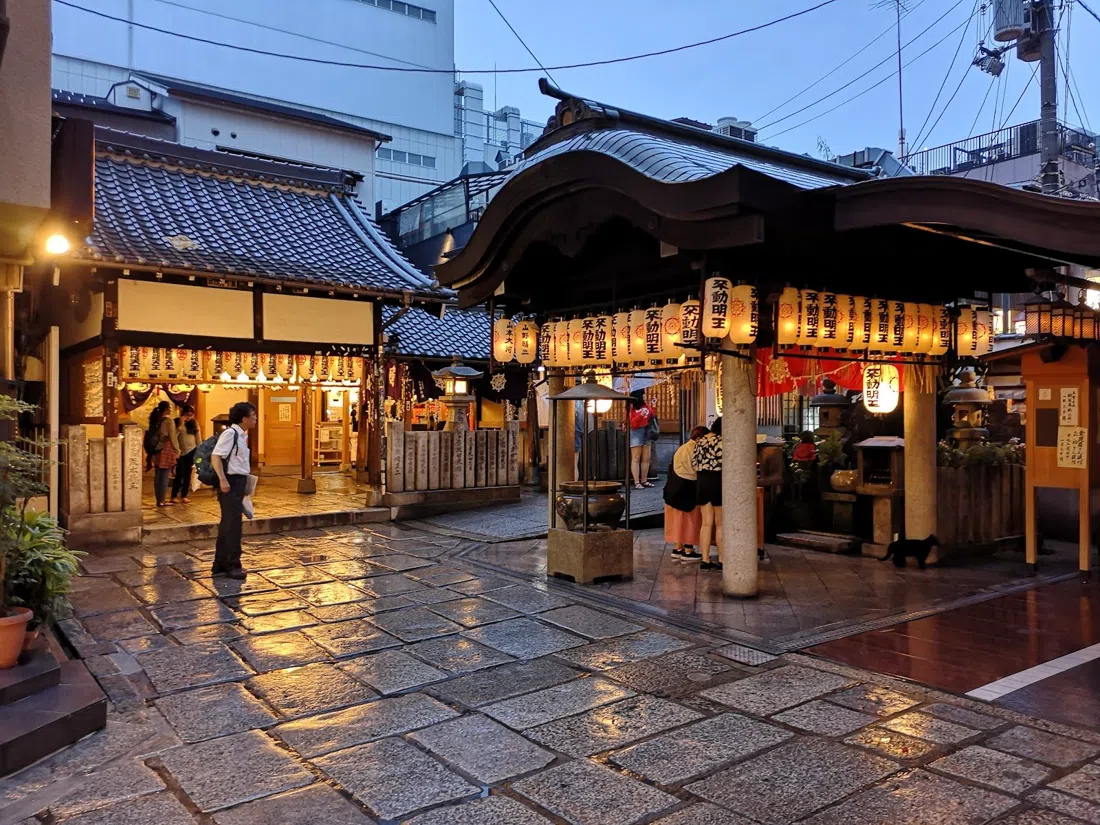
Hozenji Yokocho and Hozenji Temple (Mizukake Fudo) (Namba backstreets) is the counterweight, one block from the canal and a different century. The stone-paved alley is public and free to walk, and it is best after 19:00 when the lanterns are lit and the flagstones are wet. The sixty-odd bars and restaurants along it are tiny, so a party above four either splits or books ahead; meals run ¥2,000 to ¥8,000. Two unwritten rules carry real weight here: keep your voices down, and do not photograph people eating through open doorways. The alley works because it is quiet, and a loud group of eight is the thing that breaks it.
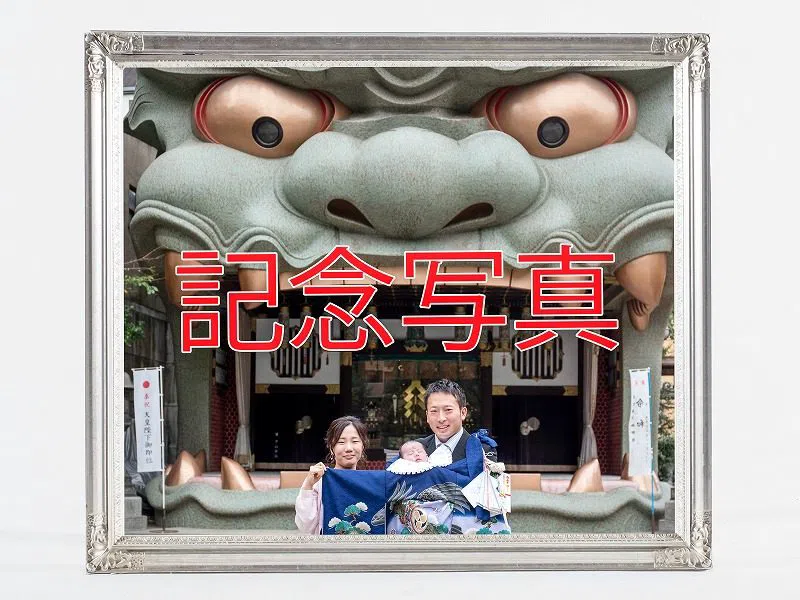
South-west of the Namba stations, five minutes on foot, Namba Yasaka Shrine (Namba) hides an enormous lion's-head stage in a small courtyard. It is free and open around the clock, which makes the timing question a crowd question rather than an opening-hours one: come before 09:00 or after 17:00 and a group of four to eight can photograph the lion without forming a scrum in front of it. People come here to pray, not to pose. Stand aside when they do.
The backstreet bars where group size is the door policy
If you only do one thing after dark in Minami that is not on a postcard, make it the Misono Building (Ura-Namba) (Sennichimae backstreets), a scuffed retro block of individual bars stacked around a stairwell, each seating six to eight people. Cover charges run ¥500 to ¥1,000 per bar plus drinks at ¥600 to ¥1,000, and the right way to use it is a two- or three-bar hop rather than settling in. The arithmetic is unforgiving: a group of eight will not fit in one room, and some masters prefer regulars. A guide or a Japanese speaker smooths that door considerably, and there is no shame in using one. A guided small-group option exists for precisely this, runs seven days a week and starts from 72 USD per person. Across the bookable experiences in this quarter there are 4,665 traveller reviews, with the top-rated one at 5.0 out of 5 from 3,177 reviews, which tells you the format works. It still will not make a party of ten welcome in a six-seat bar.
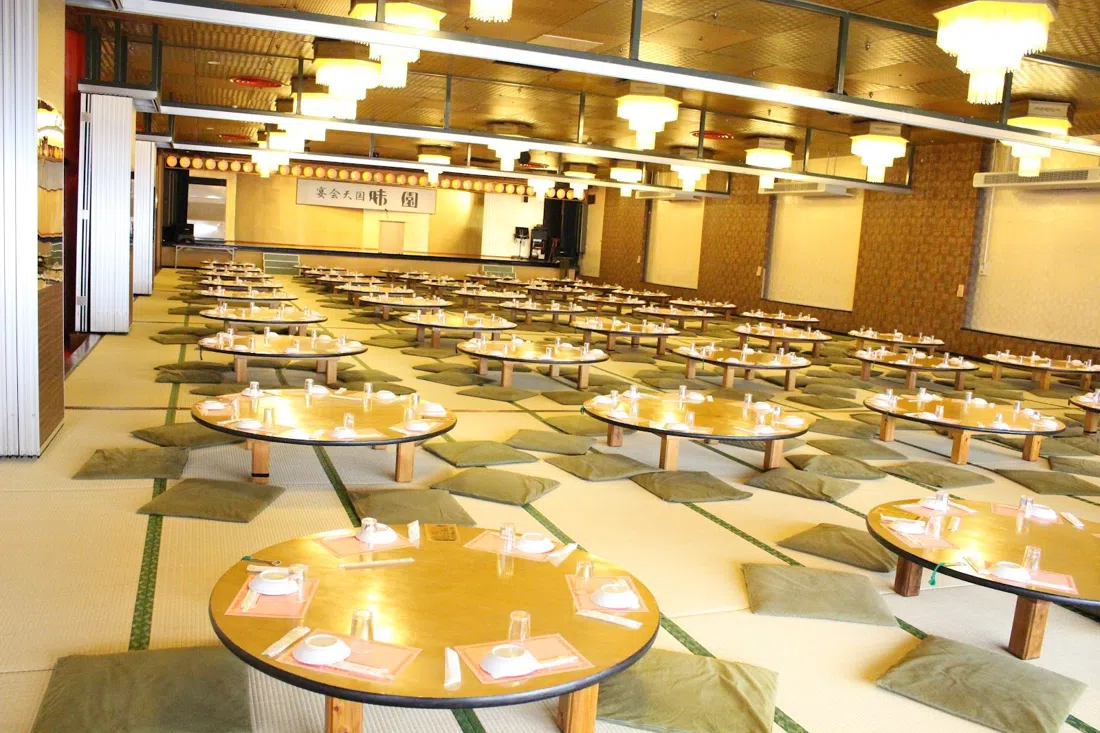
Mornings belong to the market and the knife shops
Kuromon Ichiba Market (Nipponbashi) is a morning stop or a mistake. Most of its 150-odd stalls open around 09:00 and wind down between 17:00 and 18:00, and the aisle narrows badly by midday, which is why guides keep groups to six or fewer and use the standing counters at the stall fronts. Snacks run ¥500 to ¥3,000 and cash is preferred. The house rule matters more than the prices: eat at the stall, never while walking. Go before 10:00 and it is a market. Go at 13:00 and it is a corridor.
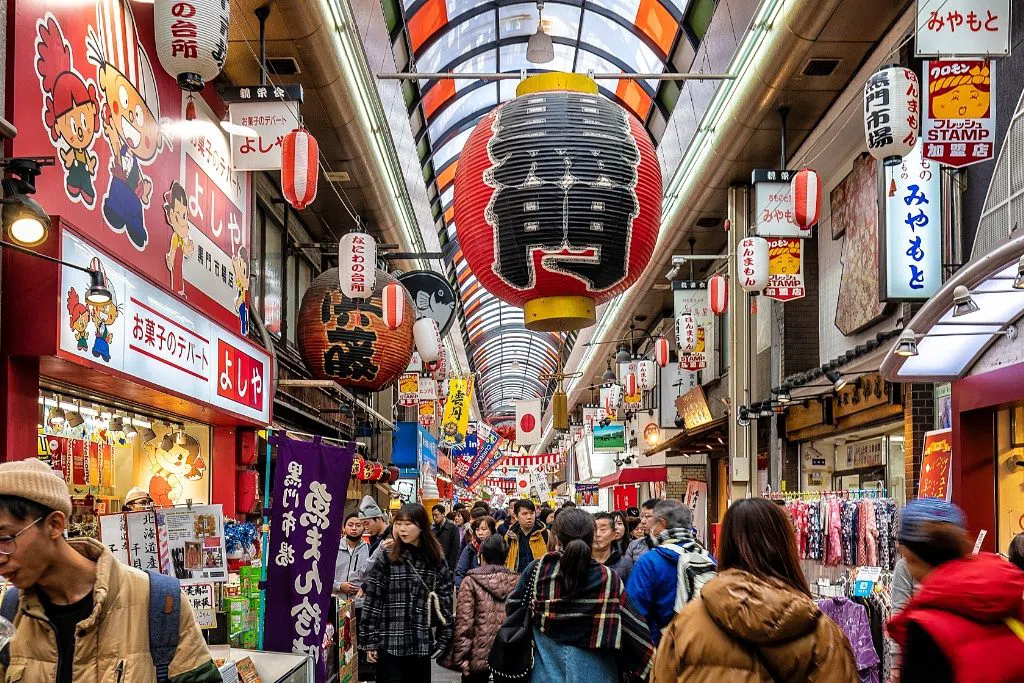
Three minutes from Namba station, Sennichimae Doguyasuji Shopping Street (Sennichimae) is where the city's chefs buy their kit, an arcade of specialist shops running roughly 10:00 to 18:00, with knives from ¥3,000 to well past ¥30,000. Groups of four to six browse comfortably; more than that and you block the aisle in shops the width of a hallway. Because of those hours this is a morning or early-afternoon stop, not an evening one, and it pairs naturally with the market a few minutes away.
Three honest escapes from the crush
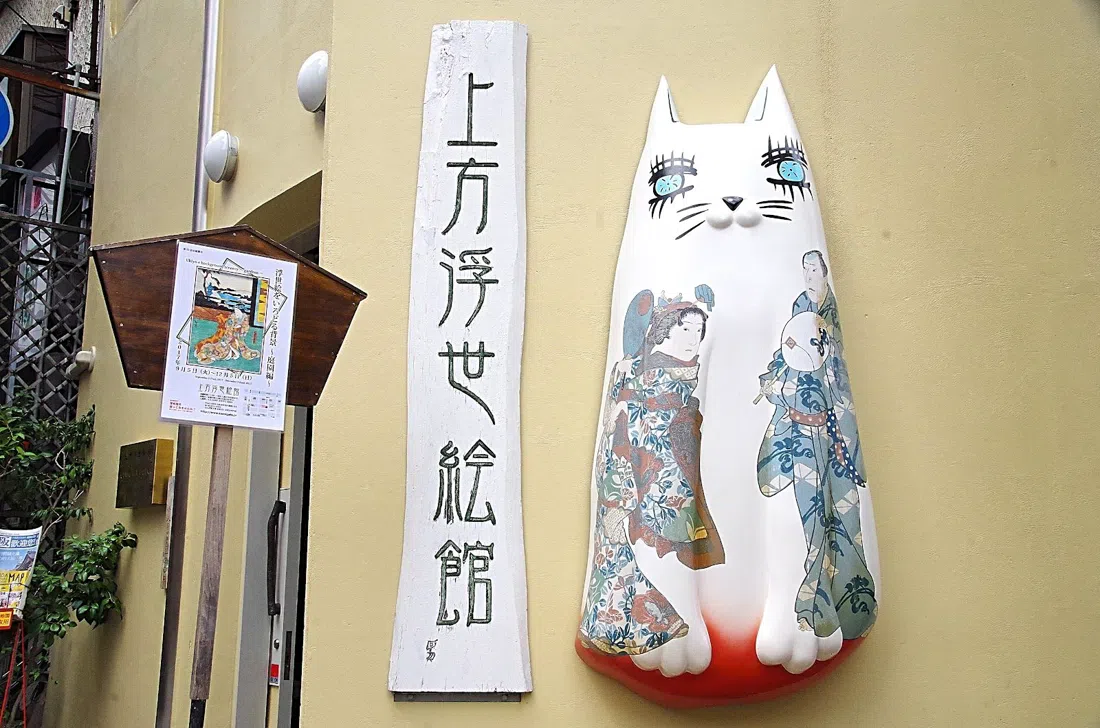
The Kamigata Ukiyoe Museum (Dotonbori) is the only museum in the world devoted to Kamigata actor prints, showing about thirty works at a time, rotating quarterly, in a small building with steep stairs. Entry is ¥700 for adults, ¥500 for high-school students and ¥300 for children, and it opens 11:00 to 18:00 with last entry at 17:30, closed Mondays. Six people fit without awkwardness; larger parties should phone ahead. Forty-five minutes here resets your tolerance for the canal entirely.
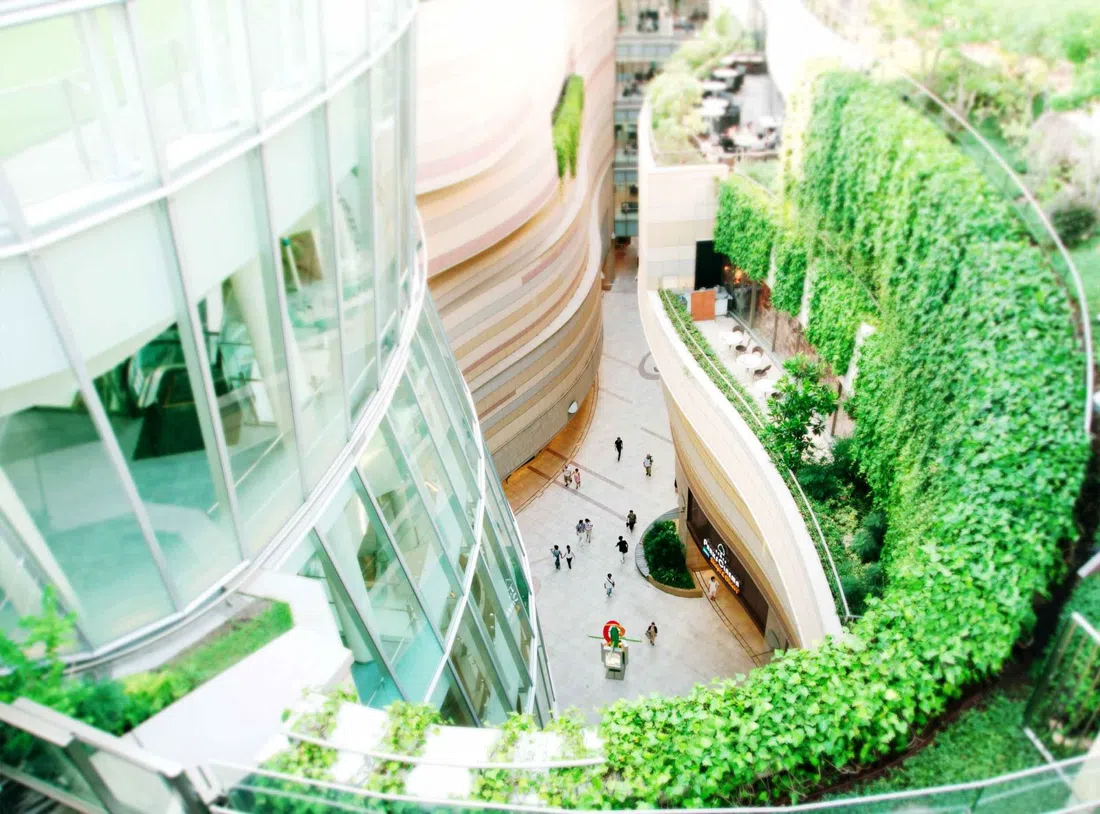
Namba Parks Garden (Namba) is free, open 10:00 to midnight, illuminated after sunset and built in terraces directly above Nankai Namba station. There is no restriction and plenty of room for a group to spread out, which makes it the obvious regroup point between the market and the neon.
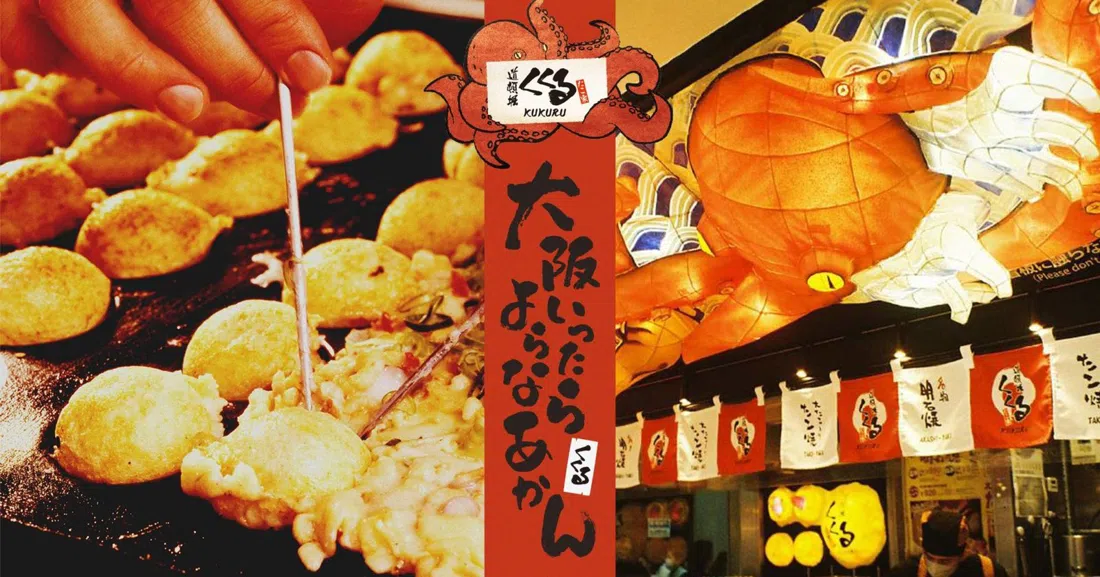
The Dotonbori Kukuru Konamon Museum (Dotonbori) is the one place in Minami where you cook the local dish rather than queue for it. Entry is free, takoyaki starts around ¥600, and making a wax food sample costs ¥2,000. It runs 11:00 to 22:00, from 10:00 at weekends, with sample-making sessions stopping around 19:15. Counter-style lessons suit four to eight, and walk-ins are usually fine outside peak weekend hours.
Amerikamura and the go-kart convoy
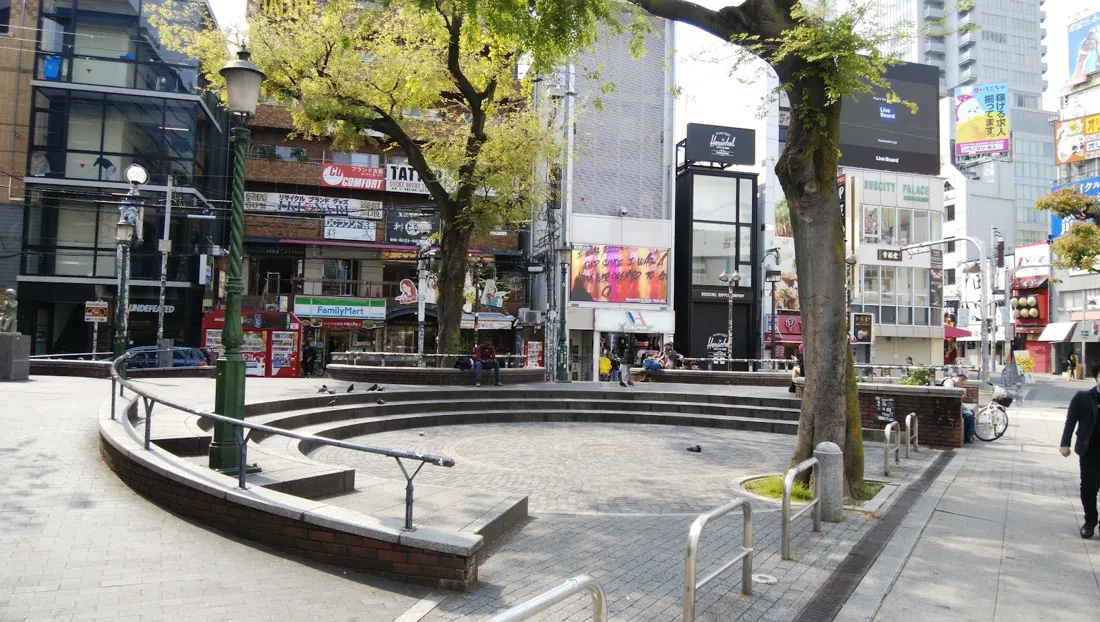
Mitsu Park (Triangle Park), Amerikamura (Amerikamura) is Osaka's youth-culture core and the standard meeting point for small-group walks through the area: an open square, no policy, no charge, and the best free people-watching in Minami. It is liveliest from late afternoon into evening and frankly grubby and dead before noon.
Street Kart Osaka (Minami-Horie) sends karts out as a guided convoy with a lead guide for every pack, looping Amerikamura, Shinsaibashi, Dotonbori and Namba in about an hour, at roughly ¥7,000 to ¥12,000 a driver depending on the slot. You must bring a Japanese licence or a 1949-Convention International Driving Permit, and some nationalities also need an official Japanese translation. Without the permit you do not drive, and it cannot be fixed on the day. Sort the paperwork at home, not at the counter.

Two hours of manzai at the Grand Kagetsu
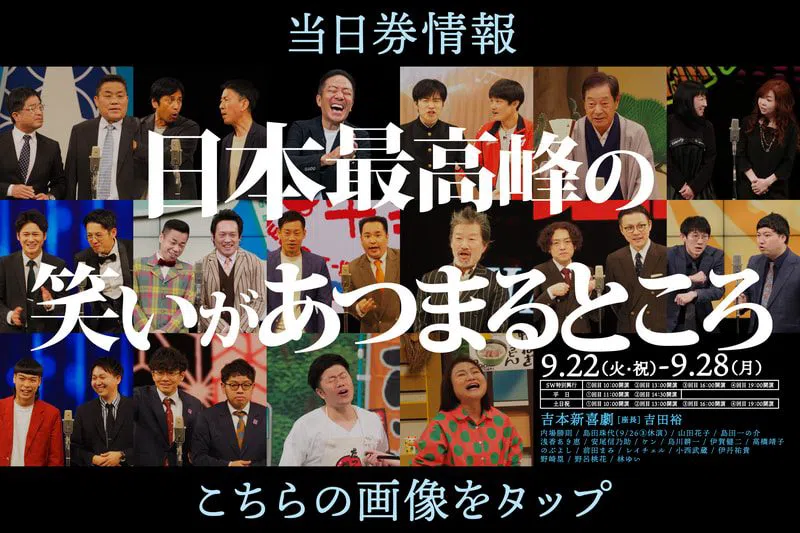
Namba Grand Kagetsu (NGK) (Namba) is the home of Osaka's manzai double-act comedy, with seats at ¥5,000 on the first floor and ¥4,500 on the second. Shows run at 11:00 and 14:30 on weekdays and three times a day at weekends, lasting two to two and a half hours. English subtitles are irregular, so go in expecting to miss most of the wordplay. The shinkigeki slapstick finale lands without a word of Japanese. Buying a block of seats for a group is straightforward, and day-of box-office seats are easiest for weekday morning shows.
Booking ahead against walking up
Four things here reward booking: the river cruise slot, where the web reservation closes ten minutes before departure; a block of theatre seats; the karts, because of the licence check; and a museum visit for more than six people, which needs a phone call. Almost everything else in Minami is walk-up by design. The ferris wheel queues on the spot, the skewer counters queue rather than reserve, and the sign, the alley, the shrine, the square and the rooftop garden cost nothing and never need a ticket. A guided small-group walk buys you two specific things: the backstreet doors where a stranger's word helps, and a route that avoids the bridge at 20:00. It does not buy you access to anything that is otherwise closed.
Is it worth it
Yes, with a condition attached to the group size. Minami at night is one of the most concentrated pieces of urban theatre in Japan, and doing it at four to six people means you can be in a six-seat bar at 21:30 instead of standing outside it. Couples get the widest run of the place, because the alley, the counters and the bar block all work best at two. Groups of eight or more should plan to split deliberately rather than discover the limit at a door: two cabins on the wheel, two bars in the Misono Building, six through the market. Families do fine on the daytime half, where the market, the cooking counters, the shrine and the rooftop garden all take children without fuss. People who dislike crowds should treat 19:00 to 21:00 on the bridge as a scheduled event to be avoided, not a queue to be endured.
Best time to go
The quarter has two distinct shifts. Before 10:00 it belongs to the market and the knife shops, uncrowded and functional. From late afternoon the balance tips: Amerikamura wakes up, the sign comes on about thirty minutes after sunset, and the lanterns in Hozenji Yokocho earn their keep after 19:00. The narrow window from 19:00 to 21:00 is the one to plan around rather than through, because that is when the bridge jams and the after-dark cruise slots fill first.
By day of the week: Mondays lose the Kamigata Ukiyoe Museum entirely, Tuesday afternoons lose the ferris wheel from 13:00, and weekends add a third comedy show but make the Konamon Museum counters and the arcades notably busier. Weekday mornings are the easiest time for theatre seats at the box office. Season-wise, the arcades matter most in June, when heavy rain makes a covered spine the difference between a walk and a washout, and the evening river runs are most pleasant outside the deep humidity of high summer.
Practical notes
Transport is barely a question. Everything above sits inside a twenty-minute walk, and Namba is the anchor: Nankai, subway and JR lines converge there, and the Midosuji and Sennichimae subway lines drop you at either end of the quarter. You will walk far more than you ride, so wear the shoes accordingly.
Carry cash. Kuromon Ichiba prefers it, bar cover charges in the Misono Building are a cash transaction in practice, and the smaller counters are happier with notes than cards. Around ¥10,000 per person for a full day covers most of it.
A sensible day, in order: market before 10:00, knife shops or the print museum late morning, rooftop garden or a cooking counter mid-afternoon, the shrine before 17:00, the cruise or the wheel at dusk, skewers, then two bars in the backstreets. That is a full day at a human pace, not a sprint.
On budget, a day here without the karts or the theatre runs roughly ¥9,000 to ¥12,000 a head: ¥1,500 or so on market snacks, ¥2,000 for the cruise, ¥600 for the wheel, about ¥2,500 for dinner at the skewer counter, and ¥2,500 to ¥4,000 for two bars with cover charges. Add ¥7,000 or more for the karts and ¥4,500 to ¥5,000 for a theatre seat if you want them. Staying inside Minami saves you the last train question entirely. The Osaka hotel search covers the Shinsaibashi and Namba blocks, and a room within ten minutes of the canal is worth more here than an extra star rating twenty minutes out.