Osaka-numret
Tennoji and Abeno, Osaka's temple-and-tower district on foot
Within a few streets of Tennoji Station you can walk from Shitennoji's 593 AD pagoda to Japan's tallest building, then sit down at a Bib Gourmand takoyaki counter.

Av Inês CarvalhoOsaka one neighbourhood at a time
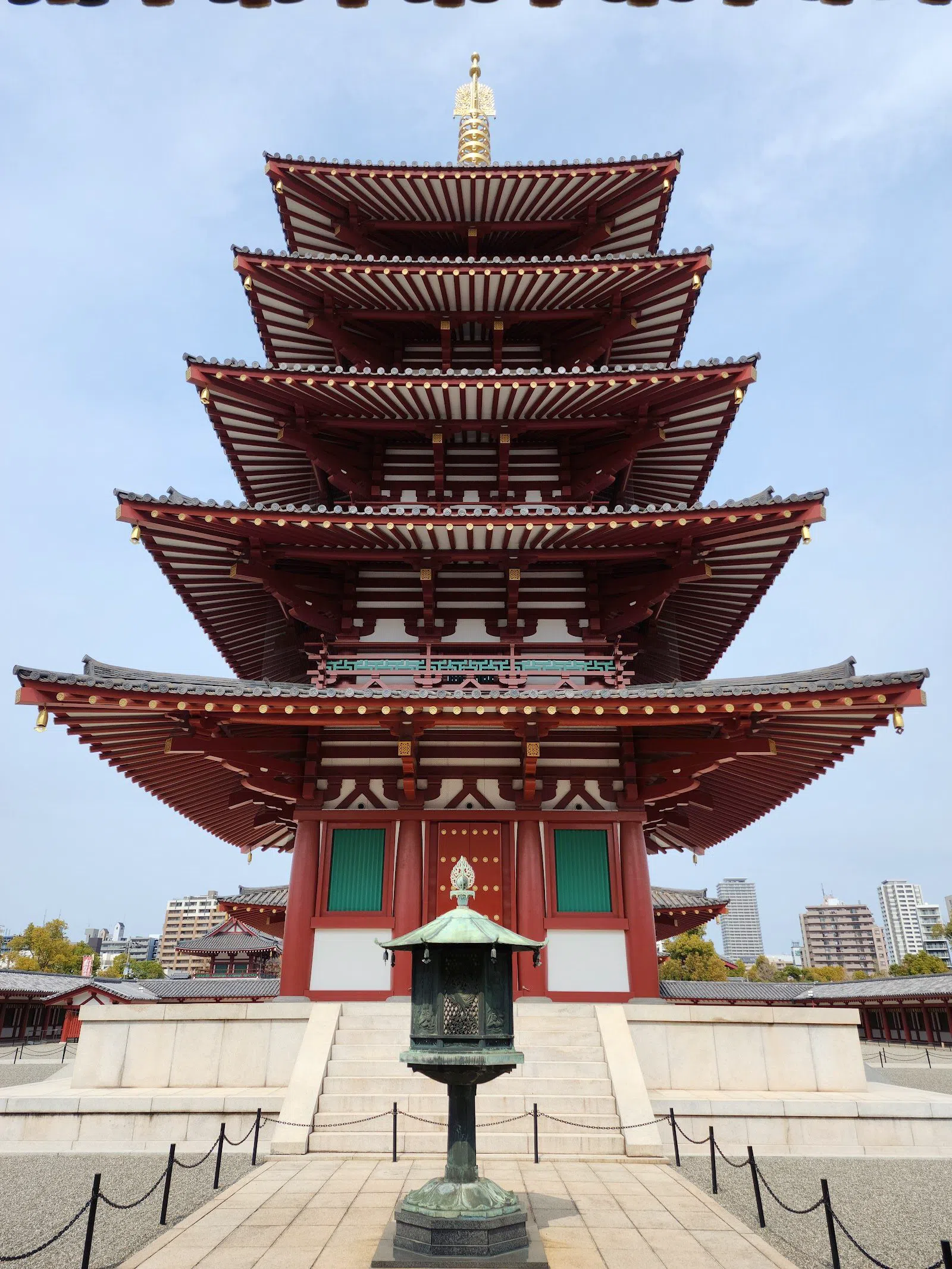
Shitennoji was founded in 593 AD as Japan's first state-built Buddhist temple, and its vermilion five-storey pagoda still stands in a walled courtyard with Abeno Harukas, Japan's tallest building, behind it. On the 21st of any month a flea market fills the temple grounds and the gates open 30 minutes early.
Shitennoji and the temples around it
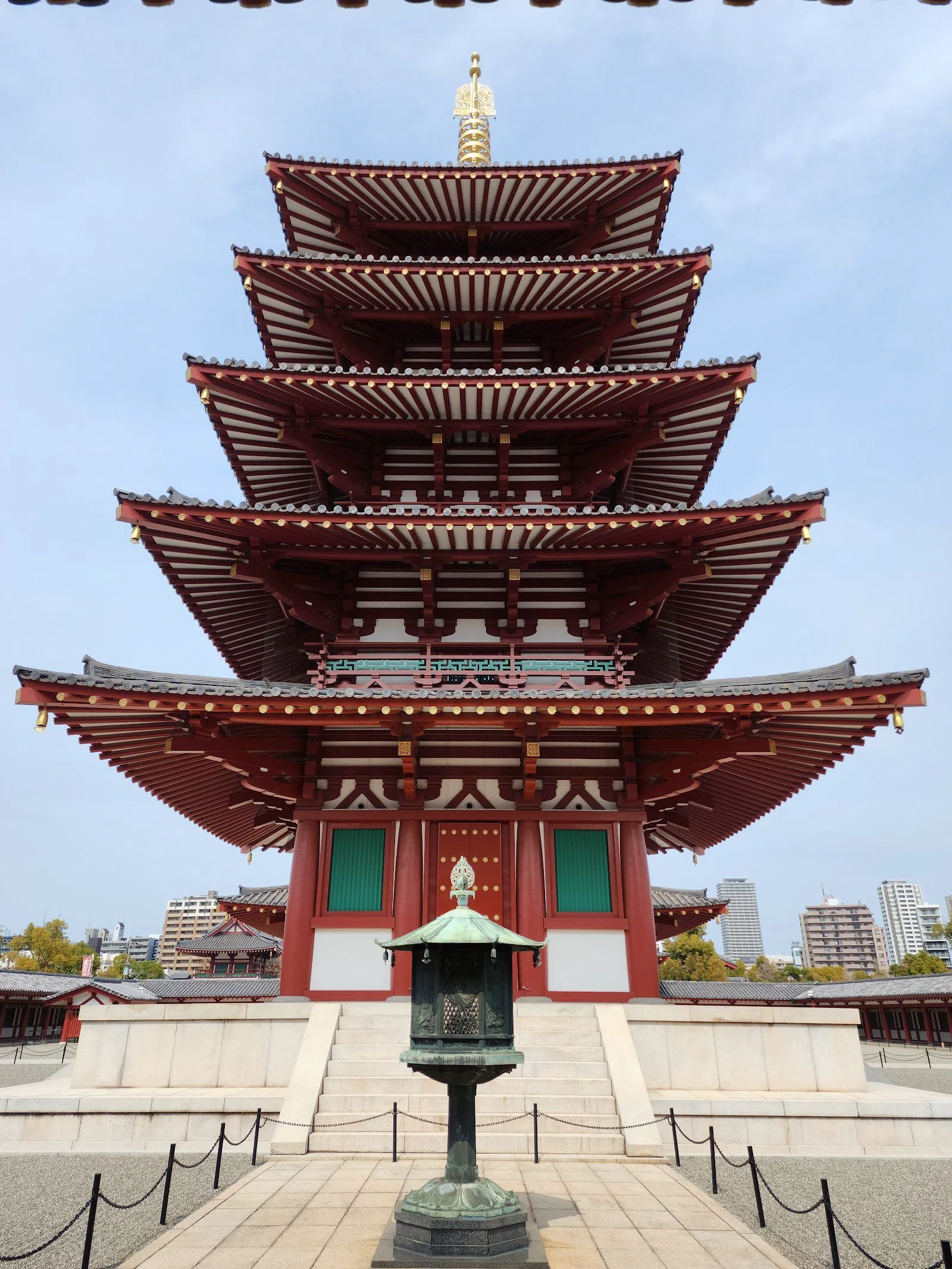
A massive stone torii gate leads into Shitennoji Temple (Tennoji), and the outer grounds cost nothing. Inside, the Chushin Garan and the Gokuraku-jodo Garden are ¥300 each. The Treasure House is ¥500. Tickets are sold per head at the gate and there is no booking.
The garan holds the Kondo hall and the pagoda in a walled rectangular courtyard, the oldest temple layout in Japan. Guided groups work through it during the day. Keep your voice down in there. It has stood as a state temple for more than 1,400 years, and the district still takes its bearings from it.
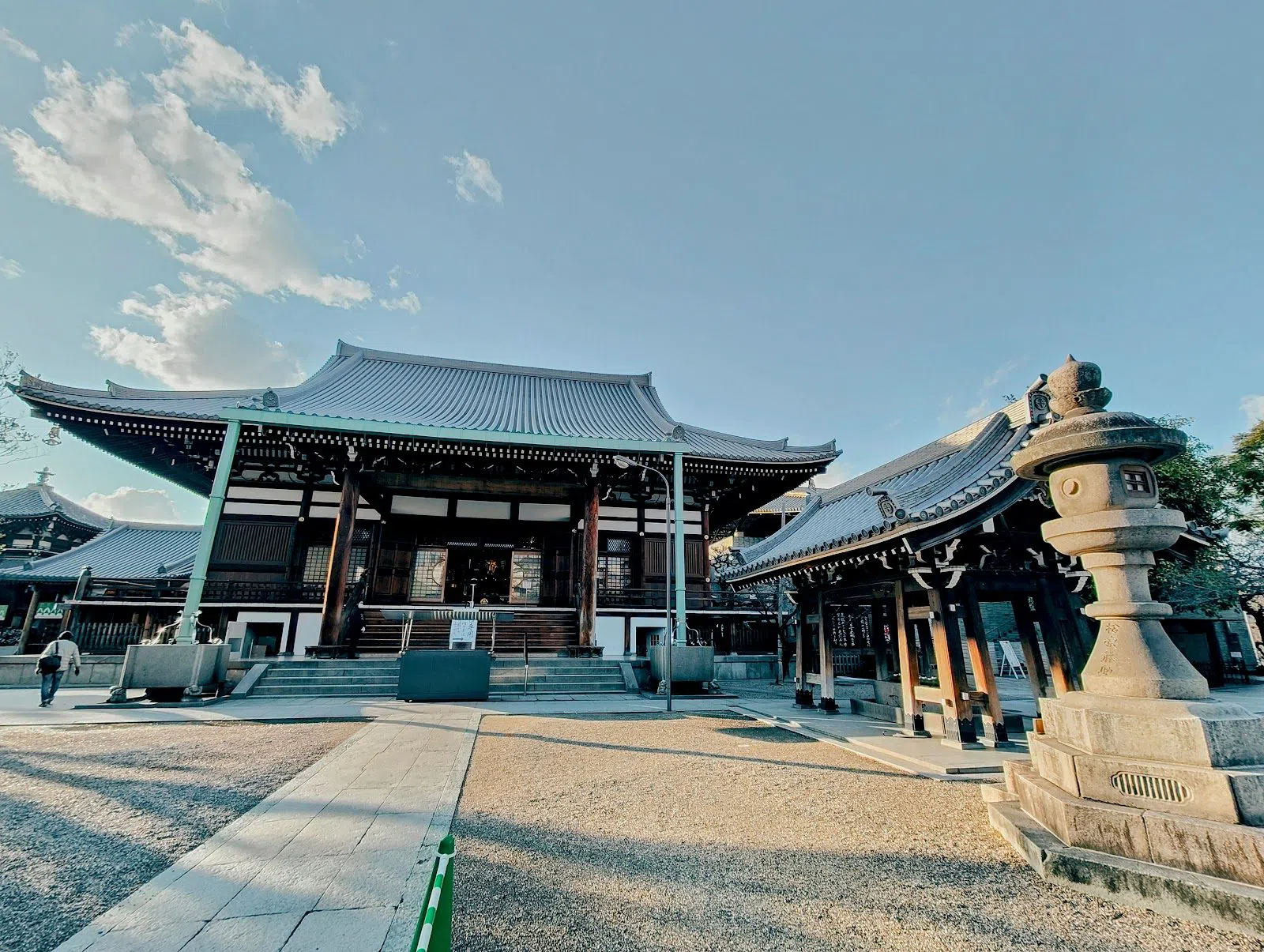
Isshin-ji Temple sits five minutes from Tennoji Station and charges nothing. Its Sanmon gate is steel, glass and concrete, with towering bronze Nio guardians and cast relief panels of heaven and hell, and the traditional tiled halls stand behind it. The okotsubutsu are the reason to walk over. Each is an Amida statue cast from the cremated ashes of 150,000 donors, and one has been made every decade since 1887. This is an active funerary temple, and photographs inside the halls are out.
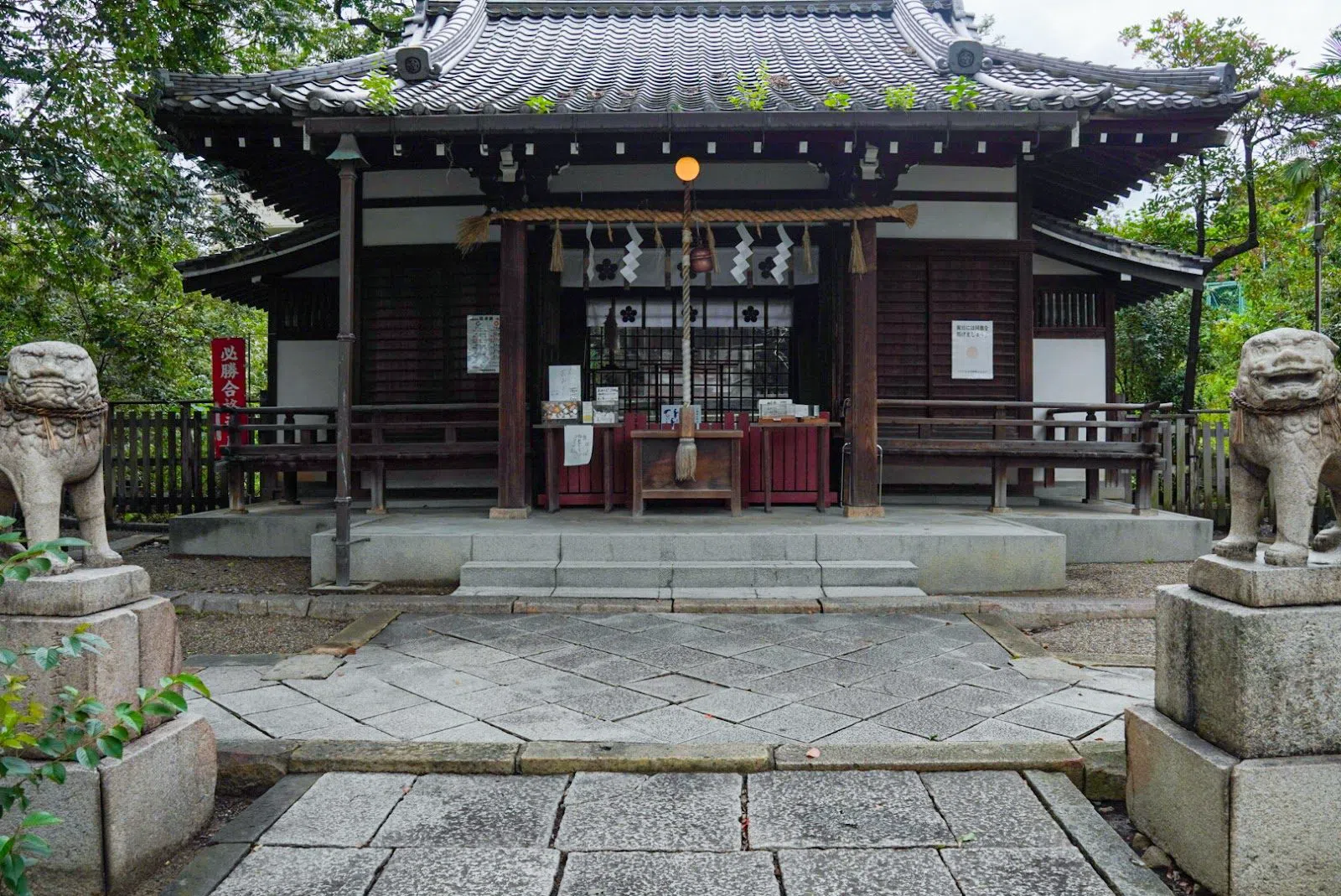
Yasui Shrine (Yasui Tenmangu) is the spot where Sanada Yukimura was killed in the 1615 Summer Siege of Osaka, which makes it a pilgrimage for samurai-history visitors. A bronze seated statue of Yukimura rests against a pine, beside a stone death monument and an old well, with the city pressing in on all sides. The small walled precinct has no resident priest, so the gates open at 07:00 and close in the late afternoon. No official website lists them.
Planera din resa till Osaka
Aktuella priser från våra bokningspartner.
Gratis avbokning på många rum. Vi kan få provision när du bokar.
Inside Tennoji Park
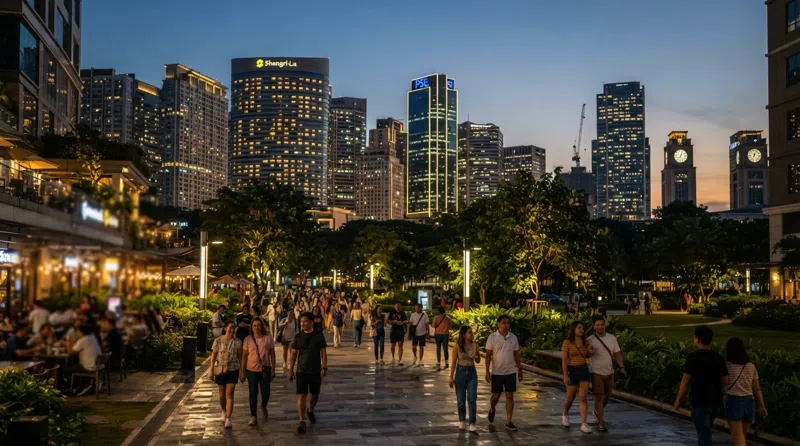
Tennoji Park (Tenshiba) is free and open 07:00 to 22:00, with the playground and futsal court charged separately. The lawn runs 7,000sqm straight at the glass slab of Abeno Harukas, terrace cafes and a timber-decked food row along one edge, dogs and families spread over the grass. The terrace restaurants take bookings, and the lawn is the simplest place in the district to agree to meet.
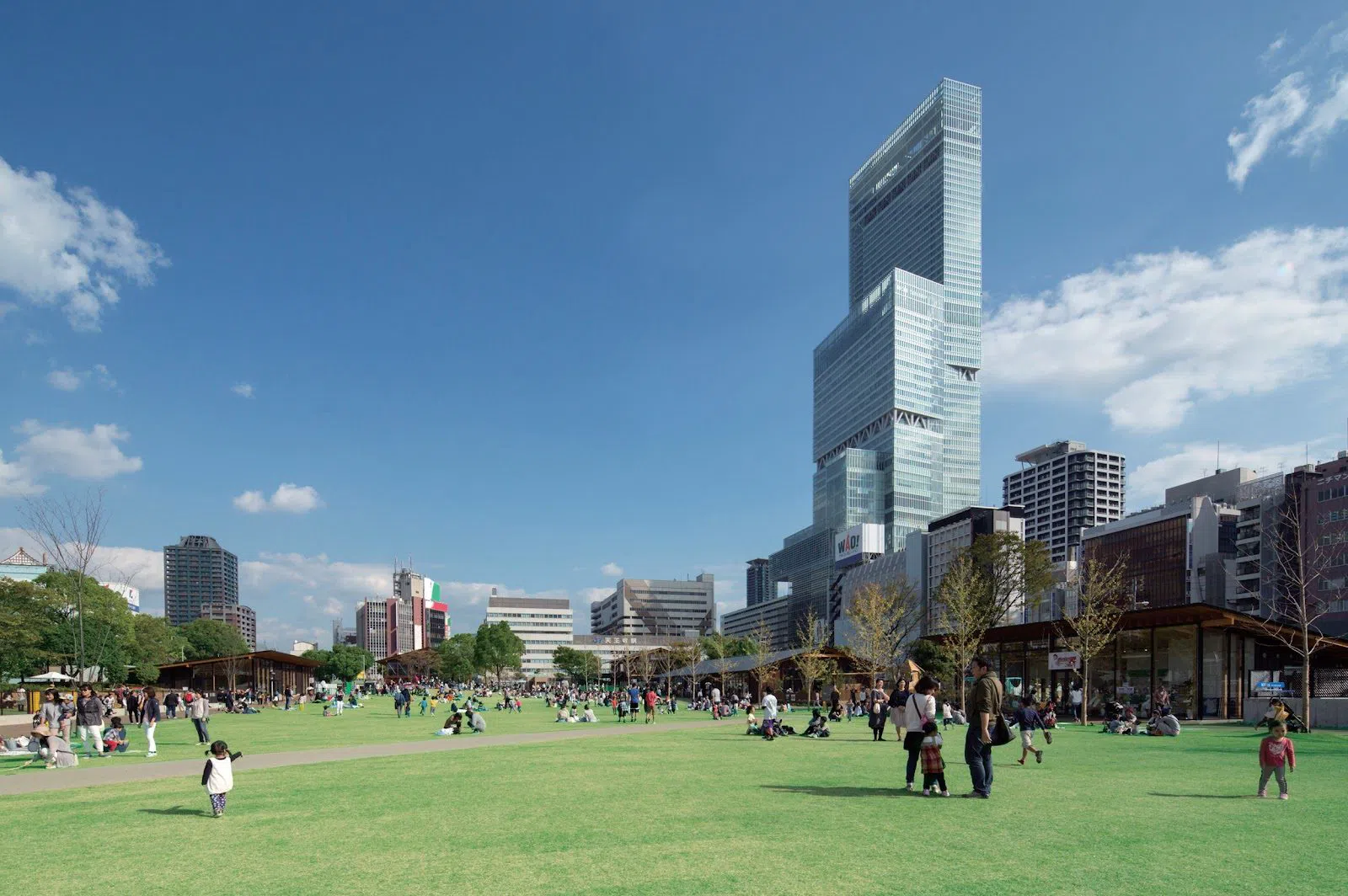
The park also holds the zoo, Keitakuen and the art museum inside its boundary. Chausuyama, the burial mound Yukimura used as his command post, is a two-minute walk from the lawn.
Keitakuen Garden costs ¥300. The Sumitomo family kept it as a private garden and handed it to the city in 1926. A circular pond sits at the centre of the Meiji strolling layout, with stepping stones and clipped pines mirrored in still water and skyscrapers showing over the tree line. Come in late spring, or in November for the maples. The garden is small and it is kept quiet.
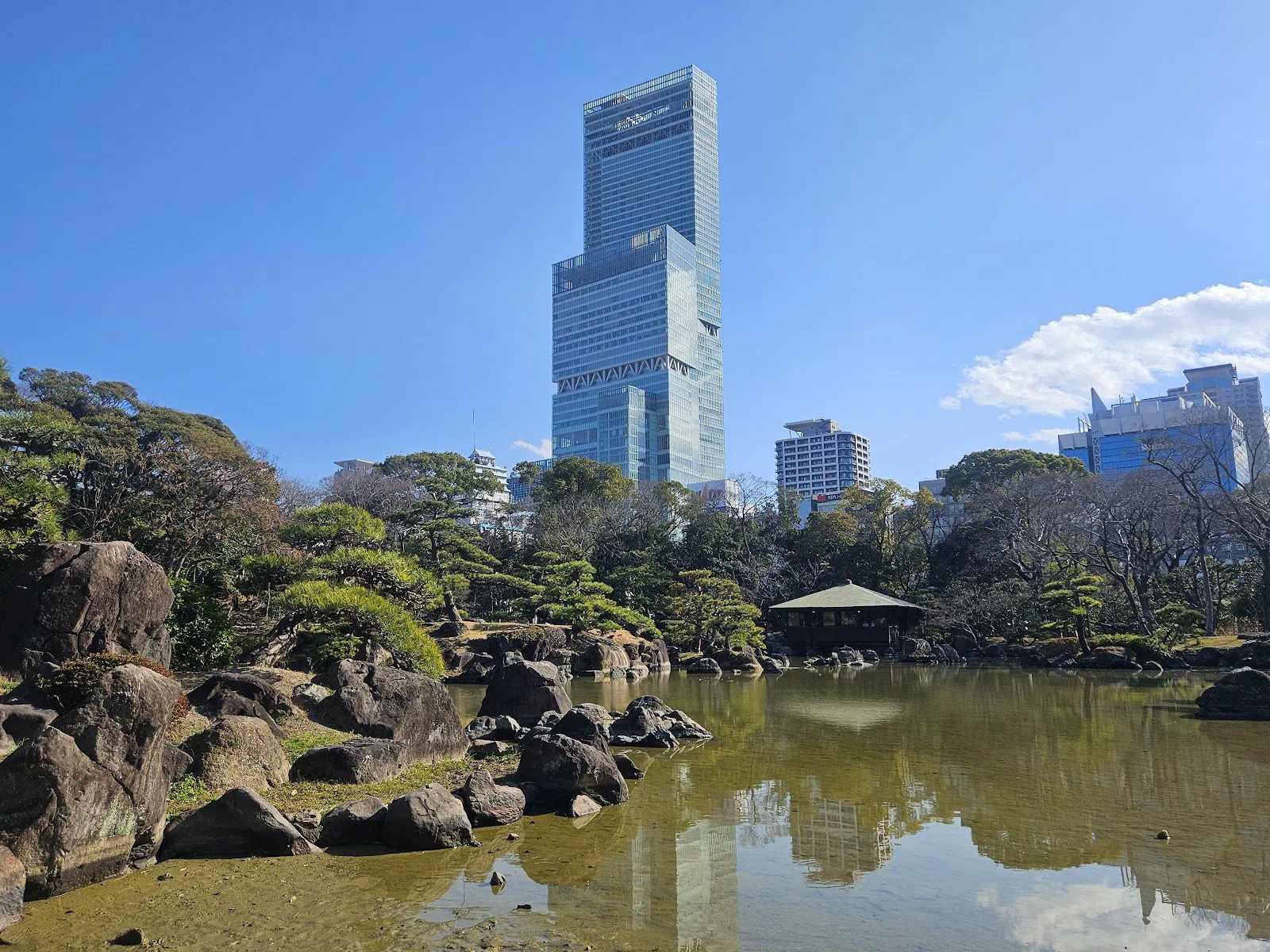
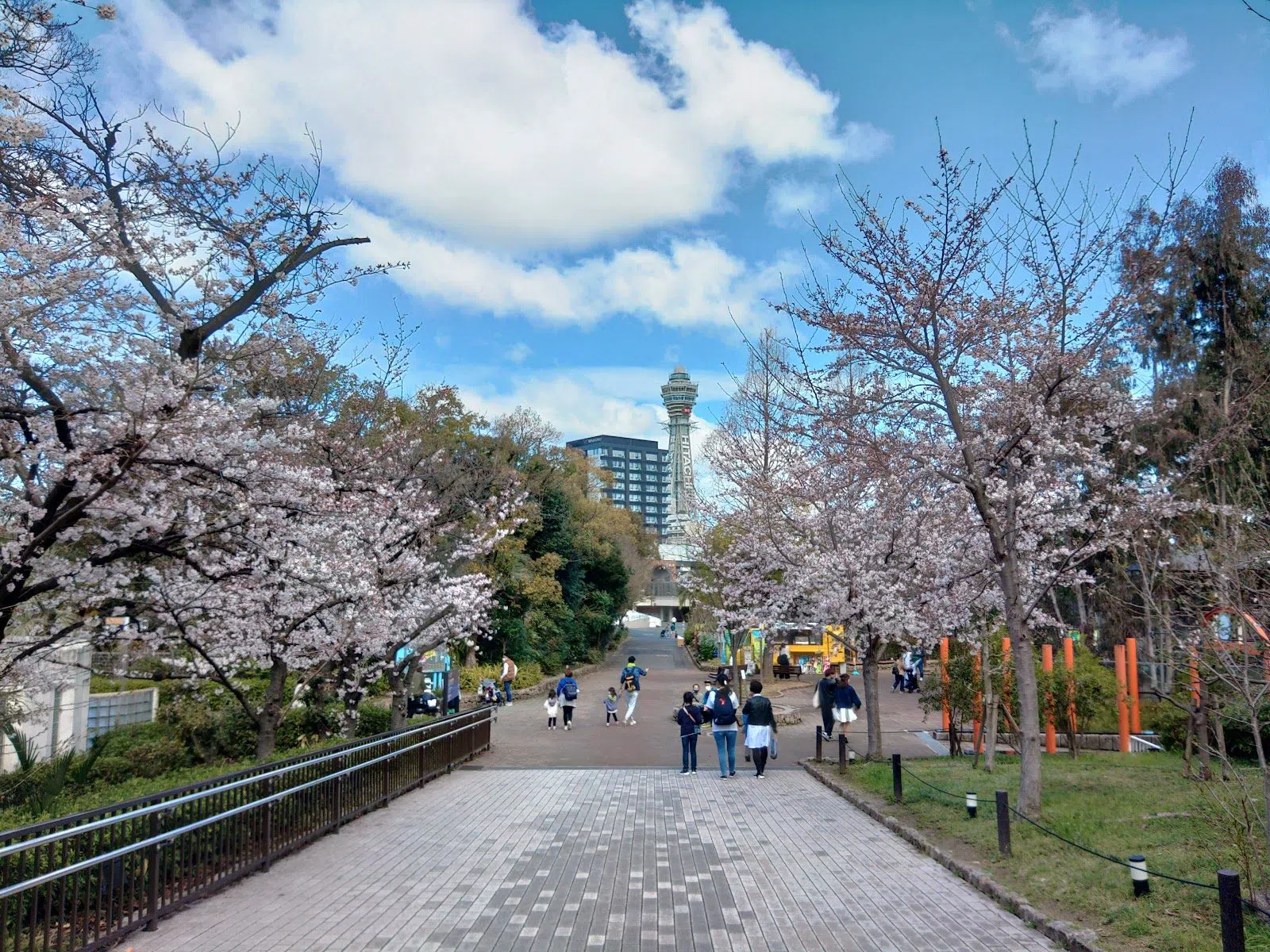
Tennoji Zoo has been open since 1915, one of Japan's oldest, wedged between park trees and tower blocks. Adults pay ¥800 and school-age children ¥200. Under-sixes go free, and group rates are discounted at the gate. The rebuilt elephant exhibit reopened in April 2026 as Elephant Village, a rainforest enclosure; the hippo pool is nearby and Tsutenkaku shows above the perimeter. Autumn Night ZOO evenings run to 20:00.
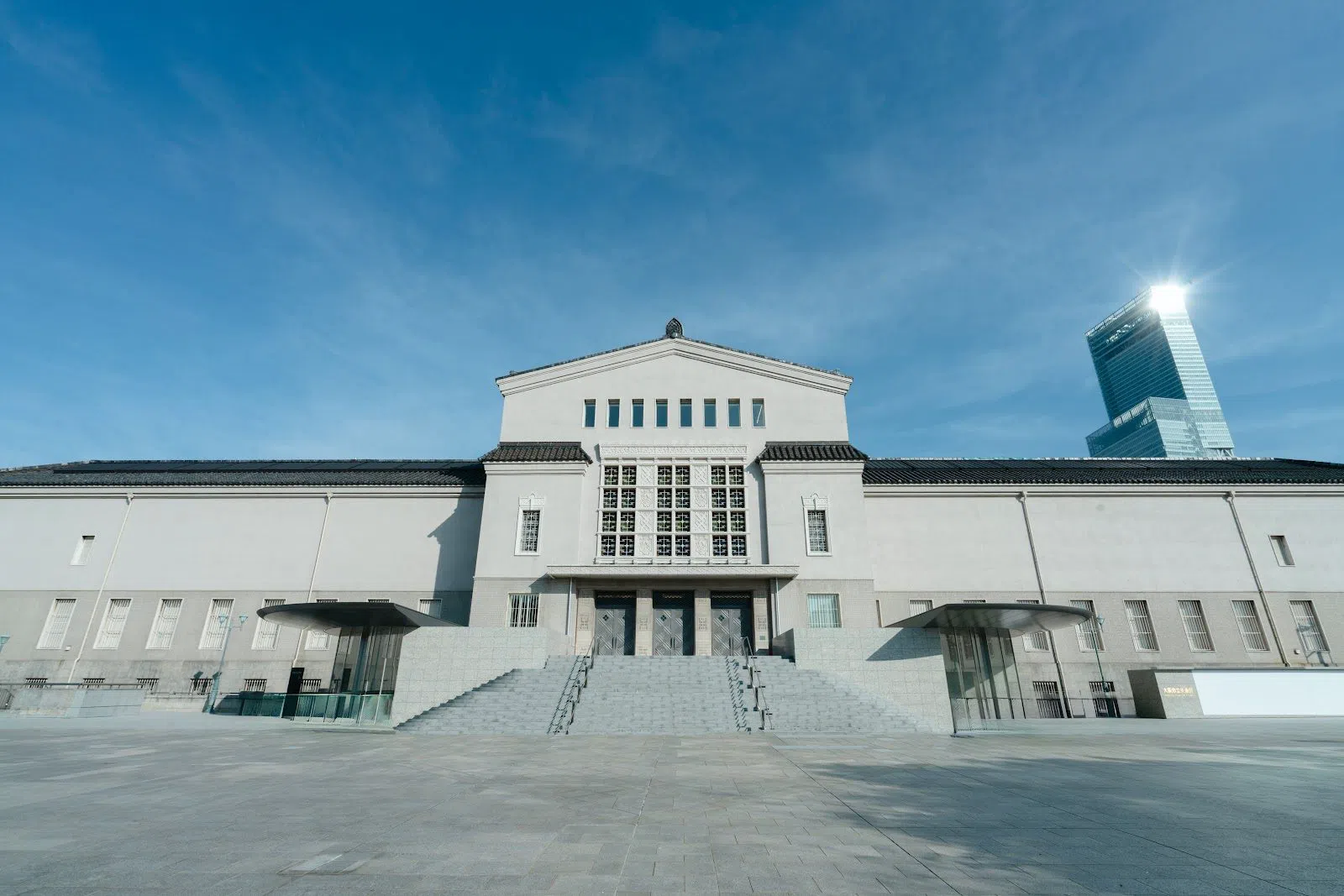
Osaka City Museum of Fine Arts stands on a rise above the park in a 1936 imperial-crown-style stone building, symmetrical wings under a tiled hipped roof, reached by broad front steps. It reopened on 1 March 2025 after a two-and-a-half-year rebuild as an open museum, and almost everything outside the exhibition rooms is now free to walk into. Special exhibitions run ¥1,200 to ¥2,000. The collection is strongest on Chinese and Japanese classical art, and the lobby and free zones take a crowd without strain.
Harukas 300 and the gallery below it
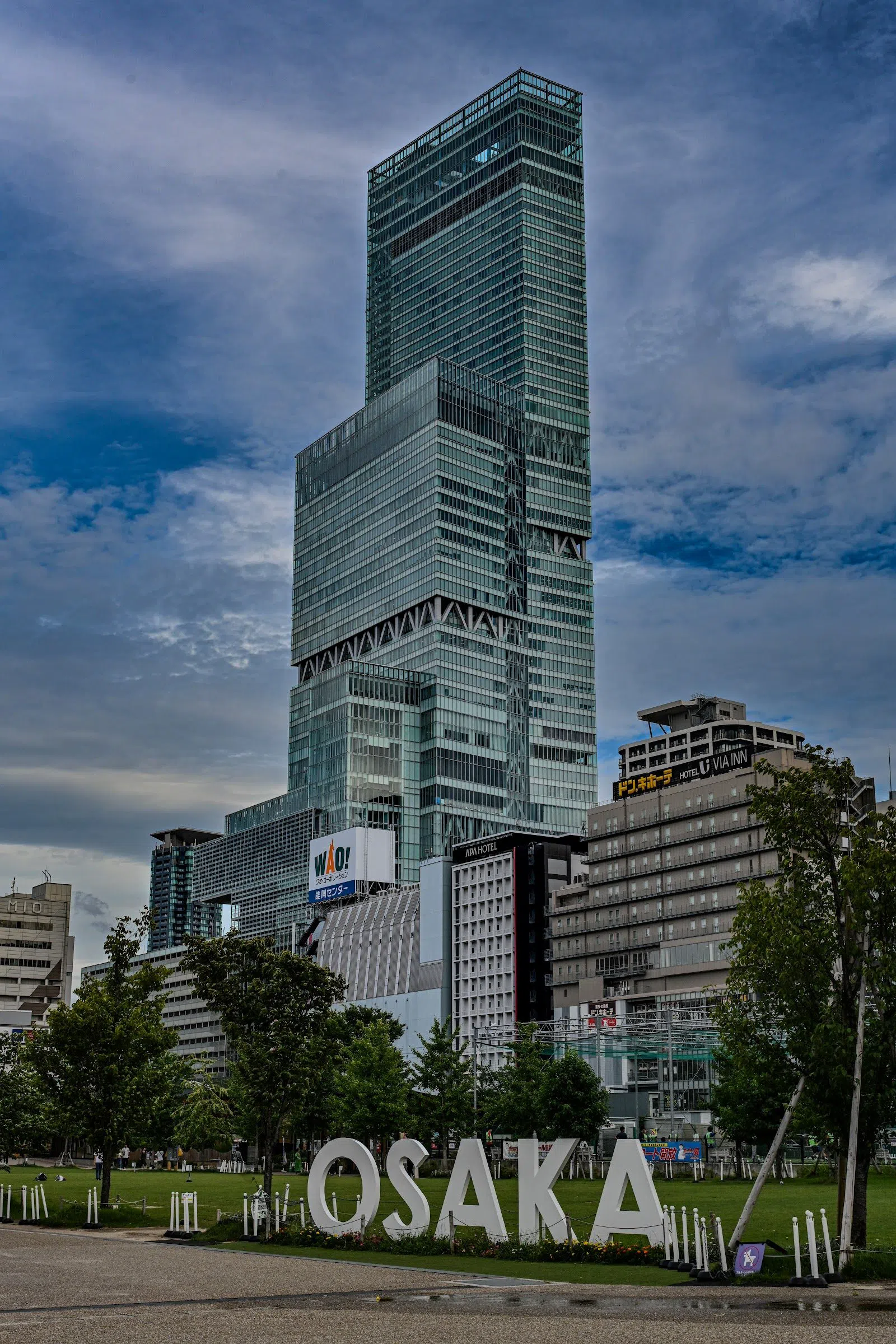
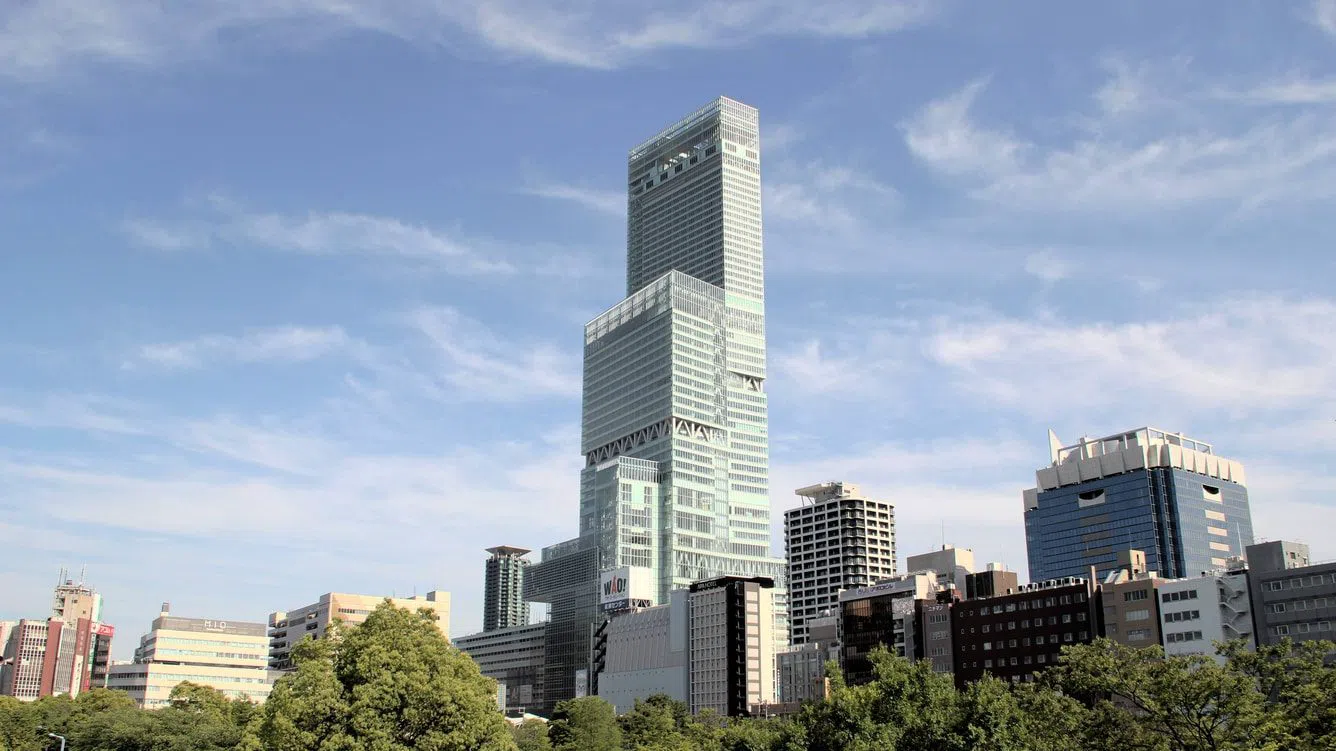
Harukas 300 Observatory is the single reason most visitors come to Tennoji. It occupies floors 58 to 60 of a 300m stepped glass tower, a three-storey glass atrium with an open-air wooden-deck sky garden and the void dropping away beside it. Osaka Bay lies on one horizon and the Ikoma range on another.
Counter tickets are ¥2,200 for an adult. Book online by the previous day and the price is ¥1,980. Children aged six to 14 pay ¥900. The price rose on 23 July 2026, and older guides quoting ¥1,500 are wrong. Booking online also keeps you clear of the ticket desk on 16F. Arrive an hour before sunset and stay for the neon.
Abeno Harukas Art Museum shares that 16th-floor lobby with the observatory lifts and holds no permanent collection. It runs loan shows instead, recently 150 pieces from the Brooklyn Museum's Ancient Egypt holdings. Tickets vary by exhibition, ¥1,500 to ¥2,000 for an adult. Blockbuster shows switch to timed entry, and a party should book ahead. The open terrace on the same floor is free and looks over the Tennoji rooftops. Take that view if you skip the observatory.
Tsutenkaku, 10 minutes west
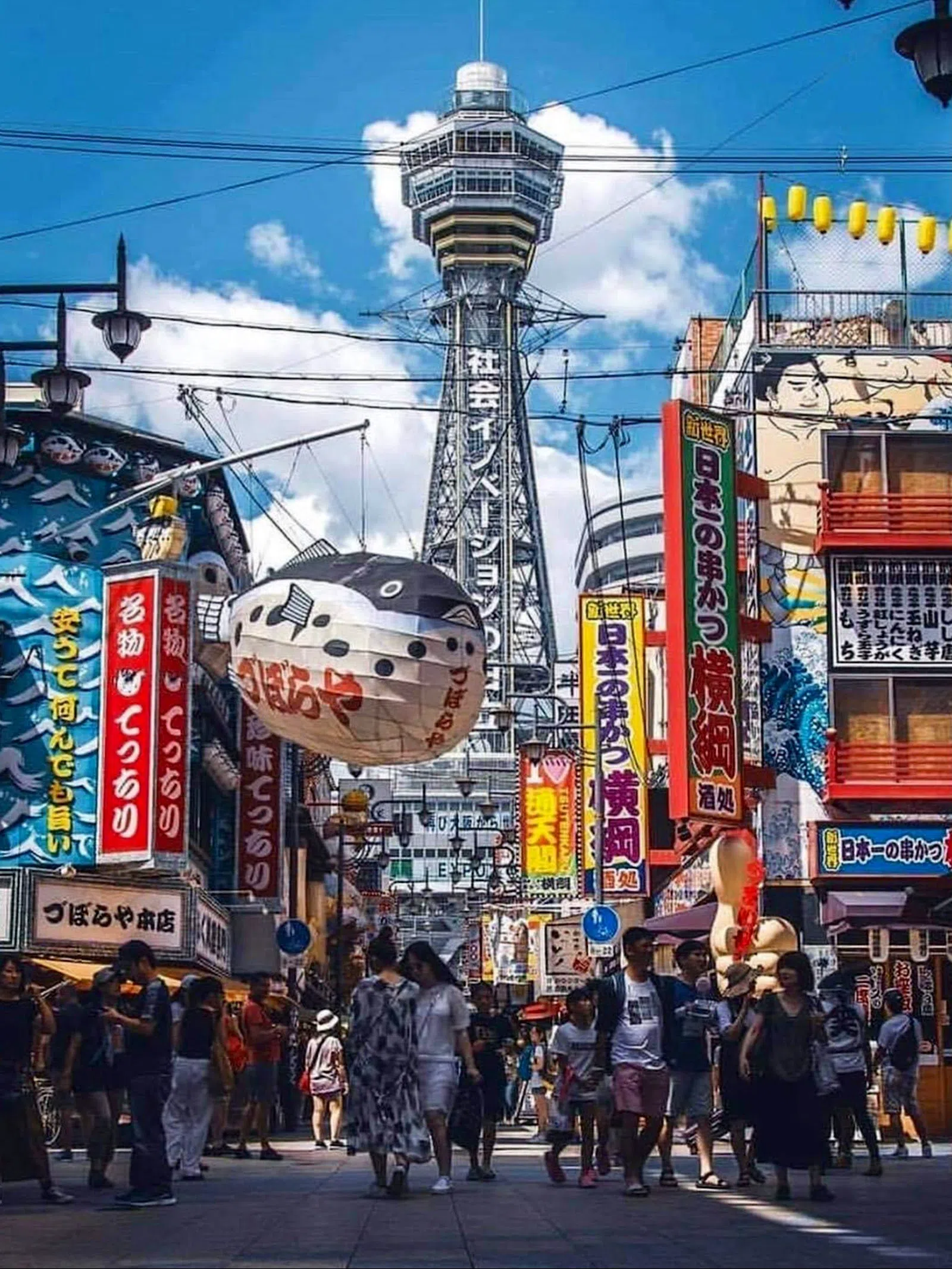
Tsutenkaku Tower (Shinsekai) is a 10-minute walk off the west side of Tennoji Park, standing in its own district. The 1956 steel lattice is lit in shifting neon, with the billboard-plastered streets of Shinsekai radiating below, and it is the old half of the skyline pair it makes with Harukas. On the observation floor sits the gold Billiken idol, grinning, pointed feet forward.
Tickets now require a timed-entry reservation, so book the slot before you walk over. The observation deck is ¥1,000 to ¥1,200 for an adult, and prices and hours were revised in March and April 2026. The Tower Slider is a separate ticket, ¥1,100 for an adult and ¥600 for a child aged seven to 14. The slide spirals 60m to the basement, a ten-second drop. Height limits apply.
Eating around Tennoji Station
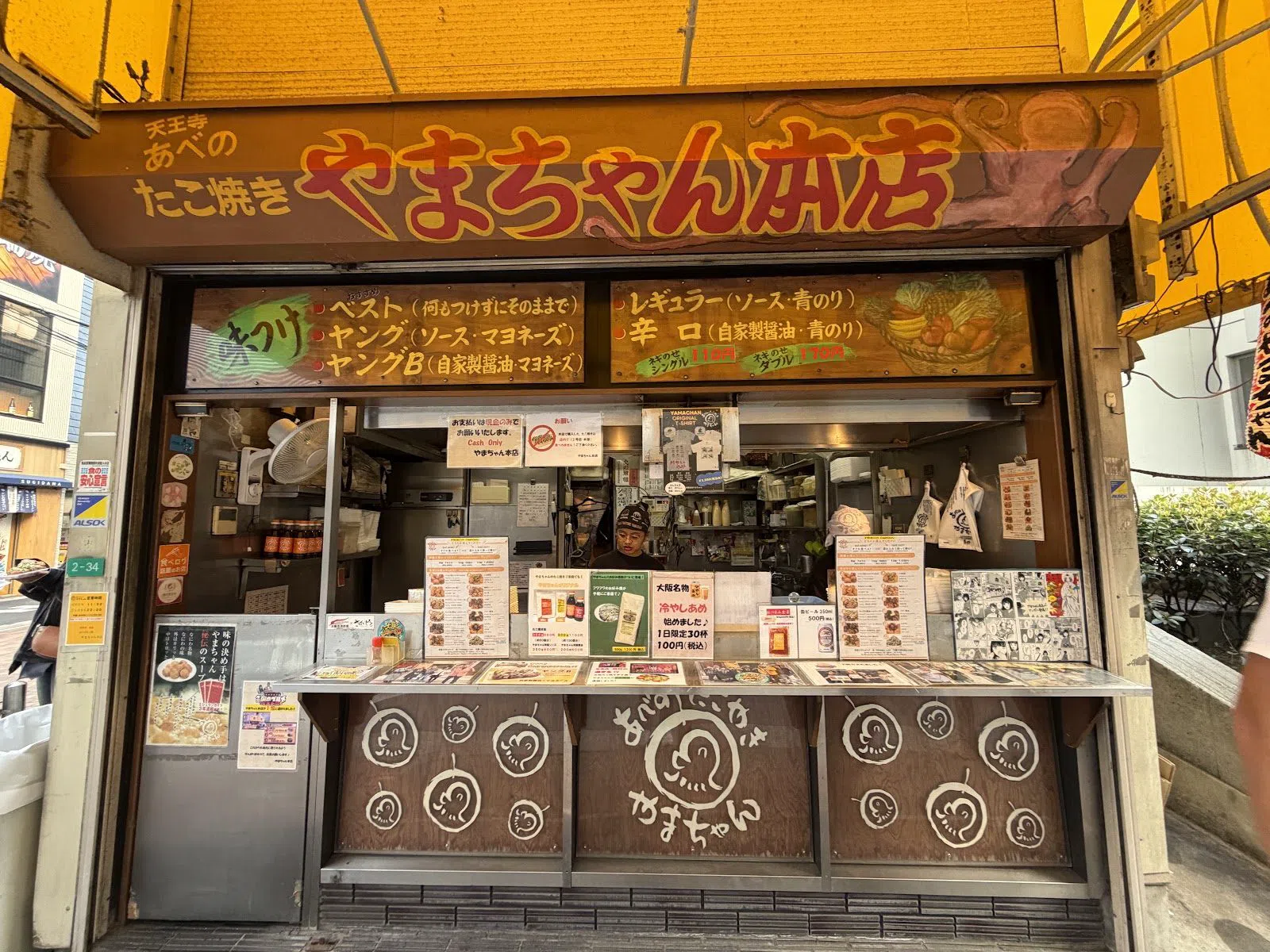
Abeno Takoyaki Yamachan (Honten) (Abenosuji) has been flipping batter with steel picks on a cast-iron dimpled griddle since 1988, one minute from Osaka Abenobashi Station. The dashi carries more than 10 ingredients, pineapple and apple among them, and the balls arrive plain. Taste one before you reach for sauce. A portion is ¥500 to ¥900, eaten standing at the street-front counter from a paper tray. It holds a Michelin Bib Gourmand. The counter is tiny, so a group of more than four should split or carry the trays round to Tennoji Park.
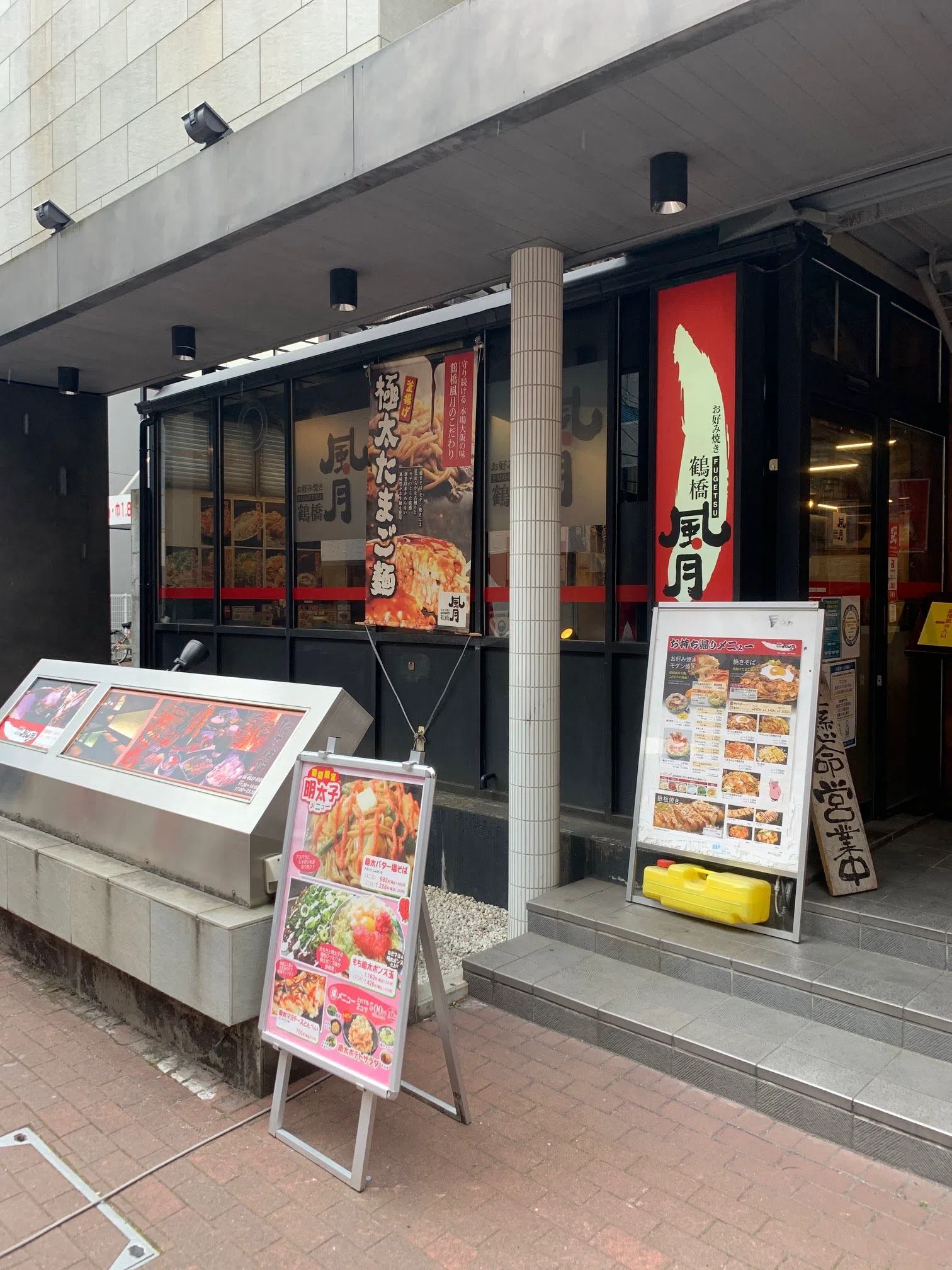
Tsuruhashi Fugetsu Abenobashi builds cabbage-heavy okonomiyaki in front of you on teppan-topped tables, three minutes from Tennoji Station, steam and bonito flakes curling over the hotplate. The chain was born in nearby Tsuruhashi, and this is the Osaka benchmark for the dish. It opens 11:00 to 23:00 year-round across 96 seats with table partitions, and set menus are priced for two to three and three to four people. Expect ¥1,000 to ¥2,000 a head. The phone lines are closed. Reserve online.
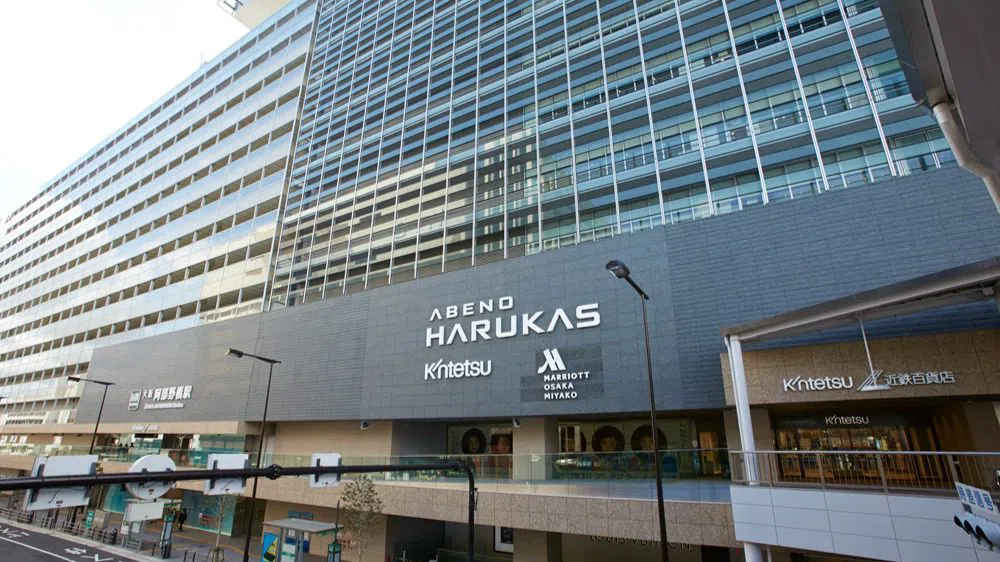
Abeno Harukas Kintetsu Main Store is Japan's largest department store by floor area, and its basement depachika runs counters of glossy wagashi, sushi and bento under bright white light. Buy there and take it onto the Tenshiba lawn in good weather. The dining floors are 12 to 14, dozens of restaurants with windows looking straight down on Tennoji Park, many of them taking reservations and large tables. Lunch runs ¥1,200 to ¥2,500. Dinner is ¥3,000 to ¥8,000. This is the easiest place here to feed a mixed party that cannot agree.
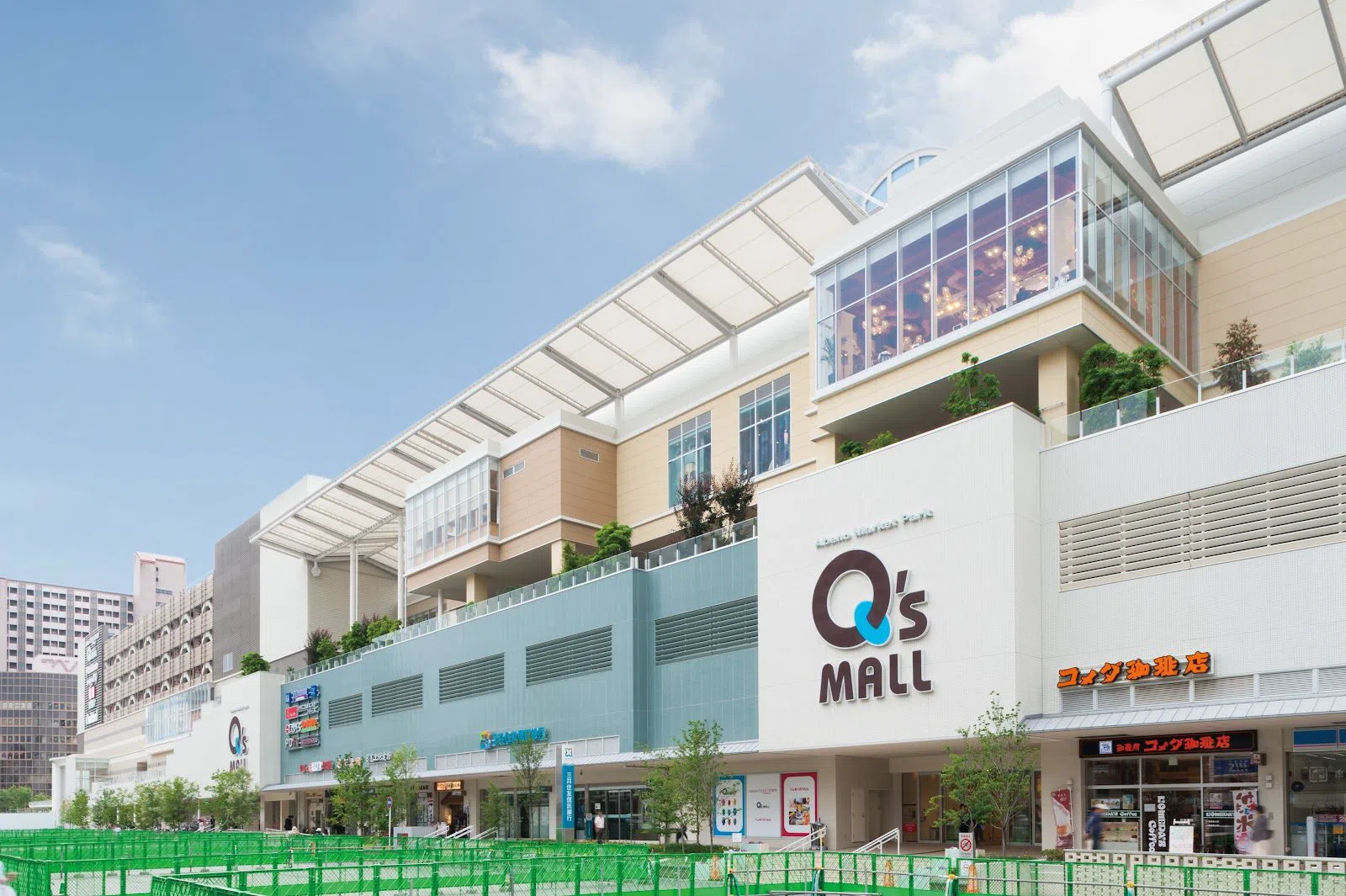
Abeno Q's Mall is a long low block joined to Tennoji Station by elevated walkways. The cover matters in Osaka's summer heat and rain. Entry is free, and 250 storefronts run over three levels. A cinema and an arcade sit alongside a food court where meals are ¥800 to ¥1,500. Prices are lower and the range wider than in the tower, and the rooftop Sky Garden is a lawn terrace above the shops.
Drinking in Ura-Tennoji
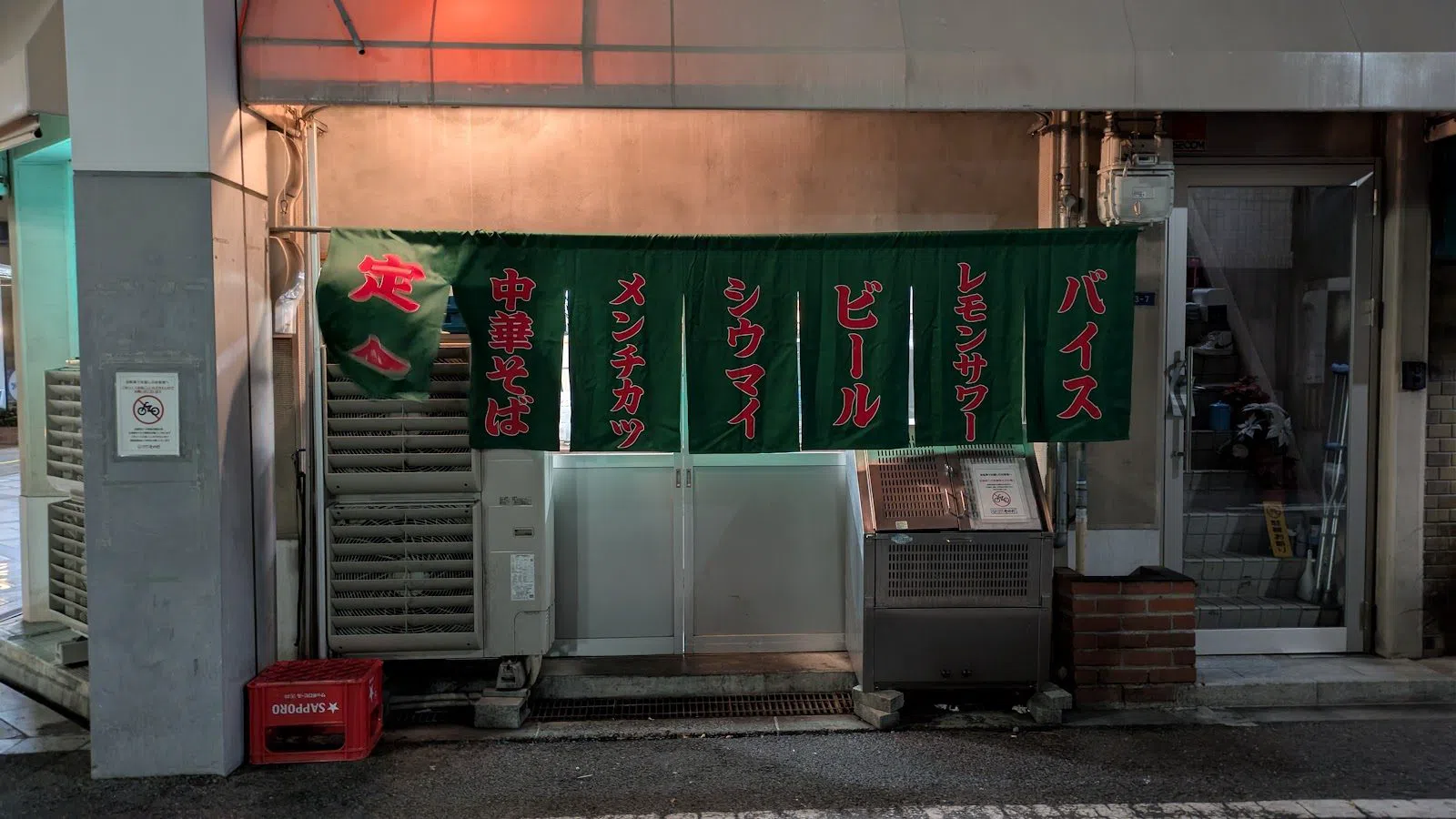
Ura-Tennoji is the scruffy back-street drinking warren a minute north of Tennoji Station, used by locals and found by few visitors. Stand Sonoda Ura-Tennoji is the pick of it, a retro Showa-style tavern in the Hanwa shopping arcade behind the station, handwritten paper menus pinned to the wall, yellow light, a crowded counter and a second floor upstairs. Drinks and food come to ¥2,000 to ¥3,000 a head. It takes parties up to about 25, it is visibly comfortable with foreign walk-ins, and it fills fast after 18:00. The same group opened a ramen shop on the same lane in July 2026. Its Instagram (@sonoda.tennouji) is the only live listing, with no website to check.
Where to stay
Osaka Marriott Miyako Hotel holds 360 rooms on floors 38 to 57 of Abeno Harukas, floor-to-ceiling glass with the Osaka grid and the bay laid out below, and a sky lounge. It connects straight into Tennoji Station without taking you outside, and its banquet space handles block bookings. Doubles run ¥35,000 to ¥70,000 a night, peaking in cherry-blossom April. Book a high floor facing north for the city view. The station-side business hotels around Abeno Q's Mall go for a third of that.
Planning notes
Keitakuen and Tennoji Zoo both close on Mondays. Reserve a timed slot for Tsutenkaku, a table at Tsuruhashi Fugetsu online, and your Harukas 300 ticket by the previous day. See the Osaka guide and the Osaka hotel search.
Innan du åker
How much does Harukas 300 cost, and is it cheaper online?
A counter ticket is ¥2,200 for an adult. Booked online by the previous day it is ¥1,980, and children aged six to 14 pay ¥900. The price rose on 23 July 2026, so older guides quoting ¥1,500 are out of date. Booking online also keeps you away from the ticket desk on 16F.
What is closed on Mondays in Tennoji?
Keitakuen Garden and Tennoji Zoo both close on Mondays. Shitennoji's outer grounds, Isshin-ji, Yasui Shrine and Tennoji Park need no ticket, and the park itself is open 07:00 to 22:00.
Do I need to book Tsutenkaku Tower in advance?
Yes. You need a timed-entry reservation to buy a ticket, so a group has to book its slot ahead. An adult ticket for the observation deck is ¥1,000 to ¥1,200. The Tower Slider is a separate ticket, ¥1,100 for an adult and ¥600 for a child aged seven to 14, and it has height limits.
Is Shitennoji Temple free to visit?
The outer grounds are free. The Chushin Garan and the Gokuraku-jodo Garden are ¥300 each and the Treasure House is ¥500, all paid per head at the gate with no booking. Go on the 21st of any month, when a flea market fills the grounds and the gates open 30 minutes early.
Where can a group of eight eat near Tennoji Station?
Tsuruhashi Fugetsu Abenobashi has 96 seats with table partitions and set menus priced for two to three and three to four people. Its phone lines are closed, so reserve online. The Harukas Dining floors, 12 to 14 of the Kintetsu store, take reservations and seat large tables. Stand Sonoda takes parties of up to about 25 but fills fast after 18:00.