The Osaka issue
Kuidaore: How Osaka Eats Itself Alive
Osaka's obsession with food is a way of life called kuidaore — here's how to eat the city street by street in 2026, from ¥110 skewers to castle-view wagyu.
By Rina FukudaOsaka's kitchens, counter by counter
There is a word Osaka has quietly lived by for centuries: kuidaore, roughly, to ruin yourself by eating. It is not a warning here so much as a civic ambition — a city that measures a good day in bowls, boxes and skewers rather than sights. Come hungry, wear the loose trousers, and understand that in 2026 the fastest way to know Osaka is to eat your way through it, neighbourhood by neighbourhood, until you can barely move.
This is a working eater's guide, not a listicle. Every place below is one I'd send a friend to, with honest notes on which suit a couple at a counter and which can swallow a hungry group of eight. Sort your base first — the whole of central Osaka is walkable and train-linked, so an Osaka hotel search near Namba or Umeda puts most of this within a short ride. For wider context on the city beyond the plate, the Osaka guide covers the rest.
The dish that built the city: kushikatsu in Shinsekai
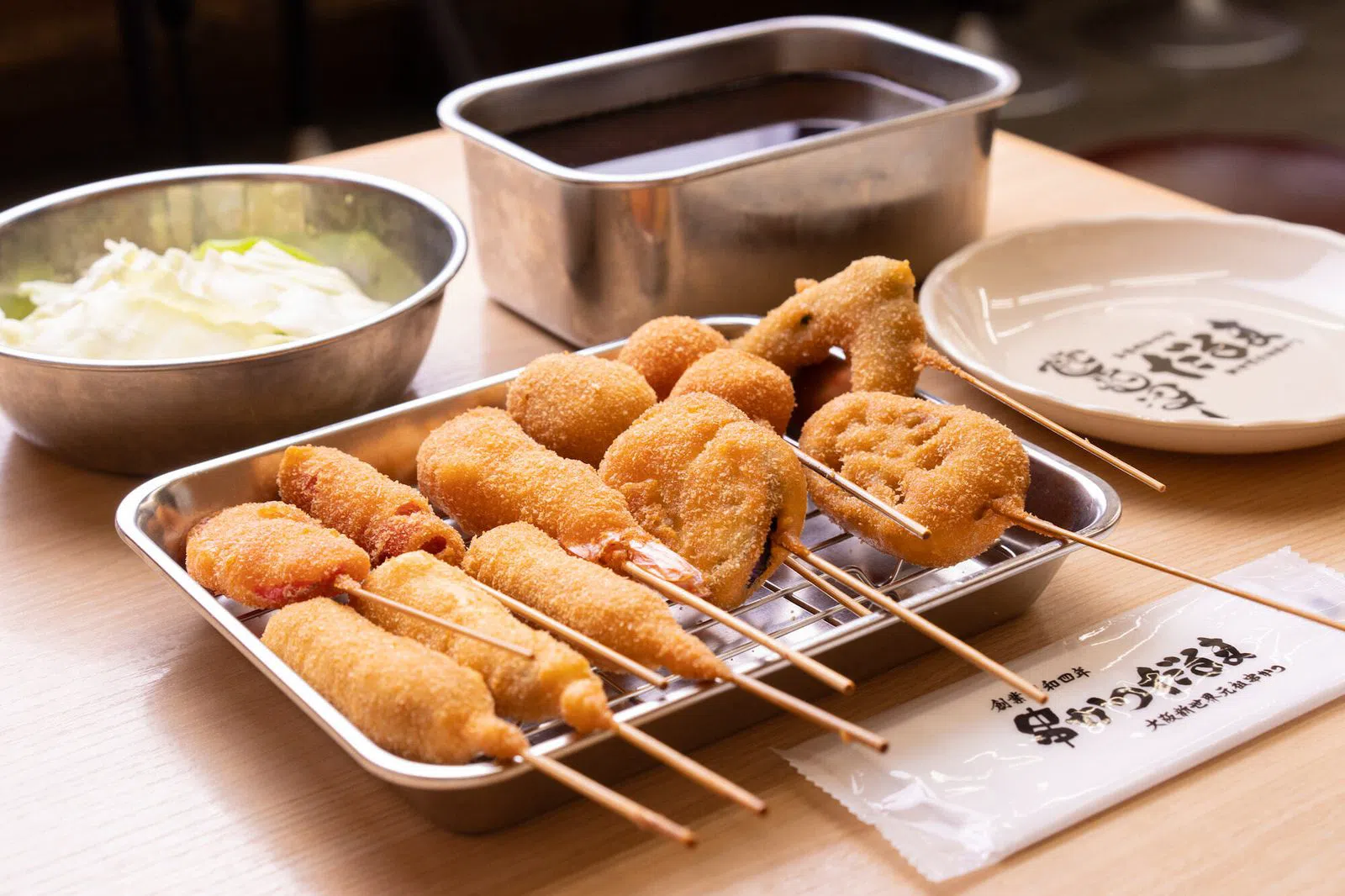
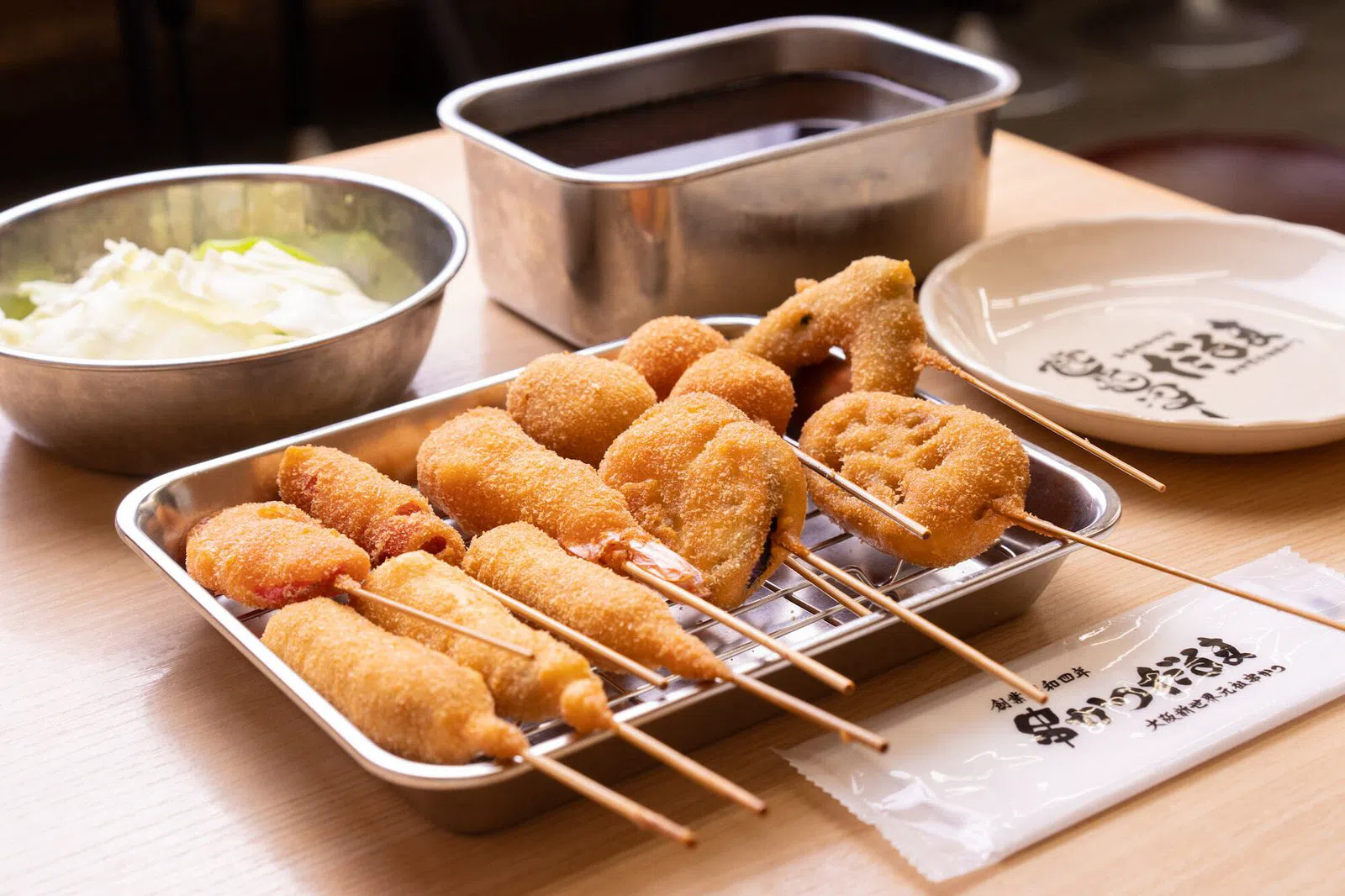
Start where Osaka's street-food identity was forged. Kushikatsu Daruma (Shinsekai) has been deep-frying panko-crumbed skewers since 1929, and it remains the definitive introduction to the dish — everything from beef and quail eggs to asparagus, threaded on a stick, breaded, fried and dunked once (and only once) into a communal tub of thin brown sauce. The no-double-dipping rule is real and enforced with signage; treat it as sacred. Skewers run ¥110–300 each, and you'll eat well for ¥1,500–3,000 a head.
The practical intelligence: the Shinsekai flagship is a tight, standing-and-stool counter that's best for solos, couples or a party of three or four who don't mind elbows. If you're a larger group, don't fight it — the Dotonbori and other branches (Daruma runs 16 across the city in 2026) have proper table seating and take weekday reservations for two or more. Book those; queue the flagship. Shinsekai itself, all retro neon and the Tsutenkaku tower overhead, is worth the trip for atmosphere alone, but it's the food that earns the pilgrimage.
Plan your Osaka trip
Live prices from our booking partners.
Free cancellation on many rooms. We may earn a commission when you book.
Okonomiyaki: the queue and the easy way out
Osaka's savoury cabbage-and-batter pancake, griddled with pork, seafood or cheese and lacquered with sauce, mayo and dancing bonito flakes, has two answers depending on how much time you have and how many of you there are.
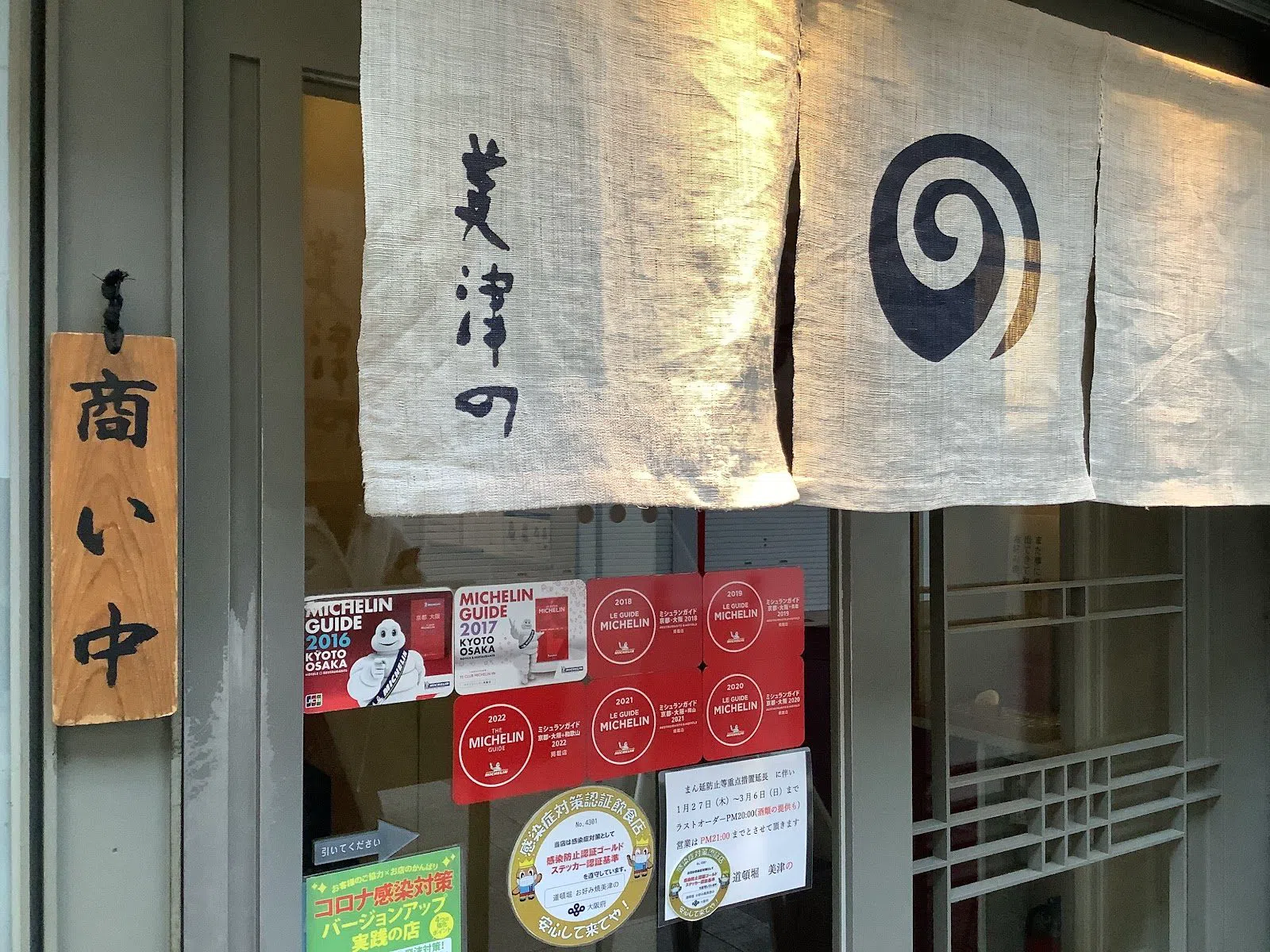
For the pilgrimage version, Okonomiyaki Mizuno (Dotonbori) has been at it since 1945 and carries a Michelin Bib Gourmand listing — a genuine rarity for a dish this humble. It's a tiny counter-and-table shop, wonderful for a pair or a small group, and the batter is looser and eggier than most, cooked in front of you with real care. The catch is the queue: it can run long, and there's no big-party seating, so time-pressed readers or groups of five-plus should plan around it. Reckon on ¥1,000–2,000 a head. Go early, or go off-peak, mid-afternoon.
When Mizuno's line is out of the question — a rainy evening, a group of eight, a toddler melting down — walk to Chibo (Dotonbori Honten). This is the polished, tourist-ready flagship of a well-run chain, spread over multiple floors with table teppans, English menus and staff used to big parties. It is the easy, comfortable choice, not the cult one, and it's honest about that: ¥1,200–2,500 a head buys a reliably good okonomiyaki with none of the wait. For groups, it's frankly the sane pick in the district.
Takoyaki: the two temples, a block apart
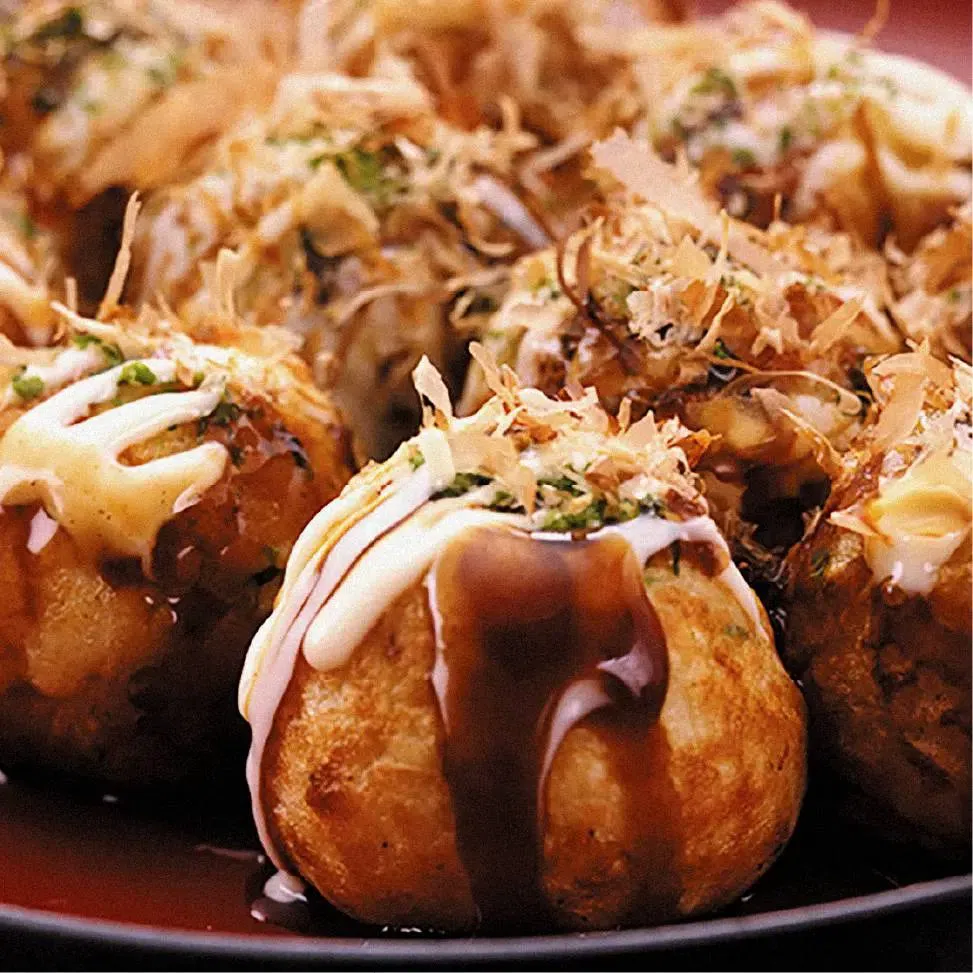
Don't let anyone tell you all takoyaki is the same. Osaka's molten octopus dumplings — batter poured into dimpled copper plates, turned with a pick until spherical, brushed with sauce — come in distinct styles, and two operators in and around Dotonbori define the debate.
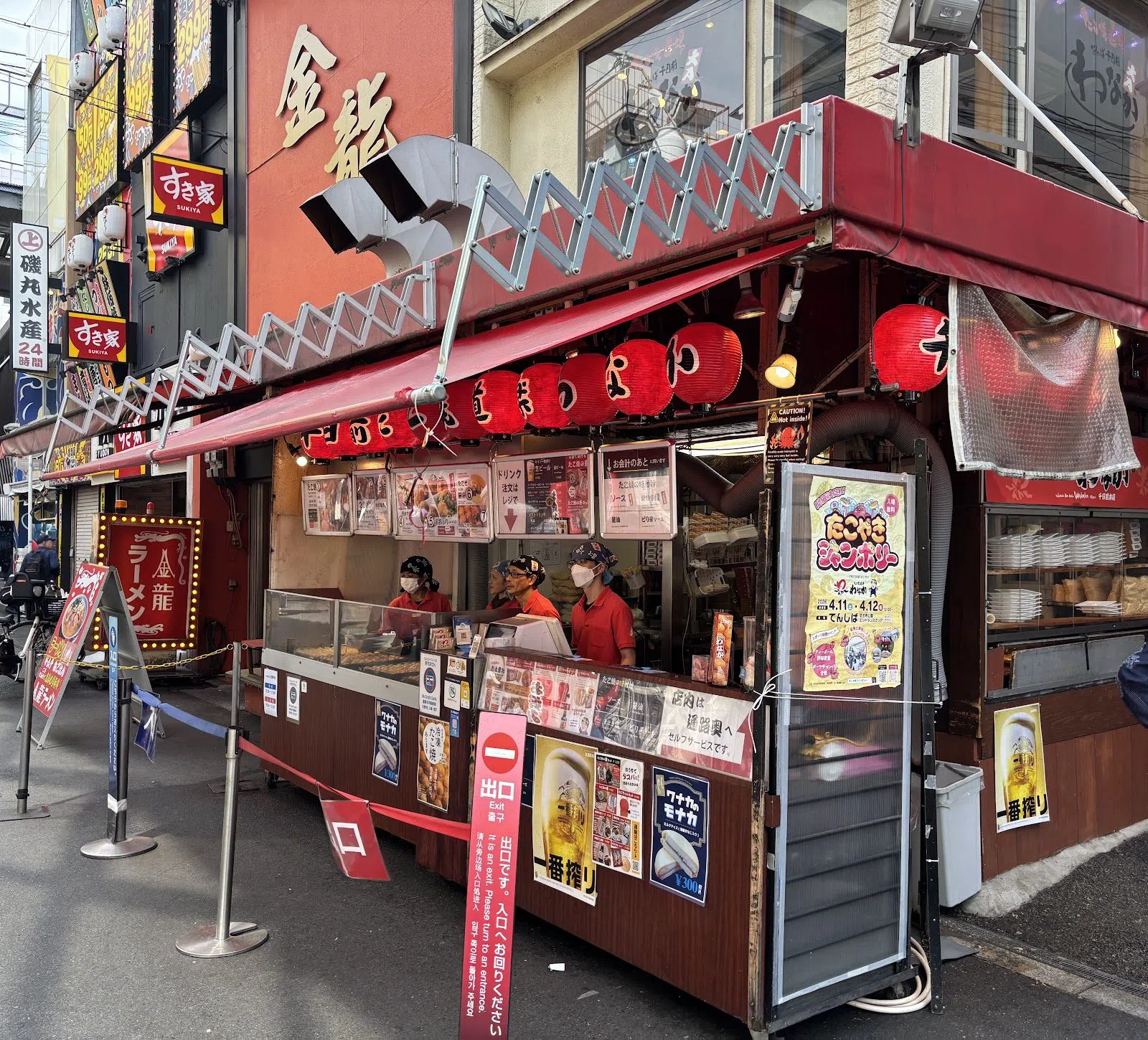
Takoyaki Doraku Wanaka (Sennichimae) is the benchmark: Michelin-recognised, cooked on copper plates, with a firmer, more savoury result that purists rate as the city's standard. It's a grab-and-go and standing-counter setup — around ¥500–700 for a box of eight — so groups graze rather than sit. Perfect as a food-crawl stop, less so for a sit-down.
A short walk away, Kukuru (Dotonbori Honten) plays the other style: fluffier, almost molten in the middle, marked by the landmark giant octopus sign that's become a Dotonbori photo cliché for good reason. It's a genuinely different operator, not a Wanaka variant, and worth trying back-to-back if you want to understand the spectrum. Takeaway from the main stand runs ¥600–900 a portion; there's a larger seated branch a block into the arcade where a group can actually sit down. My honest advice: buy a small box at each, eat them side by side, and pick your camp. That's the correct amount of takoyaki science.
Graze at your own pace: the market and a market breakfast
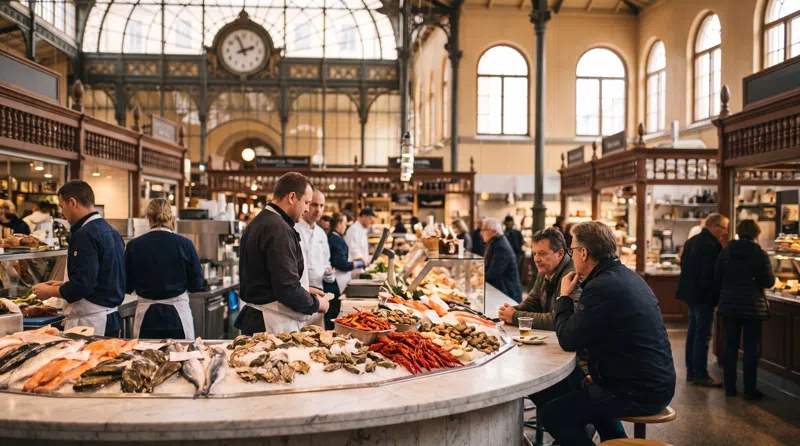
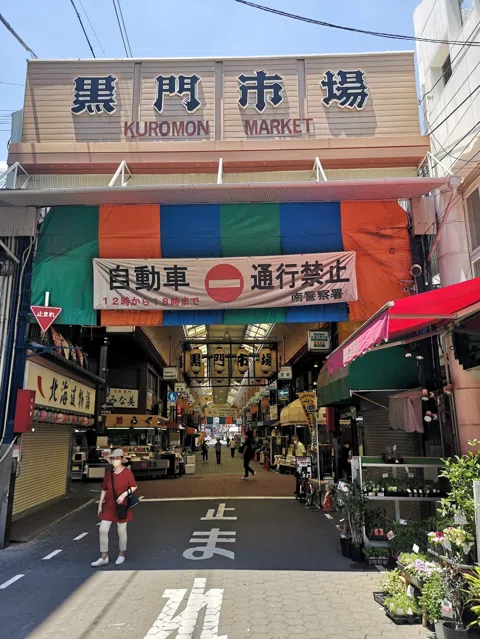
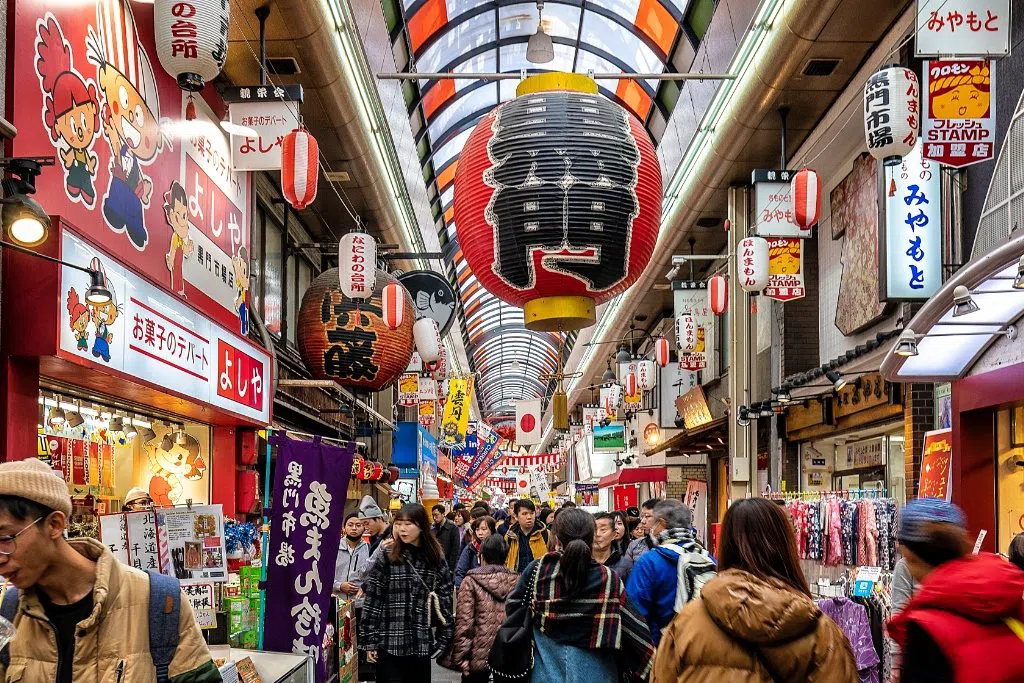
Some of Osaka's best eating isn't a restaurant at all. Kuromon Ichiba Market (Nipponbashi) is 'Osaka's Kitchen' — 150-plus stalls of grilled scallops, uni, wagyu skewers, fresh fruit and tempura — and the single best graze in the city for a group, because everyone moves at their own pace and pays for their own vices. Snacks land at ¥300–1,500 apiece. Go mid-morning to beat the crush, and note an important 2026 update: some stalls now discourage eating while walking, so use the designated seating spots rather than wandering with a dripping skewer. It's a small courtesy that keeps the market pleasant for everyone.
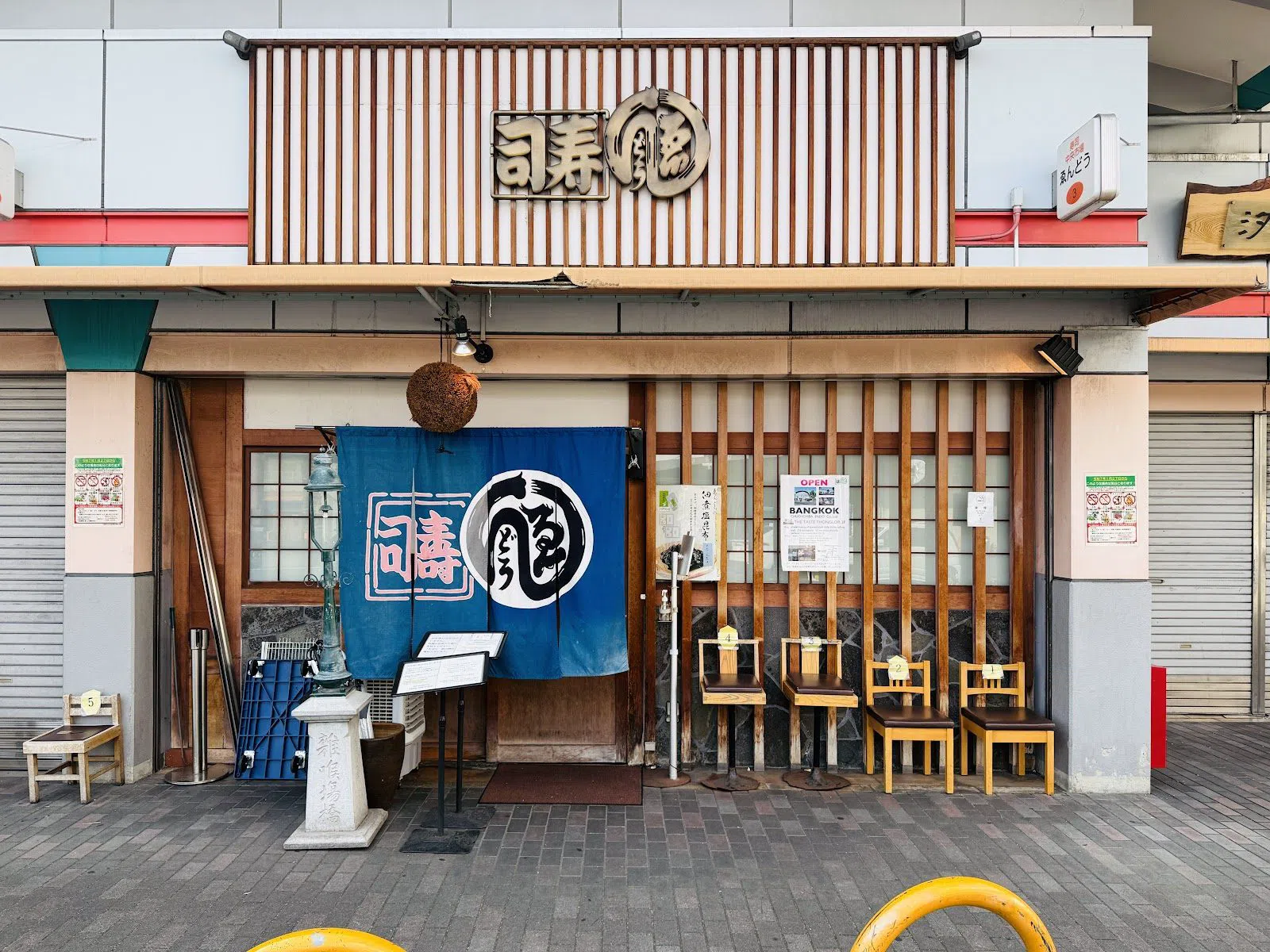
For the early risers, there's a quieter ritual worth setting an alarm for. Endo Sushi (Central Market) has served market-fresh maze sets — a curated five-piece selection — since 1907, from 6am, inside the city's central wholesale market. This is a bucket-list breakfast: the fish moves metres from boat to counter to you, and a set runs ¥1,000–2,000. Be clear-eyed about the constraints, though — it's a very small room, best for solos, pairs or a couple of friends, no good for a large party, and it's closed Sundays and holidays. There's an English menu, so ordering is painless. Turn up sleepy and reverent.
After dark: the lantern alley and the grill district
Osaka rearranges itself at night, and two very different quarters show its range.
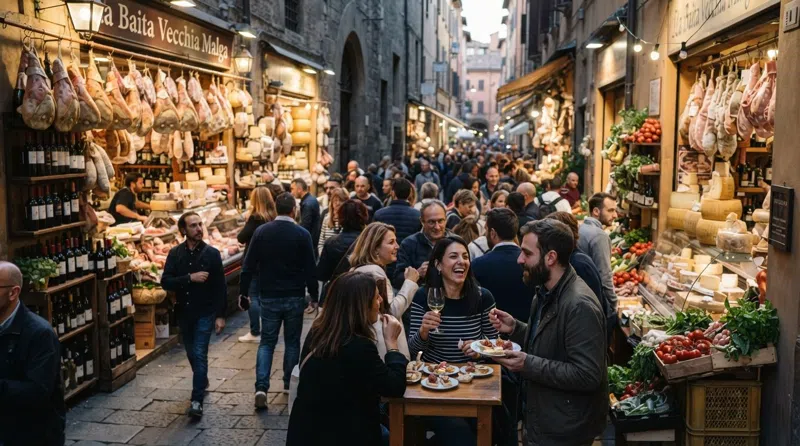
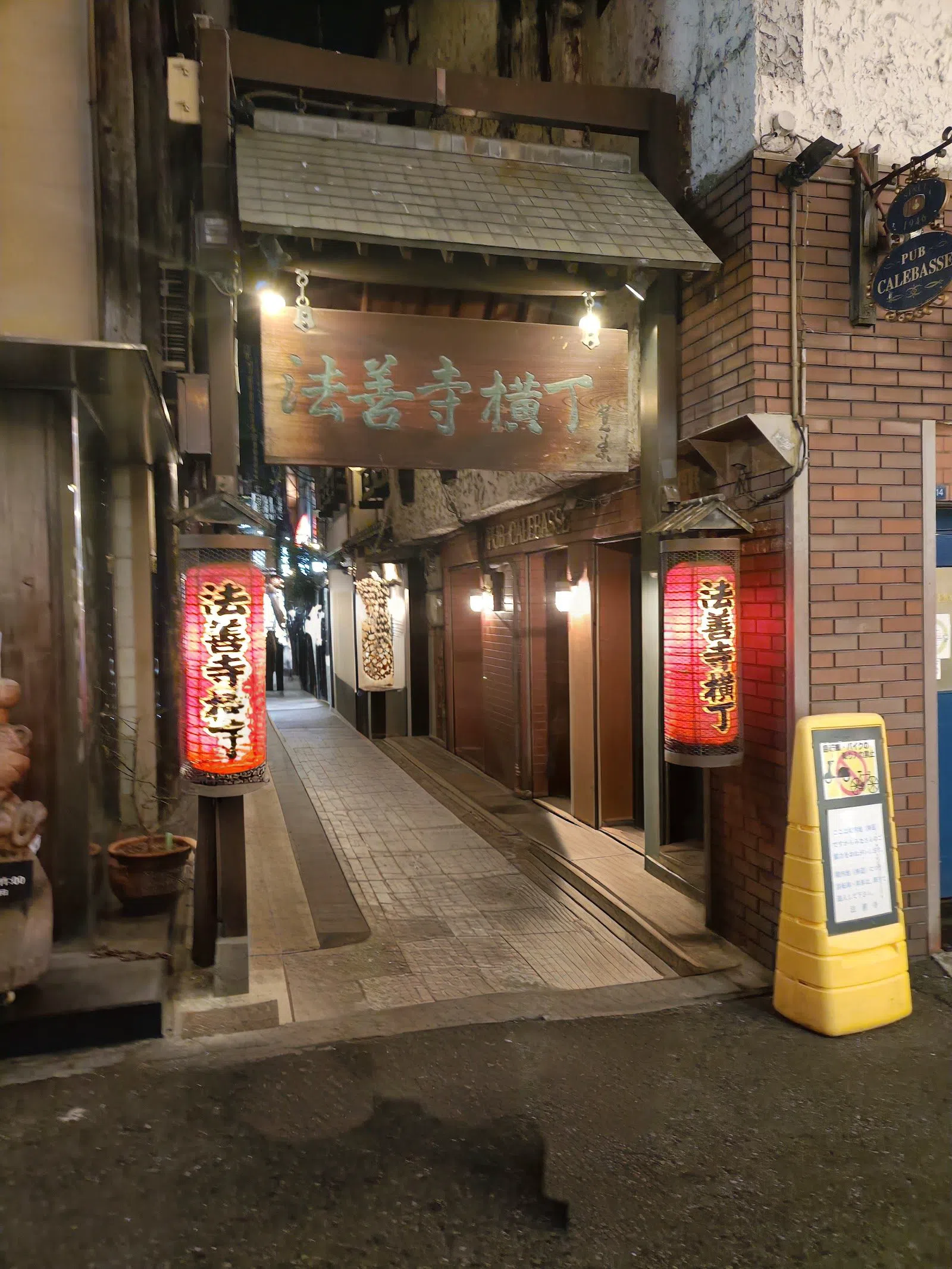
Hozenji Yokocho (Namba) is the romantic one — a narrow, stone-paved lantern-lit lane behind the Dotonbori bustle, lined with everything from tiny kushikatsu counters to serious kaiseki. It is the most characterful evening setting in the city, and it's magical after dark. The honest note: individual venues are small and can be pricier, ¥3,000–8,000 a head depending where you land, so a big group should split across a few bars rather than trying to cram into one. Wander, peer through noren curtains, commit to the one that pulls you in.
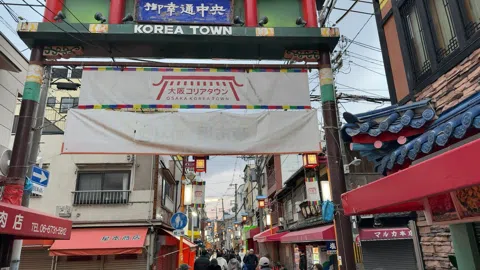
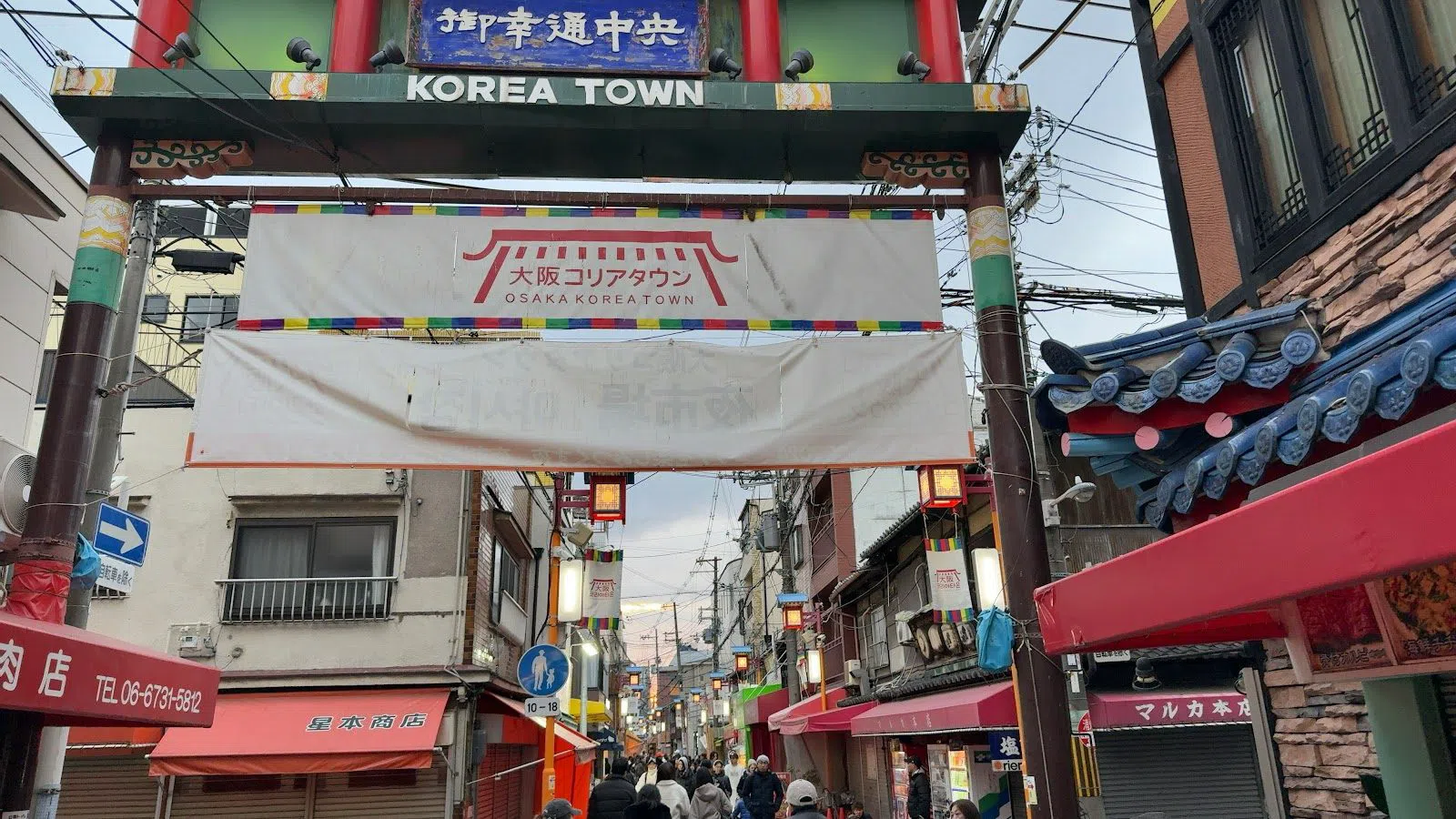
For the opposite energy, ride out to Tsuruhashi Koreatown (Tsuruhashi) — Western Japan's largest Koreatown and the beating heart of Osaka yakiniku. This is smoky, loud, joyous grilling: dozens of restaurants with proper tables, plus self-serve grill spots, and it's built for a hungry crowd. At ¥3,000–6,000 a head you get a livelier, more local night than any of the tourist-facing grill chains downtown. Bring appetite and a group; this is where the city eats with its sleeves rolled up. The area around the station is a warren of tiny shops selling kimchi and Korean groceries — worth a wander before the smoke sets in.
The splurge, the classic bowl, and eating with your hands
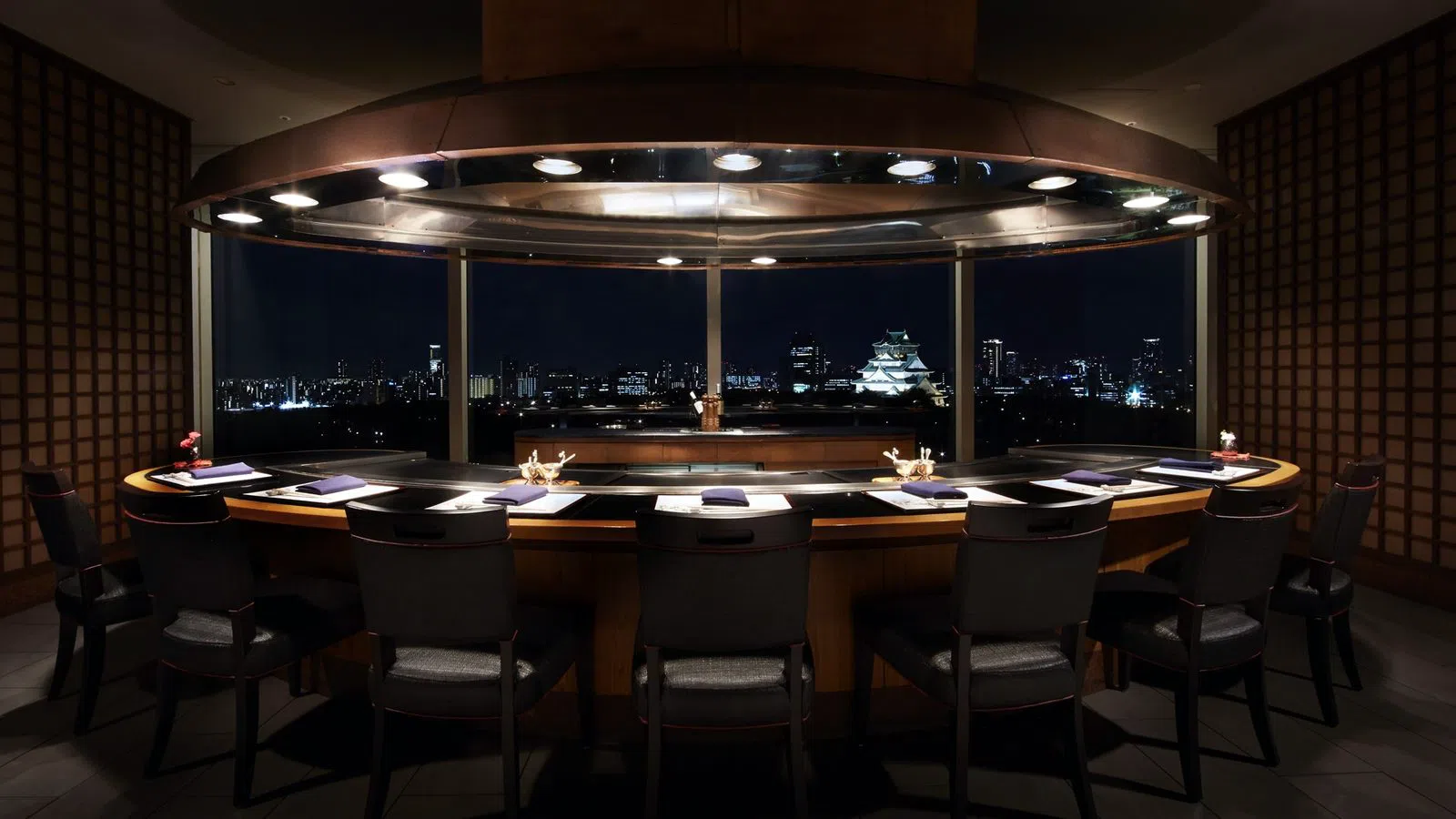
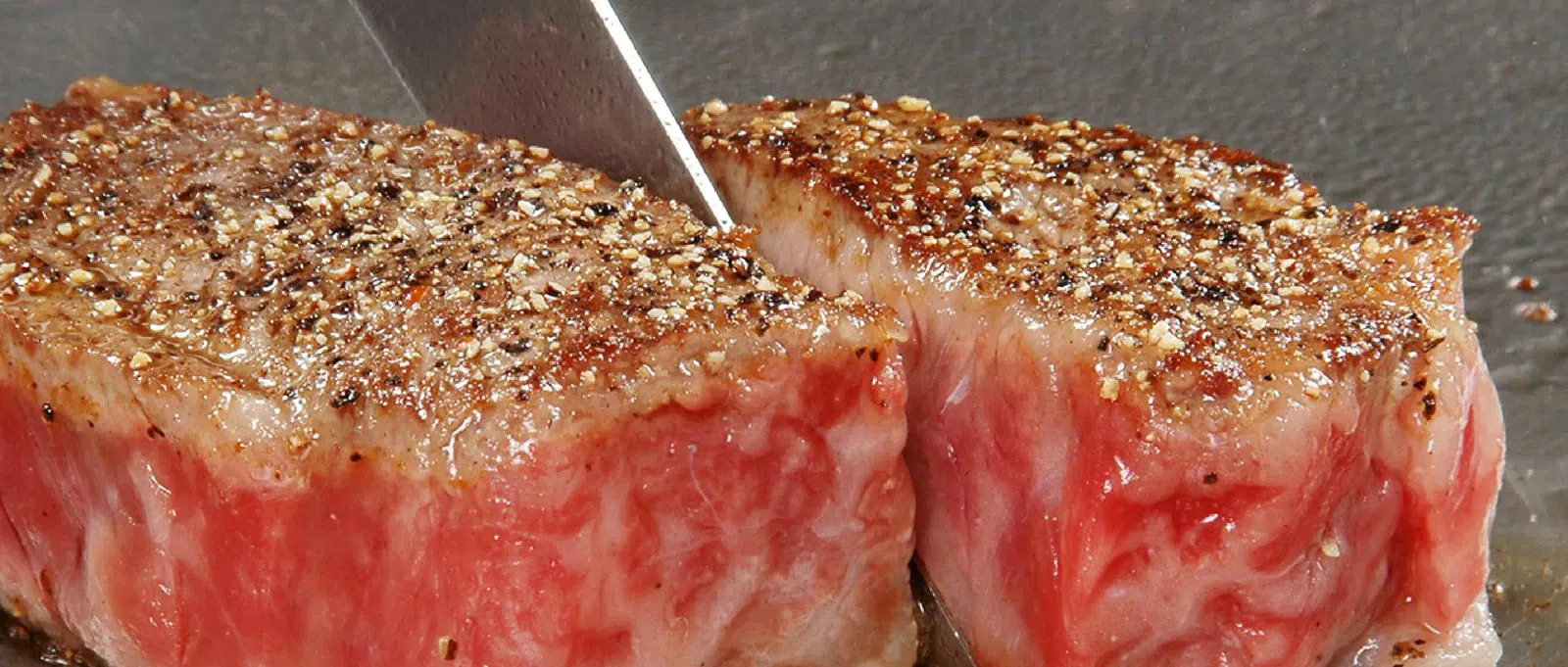
Not every Osaka meal is a ¥600 snack. When you want to mark an occasion, Teppanyaki Keyaki (inside Hotel New Otani, by Osaka Castle) is the splurge pick: premium wagyu teppanyaki cooked at the counter, with genuinely the best castle view in the city — verified live on the hotel's own 2026 site. Lunch starts from ¥7,500 and dinner from ¥16,000, and it takes groups by reservation, with counter and table teppans that suit a special-occasion party. Book ahead; this isn't a walk-in.
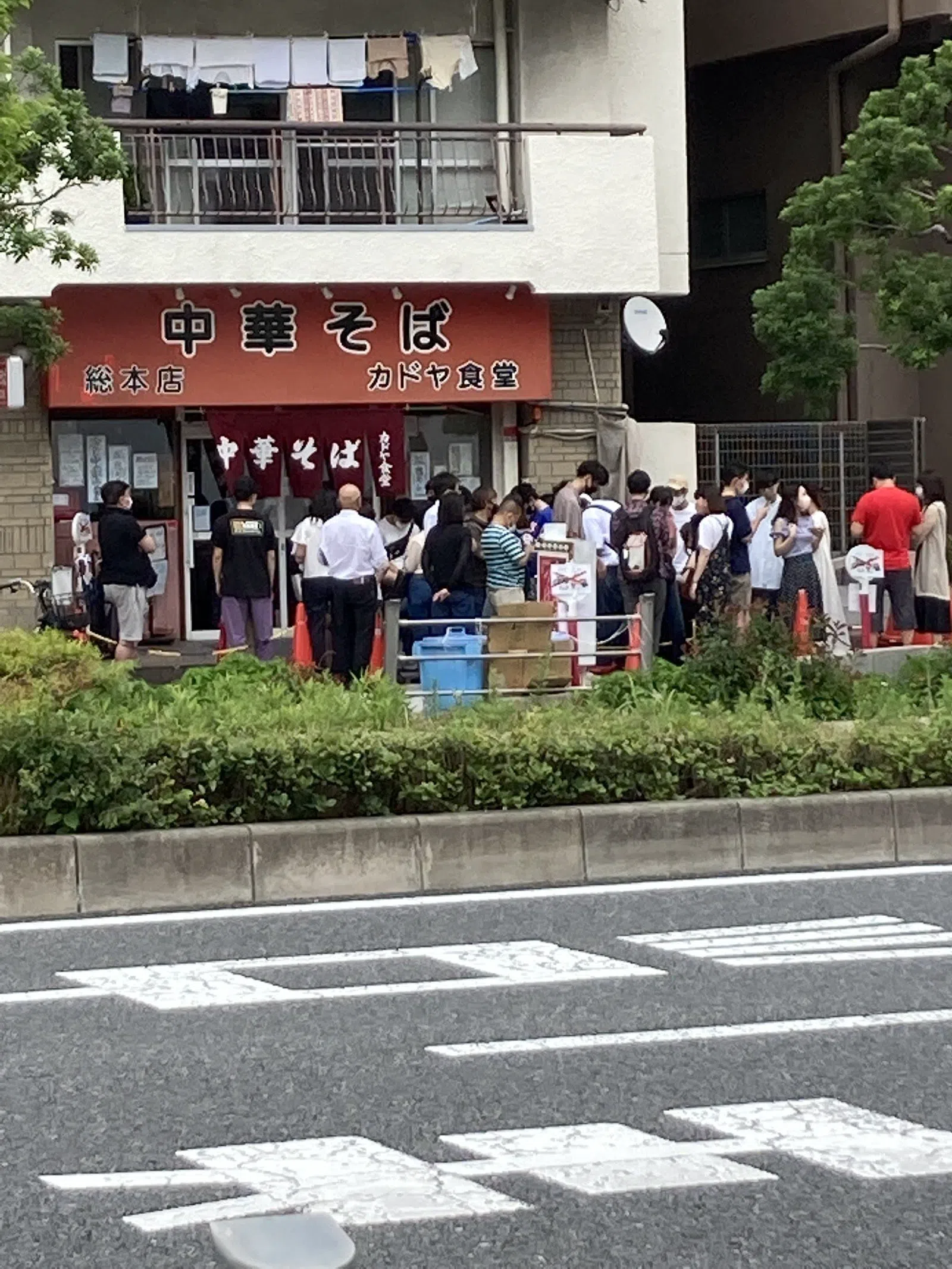
For something at the other end of the price scale but no less revered, anchor a ramen stop at Kadoya Shokudo (Fukushima). This 1953 shoyu-ramen institution is consistently rated among Osaka's best — a clean, classic soy bowl at ¥900–1,500 that shows what the city does when it isn't shouting. It's a small, counter-led shop with turnover queues, so it's best for one or two, not a big group. Come solo, sit, slurp, leave happy.
And if you'd rather make Osaka's street food than only eat it, two experiences bookend the trip well. The Okonomiyaki & Takoyaki Cooking Class (Nanba) puts you behind the griddle with English-fluent hosts, in small-group or private formats, for around ¥6,000–9,000 a head — a hands-on session that works beautifully for families and friend groups, and a smart counterpoint to all the passive eating. For a guided night into the bars locals actually drink in, the Magical Trip — Osaka Bar Hopping Night Tour (Namba) runs small groups (adults, 20-plus, all food and drink included) for around ¥12,000 a head over three hours. It's one operator with several tour variants, and it's the efficient way into the hidden Ura-Namba izakaya for first-timers who don't want to fight the language barrier. Neither is essential, but both turn a food trip into something you'll actually remember doing, not just tasting.
Practical notes: getting around, cash and timing
Getting around. Central Osaka is compact and superbly train-linked; the Midosuji subway line strings together the key eating grounds, and Namba, Shinsaibashi and Umeda are the hubs to orient by. Grab an ICOCA (or add one to your phone) and you'll tap through everything without thinking. Most of this guide is walkable in clusters — Dotonbori, Namba, Shinsekai and Kuromon form one loose district you can graze across on foot.
Cash. Card acceptance has improved sharply, and hotels, chains like Chibo and the tour operators take plastic happily. But the best street food — a box of takoyaki, a market skewer, a tiny alley counter in Hozenji Yokocho — still runs on coins. Carry ¥5,000–10,000 in cash per person per eating day and you'll never be caught out.
Timing. Osaka rewards the early and the late. Endo Sushi wants you at 6am; Kuromon is best mid-morning before the crowds; the alleys and grills only come alive after dark. Build a day around that rhythm rather than three big sit-down meals. Weekday lunches at the reservation places (Daruma branches, Teppanyaki Keyaki) are calmer and often cheaper than dinner.
Budget. You can eat gloriously in Osaka for very little. A full day of street grazing — kushikatsu, both takoyaki styles, an okonomiyaki, a market breakfast — lands around ¥4,000–6,000 a head. Add a yakiniku night in Tsuruhashi or a splurge at Teppanyaki Keyaki and you're at ¥12,000–20,000. That's the beauty of kuidaore: the city lets you ruin yourself on any budget. Just pace it, drink water between the fried things, and leave one meal hungry — Osaka will always give you a reason to come back.
Before you go
What does kuidaore actually mean?
Kuidaore roughly translates as 'to ruin yourself by eating' — an old Osaka phrase that's become the city's proud food philosophy. It captures the local habit of prioritising eating above almost everything else, spending freely on street food, markets and counters until you can't manage another bite.
What are Osaka's three signature street foods?
Kushikatsu (deep-fried panko skewers, defined by Kushikatsu Daruma in Shinsekai), okonomiyaki (a savoury griddled cabbage pancake, best at Mizuno or Chibo in Dotonbori) and takoyaki (molten octopus dumplings from Wanaka or Kukuru). Trying all three across a day is the classic Osaka introduction.
Which Osaka food spots work for large groups?
Chibo has multiple floors and table teppans for okonomiyaki; Tsuruhashi Koreatown's yakiniku restaurants seat hungry crowds; Kuromon Ichiba lets everyone graze at their own pace; and Daruma's Dotonbori branch takes weekday reservations for two or more. Avoid tiny counters like Mizuno, Endo Sushi and Kadoya Shokudo with big parties.
Do I need cash to eat in Osaka in 2026?
Cards are widely accepted at hotels, chains and tour operators, but the best street food — takoyaki boxes, market skewers and tiny alley counters in Hozenji Yokocho — still runs largely on cash. Carry ¥5,000–10,000 per person per eating day to be safe.
What's the best time to visit Kuromon Ichiba Market and Endo Sushi?
Visit Kuromon Ichiba mid-morning to beat the crowds, and use the seating spots since some stalls now discourage eating while walking. Endo Sushi opens at 6am for market-fresh sushi sets and is best for early risers — note it's closed on Sundays and holidays.