Osaka's oldest piece of advice to visitors doubles as a joke Osaka tells about itself: kuidaore — eat until you drop, or, more literally, eat until you're ruined. It's a boast wrapped in self-mockery, coined in a city that has spent four centuries building the infrastructure to make good on it — a covered fish market that never went polite, a canal-side strip lit up like a fairground for crab and octopus, and an entire street sold on nothing but the knives and pans behind it all. Nowhere sums up that spirit faster than the market at the center of it: walk in hungry, walk out with sauce on your sleeve, and you'll understand why "ruined" is a compliment here.
Kuromon Ichiba: The Engine Room
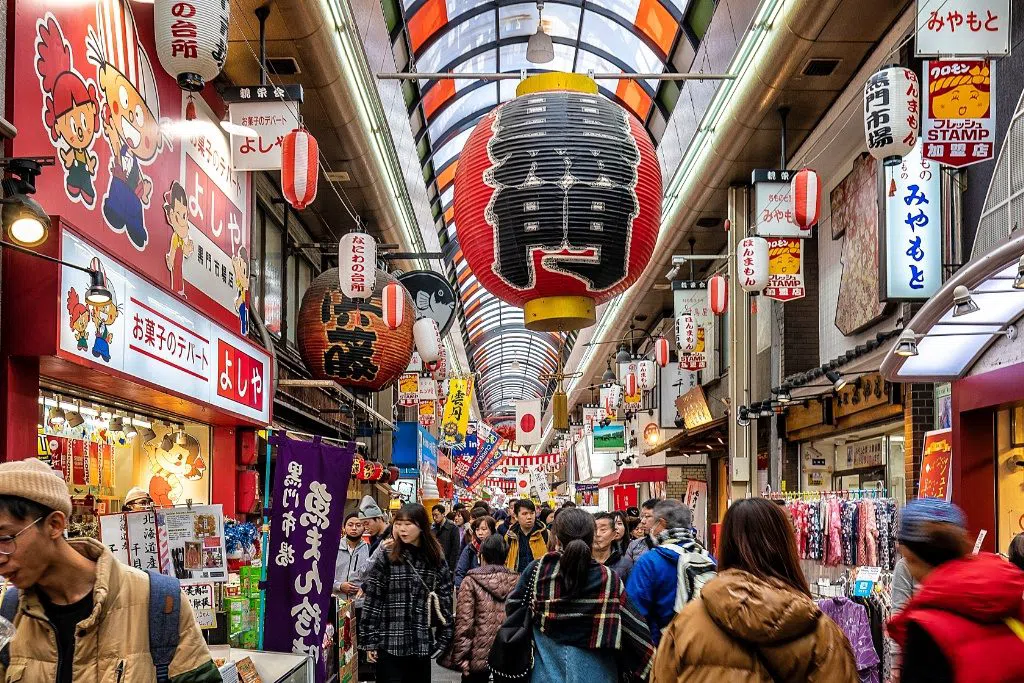
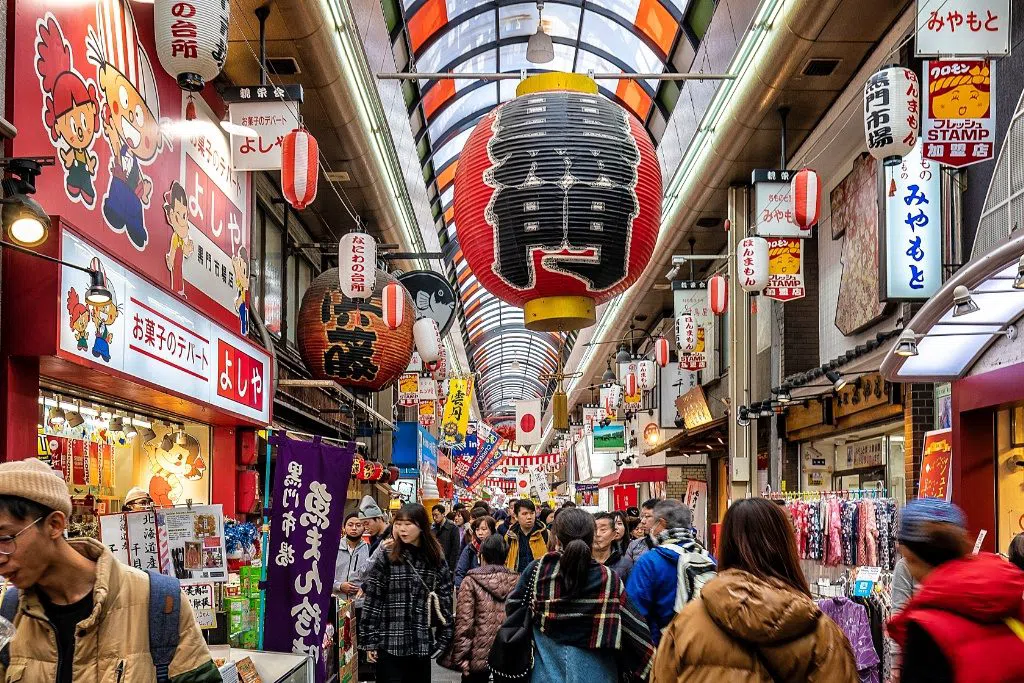
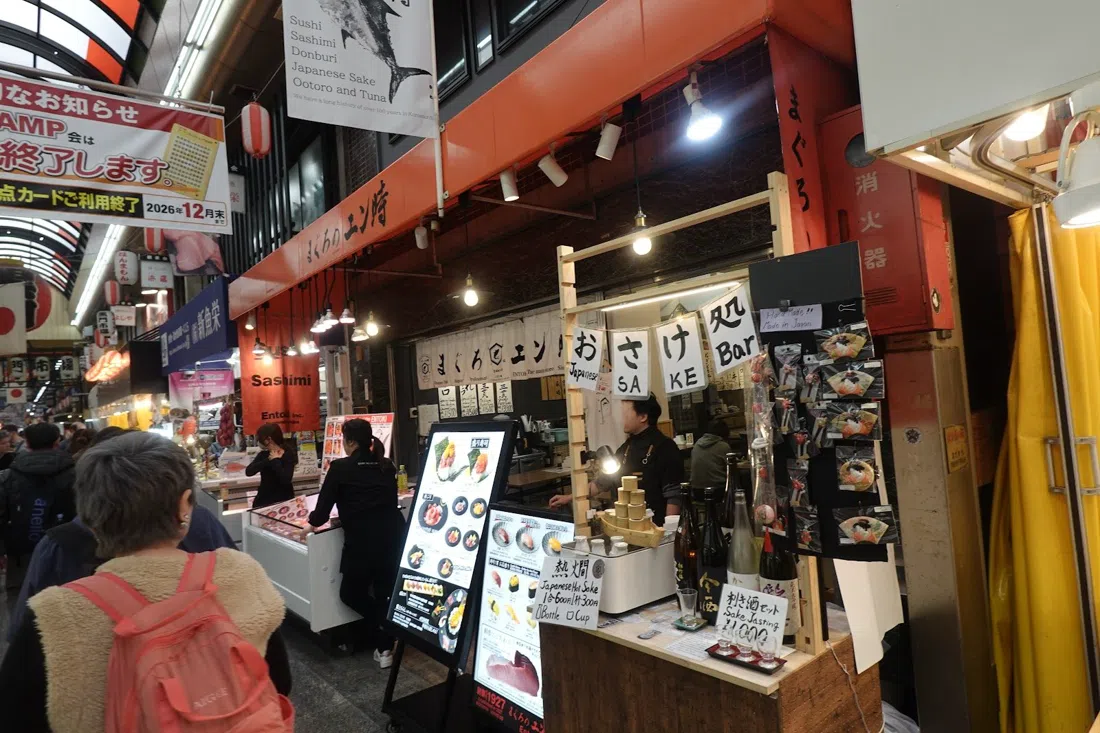
Kuromon Ichiba Market (Nipponbashi, central Osaka) started almost 190 years ago as a wholesale fish market feeding the restaurants around it, and it never fully gave up that job even as it turned into the covered eat-as-you-walk arcade visitors know today. There's no door, no cover charge, no booking system — it's a public arcade, so groups don't reserve, they just spread out along the strip and text each other a meeting point further down. The trade-off is crowding: by midday the aisles narrow to shoulder-to-shoulder, and the smart move is arriving before 10am, while stallholders are still setting up and the market's own regulars are doing their actual shopping rather than tourists doing theirs. Budget roughly ¥2,000–¥4,000 per person to graze properly through two or three stops — this isn't a sit-down meal, it's a moving one, eaten standing at counters with the market's noise and ice and shouted orders behind you.
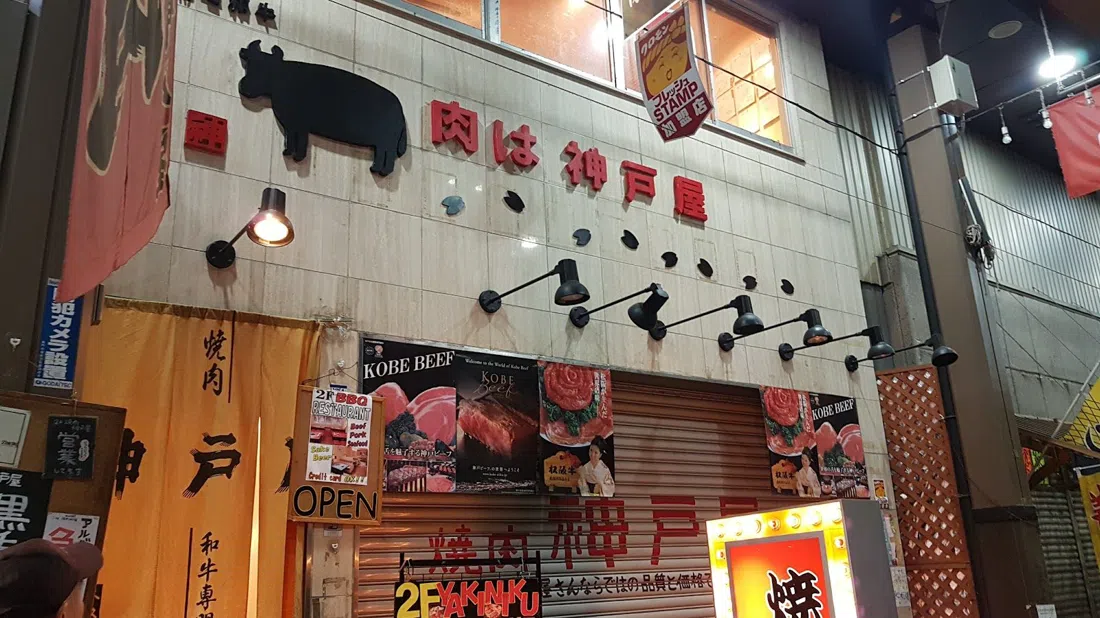
The market's benchmark stop is Maguro no Entoki, a tuna sashimi stall trading since 1927 that still cuts to order at the counter. It's grab-and-go, which suits groups fine — split up, order individually, regroup a few stalls down — and a portion runs ¥500–¥1,500 depending on the cut. This is the stall for the otoro money shot: a single fatty tuna slice, sliced to order, eaten standing up with the whole market as backdrop. A few stalls over, Meat Shop Kobeya carries the market's other reputation, for beef. It's a working butcher with a yakiniku counter attached — genuine A5 Kobe and Matsusaka beef at prices that undercut what visitors pay for the same grade elsewhere in the city. The ground floor is skewers and grab-and-go, ¥1,000–¥3,000 a portion; upstairs is proper eat-in seating that can actually hold a group if you'd rather sit and grill than eat standing.
Dotonbori: The Postcard That's Also Dinner
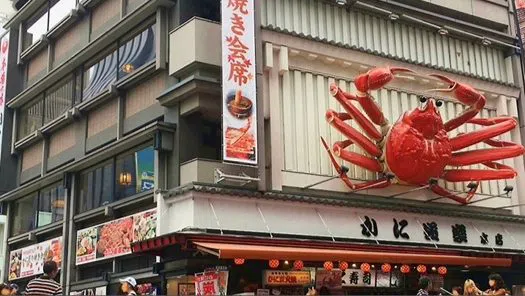
Ten minutes south, Kani Doraku, Dotonbori Honten (Dotonbori) is the giant mechanical crab sign every visitor photographs before they've eaten anything — but it's worth going inside, because the restaurant behind the sign is a genuine multi-course crab kaiseki operation, not a tourist backdrop dressed up as one. It's built across several floors specifically for tour groups and set menus, so large parties are the default booking, not an inconvenience; expect ¥5,000–¥10,000 per person for a proper course. If that's more sitting-down meal than the moment calls for, Takoyaki Doraku Wanaka, a few streets over, is the opposite end of the spectrum: a takeaway counter selling the octopus balls that are arguably Osaka's single most-copied street food, repeatedly voted the city's best version. It's built for queuing and eating curbside — ¥500–¥800 for a pack of six to eight, no seating required, no reservation possible or needed.
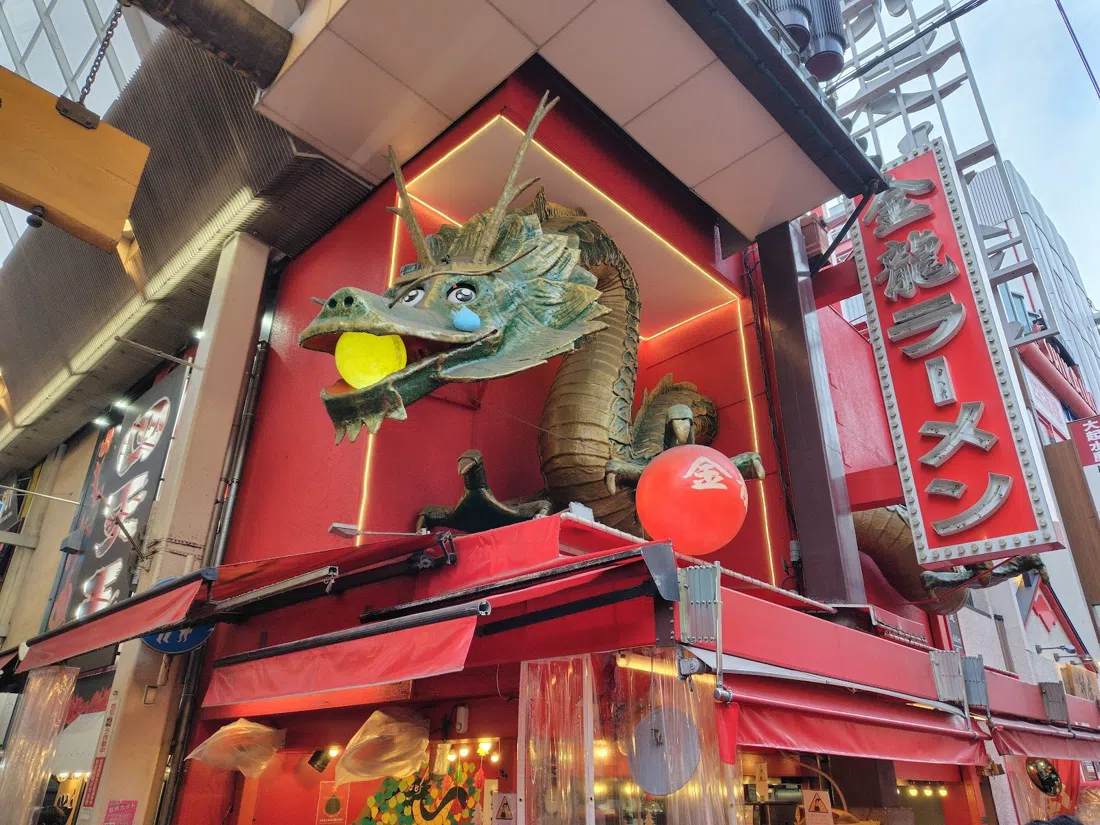
For the late shift, Kinryu Ramen, Dotonbori runs 24 hours, which matters more than it sounds — Osaka's markets and depachika food halls close by early evening, and Kinryu is the one still serving when everything else in this guide has shuttered. A bowl is ¥700–¥900, with a free self-serve bar of garlic, chives, and kimchi to pile on top. It's fast, cheap, and built for groups arriving hungry and scattered at midnight — not a destination meal, but the honest last stop of a kuidaore day.
Shinsekai: Where the Dish Itself Was Born
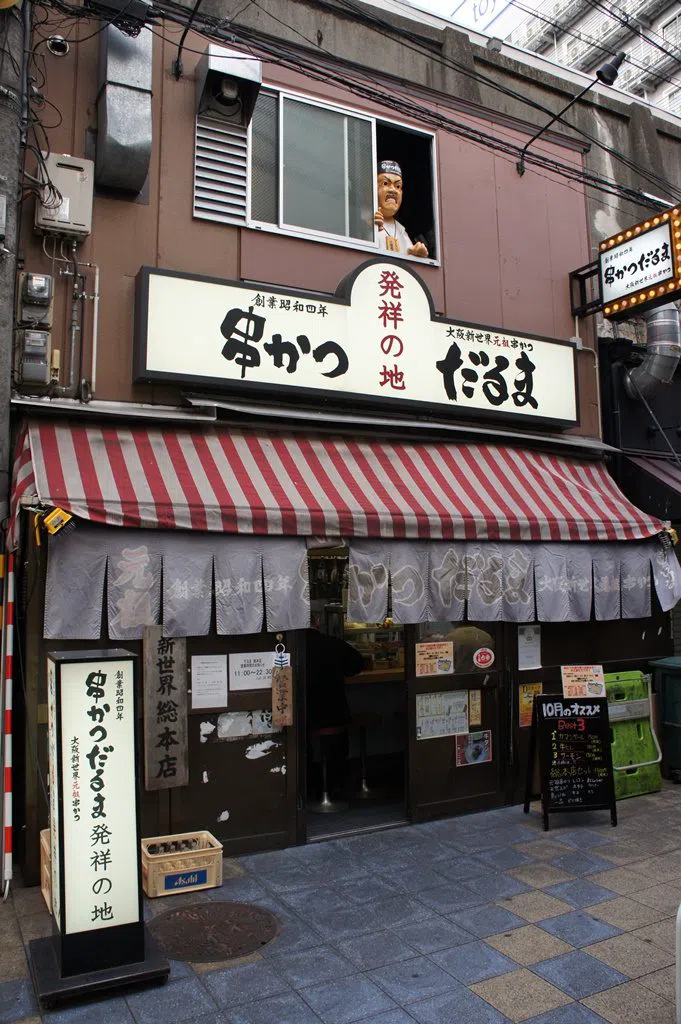
Most of what Osaka eats standing up traces back to one restaurant. Kushikatsu Daruma, Shinsekai Honten (Shinsekai) opened in 1929 and is generally credited as kushikatsu's birthplace — the deep-fried, skewered street food that, more than any other dish, explains why Osakans eat on their feet instead of at a table. The Shinsekai flagship spans multiple floors and regularly hosts full tour groups, so it's genuinely group-friendly, but book ahead for parties of six or more rather than showing up and hoping for a table. A meal runs ¥1,500–¥3,000 per person, skewer by skewer, and the low-rise, unglossy streets around it are as much a part of the experience as the food itself — this is old Osaka, not the polished version.
Beyond the Center: The Market Culture That Doesn't Perform for Tourists
Kuromon gets the crowds, but two other markets show where Osaka's kitchen culture actually runs when nobody's watching. The Osaka Municipal Central Wholesale Market (Fukushima) is the working market that Kuromon effectively evolved out of — this is where the city's restaurants still buy their fish today. The auction floor itself is licensed-buyer only, but the public dining areas welcome groups, and the move is going early: 5–7am for the auction, then breakfast at one of the public sushi counters, where the fish is fresher than anywhere else in the city because it hasn't traveled anywhere yet. Expect ¥1,500–¥4,000 per person, and expect it to feel like a genuinely working market rather than a curated experience.
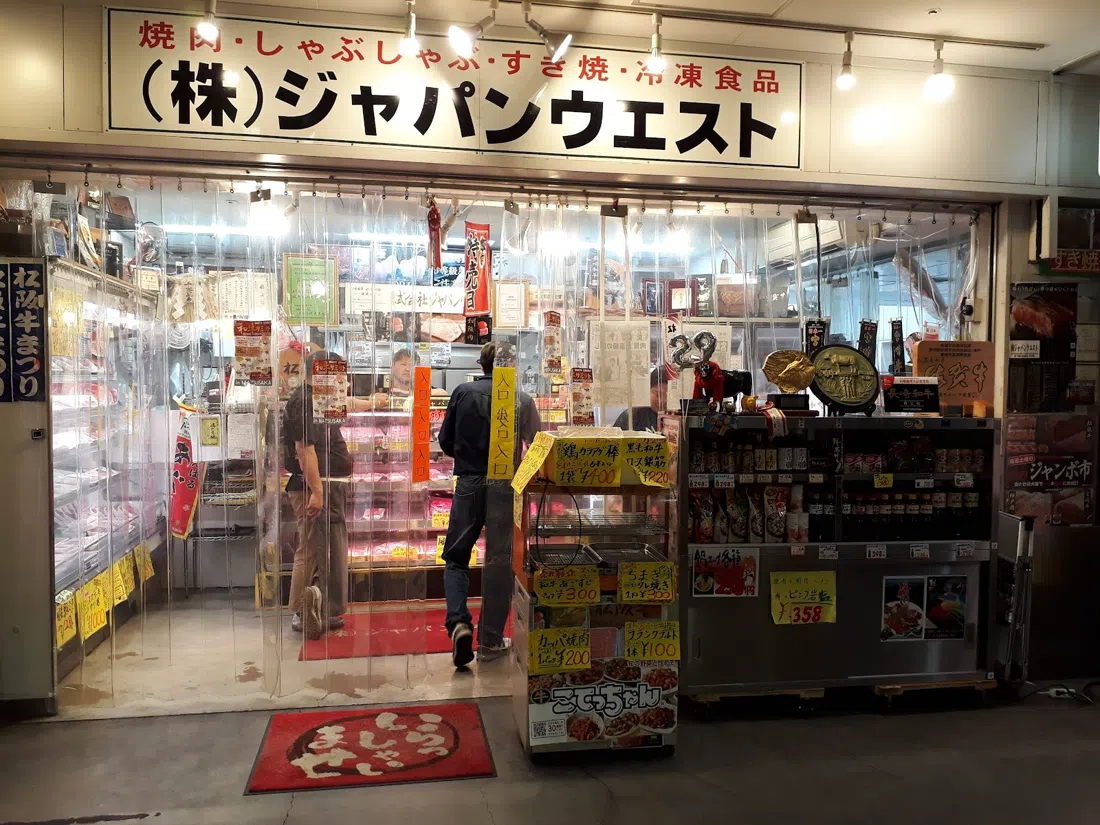
Further east, Ganso Mawaru Genrokuzushi, Higashi-Osaka Honten (Higashi-Osaka) has a claim that sounds like marketing until you check it: this is where conveyor-belt sushi was invented, in 1958 — a format now running in food courts on every continent. The counter seating turns over fast and is informal enough for walk-in groups, no reservation drama, and at ¥135–¥400 a plate it's the cheapest genuinely excellent meal in this whole guide.
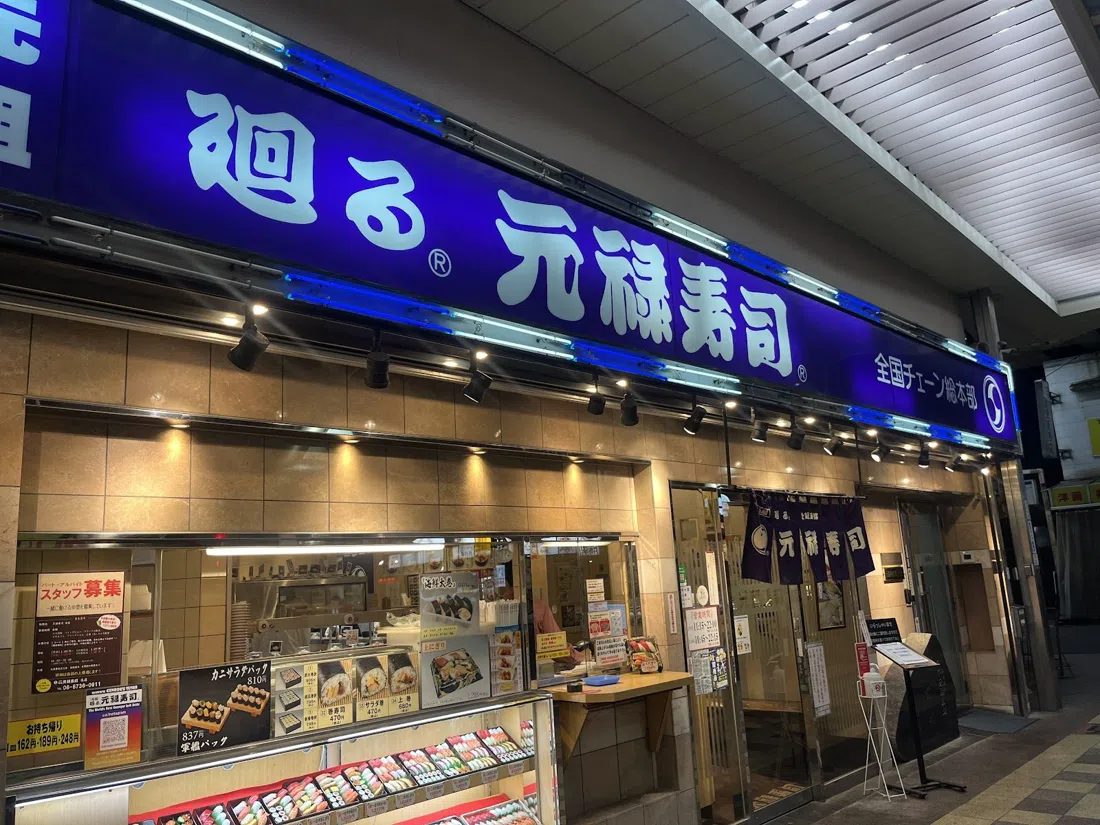
And for the side of kuidaore that gets photographed less often, Tsuruhashi Korea Town Market (Tsuruhashi) is Japan's largest Koreatown market and the honest counterpoint to Kuromon's fish-and-tuna identity — proof that Osaka's eat-everything culture absorbed a whole other cuisine rather than just tolerating it next door. Many of the yakiniku halls here are purpose-built for groups, with grills set into every table, and weekdays are noticeably calmer than weekends if a market without elbow-to-elbow crowds sounds appealing. Street food runs ¥1,000–¥3,000 per person; a proper sit-down yakiniku meal costs more, but the portions and quality both justify it.
The Tools Behind the Table, and the Rainy-Day Backup
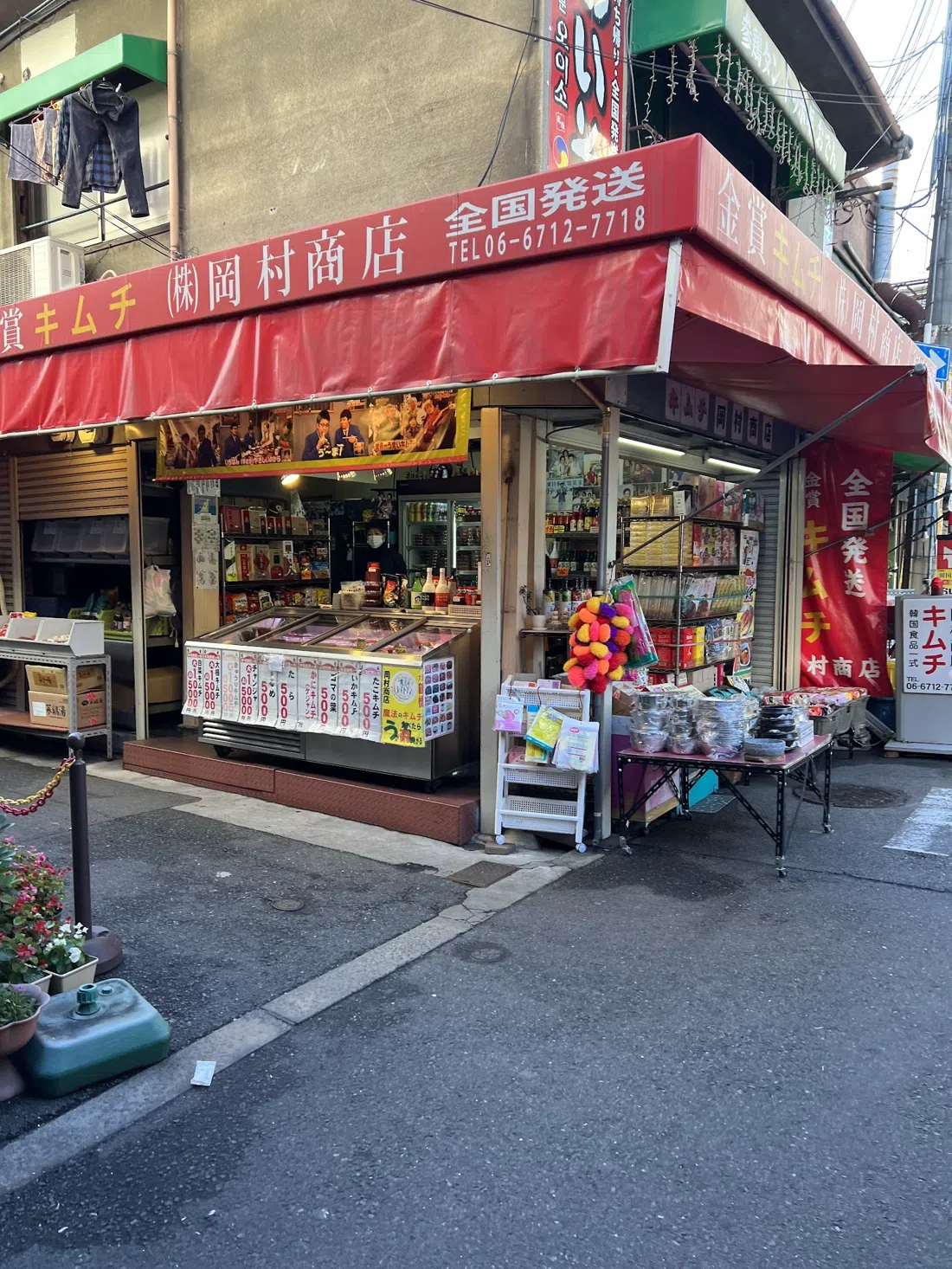
None of the above happens without somewhere to buy the equipment, and Osaka has a street for that too. Sennichimae Doguyasuji (Kitchenware Street) (Namba, a short walk from Dotonbori) is the literal kitchen behind Osaka's kitchen culture — a full street of professional cookware shops where the city's chefs and market stallholders buy their knives, pans, and takoyaki griddles. It's free to browse, shops are used to groups wandering through, and some knife shops run engraving demonstrations on the spot. Knives start around ¥1,000, though the good ones run considerably more, and even non-cooks tend to leave with something.
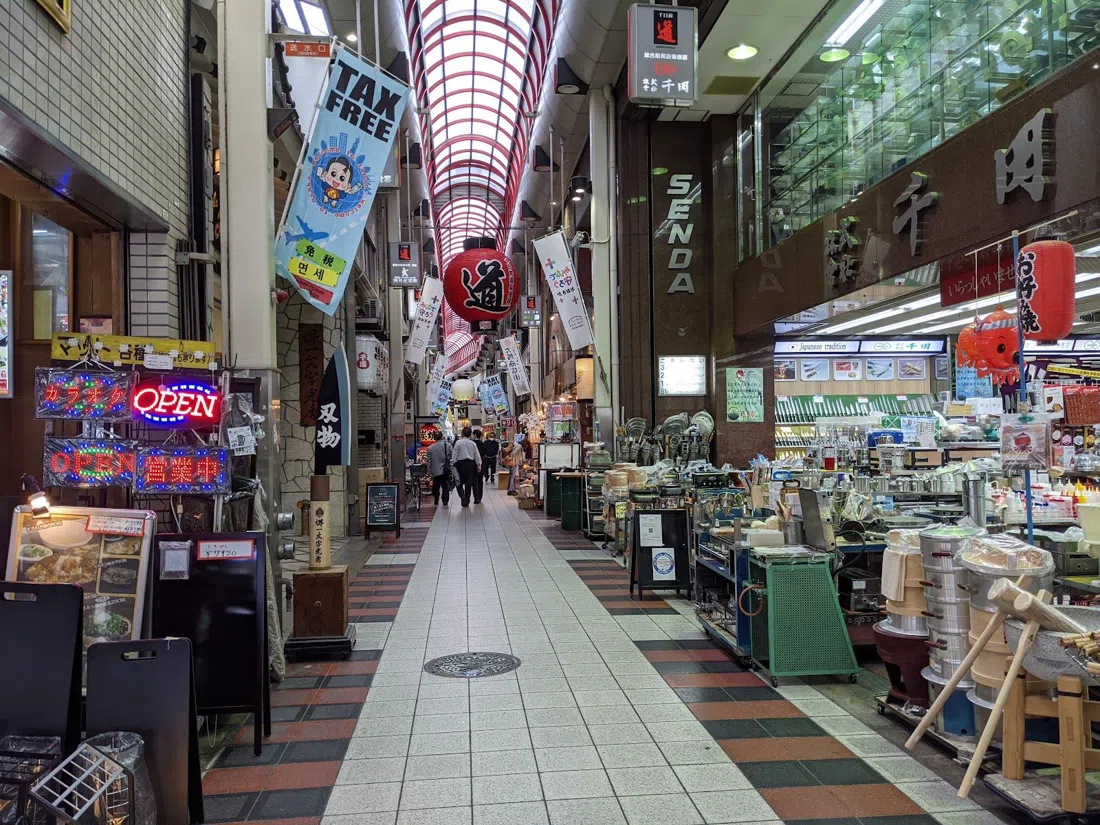
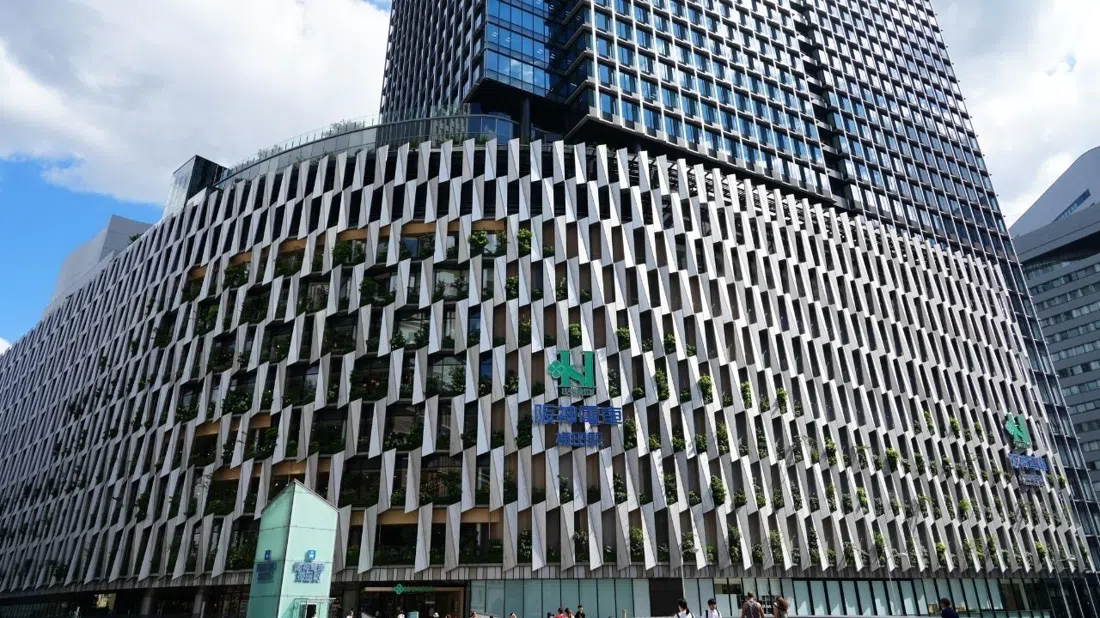
For a wet or exhausted afternoon, Hanshin Umeda Depachika (Umeda) is the indoor, all-weather bookend to Kuromon's open-air grazing. Rebuilt in 2022, it's still widely considered Osaka's best-loved department-store basement food hall — an entire floor of stalls where groups can split up, graze, and regroup exactly like at Kuromon, just under a roof and with air conditioning running. Expect ¥500–¥3,000 per person depending on what catches your eye; it's as good a fallback plan as a destination in its own right, and a useful last stop before an evening train.
For the wider picture of where to sleep, eat, and move around the rest of the city beyond this itinerary, the Osaka guide covers the full picture.
Getting There, Cash, Timing, Budget
Transport. Kuromon Ichiba sits a short walk from Nippombashi Station; Dotonbori and the Sennichimae kitchenware street are both walkable from Namba Station, one stop away; Shinsekai is served by Dobutsuen-mae Station; Tsuruhashi Korea Town has its own station on the JR loop line; Hanshin Umeda Depachika sits beneath Osaka/Umeda Station in the north of the city. A day built around Kuromon, Dotonbori, and Shinsekai is walkable end to end if a couple of kilometers on foot doesn't bother you; add Tsuruhashi or the wholesale market on the same day and it's worth budgeting for the subway between them.
Cash. Card acceptance in Osaka has improved fast, but small stalls inside Kuromon Ichiba, Tsuruhashi, and the outer wholesale market still often prefer cash for anything under a few hundred yen. Carry some — convenience store ATMs (7-Eleven is the reliable one) are everywhere and accept most foreign cards.
Timing. Get to Kuromon Ichiba before 10am if crowds bother you; by midday it's genuinely shoulder-to-shoulder and slow going. The wholesale market rewards an even earlier start, 5–7am for the auction. Kushikatsu Daruma and Kani Doraku are dinner-hour destinations best booked ahead for groups of six or more. Kinryu Ramen is the one place on this list with no wrong hour — it's open all night, every night.
Budget. A grazing day through Kuromon plus a sit-down dinner at somewhere like Kushikatsu Daruma, or a mid-tier crab course at Kani Doraku, lands most travelers around ¥6,000–¥12,000 per person for food alone (roughly $40–$80), before drinks. Sushi at Genrokuzushi or ramen at Kinryu can bring an entire meal down under ¥1,000. For where to base yourself between meals, the Osaka hotel search covers options close to both Kuromon and Dotonbori, which keeps this whole itinerary within walking distance of wherever you're sleeping.