Osaka-nummeret
Walking Osaka's Uehommachi and Shitennoji temple quarter
Temples, a bone-Buddha hall, a 7,000 m² lawn and a basement of six-seat counters are all within walking distance on the Uemachi plateau.

Av Inês CarvalhoOsaka one neighbourhood at a time
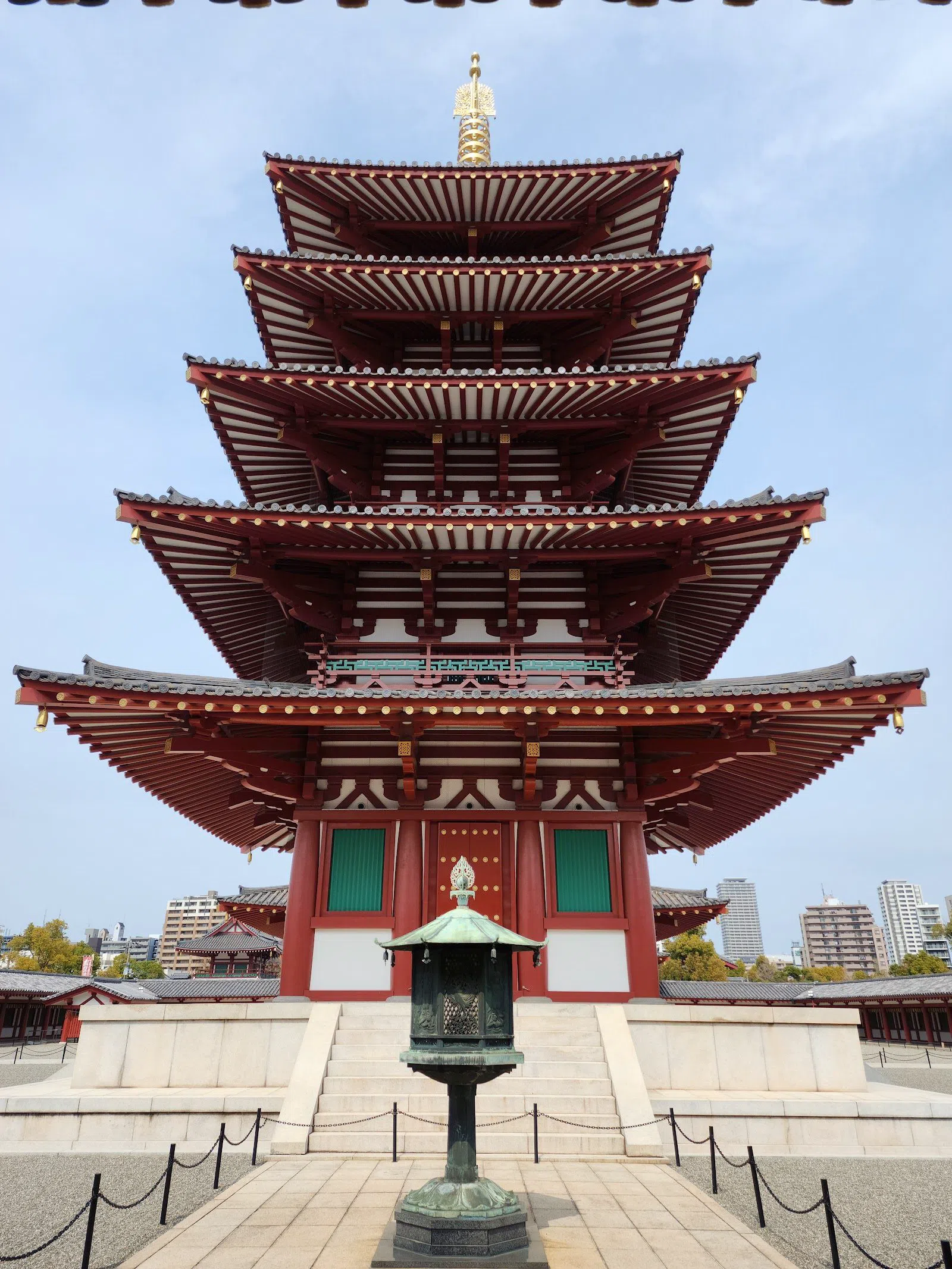
Shitennoji Temple was Japan's first state-commissioned Buddhist temple, and it has stood on the Uemachi plateau since 593. Its outer grounds are free and open 24 hours, and on the 21st and 22nd of every month 300 to 500 stalls of antiques, old kimono and street food fill them. Five minutes' walk away, Isshin-ji Temple keeps six Buddhas cast from the ashes of roughly a million people.
Shitennoji Temple and the 21st of the month
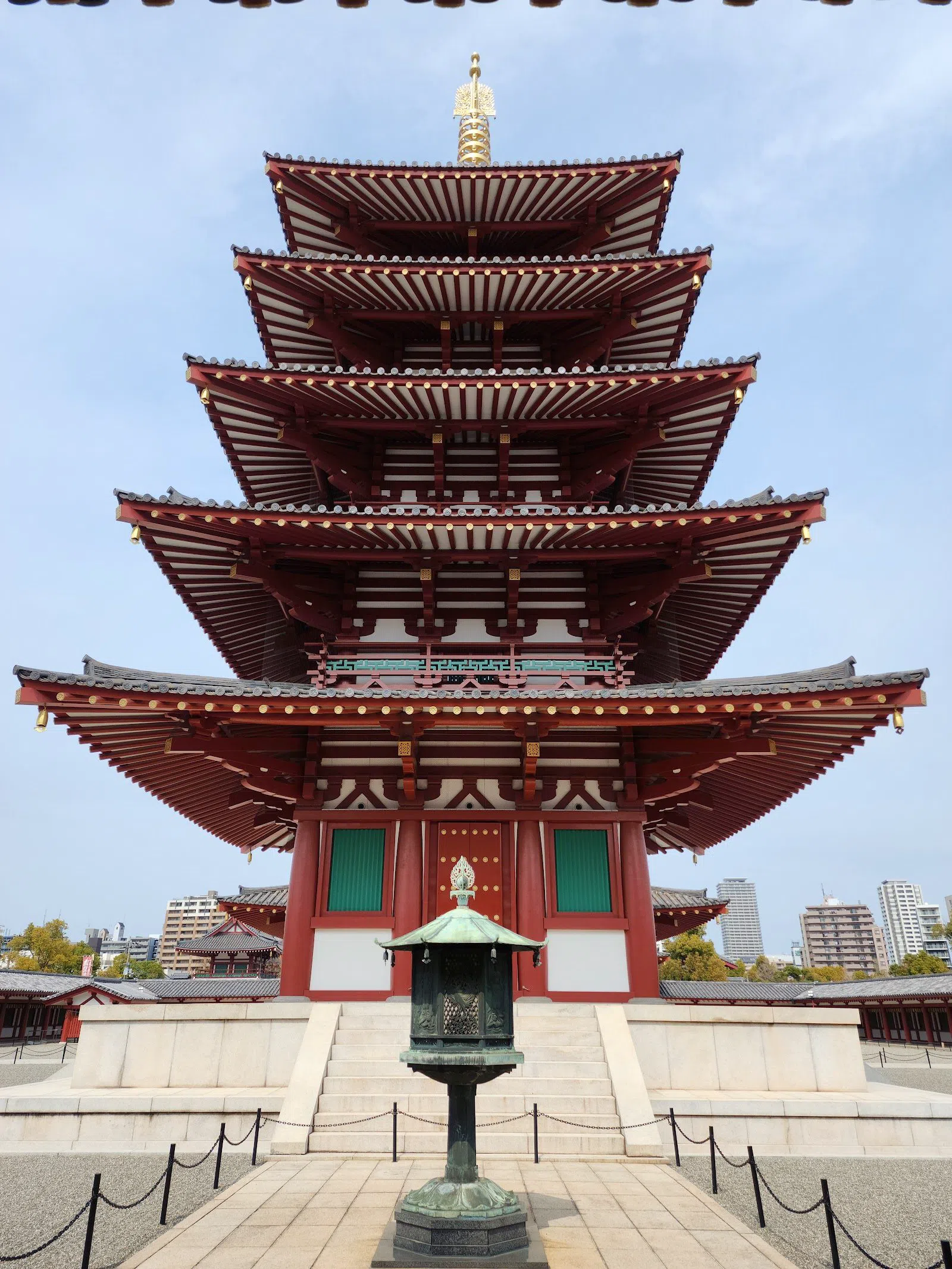
A large stone torii gate opens the approach. Inside it is the Chushin Garan, a square roofed cloister with the five-storey vermilion-and-white pagoda in the middle. The free outer grounds have a turtle pond crossed by stone bridges, and you can walk them at any hour.
Ticketed areas open 8:30 to 16:30 from April to September. From October to March they close at 16:00. The Central Precinct and the Treasure House are ¥500 each, the Gokuraku-jodo Garden ¥300. Parties of 30 or more pay ¥100 less a head.
The garden shuts from the 1st to the 10th of most months, so check the date before you build a morning around it. For the market, come on the 21st, when the gates open at 8:00 and the stalls cost nothing to walk.
Planlegg reisen til Osaka
Oppdaterte priser fra våre bookingpartnere.
Gratis avbestilling på mange rom. Vi kan motta provisjon når du bestiller.
Isshin-ji and Aizendo Shomanin
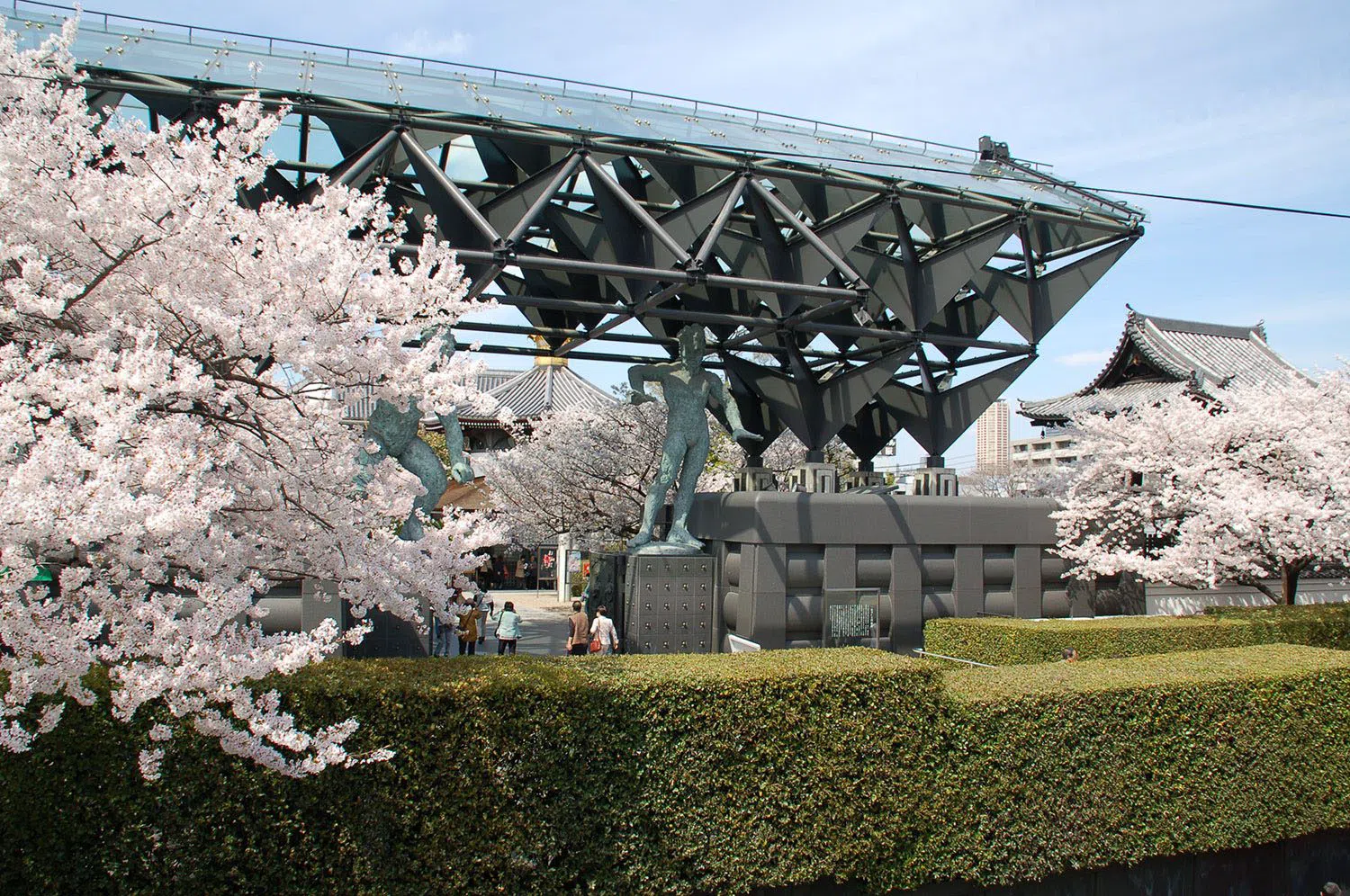
Isshin-ji's entrance is a curving arch of bare concrete flanked by abstract cast-metal guardian figures, with a concrete and steel hall behind it, nothing like a wooden temple gate. Since 1887 the temple has cast six Okotsubutsu, bone Buddhas made from human ashes, and the seventh is due in 2027. Entry is free, 9:00 to 16:00 daily, five minutes from Shitennoji-mae Yuhigaoka.
It is a working crematorium temple. Shoes come off in the hall, photography is banned in the charnel hall, and voices stay low.
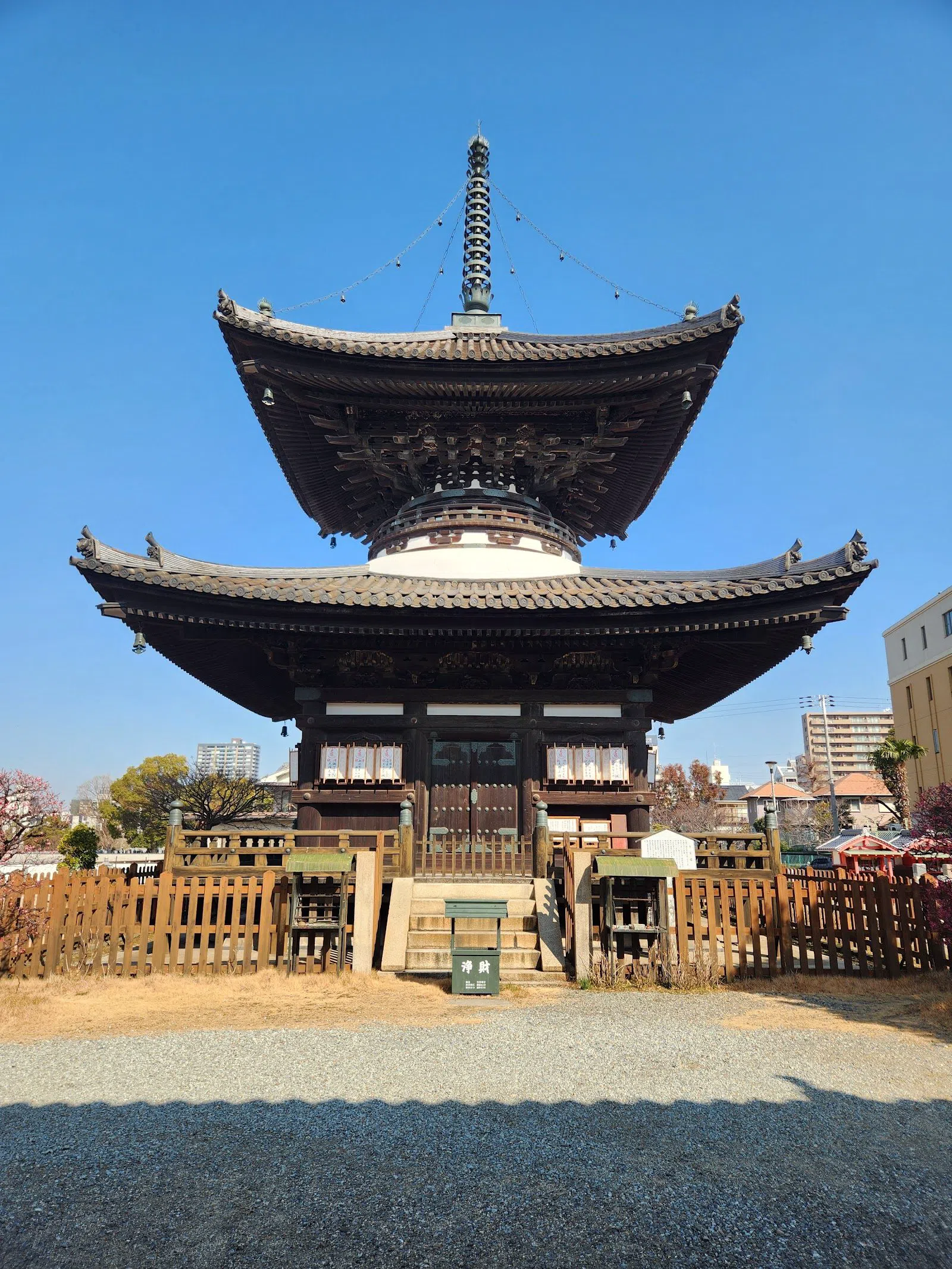
Aizendo Shomanin has the oldest wooden structure in the city, a two-tiered tahoto pagoda that Toyotomi Hideyoshi rebuilt in 1597 and that is now a National Important Cultural Property. The lower storey is square and the upper one round, the timber dark and weathered above white plaster walls, and the walled compound around it is tiny. Entry is free and the grounds open 9:00 to 16:30 year-round. From 30 June to 2 July the Aizen Matsuri, reckoned Japan's oldest summer festival, opens the pagoda and the hidden Aizen Myoo image.
Kiyomizu-dera and the Tamade-no-taki waterfall
Kiyomizu-dera is Osaka's own Kiyomizu, and its timber viewing stage juts west over tiled rooftops towards the old Yuhigaoka slopes, sunset hill. Behind the hall, Tamade-no-taki drops in a single thin line through a torii into a stone basin, the only natural waterfall inside the city. The grounds are free.
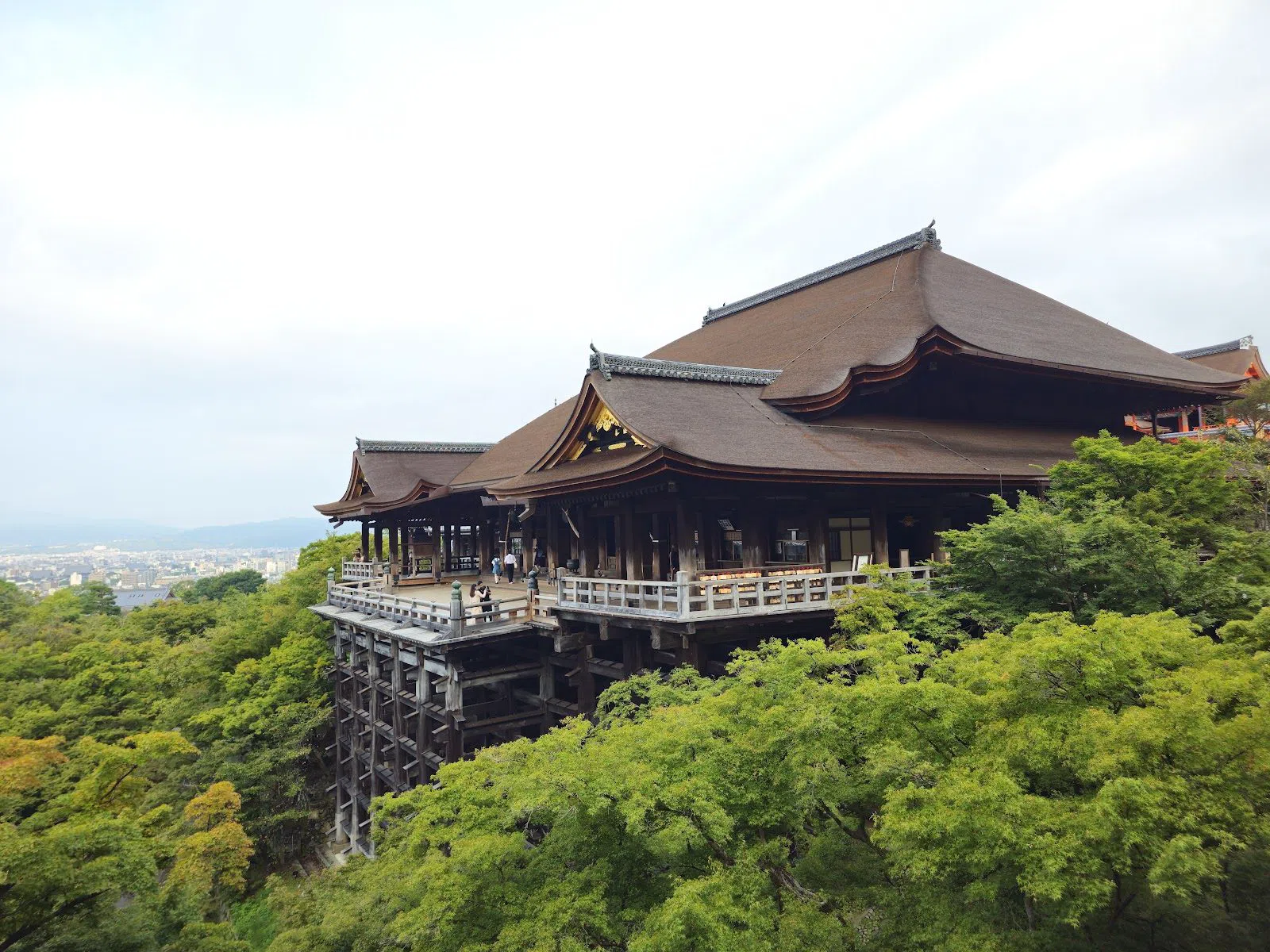
Paths and stairs here are narrow. Special night openings run from 27 March to 5 April and from 14 to 16 August 2026.
Ikukunitama and Yasui shrines
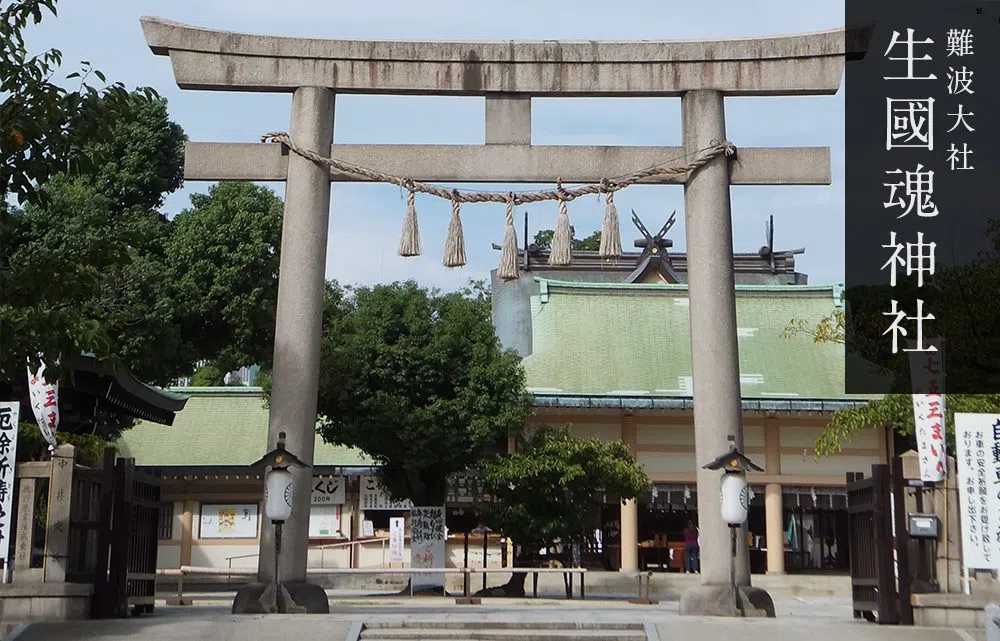
Ikukunitama Shrine, Ikutama-san to the neighbourhood, is claimed as Osaka's founding shrine and sits nine minutes' walk from Kintetsu Osaka-Uehommachi. The hall is vermilion under the sweeping Ikutama-zukuri roof unique to it, small sub-shrines run along a gravel path, and a statue of the writer Ihara Saikaku stands at the entrance. Entry is free, 9:00 to 17:00, and the goshuin desk closes at 16:30. The Ikutama Matsuri fills the streets on 11 and 12 July. Osaka Castle and the Osaka Museum of History sit 2 km further north along the same plateau.
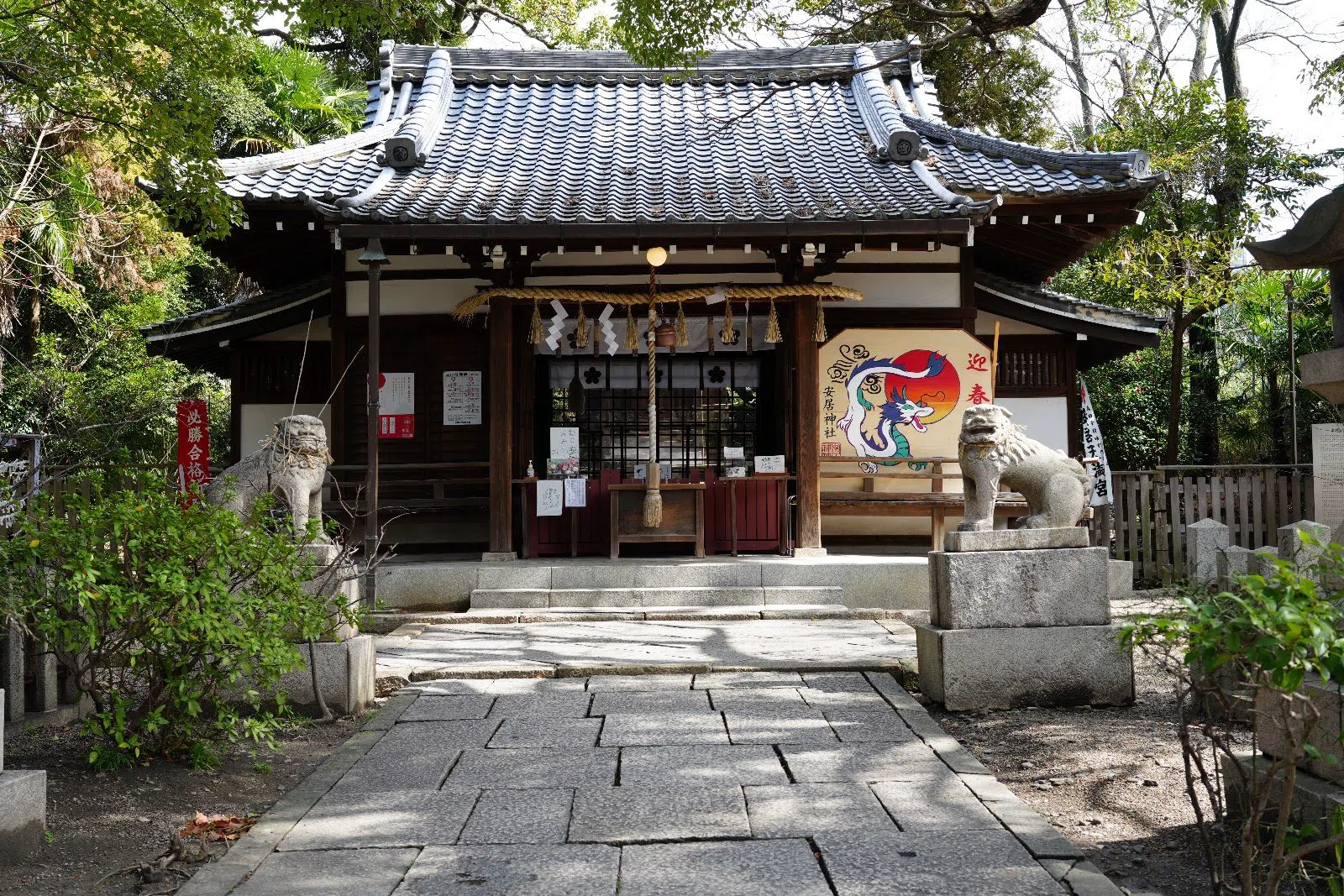
Yasui Shrine is the spot where Sanada Yukimura was killed in 1615, at the end of the Siege of Osaka. A seated bronze of the samurai in armour stands beside an old pine in a small walled compound, with a stone memorial and the covered Kanshizume well, one of Tennoji's seven famous waters. The grounds are free and open 7:00 to 16:00, six minutes from Shitennoji-mae Yuhigaoka. Nobody staffs the compound for much of the day.
The Tenshiba lawn and Aoi Napoli
Tennoji Park was remade in 2015, and the Tenshiba entrance area is 7,000 m² of flat open lawn with picnic blankets spread across it and the 300 m glass slab of Abeno Harukas rising directly behind. Entry is free, 7:00 to 22:00. Low timber cafe pavilions line one edge, where Tully's, bloom&brew and MAKIBI PLACE trade until 22:00. Families, picnics and dogs are the norm, and the park has a fenced dog run and a paid indoor kids' playground. The wooded mound at the back is Chausuyama, a command post in both Osaka sieges.
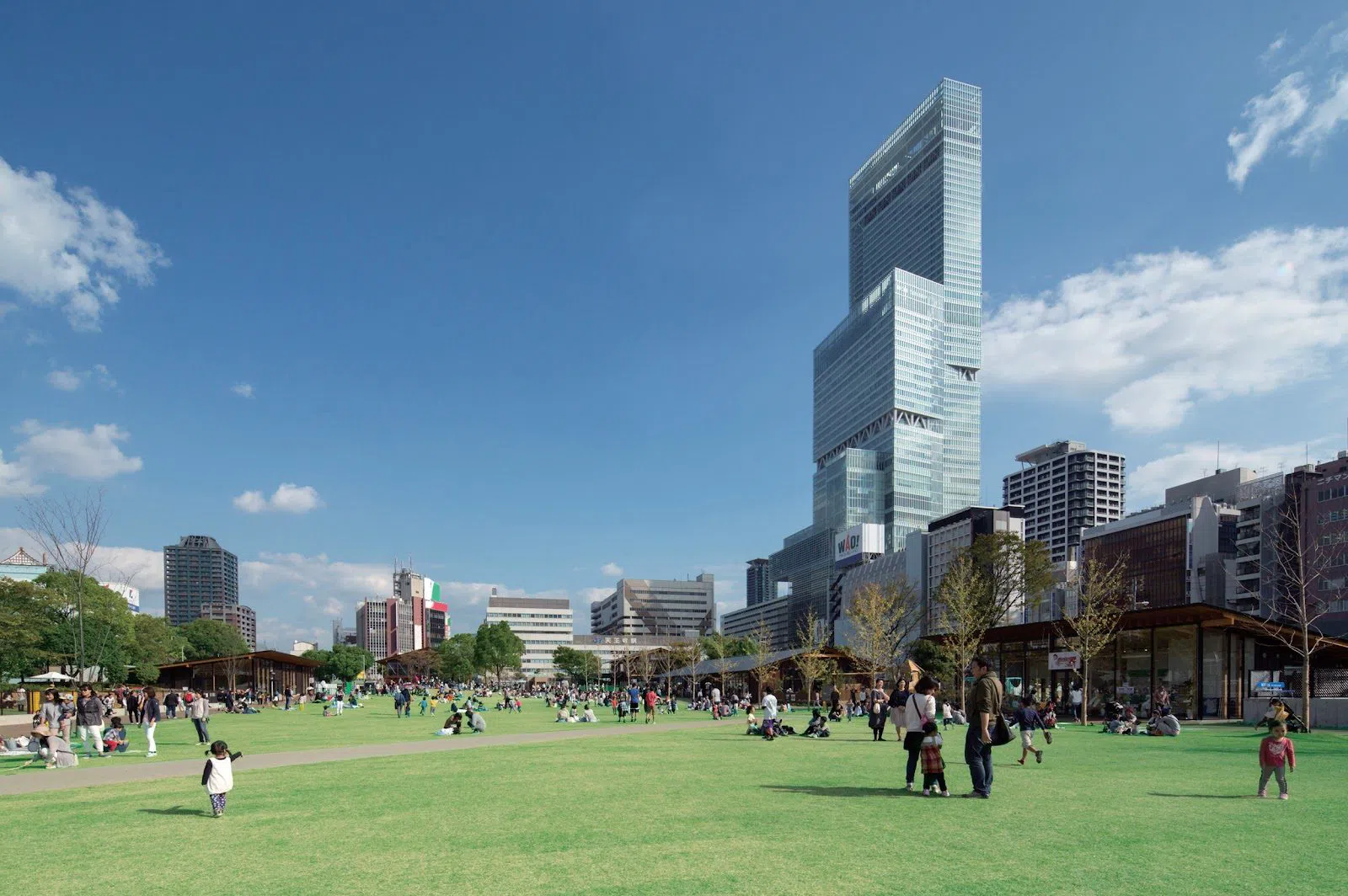
Aoi Napoli in the Park is the park restaurant worth planning around. The domed wood-fired oven sits in a glass pavilion and the terrace tables spill onto the Tenshiba lawn, with Abeno Harukas behind. The pizza is Neapolitan, baked in that oven. Lunch sets run ¥1,500 to ¥2,500 and dinner costs more. Hours are 11:00 to 22:00 with last orders at 21:00, every day but 31 December and 1 January, and the terrace takes party bookings.
Tennoji Zoo and Keitakuen Garden
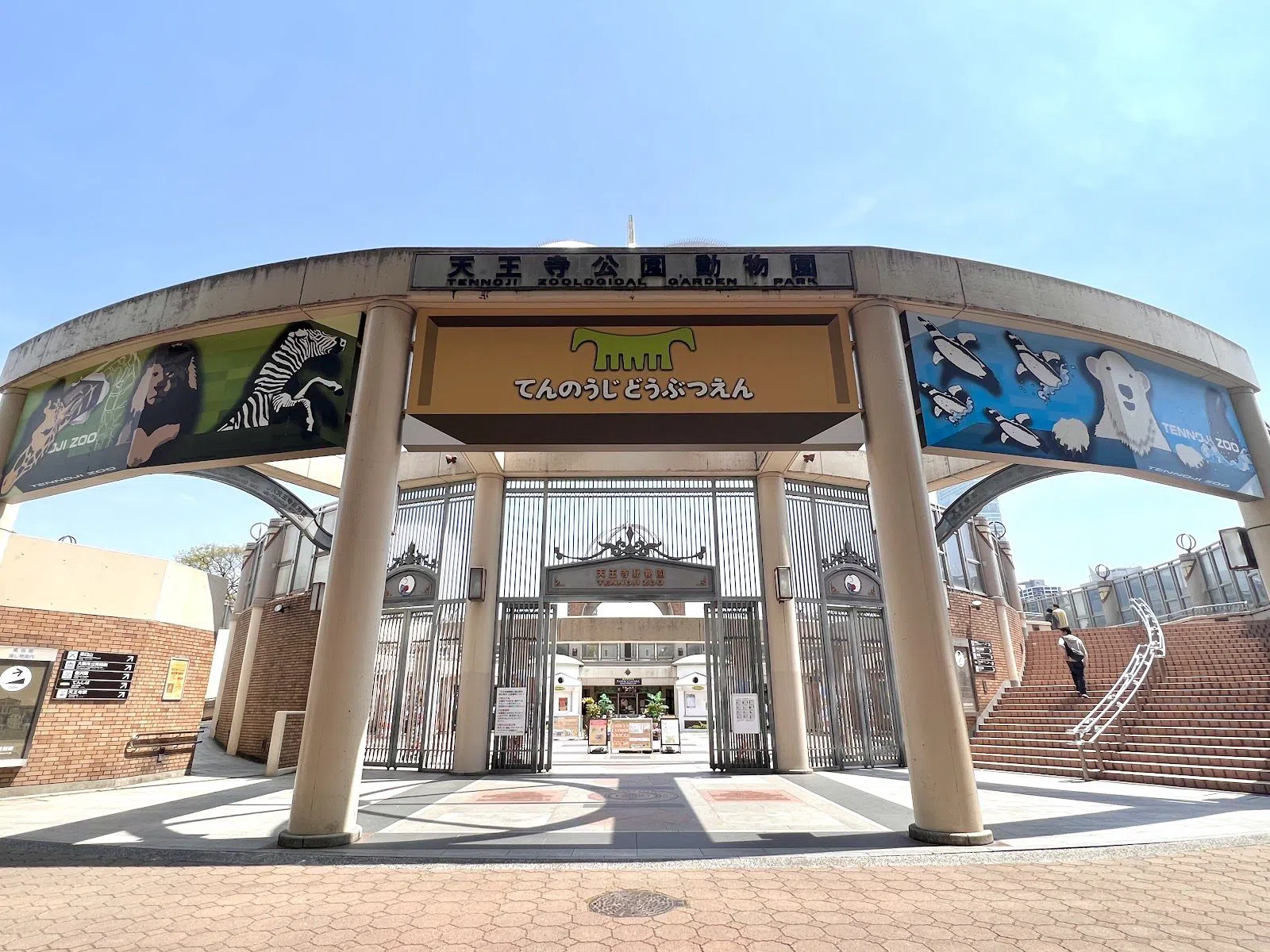
Tennoji Zoo opened inside the park in 1915 and is hemmed in by tower blocks, giraffes standing in an open African savanna paddock against the skyline, hippos viewed underwater through glass. Adults pay ¥800. The price rose from ¥500 on 1 July 2026 and most English pages still print the old figure. Out-of-city school pupils pay ¥200 and pre-schoolers go free. Hours are 9:30 to 17:00, and to 18:00 on May and September weekends and holidays. It closes Mondays. Several gates let you in and the paths take buggies.
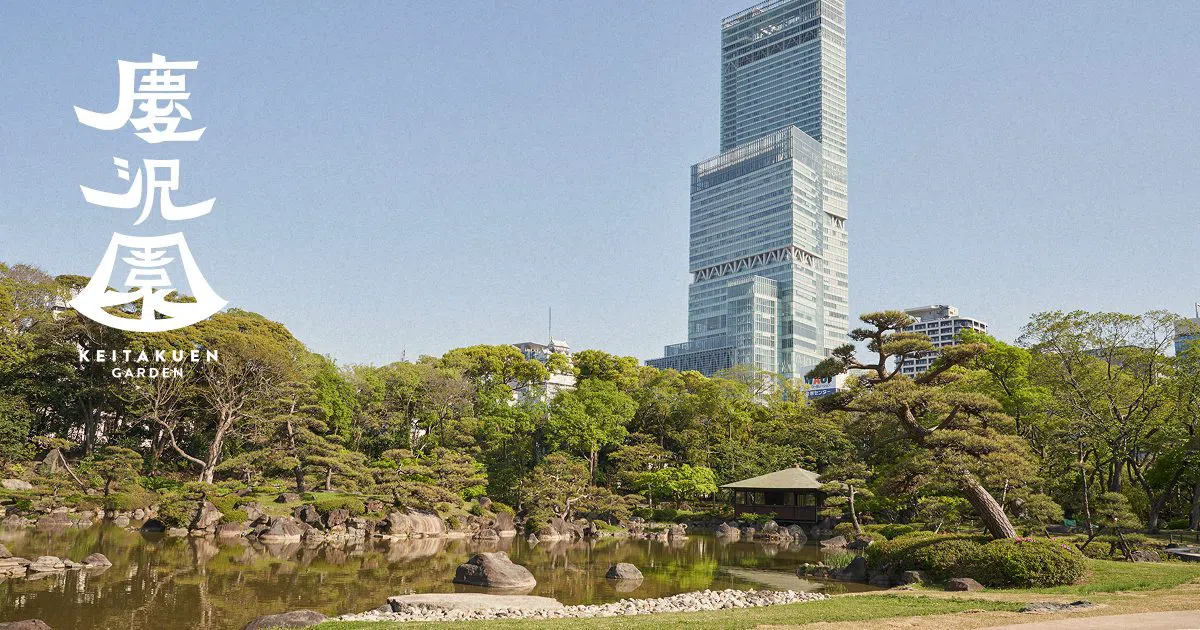
Keitakuen Garden was the Sumitomo family's villa garden before the family gave it to the city. A single looping gravel path circles the pond, clipped pines reflect in still water, and the 1936 stone facade of the art museum shows above the trees. Adults pay ¥300 and students ¥200. Under-15s go free. It opens 9:30 to 17:00, to 18:00 on May and September weekends, and closes Mondays. The circuit takes 20 minutes, and late autumn is the time to spend them.
Osaka City Museum of Fine Arts
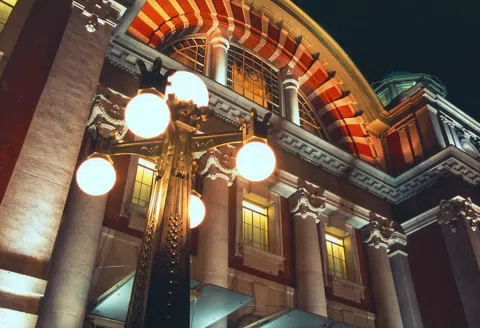
The Osaka City Museum of Fine Arts reopened on 1 March 2025 after two years of rebuilding. The building is a 1936 imperial-crown-style palace of stone and brick on the park slope, and inside it a vast marble central hall rises between twin staircases. The collection runs to 13,500 works of Japanese and Chinese art, National Treasures among them.
Adults pay ¥500 for the collection and under-18s and Osaka seniors nothing. Special exhibitions cost more. Opening is 9:30 to 17:00 with last entry at 16:30, and the museum closes Mondays. A new ground-level entrance from the park and the free central hall make a drop-in visit easy.
Soba and warabi mochi by the temple gates
Shitennoji Hayauchi buys its buckwheat direct from farmers and stone-mills it on site, three minutes from Shitennoji-mae Yuhigaoka exit 4. It is the best soba in the Tennoji area. The room is plain pale wood, 14 seats including the counter that faces the soba board, built for solos and pairs; a group should eat elsewhere. Lunch costs ¥1,000 to ¥2,000, more with sake. Lunch runs 11:30 to 15:00 daily, dinner 17:00 to 20:30 at weekends only, and the shop closes Wednesdays. Look for the glazed ceramic sign on a quiet backstreet.

Shitennoji Chaya is the stop between temples, five minutes from Shitennoji-mae Yuhigaoka. Fresh warabi mochi quivers translucent on a tall-footed lacquer stand under a dusting of kinako, and the matcha is whisked to order. Nama warabi mochi keeps for 20 minutes, so you eat it where you sit. Warabi mochi drinks are ¥780. The menu was reworked in 2026 and now carries a hot warabi mochi. Hours are 11:00 to 17:30, closed 30 and 31 December, and you can book online through Hot Pepper.
Okonomiyaki Ajikuraya on Obasecho
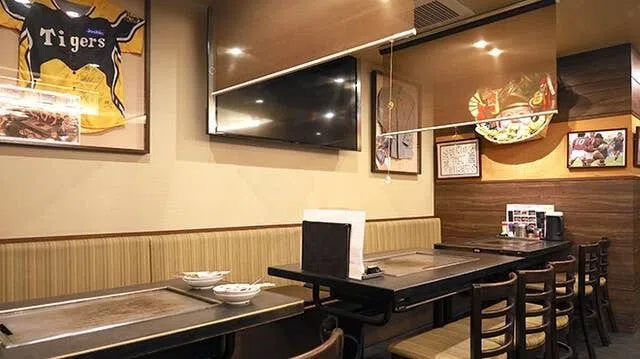
Okonomiyaki Ajikuraya stands on Obasecho, on the Uehommachi to Tsuruhashi stretch, and it is the area's standout for Osaka's own dish. The room is a long row of hotplate-topped tables, 70 seats in all. Batter and cabbage are mounded high and flipped in front of you, sauce and bonito flakes going on under the extraction hoods.
Lunch costs ¥1,000 to ¥2,000 and dinner ¥3,000 to ¥4,000. It opens 16:00 to 00:00 on weekdays and from 11:00 at weekends, takes reservations, and applies a 90-minute limit when full. The restaurant has moved once, so check the current address when you book.
Uehommachi Hi Hi Town
Uehommachi Hi Hi Town fills the basement of a 1970s concrete slab block directly under the Kintetsu terminus, and it is the best drinking in the quarter. The corridors are low-ceilinged and lined with six-seat counters, hand-painted signage and plastic food cases under strip lighting. Skewers and a beer start from ¥2,000, and sushi costs more.
Most counters seat six to 15 and the largest takes 30 to 40. Split a big party, or book ahead. Uehommachi Hotei Sushi moved its main shop into the basement on 7 February 2026, and a new Chinese diner opened in July 2026. Kintetsu's ¥130bn Uehommachi terminal redevelopment leaves this block out, though a rebuild is under discussion. Go while the block is still there.
Where to stay on the Uemachi plateau
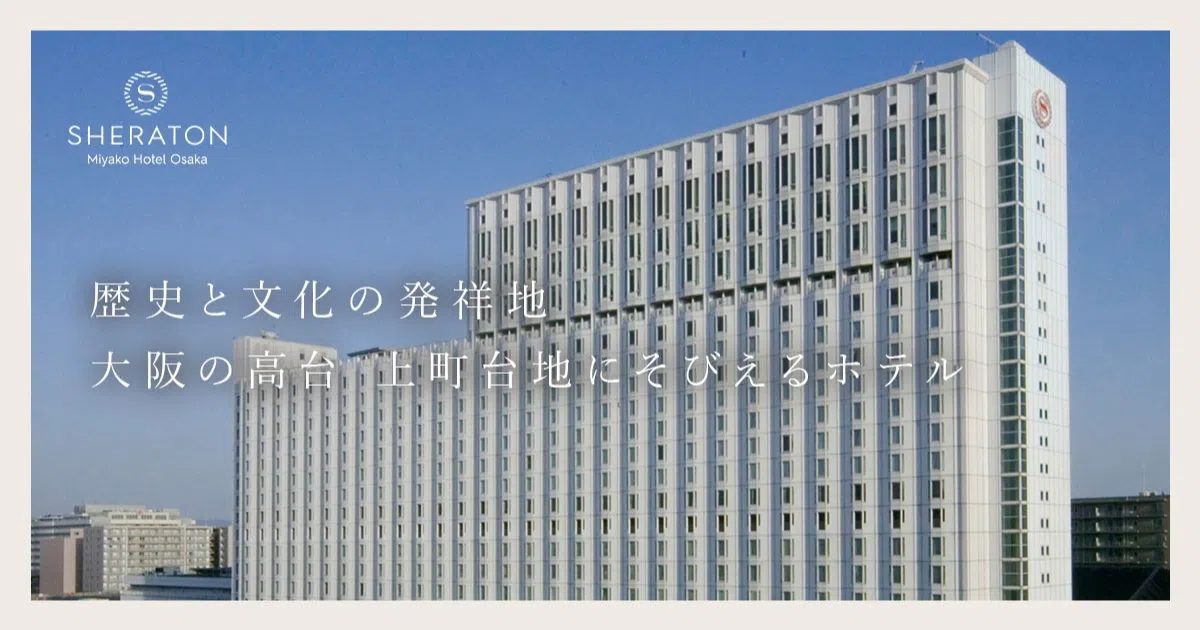
The Sheraton Miyako Hotel Osaka rises straight out of the Kintetsu Osaka-Uehommachi concourse, a tall pale 1980s tower with a wide ground-floor lounge behind glass. It has 574 rooms, coach access and seven restaurants, among them a 240-seat lounge bar and a 144-seat Sichuan room. A night for two runs ¥15,000 to ¥30,000 depending on season, and Shitennoji is a 15-minute walk away.
Cheaper beds sit close by. The Bureau Shitennoji apart-hotel is two minutes from the temple gates, and suites at Anda no Mori Osaka Tennoji Tower sleep up to eight. Compare rates on the Osaka hotel search.
Planning the walk
Tennoji Zoo, Keitakuen Garden and the Osaka City Museum of Fine Arts all close on Mondays, the Gokuraku-jodo Garden at Shitennoji shuts from the 1st to the 10th of most months, and Shitennoji Hayauchi closes Wednesdays. Book Okonomiyaki Ajikuraya and Shitennoji Chaya ahead, and confirm Ajikuraya's address when you do. See the Osaka guide for the rest of the city.
Før du drar
Do you have to pay to visit Shitennoji Temple?
The outer grounds, including the turtle pond and its stone bridges, are free and open 24 hours. The Central Precinct and the Treasure House cost ¥500 each, the Gokuraku-jodo Garden ¥300. They open 8:30 to 16:30 from April to September and close at 16:00 from October to March. Parties of 30 or more pay ¥100 less a head.
When is the market at Shitennoji?
The stalls come out on the 21st and 22nd of every month, 300 to 500 of them selling antiques, old kimono and street food across the grounds. It costs nothing to walk, and the gates open at 8:00 on the 21st.
How much does Tennoji Zoo cost in 2026?
Adults pay ¥800, up from ¥500 on 1 July 2026, and most English pages still show the old figure. School pupils from outside the city pay ¥200 and pre-schoolers go free. The zoo opens 9:30 to 17:00, to 18:00 on May and September weekends and holidays, and closes on Mondays.
What is closed on a Monday here?
Tennoji Zoo, Keitakuen Garden and the Osaka City Museum of Fine Arts. The temples and shrines keep their own hours, and Shitennoji's outer grounds stay open.
Where should you stay for this part of Osaka?
The Sheraton Miyako Hotel Osaka connects directly to Kintetsu Osaka-Uehommachi station and is a 15-minute walk from Shitennoji. Two people pay ¥15,000 to ¥30,000 a night there, depending on season. The Bureau Shitennoji apart-hotel is two minutes from the temple gates, and suites at Anda no Mori Osaka Tennoji Tower sleep up to eight.