The Osaka issue
Osaka Aquarium Kaiyukan and an Easy Half Day on Tempozan
The aquarium, the wheel, the brick warehouses and the pier sit inside four hundred metres of Osaka waterfront, and an afternoon is enough to walk all of it without hurrying anyone.

By Inês CarvalhoOsaka one neighbourhood at a time
The Chuo line surfaces for its last few stops, and by Osakako the windows are full of gantry cranes, container stacks and flat grey water. Come up the stairs and the whole of Tempozan is laid out inside about four hundred metres: an aquarium, a Ferris wheel, a row of red brick warehouses from 1923, a pier with a wooden galleon tied alongside it. A half day in central Osaka means choosing and then walking between the choices. A half day here means arriving first and deciding afterwards, which makes for a very different afternoon.
Where Tempozan sits and why the geography does the work
Tempozan is reclaimed ground on the north bank of the Aji river mouth, in Minato ward, built for shipping long before anyone thought to put a whale shark on it. The Osaka Metro Chuo line drops you at Osakako, and from exit 1 the aquarium is a five-minute walk past a small park and a marketplace building. Everything in this article except two places sits inside that same walk. That compactness is the entire argument for the area: with small children, with grandparents, with a group that cannot agree on anything, you are never more than four minutes from a toilet, a bench, a bowl of noodles or somewhere to sit down out of the weather.
The park you cross on the way is worth two minutes of attention. Mount Tenpō (Tempozan Park, beside Osakako station) is free, open at all hours, and officially surveyed as a mountain. It was formed in 1831 from spoil dredged out of the Aji river to keep the shipping channel open, and it is low enough that the summit marker sits among ordinary municipal shrubbery. Shops nearby will hand you a joke climbing certificate. It is a silly five minutes, and it is the only summit in Japan you can climb in flip-flops while holding a coffee.
Plan your Osaka trip
Live prices from our booking partners.
Free cancellation on many rooms. We may earn a commission when you book.
Start at the aquarium and start early
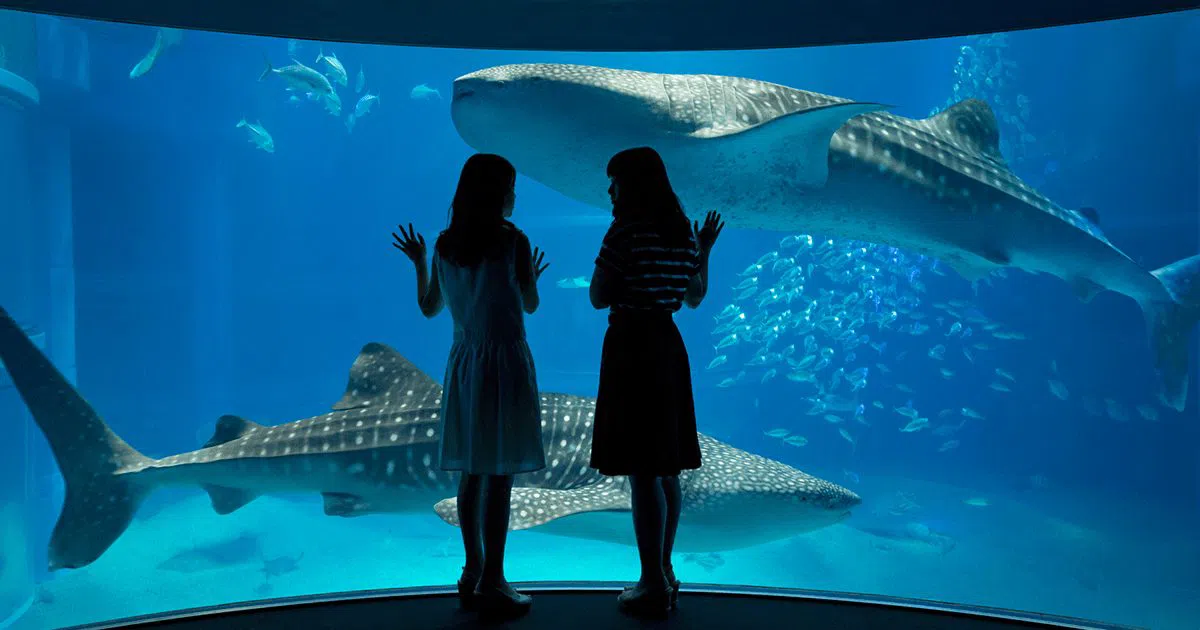
Osaka Aquarium Kaiyukan (Tempozan, beside the marketplace) is the anchor of the day and should be booked before you leave your hotel. It runs 10:00 to 20:00 for most of the year with last entry at 19:00, and it closes roughly four days a year for maintenance, so check the official calendar against your date rather than assuming.
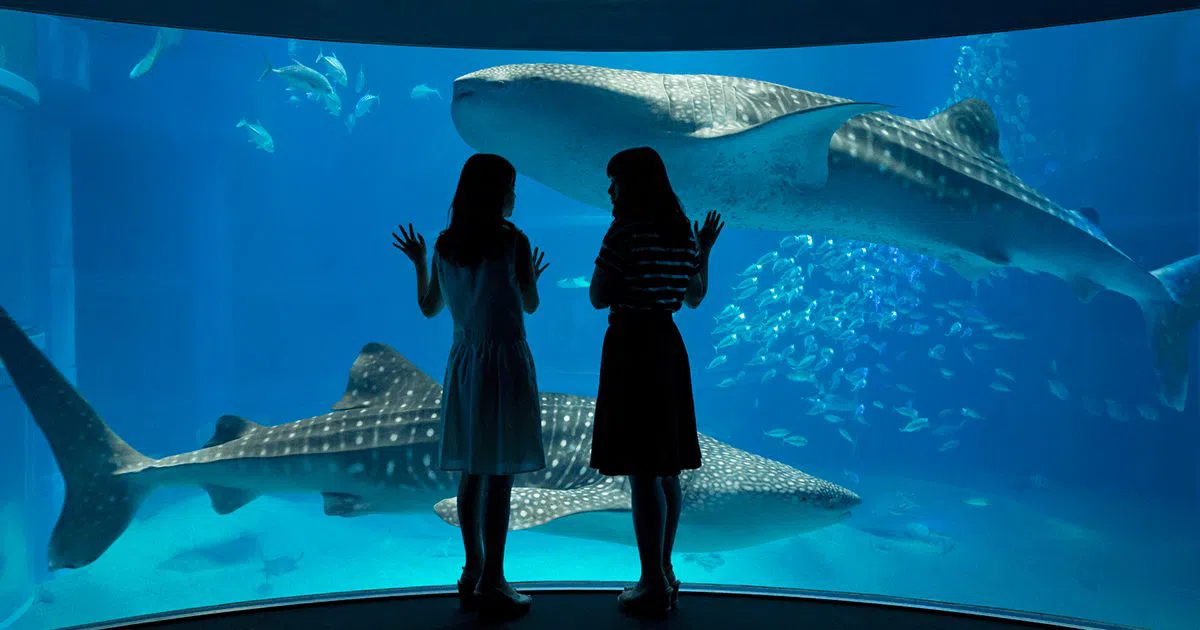
The building works as a one-way spiral. You ride an escalator to the eighth floor, then walk down and around the central Pacific tank, meeting the same water again at each level. Nobody gets lost, and a genuinely unhurried visit takes ninety minutes to two hours rather than the half day people budget for it. Tickets are timed e-tickets with a dedicated QR entrance, and pricing is dynamic: roughly ¥2,400 on a quiet weekday rising to about ¥2,700 at peak, children roughly half, under-twos free. On weekends and Japanese public holidays the good slots go, so buy yours in advance. The aquarium handles group and school bookings directly, and it absorbs large numbers better than almost anything else on the bay.
If you want the tanks at their calmest, take the first slot of the day. If you want the jellyfish lit against a dark room and the harbour going orange when you come out, take a late-afternoon one. Both are defensible. What does not work is arriving at 13:00 on a Sunday without a ticket.
The car museum goes before the aquarium, not after
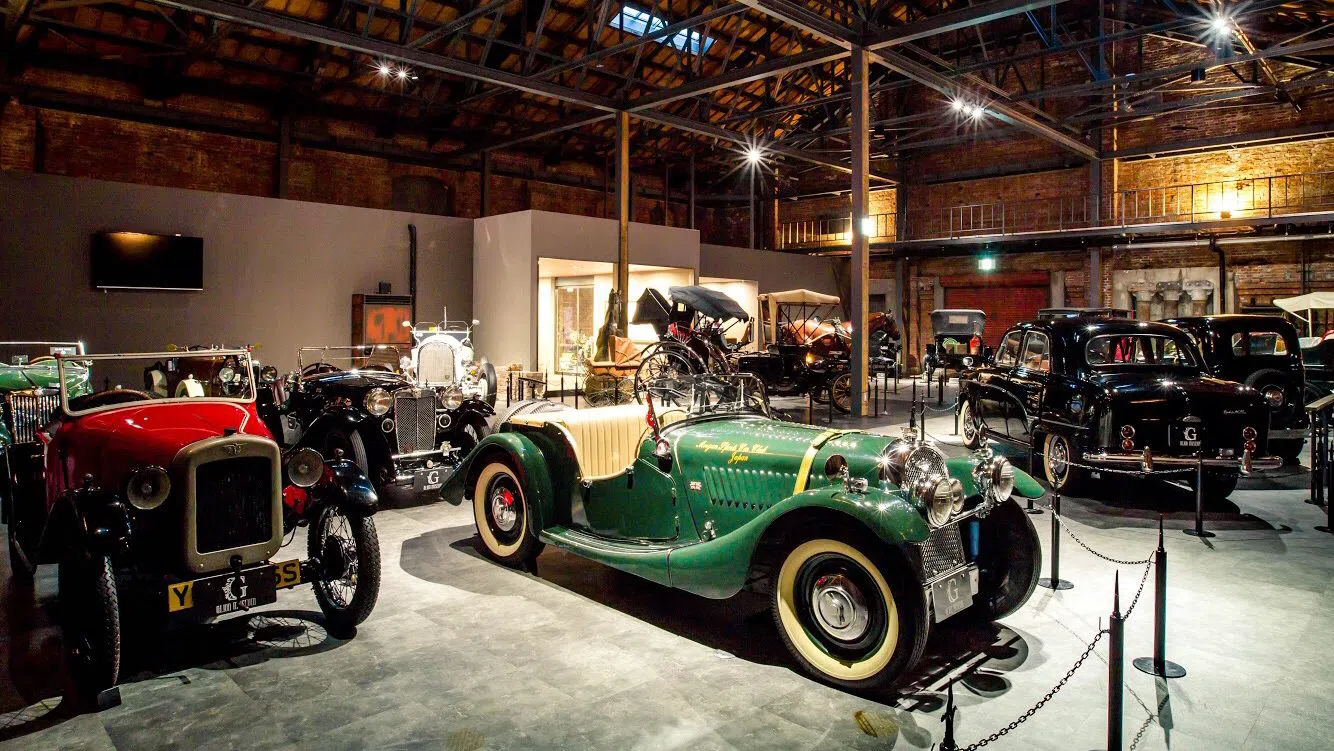
G LION MUSEUM (Tempozan waterfront, five minutes from Osakako) occupies a run of 1923 red brick warehouses that would be worth the walk even if they were empty. Inside is a classic car collection; outside is the best-looking architecture on this stretch of water, riveted steel and brick arches with the port behind it. Entry is ¥1,200 for adults from junior high age up, elementary age and under free, and parking is ¥500 on weekends and holidays only.
The scheduling detail matters more than the price. It closes on Mondays and it shuts at 17:00, so it belongs at the start of your half day rather than the end. It is walk-in, but the warehouses and their restaurants also work as an event venue and rooms are occasionally reserved at short notice, so a group of any size should ring ahead on the day rather than turn up hopeful.
Lunch that does not need a plan
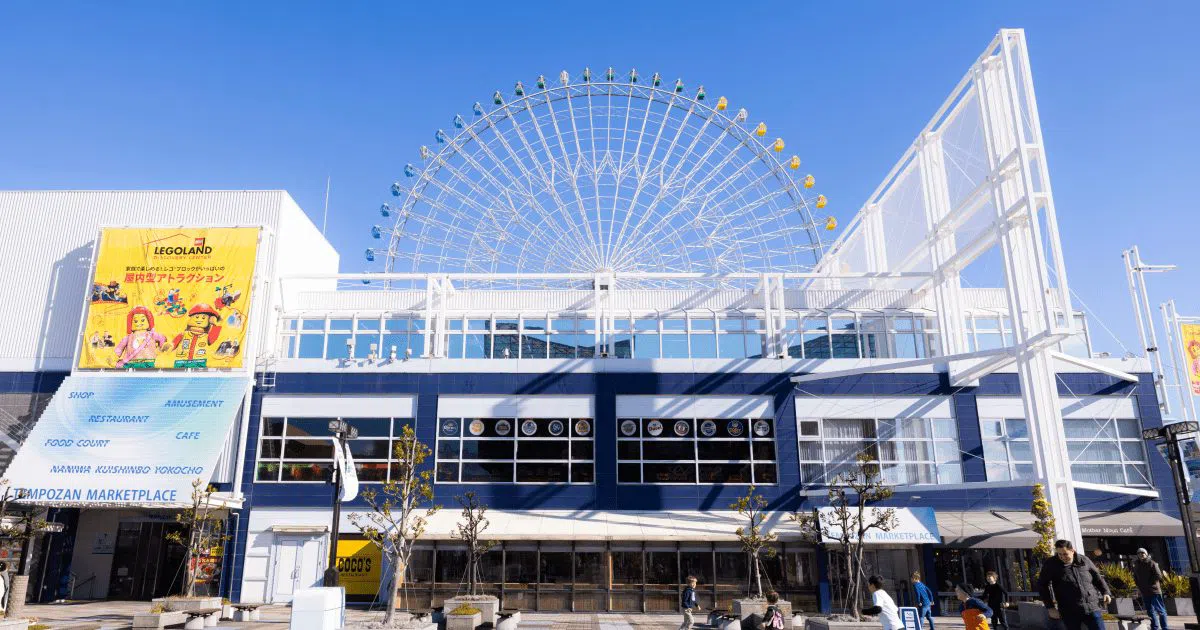
Naniwa Kuishinbo Yokocho (inside the Tempozan Marketplace, two minutes from the aquarium door) is the least painful group lunch in the area. Entry is free, there are around twenty independent stalls doing Osaka's street-food canon (takoyaki, okonomiyaki, kushikatsu), and dishes run ¥500 to ¥1,500. Counter and bench seating, deliberately retro decor, and crucially no single stall large enough to swallow an entire party's waiting time, so eight people can order eight different things and regroup at a table. Nobody has to compromise and nobody has to queue together.
For something calmer, Mother Moon Cafe Tempozan is open 11:00 to 20:30 with proper table seating and pancakes and coffee at about ¥1,000 to ¥2,000 a head. It is the sensible place to park a group that is waiting out a timed aquarium entry slot. Walk-in only, small groups fine, and no bookings for large parties, so do not arrive twelve-strong and expect a table.
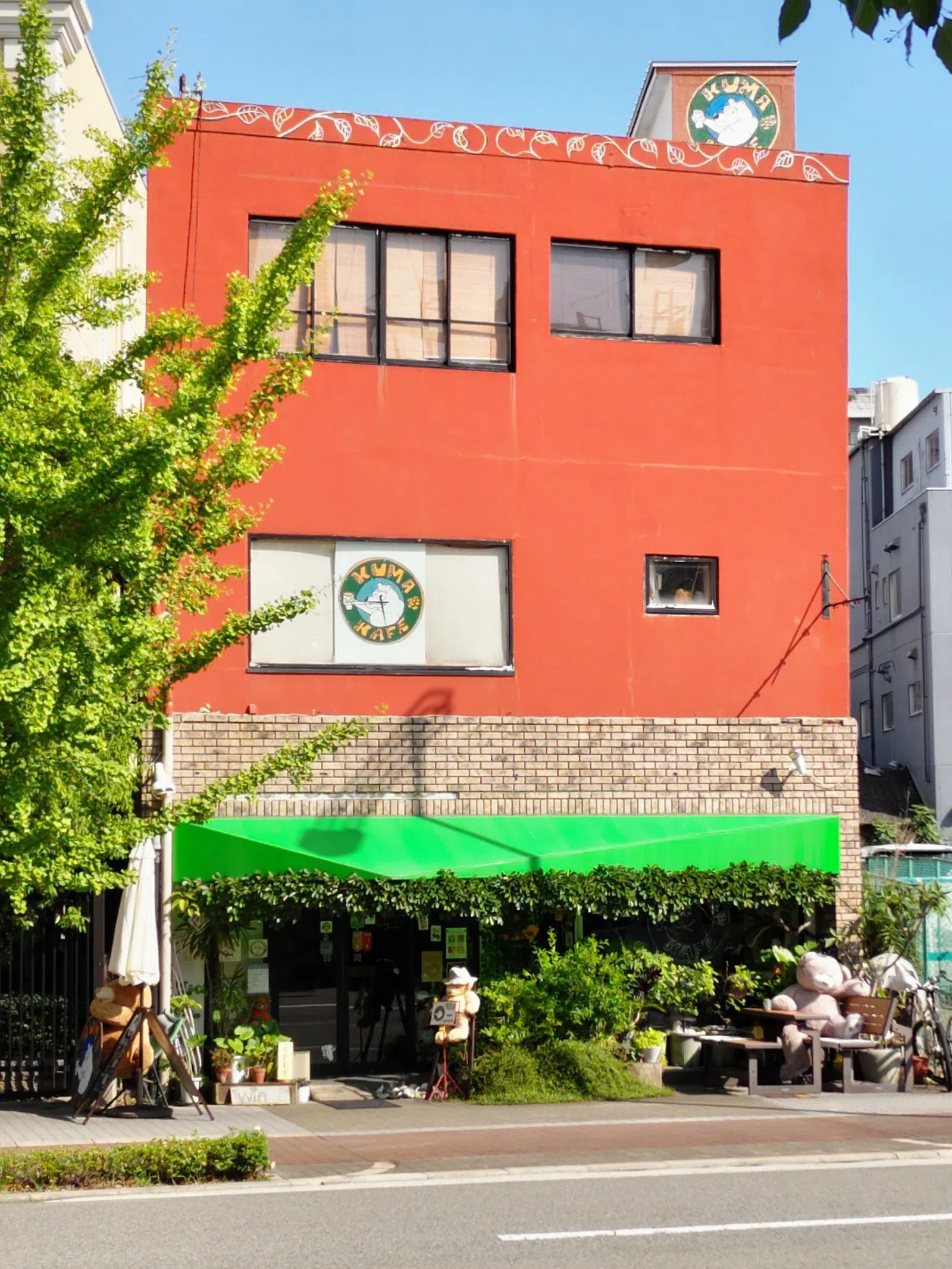
KUMA KAFE is the one room near the aquarium that feels like a neighbourhood cafe rather than a food court. It is tiny and walk-in only, open 11:00 to 17:00, closed Mondays, and it occasionally shuts at short notice. Around ¥1,000 to ¥2,500 a head. Two to four people is its natural size; anything larger should call ahead, and a party of eight should simply go elsewhere.
Fifteen minutes and a hundred and twelve metres
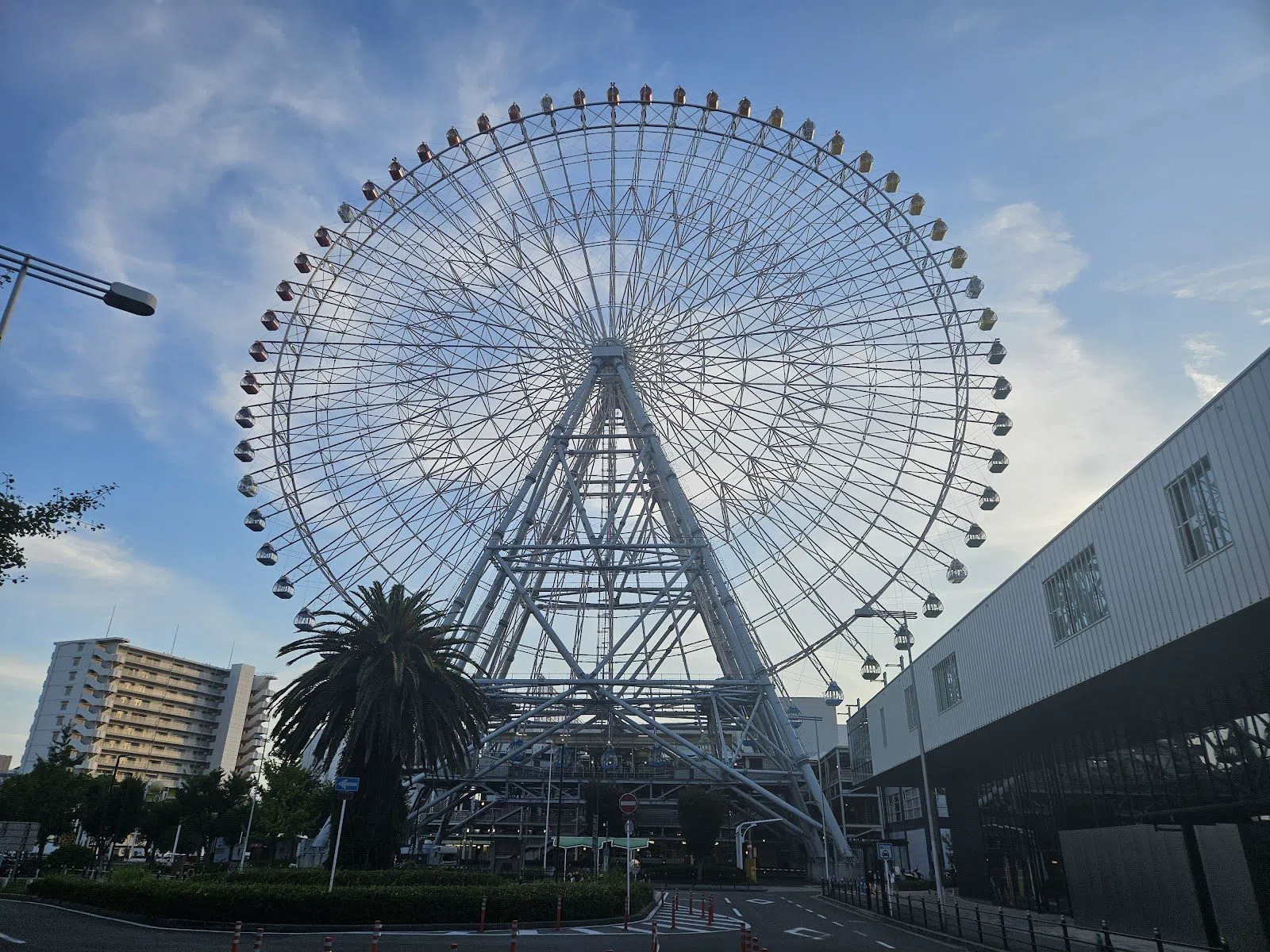
Tempozan Giant Ferris Wheel (directly beside the aquarium) is the cheapest big view in Osaka. One rotation takes fifteen minutes and lifts you 112 metres, with the Ikoma mountains inland on one side and, on a clear day, Kansai airport out across the bay on the other. It is ¥900 a person, walk-up, no reservation needed. Groups of twenty or more pay ¥800 and student groups ¥720, and three cabins are wheelchair accessible, which makes it one of the easier attractions here for a mixed-mobility party.
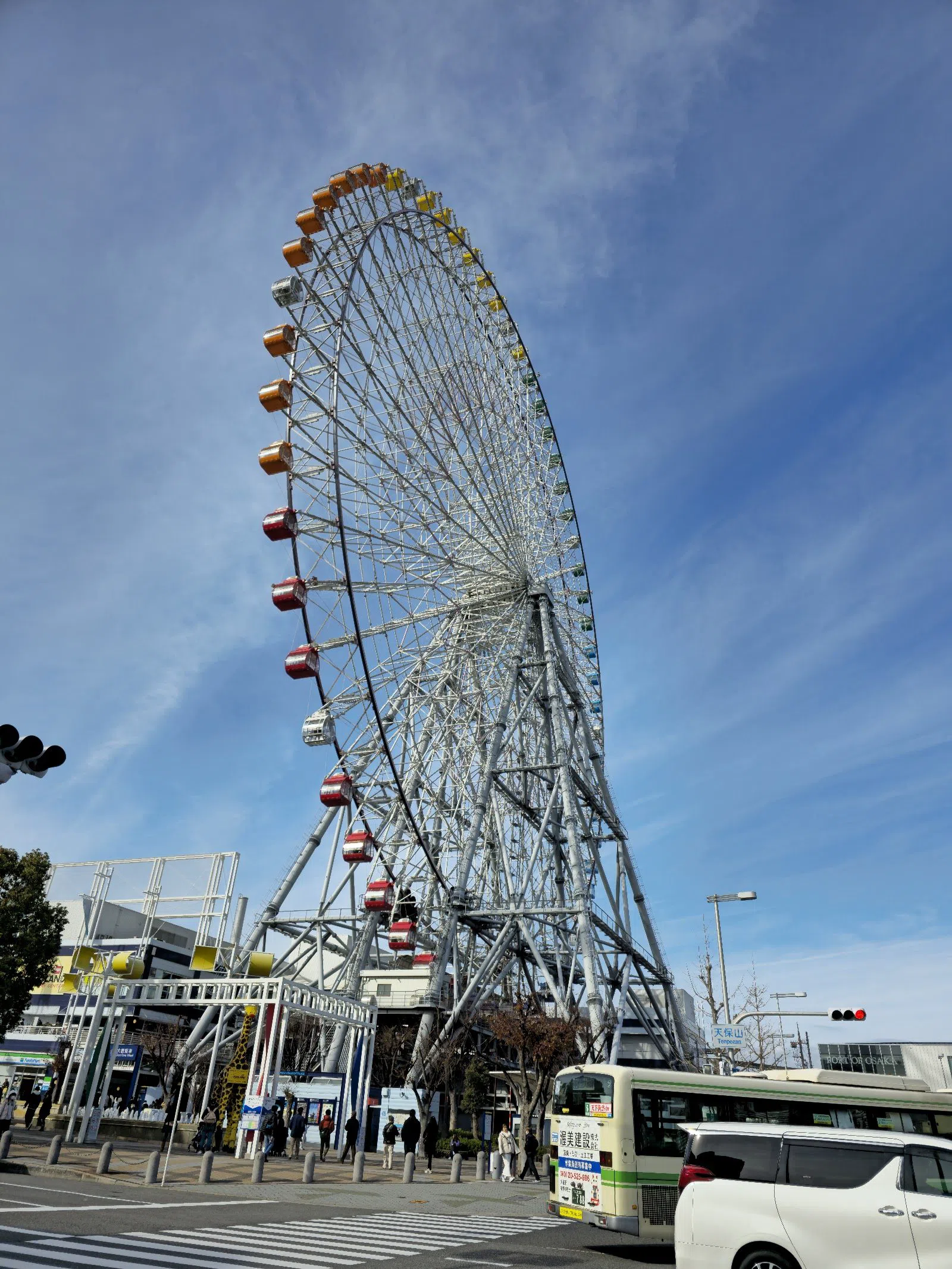
Go after the aquarium rather than before. Coming out of a dark spiral of tanks into a slow bright circuit over the water is the correct order, and at dusk the whole wheel is lit from outside so you are inside the light rather than looking at it.
Adding water to the day
Two boats leave from beside the aquarium and they do completely different jobs.
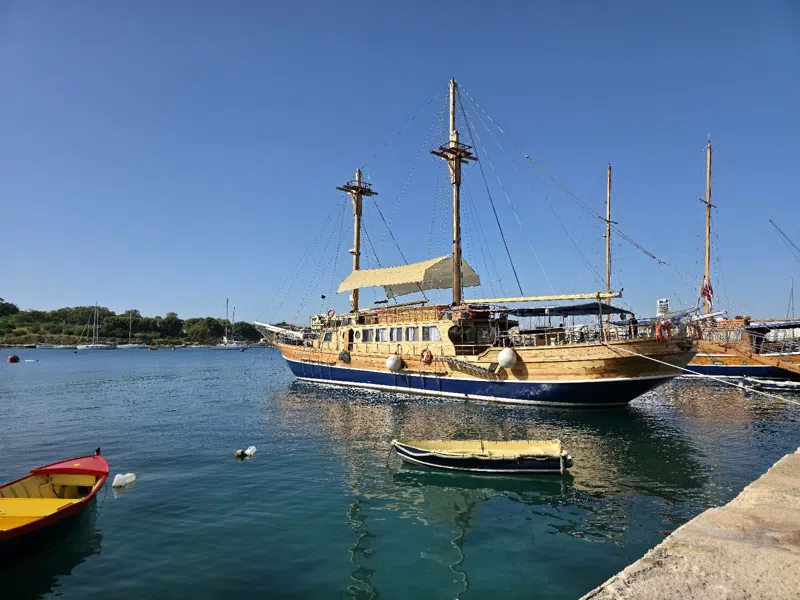
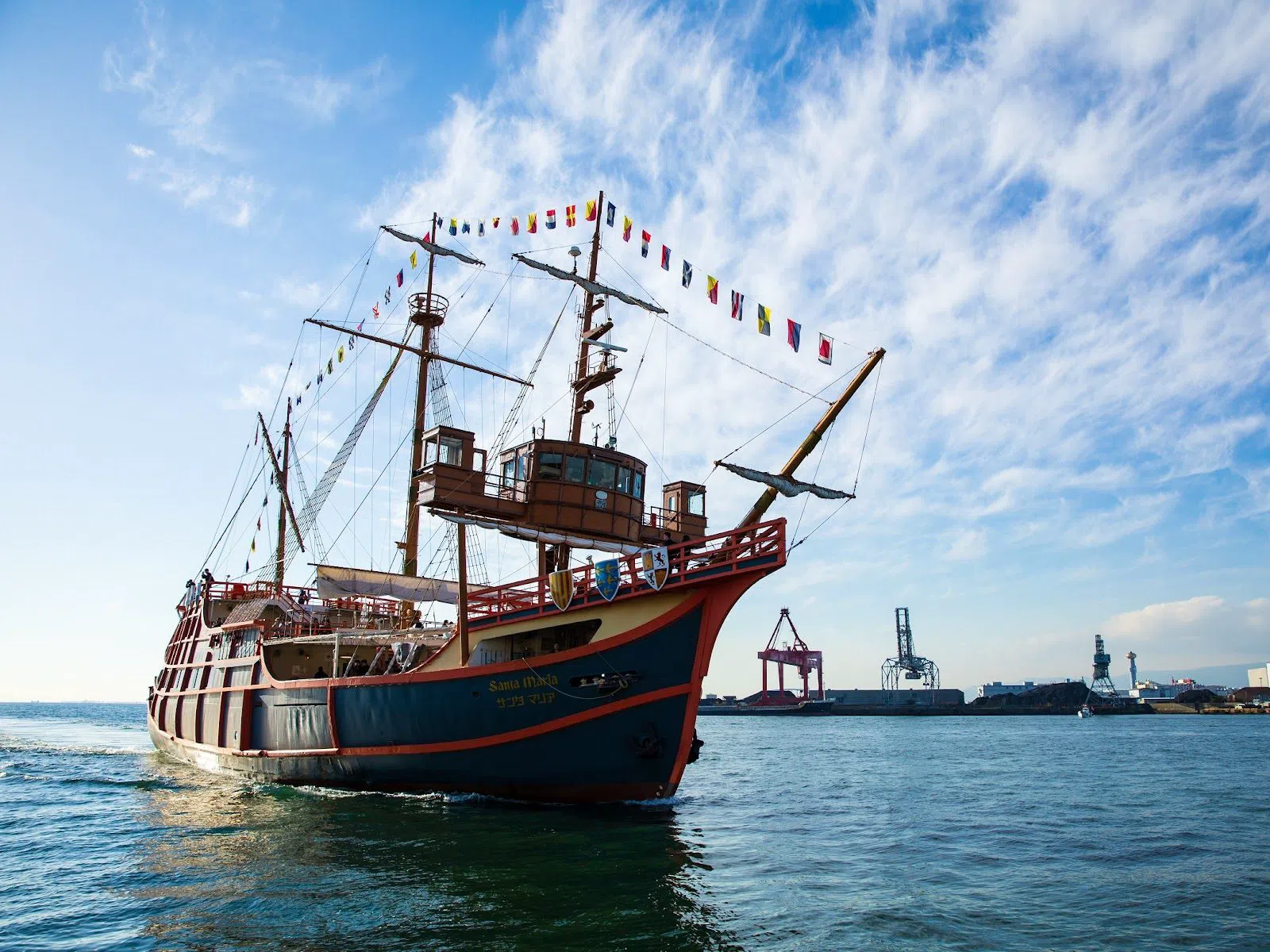
Osaka Bay Cruise Santa Maria is a 45-minute loop of the harbour on a replica galleon, departing roughly hourly, with capacity for around 800 people. Adult day cruise tickets are ¥1,800, rising to ¥2,000 from 1 October 2026, elementary-age children ¥900, and the twilight cruise ¥2,300. Group reservations from fifteen people open three months ahead and full charters six months ahead, so a company outing or a family reunion has plenty of runway. Sailings are pulled in bad weather, and there is no refund once you are standing at the pier, so check the sky before you commit a group to it.
Captain Line is the shuttle rather than the sightseeing boat: ten minutes across the water to Universal City, one to two sailings an hour all day, ¥900 one way and ¥1,700 return. It is turn-up-and-ride, fine for a family or a small group without booking, and it is the reason a Tempozan half day can become a full day without anyone touching a train. It is suspended whenever the aquarium or the theme park it serves are closed, or when the sea is rough, so treat it as a good option rather than a guaranteed one.
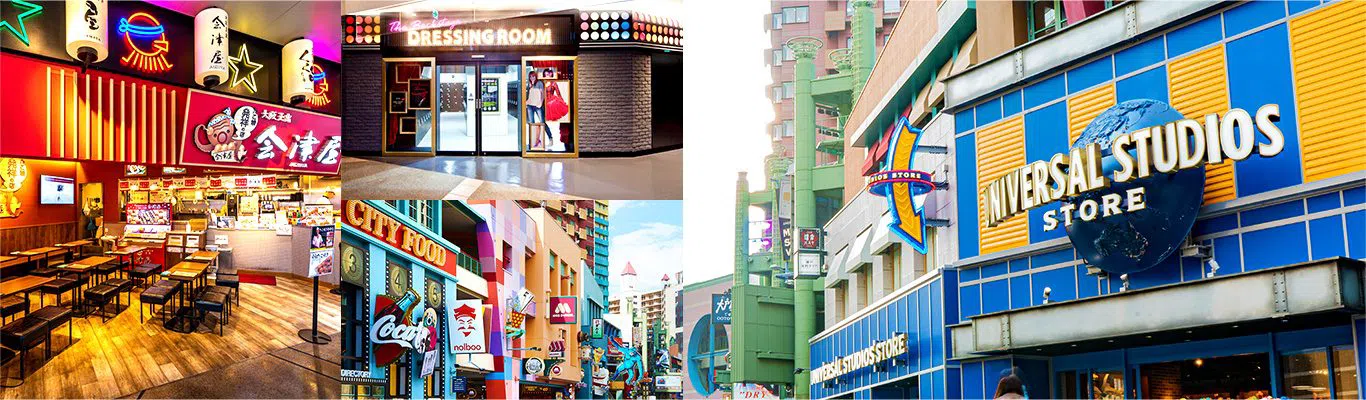
On the far side, Universal Citywalk Osaka (Universal City, Konohana ward) has no ticket and no booking, stays open to 23:00, and does meals from about ¥1,000. You can eat, browse and come straight back on the boat without ever buying a theme-park ticket, which makes it the easiest place on the bay to feed a large group after 20:00.
When it rains, or when the children are finished with tanks
LEGOLAND Discovery Center Osaka is thirty seconds from the aquarium exit and is the obvious wet-weather fallback. From about ¥2,200 online and up to roughly ¥3,300 at the door, under-threes free, school-trip and group bookings offered. It is aimed at ages three to ten and built around accompanied children, so an adult-only party should not attempt it.

Tempozan Anipa is an indoor animal park running 11:00 to 19:30 with last reception at 18:30, ¥1,100 for adults thirteen and over and ¥660 for children four to twelve. Capybaras at arm's length indoors is a reasonable release valve when small children have run out of patience for glass. The rooms are compact, so a large party should split and go in waves rather than arrive as a block.

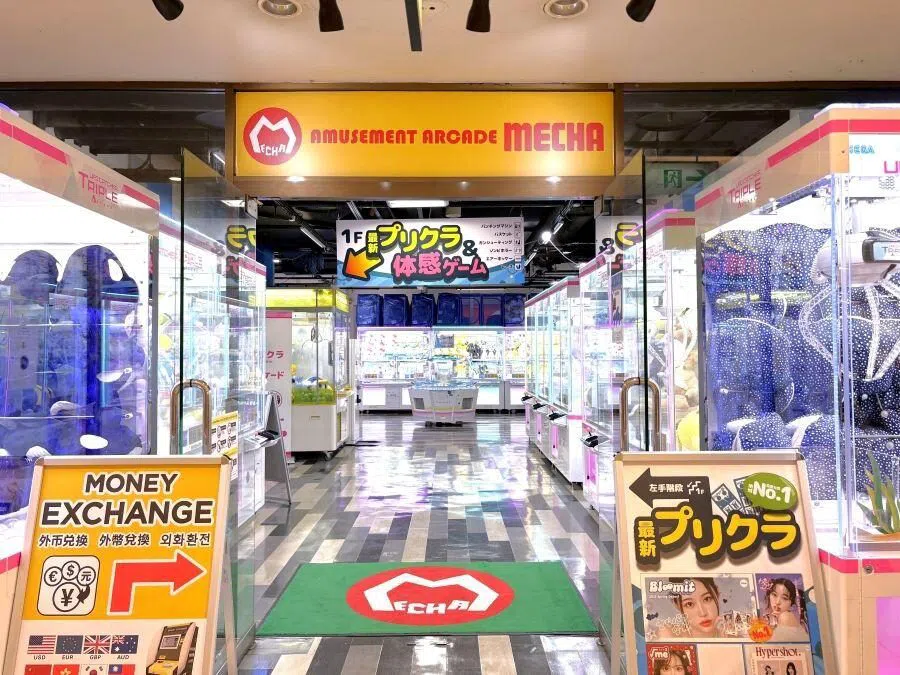
MECHA Tempozan is free to enter, ¥100 to ¥500 per play, and open to 22:00 on weekdays and 23:00 at weekends. It absorbs a group of any size and it is the honest answer to the dead hour between the aquarium closing and a dinner table becoming free.
The long view from the other side of the port
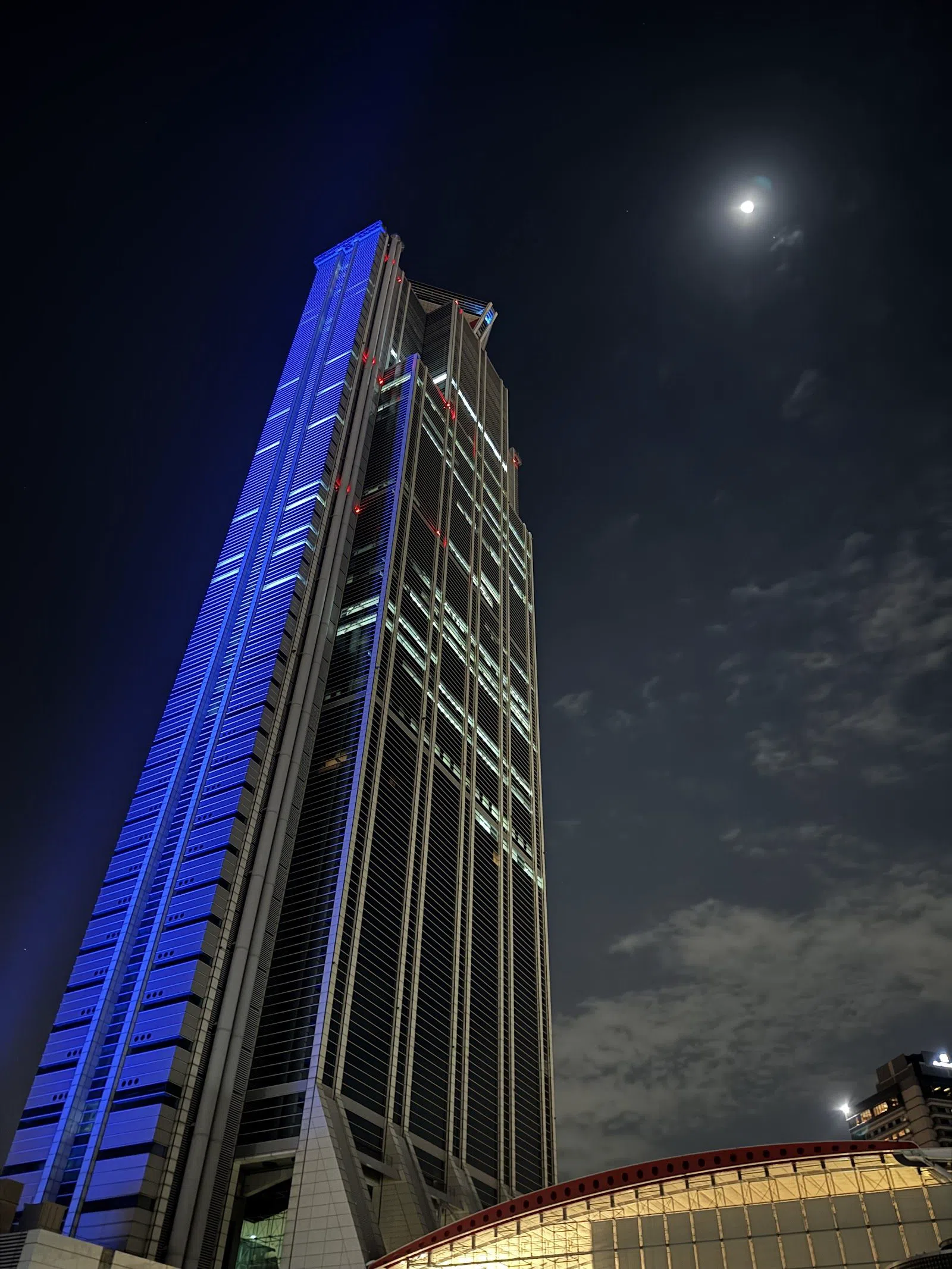
If the wheel has left you wanting height, Sakishima Cosmo Tower Observatory (Cosmosquare, Suminoe ward) is a short ride around the bay and almost always emptier than the towers in the city centre. It is ¥1,200 for adults, included in the Osaka e-pass, walk-in, rarely queues, and open until 22:00, with the bridge and the whole working port laid out below. It closes on Mondays, which catches people out, the same day that takes out the car museum and the small cafe, so a Monday visit needs its own shape.
Ending the half day in hot water
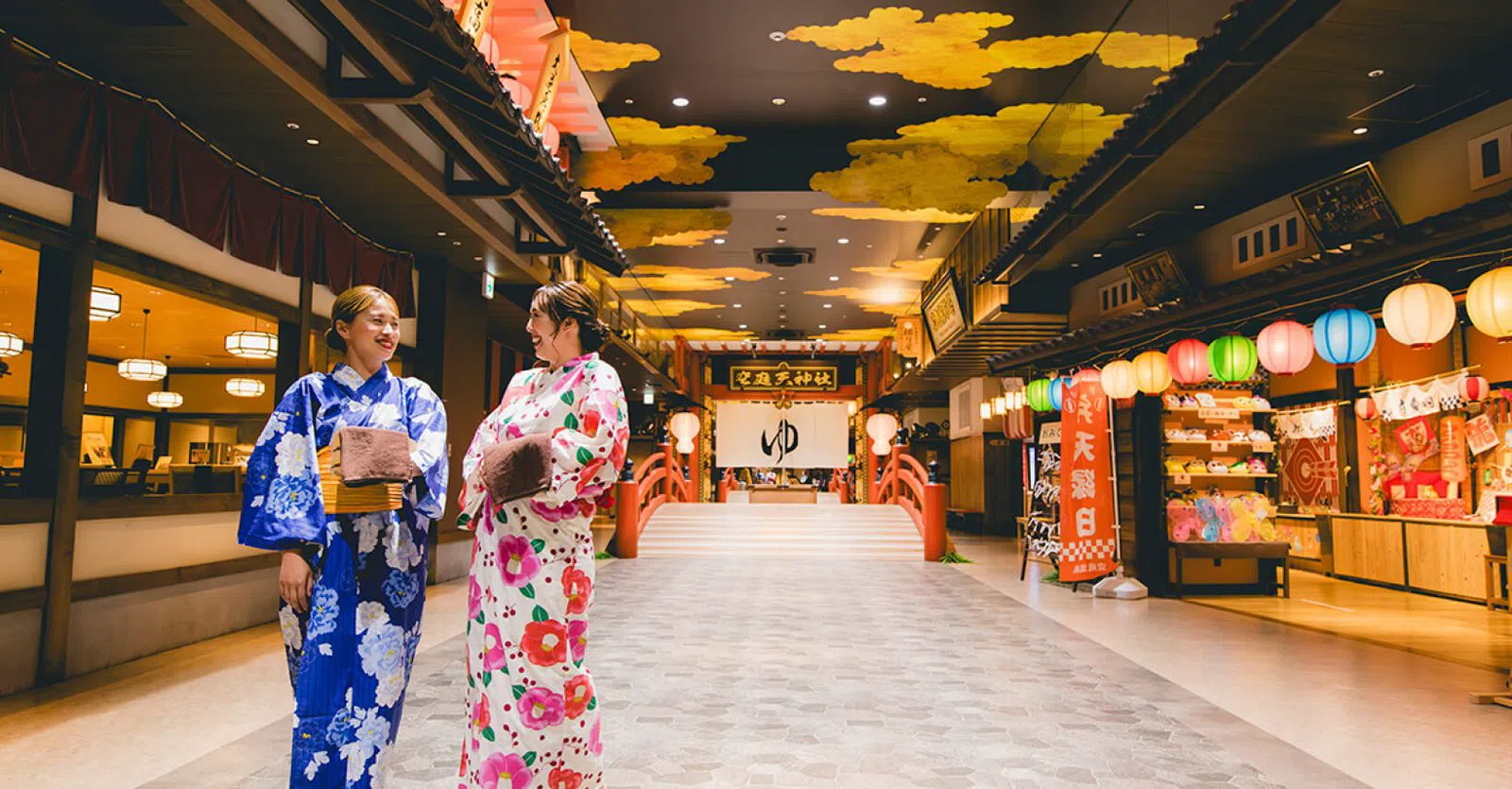
Solaniwa Onsen Osaka Bay Tower (Bentencho, one metro stop back toward the city) is the right full stop. It is open until 23:00, handles large numbers all day, and includes yukata, towels and amenities in the price, so nobody needs to carry anything from the morning. Adults pay ¥2,310 to ¥3,630 depending on the ticket type, night entry after 17:00 starts from ¥1,980, children four to twelve are ¥1,320 and over-seventies ¥1,800.
Visible tattoos must be covered with stickers in the communal baths. If that is not workable, the reservable private open-air tubs at ¥4,000 to ¥7,000 an hour are the accepted workaround, and they are also the civilised option for a couple who do not want to separate into men's and women's baths.
Three shapes for the same afternoon
With young children, go early: skip the car museum, aquarium at 10:00, the food alley at noon, the wheel, then LEGOLAND or the animal park if the weather turns, and home before anyone melts.
With a couple or two adults, go late: the brick warehouses first, a coffee at the small cafe, an aquarium slot around 16:00, the wheel at dusk, the shuttle boat across for dinner, and the onsen on the way back.
With a group of ten or more, book the aquarium slot and the harbour cruise in advance, eat at the food alley where the queues divide themselves, use the twenty-plus wheel rate, and keep the arcade in reserve for the gap before dinner. Do not build a group evening around the small cafe or the pancake place; neither is designed for it.
Practicalities
Transport. Osaka Metro Chuo line to Osakako, exit 1, then five minutes on foot; the ride from the central hotel districts is fifteen to twenty minutes with at most one change. An IC card taps you through everything including the shuttle boat's ticket window area, and the Osaka e-pass covers the Cosmo Tower observatory outright. There is no reason to drive; parking at the car museum is ¥500 and only on weekends and holidays, and the streets around the marketplace back up badly on Sundays.
Cash. Cards and IC work at the aquarium, the wheel, the museum and the onsen. Bring a few thousand yen in coins and notes anyway for the food-alley stalls and the arcade, where per-item spending sits between ¥100 and ¥1,500 and small operators are still cash-first.
Timing. Mondays close the car museum, the small cafe and the observatory. The aquarium shuts for about four maintenance days a year. Boats are cancelled in rough weather with no refund once you are at the pier. Check those four things against your date and the plan will hold.
Budget. An adult doing the aquarium, the wheel and the food alley spends roughly ¥4,000 to ¥4,500. Add the harbour cruise and the onsen and you are at ¥8,000 to ¥9,000 for a long, unhurried day with dinner still to come. A child of elementary age costs a little over half that.
Staying nearby. The bay is a fine base if the aquarium is your anchor and you like waking up to container ships; the city centre is better for eating and nightlife and is only twenty minutes away. Compare both on the Osaka hotel search, and for what to do with the rest of the trip, start with the Osaka guide.
Before you go
How long do you actually need at Osaka Aquarium Kaiyukan?
Ninety minutes to two hours is a comfortable pace. The route is a one-way spiral: an escalator takes you to the eighth floor and you walk down around the central Pacific tank, so you cannot get lost or double back, and most people finish sooner than they expect. Opening hours are 10:00 to 20:00 for most of the year, with last entry at 19:00.
Do I need to book Kaiyukan tickets in advance?
On weekends and Japanese public holidays, yes. Tickets are timed e-tickets with a dedicated QR entrance, and pricing is dynamic, from roughly ¥2,400 on a quiet weekday up to about ¥2,700 at peak, children roughly half, under-twos free. On a quiet weekday you can usually walk up, but the aquarium also closes about four days a year for maintenance, so check the official calendar against your date either way.
What else is there to do at Tempozan besides the aquarium?
Within a four-minute walk: the Tempozan Giant Ferris Wheel (¥900, fifteen minutes, 112 metres up), the Naniwa Kuishinbo Yokocho food alley, the G LION MUSEUM in 1923 brick warehouses, the Santa Maria harbour cruise, an arcade, an indoor animal park and a LEGOLAND Discovery Center. Mount Tenpō, an officially surveyed mountain formed in 1831 from river dredging spoil, is a two-minute detour with a real summit marker.
Can I reach the Universal City side without taking a train?
Yes. The Captain Line shuttle boat runs one to two sailings an hour from beside the aquarium and takes ten minutes, at ¥900 one way or ¥1,700 return, turn-up-and-ride. It is suspended when the aquarium or the theme park it serves are closed, or when the sea is rough. Universal Citywalk Osaka itself is free to walk into and open until 23:00, so you can eat there without buying a theme-park ticket.
What is closed on Mondays around the bay?
The G LION MUSEUM, KUMA KAFE and the Sakishima Cosmo Tower Observatory all close on Mondays. The aquarium, the Ferris wheel, the food alley, the arcade and Solaniwa Onsen stay open, so a Monday half day still works. It just leans on the aquarium, the wheel and the water rather than the museum and the view.