The Osaka issue
Minoh Falls and the Easiest Green Day Out of Osaka
The gorge walk starts four minutes from the station and thirty from Umeda, and north Osaka has as much again to fill the rest of a free morning.

By Inês CarvalhoOsaka one neighbourhood at a time
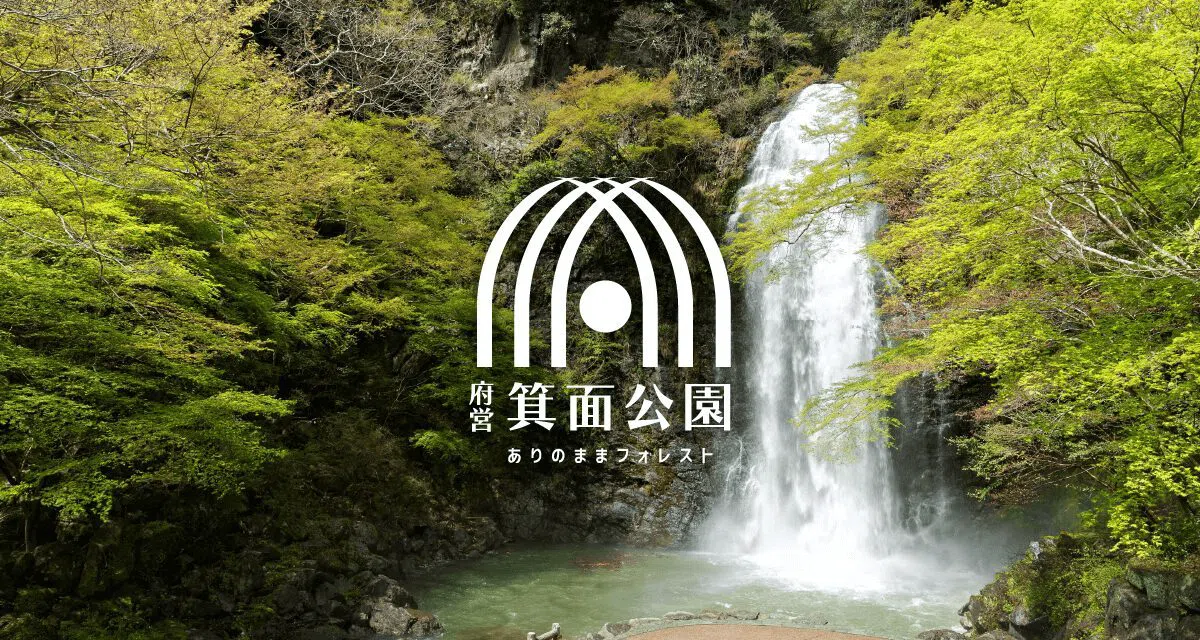
The shops thin out four minutes past the barrier at Hankyu Minoh Station, the road tips upward, and then there is only a river, a wall of maples and the sound of water working over rock. Half an hour before that you were standing in Umeda. Osaka gives up its countryside more easily than almost any large city in Japan, and the mistake most visitors make is treating Minoh as one photograph at the top rather than the hour of walking that earns it.
The walk up the Minoh gorge
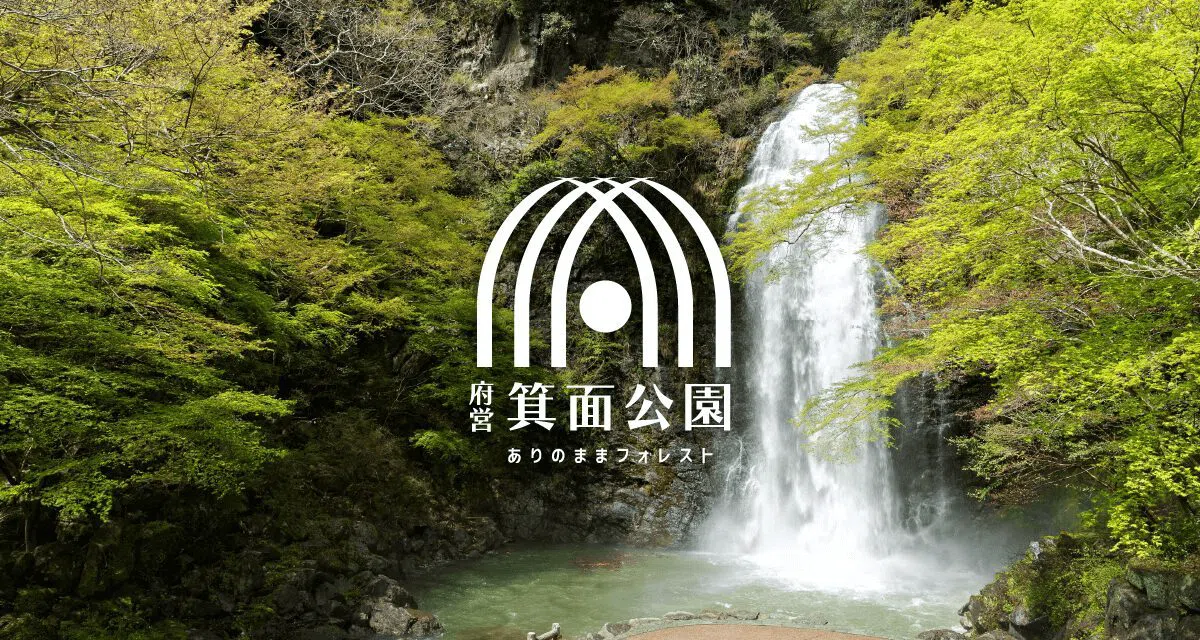
Minoh Park, formally the Meiji-no-Mori Minoo Quasi-National Park (Minoh, at the top of the northern suburbs), is free, ungated and unbookable. There is no ticket office, no timed entry and nothing to arrange in advance, so it is the rare Osaka outing that survives a change of plan at breakfast. The path to Minoh Falls runs 2.7km from the station, mostly paved, and takes about 45 minutes one way at a pace a mixed group can actually hold. It climbs, but gently and evenly, so the slowest walker sets a rhythm everyone can live with instead of being stranded on a staircase. Allow two hours for the round trip with stops, three if you intend to eat and sit at the top.
Two warnings. The first is crowding. On peak-autumn weekends the gorge is shoulder-to-shoulder from the station upward, a slow single file of people rather than a walk in the woods, and the only real fix is a weekday, or a start before nine. The second is status. A fire destroyed the teahouse that stood in front of the falls in November 2025, and the last 200 metres of path stayed shut for months afterwards; the full route reopened on 7 August 2026. Even now, the bench area directly in front of the falls closes after heavy rain, so if a wet spell or a typhoon has just gone through, check before you give a morning to it.
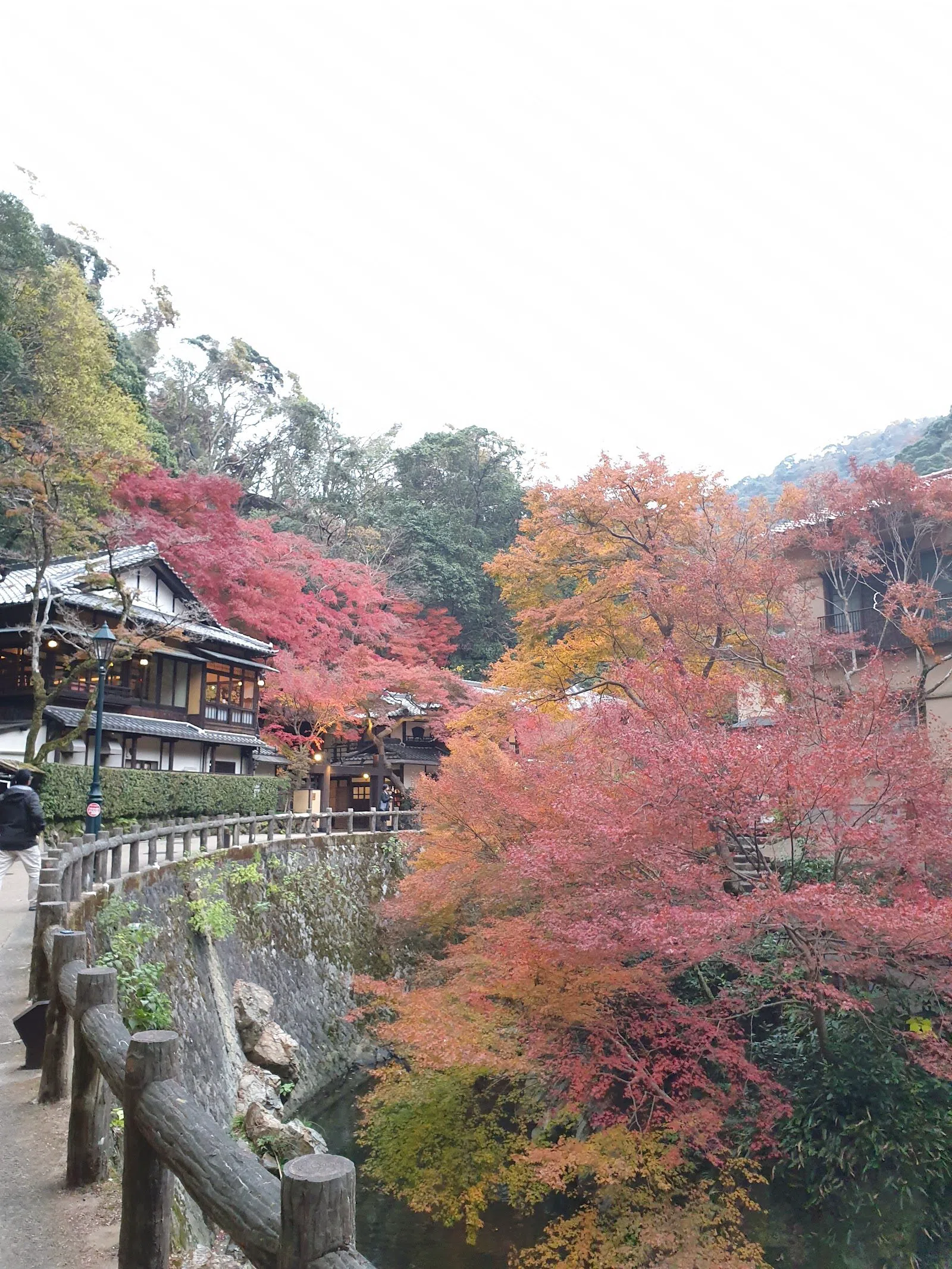
Fifteen minutes up from the station, the Minoh Park Insect Museum (on the falls path itself) is the only indoor room on the walk and the reason a family day here survives bad weather. Entry is ¥280 for adults and free for junior-high age and under, and it closes on Tuesdays. It also closes whenever a storm or landslide warning is in force for the area. That is a live rule rather than a formality, and it will be the same weather that has shut the top of the path. The building is small. A party of more than eight or so should split and go through in waves rather than filling the place.
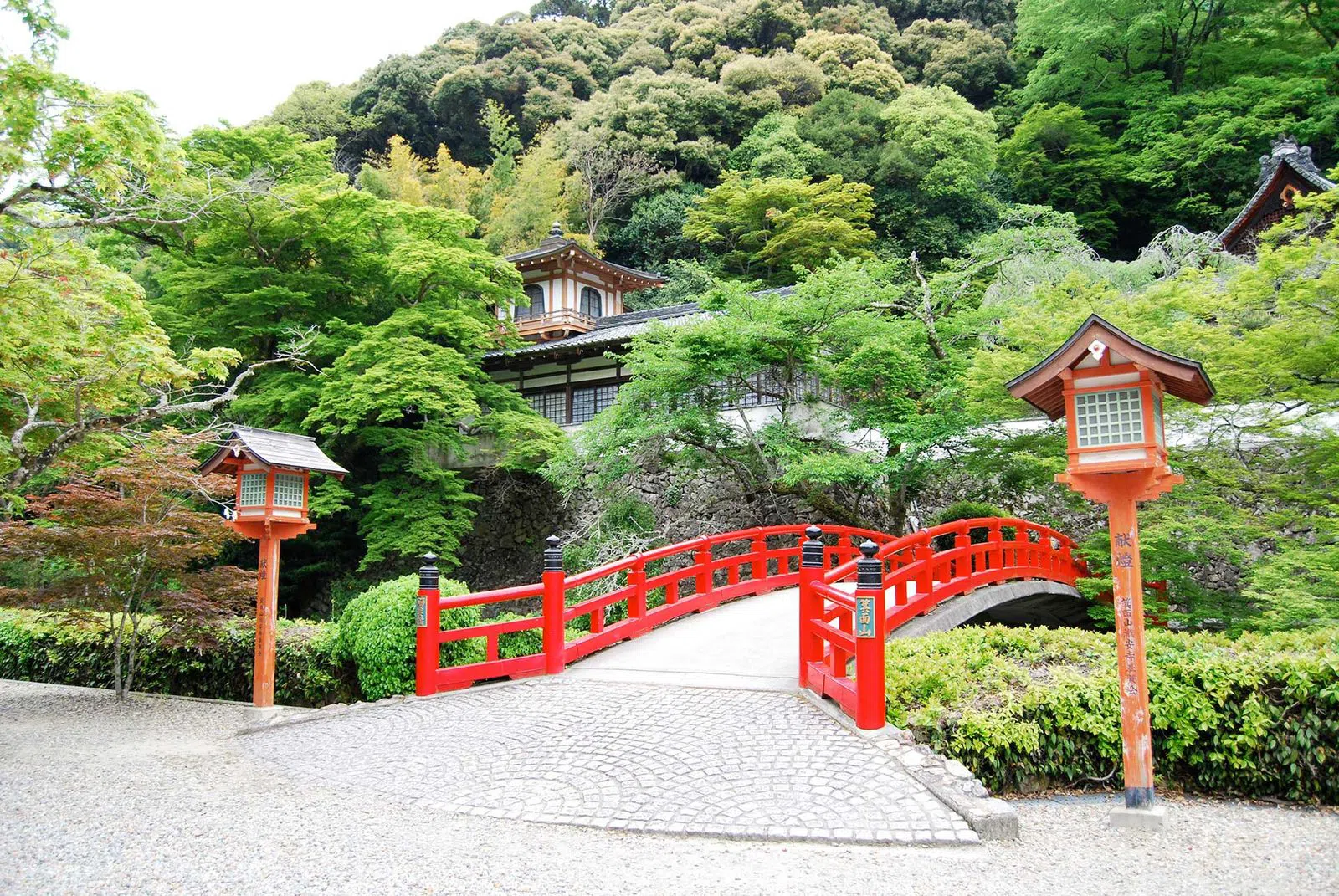
About halfway up, Ryuanji Temple (Minoh gorge, directly on the path) is the reason the path exists at all. It is a Shugendo site founded by En no Gyoja, and it holds what is held to be Japan's oldest Benzaiten. The mountain-ascetic tradition here runs more than a thousand years deeper than the maple-viewing crowds walking past it. The grounds are open and free for a standard visit; special viewing periods are charged at ¥500 for adults and ¥300 for school students, and the temple office keeps 10:00 to 16:00. The approach is a narrow bridge and steps, so a large group should string out and let people through rather than arriving as a block.
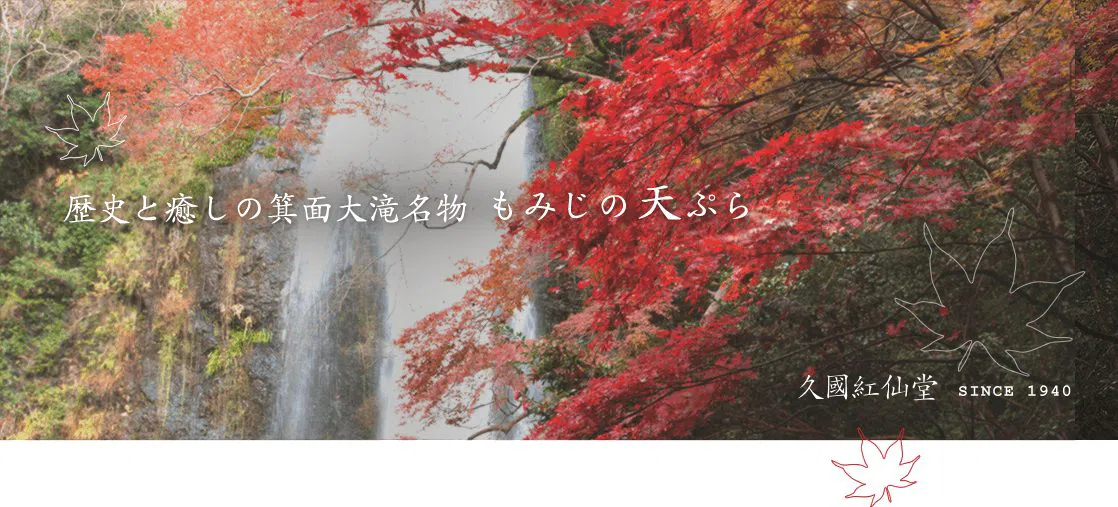
Buy your food on the way up, not at the top. Hisakuni Kosendo (on the falls path) is the working source for momiji tempura, maple leaves salted, battered and fried sweet, sold hot in paper bags at roughly ¥500 to ¥800 each. It is counter service with essentially nowhere to sit, which makes it fine for a group buying and walking on and wrong as a rest stop. This matters more than it used to: Furaibo, the historic teahouse in front of the falls, burned down in November 2025 and is gone. Nothing has replaced it. Walk to the top expecting a view and a bench, not a kitchen.
Plan your Osaka trip
Live prices from our booking partners.
Free cancellation on many rooms. We may earn a commission when you book.
Up the mountain to Katsuo-ji
The falls are a half-day, not a day, and the natural second half is Katsuo-ji Temple (in the hills above the Minoh gorge). You can take the bus up from Minoh Station, which is what most people should do, or continue on the hiking trail from the falls, which is a real walk over ridge ground rather than a stroll and turns the outing into a committed full day. Admission is ¥500 for adults, ¥400 for elementary and junior-high students and ¥100 for preschool children. Hours are 8:00 to 17:00, extended to 18:00 on Saturdays, so a Saturday is the one day you can walk the gorge slowly in the morning and still reach the temple gardens in late-afternoon light.

If you are driving, read the parking rules before you set off rather than at the barrier. The car park runs fully reservation-only on weekends, public holidays and over New Year, which is exactly when people turn up unannounced. Tour-bus parking exists but must also be reserved. Groups are otherwise easy here: the site is large, the paths are wide and nobody minds a party of twenty moving through the gardens.
Two more greens on the same run north
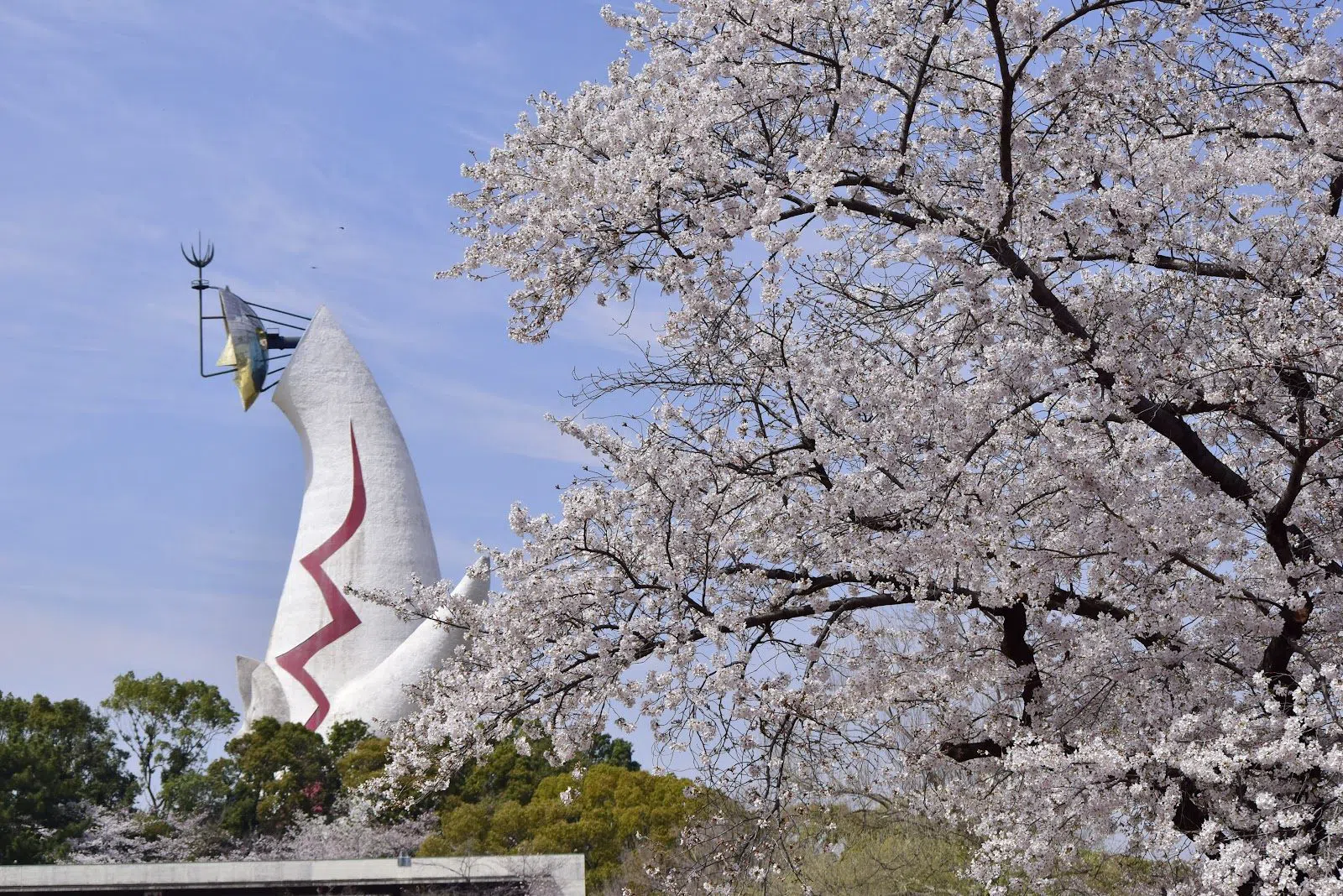
Expo '70 Commemorative Park (Suita, north Osaka) is the flat, open, lie-on-the-grass counterweight to a gorge walk, and it sits close enough to Minoh that the two can share a day if you start early. Adult entry is ¥450 and children are free following the fee revision of 1 April 2026. It closes on Wednesdays. Less obviously, it sometimes closes entirely for ticketed events (the Kamigata Expo Park Fes takes the whole park on 31 October and 1 November 2026), so it must never be treated as a walk-up certainty. Check the day before. For groups it is the most forgiving space on this list: lawns big enough to lose a school party in, and advance bus-parking reservation available for some of the car parks.
Hattori Ryokuchi Park and the Open-Air Museum of Old Japanese Farmhouses (Toyonaka) sits on the same northbound run out of the city as Minoh, which means it slots into the same half-day without picking up a new train line. The park is free and wide-pathed, comfortable for any size of group. The museum, Japan's first open-air museum and a collection of farmhouses dismantled and rebuilt on the site, costs ¥800 for adults, ¥300 for high school students and ¥200 for elementary and junior-high, opens 9:30 to 17:00 with last entry at 16:30, and closes on Mondays. It is also the only green on this list with real roofs you can stand under, so when the forecast turns and the gorge is off, this is where the day goes.
Where the prefecture gets steeper
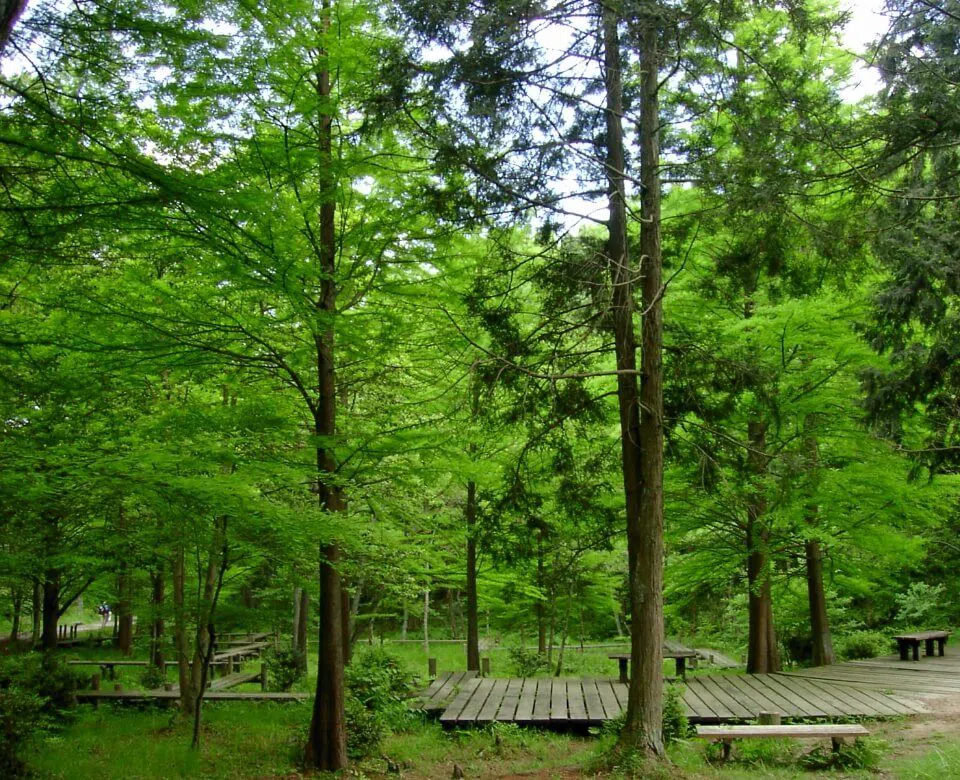
Osaka Prefectural Forest Hoshida Park and its Hoshi no Buranko suspension bridge (Katano, north-east of the city) is the most photogenic nature day in the prefecture and the one people most often misjudge. Entry is free. The park keeps 9:00 to 17:00 and the bridge itself closes at 16:30, and the bridge is a 20 to 30 minute uphill walk from the car park, not a viewpoint you drive to. Parking costs ¥200 an hour across 88 spaces that fill on weekends, with bus parking at ¥600 an hour by reservation. Storm damage closed sections of the park into 2026 and the reopening has been phased; the bridge closure was only lifted in mid-August 2026. Confirm the bridge is open on the day you travel rather than the week you plan.
Mount Ikoma, reached by the Ikoma Cable Car to Ikoma Sanjo Yuenchi (the ridge on the prefecture's eastern edge) is the cheapest big view in reach of the city: around 20 minutes from Namba, then a 15-minute ride up to 642 metres. Park admission is free and rides are charged individually at roughly ¥360 a leg, which suits groups because nobody has to commit to a package. Two facts catch people out: it closes on Thursdays, and it shuts for the winter season from early December.
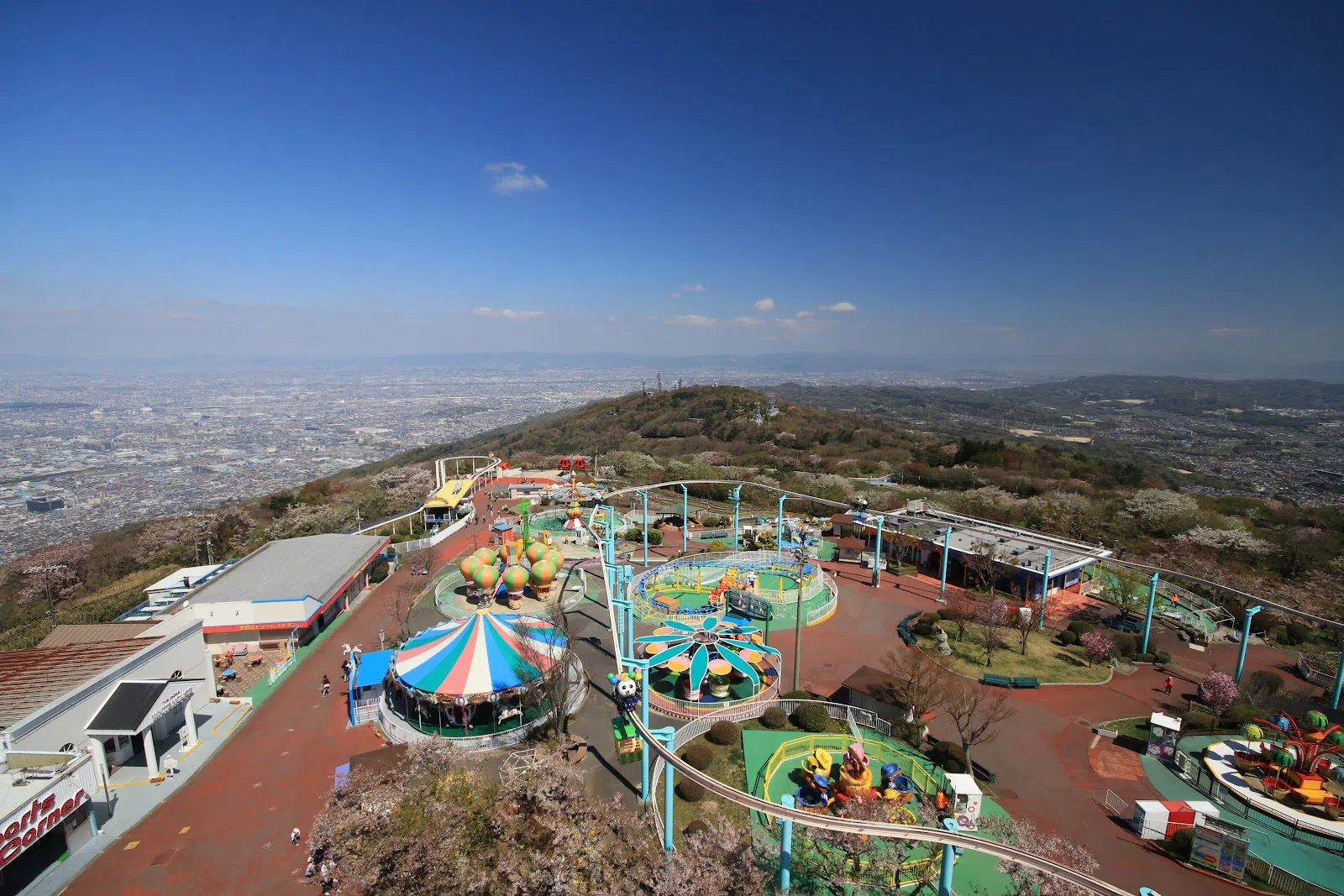
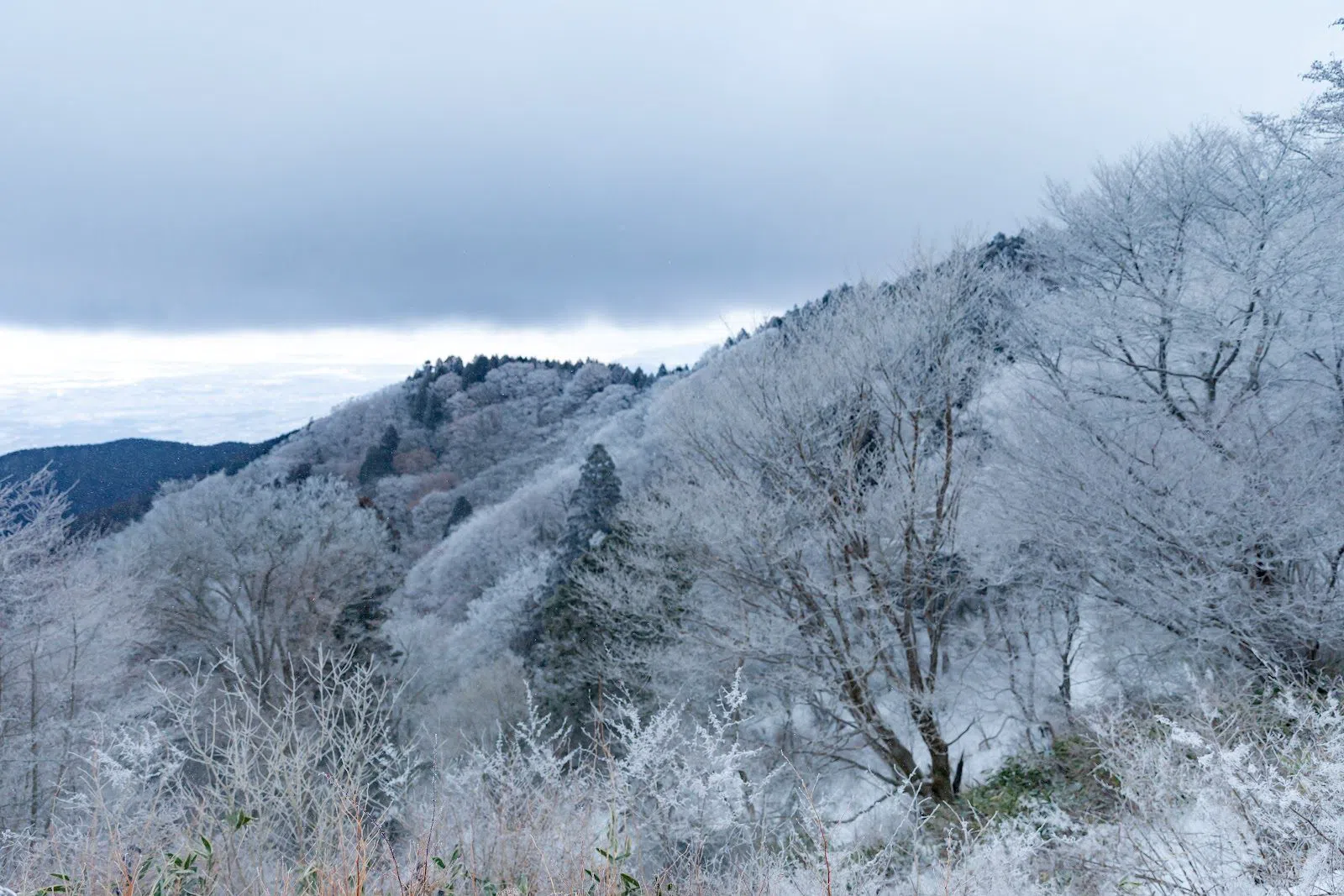
Mount Kongo (Chihaya-Akasaka, on the southern border of the prefecture) is the serious option, the highest walk in Osaka Prefecture, roughly two hours up the Chihaya main trail, free apart from the bus. The bus from Kawachinagano Station runs hourly on weekdays and twice-hourly at weekends, takes about 40 minutes and costs around ¥480 each way, so plan the return leg before you start the ascent. The ropeway has not run since 2019 and was formally abolished in 2022, so the mountain is now on foot in both directions. Hiking clubs take large parties up it every weekend, which tells you both that it is well-trodden and that you will not have it to yourself.
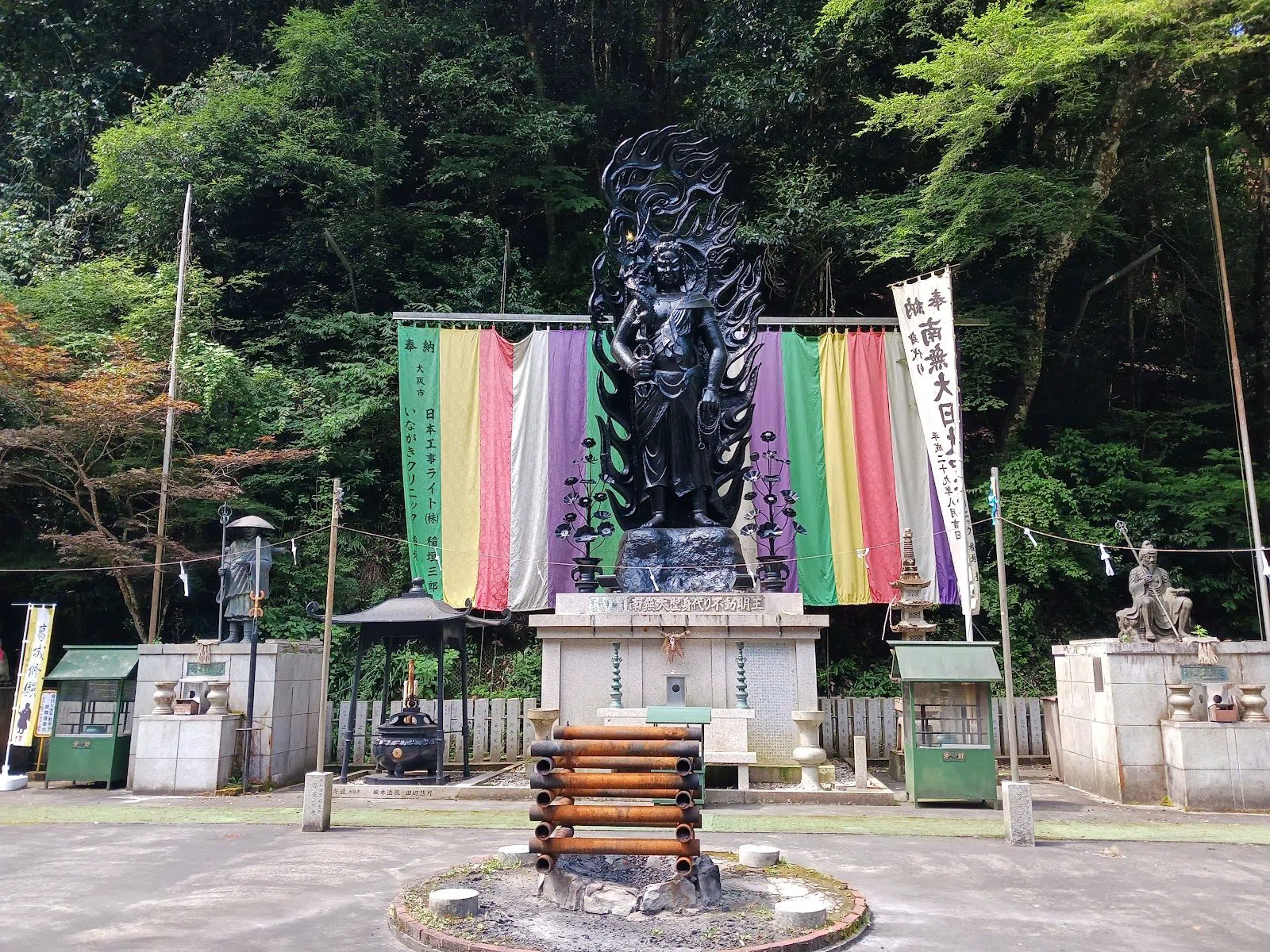
Mount Inunaki and Inunakisan Shipporyuji Temple (the southern hills) is the only entry here with an actual practice attached rather than a view. The temple approach from the Inunakisan bus stop is an easy hour on foot and free to walk. Groups are handled through booked guided programmes, including waterfall training, and that is the right way in. Book it rather than turning up, and treat the place as what it is, a working religious site with people doing something serious in the water. Inunaki Onsen at the foot of the mountain takes day bathers and is charged separately, which makes it the obvious end to a cold-weather walk.
The all-weather ones inside the city
Tsurumi Ryokuchi Park and Sakuya Konohana Kan (Tsurumi, east Osaka) is the rain-proof pick and the one that works in any season. The park is free; the greenhouse, one of Japan's largest, costs ¥500 for adults and is free for junior-high and under, and closes on Mondays. It is ten minutes from Tsurumi-Ryokuchi Station on the Nagahori Tsurumi-ryokuchi line, which is close enough that you can decide at 11am and still get a full afternoon.
Nagai Botanical Garden (Nagai, southern Osaka) is the cheapest proper green space inside the city and a genuine botanical collection rather than a lawn with labels: ¥300 for adults, ¥200 for high school and university students, free for junior-high and under, open 9:30 to 17:00 and closing at 16:30 from November to February. teamLab runs a night installation on the same grounds on an entirely separate evening ticket, and that catches people at the gate. A daytime garden ticket does not admit you to it, and the evening ticket is not a way to see the garden.
Gardens south of Namba
Daisen Park Japanese Garden (Sakai, 20 minutes south of Namba) pairs a formal garden with the Mozu Tombs World Heritage grounds around it, which is a rare combination this close to a metro. Entry is ¥200 for adults, ¥100 for elementary and junior-high students, and free for over-65s; hours are 9:00 to 17:00 with last entry at 16:30, closed Mondays and over the year-end. It was shut for plant-room works from November 2025 and reopened on 31 March 2026, worth knowing if you are reading anything written in between.
OSAKA Garden of Floral Culture, the Osaka Prefectural Flower Garden (Kawachinagano), is the deep-south option and really only makes sense if you are already heading that far, to Mount Kongo, say. Adults pay ¥580, high school students ¥290, and junior-high and under go free, with an explicit group rate from 30 people. Hours move with the season: 9:30 to 17:00 from March to September, 10:00 to 16:00 in December and January, last entry an hour before closing. Its distinctive draw is the plum-blossom kotatsu event from February into early March, which is a better reason to come than the summer beds.
Getting there, paying and timing
For Minoh, take the train north from Umeda and change once for Hankyu Minoh Station; door to gorge is about half an hour and the falls path starts a few minutes' walk from the platform. Everything else on this list is reachable on ordinary suburban lines with an IC card, so load it before you leave the city and stop thinking about fares. Carry cash anyway: temple admissions, park gates, the Insect Museum and the momiji tempura counter are all small-ticket, and the smaller the ticket the more likely coins are the only answer. Budget for a day here is genuinely low. Minoh Park itself is free, Katsuo-ji is ¥500, and a full north Osaka day with a bus, a temple and a bag of tempura lands under ¥2,000 a head before food.
Timing decides the quality of the day more than the choice of park. Start early for the gorge, particularly in autumn; keep Wednesdays clear of Expo '70; keep Mondays clear of Hattori Ryokuchi, the greenhouse at Tsurumi and Daisen; keep Tuesdays clear of the Insect Museum and Thursdays clear of Mount Ikoma. Check the status of Minoh's falls-front area and the Hoshi no Buranko bridge on the morning you travel rather than trusting a plan made a month ago, because both have reopened in phases during 2026.
If you are basing yourself north of the centre to shorten these runs, compare rates on the Osaka hotel search before you book, since the northern stations shave real minutes off every trip described here. For what to do with the rest of the trip, the wider Osaka guide covers the city days that these green ones are meant to break up.
Before you go
How long does the walk to Minoh Falls take?
The path runs 2.7km from Hankyu Minoh Station and takes about 45 minutes one way at an unhurried pace. It is mostly paved and climbs gently, so mixed-ability groups stay together. Allow two hours for the round trip with stops, or three if you plan to sit at the top.
Is Minoh Park fully open after the 2025 teahouse fire?
Yes. The fire in November 2025 destroyed the Furaibo teahouse and closed the last 200 metres of path for months; the full route reopened on 7 August 2026. The bench area in front of the falls still closes after heavy rain, so check on the day.
Can you do Minoh Falls and Katsuo-ji in the same day?
Comfortably. Walk the gorge in the morning, then take the bus up to Katsuo-ji from Minoh Station, or continue on the hiking trail from the falls if you want a full day on foot. Katsuo-ji costs ¥500 for adults and opens 8:00 to 17:00, until 18:00 on Saturdays.
Is Expo '70 Commemorative Park open every day?
No. It closes on Wednesdays, and occasionally shuts entirely for ticketed events: the Kamigata Expo Park Fes takes the whole park on 31 October and 1 November 2026. Adult entry is ¥450 and children are free after the 1 April 2026 fee revision. Check the day before you go.
Where can you get outdoors near Osaka when it rains?
Sakuya Konohana Kan at Tsurumi Ryokuchi is the reliable answer: one of Japan's largest greenhouses, ¥500 for adults, closed Mondays. The Open-Air Museum of Old Japanese Farmhouses at Hattori Ryokuchi has real roofs and sits on the same northbound run as Minoh, and the Minoh Park Insect Museum works for families unless a storm warning closes it.