The Osaka issue
Choosing Where to Sleep in Osaka on a First Trip
Osaka has two downtowns and a quiet middle that most first-time visitors never think to book. Here is what each one costs, how loud it is at night and what sits next to it.
By Inês CarvalhoOsaka one neighbourhood at a time
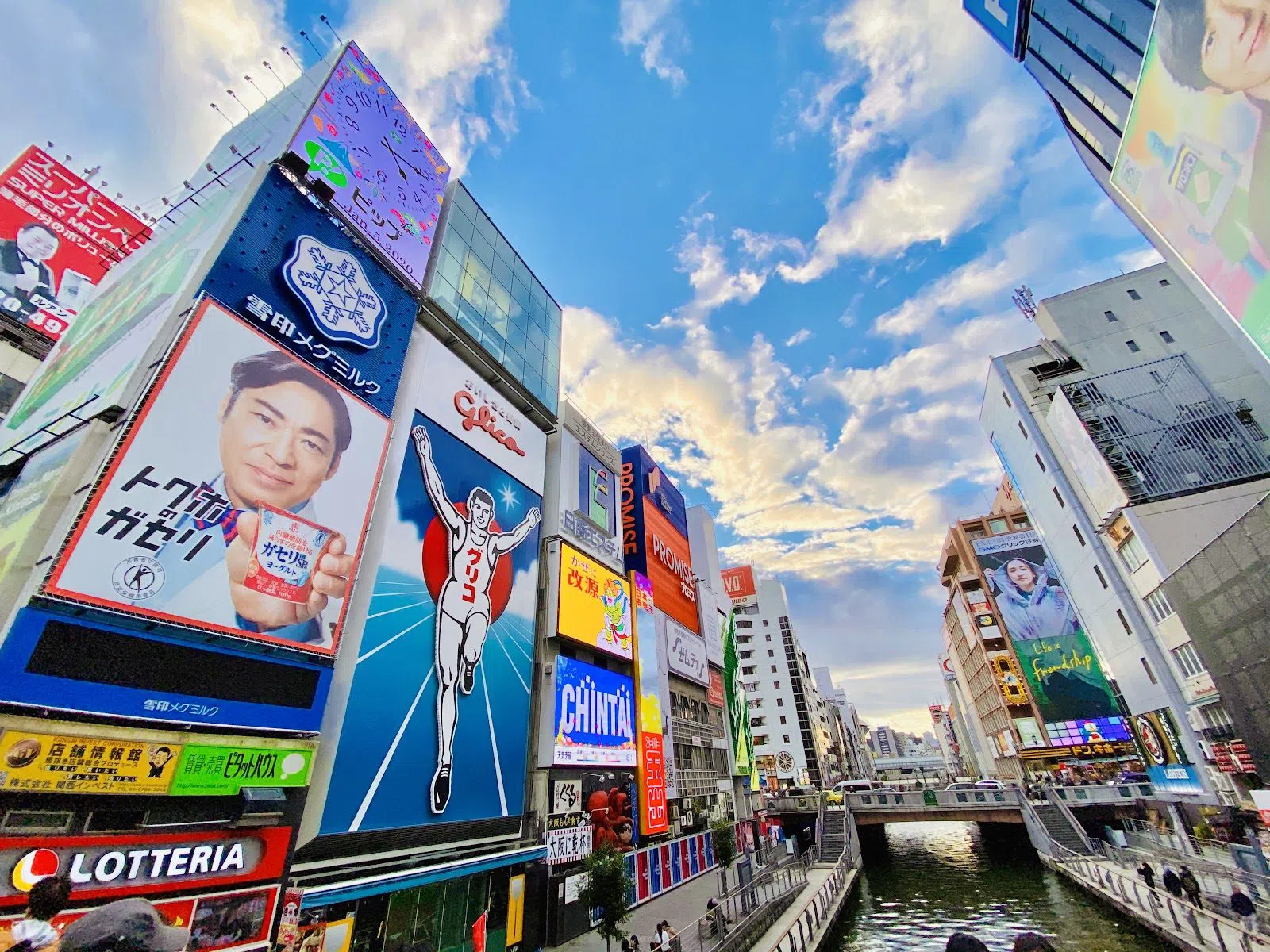
Osaka's centre is split in two. In the south, Namba's signage runs down to the water at Dotonbori and the smell of frying batter doesn't let up much before two in the morning; in the north, Umeda stacks department stores, train platforms and hotel lobbies into towers you can move between without ever stepping outside. Almost every first-trip decision comes down to which of those you want to walk home into, and to the quiet middle between them, which most visitors never think to book.
Start with the two downtowns
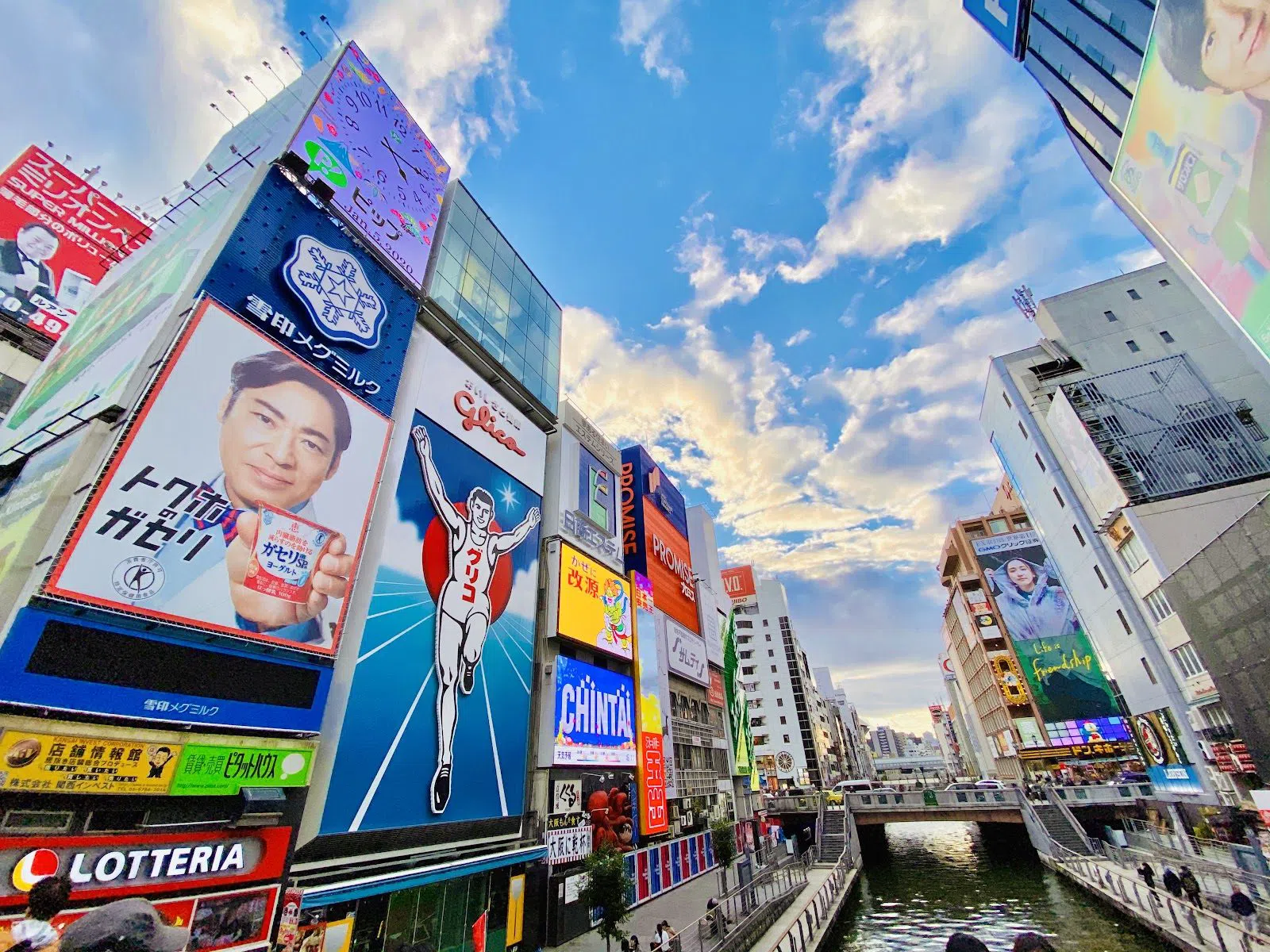
Namba & Dotonbori (Minami) is the default answer for a first trip, and it earns it. Dotonbori, Kuromon and the Shinsaibashi arcade are all on foot from one another, and Nankai Namba runs direct to Kansai Airport in about 40 minutes, which matters more than people expect at the end of a long flight. Doubles run roughly ¥12,000–¥60,000: business hotels start around ¥12,000, with Swissôtel Nankai and Centara Grand at the top of the range. Swissôtel Nankai's 6th-floor lobby is under renovation from 20 August 2026 to March 2027, so arrivals there will be routed around building works for the whole season.
For groups this is the strongest area in the city. The big izakaya floors will seat six to ten without a booking, Namba is thick with apartment-style hotels that sleep four to six in one unit, and late check-ins are so normal that nobody makes a performance of them. The trade-off is noise until 2am, and street-facing rooms on the lower floors hear all of it. If you sleep lightly, ask for high and interior, or read the rest of this piece first. To compare rates and room configurations, the Osaka hotel search is the fastest way to see what's free on your dates.
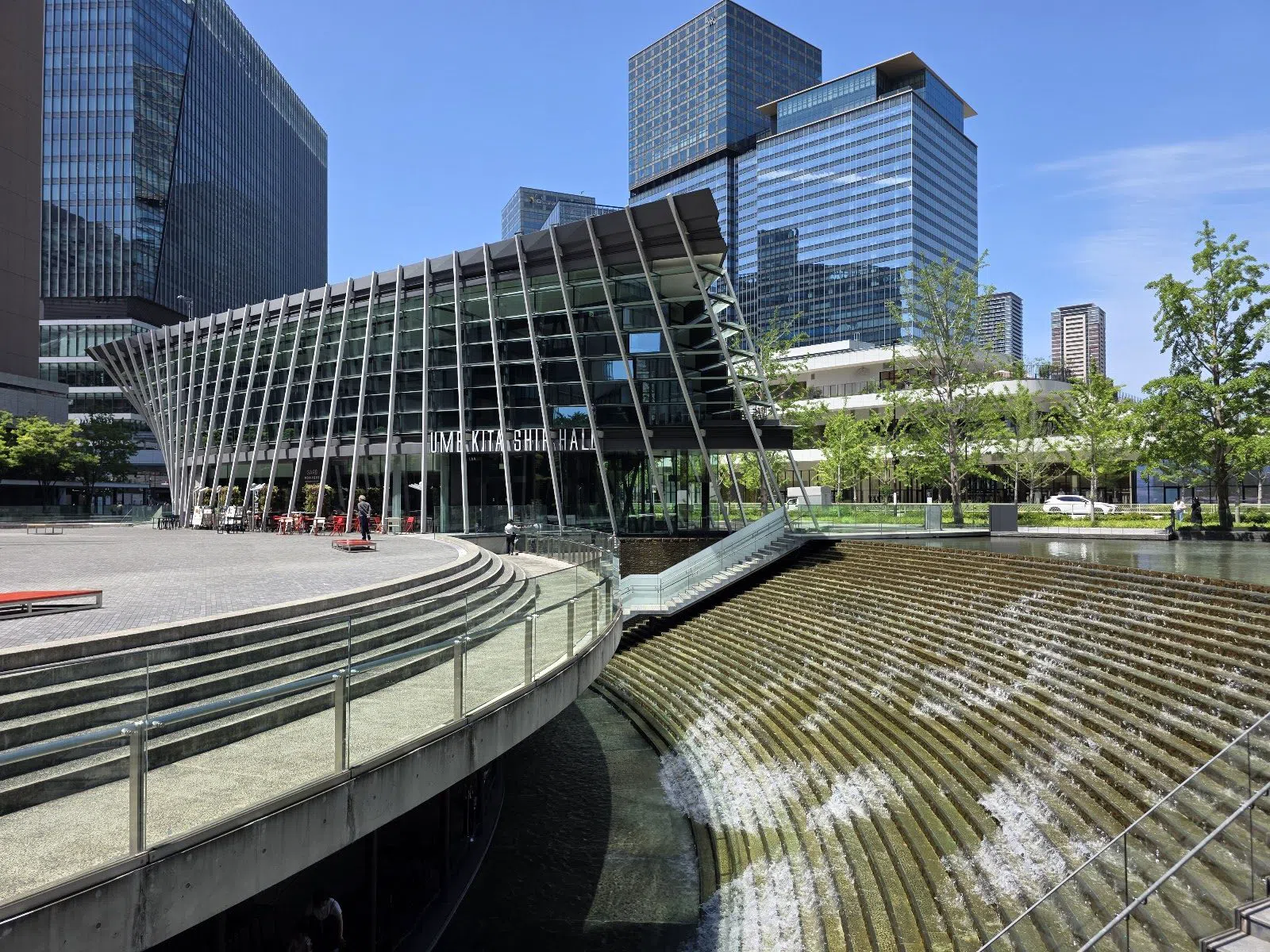
Umeda & Umekita (Kita) is the other obvious answer, and the better one if your trip involves day trips. Everything radiates out of a single station complex, so the wider Kansai region is 25 minutes to an hour away without a transfer: the temple towns, the port cities, the castle towns to the west. Rates span ¥15,000 to ¥150,000, from ordinary business hotels up to the Waldorf Astoria and the Ritz-Carlton. Umekita's south wing opened on 21 March 2025 with the Waldorf Astoria on floors 28–38; the full build-out runs to FY2027, so expect hoardings and diverted walkways around the newer blocks.
Umeda suits multi-generation groups better than anywhere else here, for unglamorous reasons: the international hotels have connecting rooms, the lifts cope with luggage and pushchairs, and Grand Green Osaka's restaurant floors will seat a large table without a month's notice. What it lacks is street life. Umeda's pleasures are largely indoors and vertical, and the walk back to your room at midnight is more shopping podium than city.
Plan your Osaka trip
Live prices from our booking partners.
Free cancellation on many rooms. We may earn a commission when you book.
Sleeping between the two
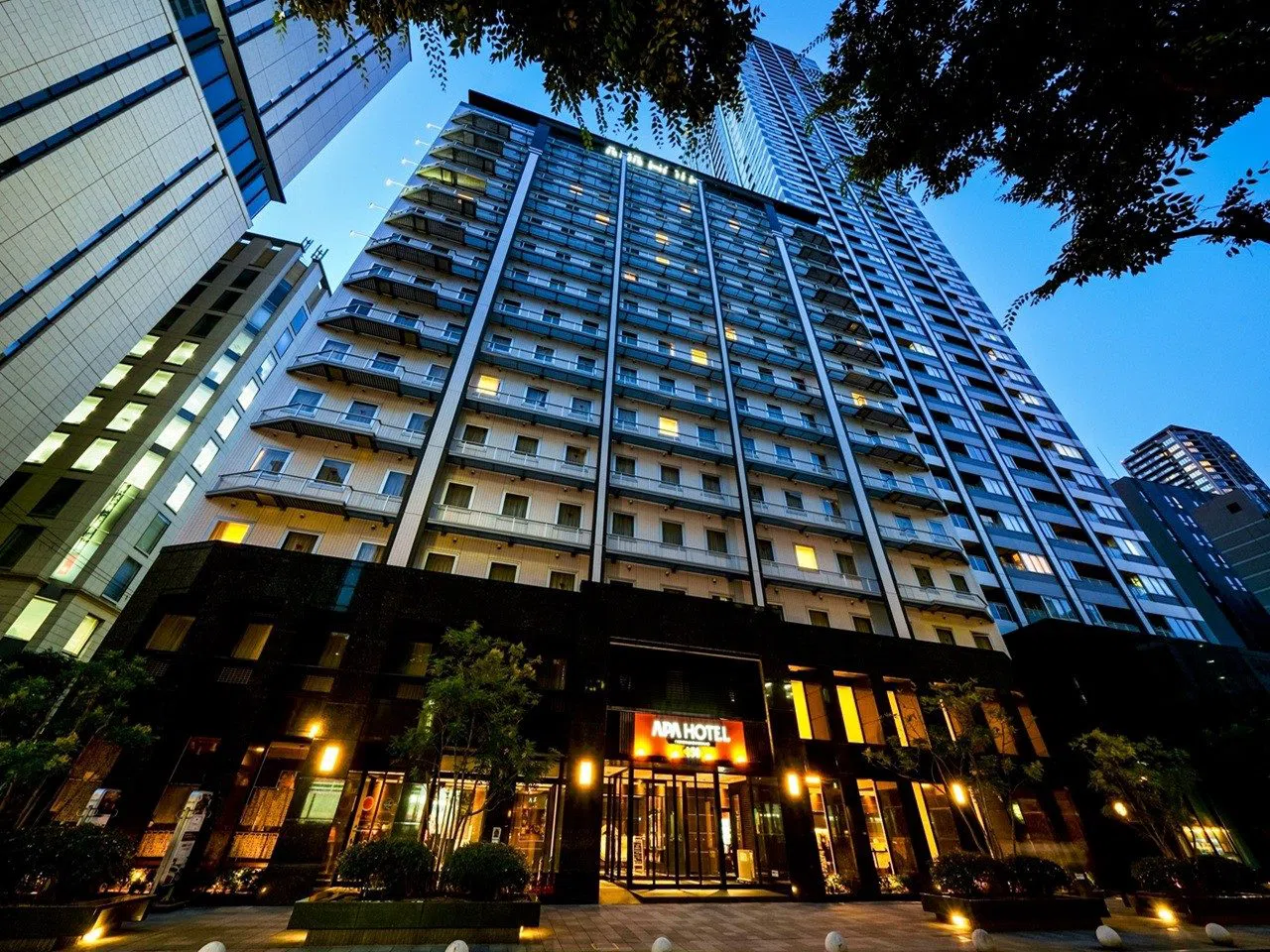
Honmachi & Yodoyabashi (central business district) is the pick I make most often for a first trip, and almost nobody arrives planning it. It sits one Midosuji subway stop from both Umeda and Namba, so the entire city is either a four-minute ride or a walk of half an hour, and you sleep through the night. Rooms run ¥12,000–¥90,000, with The St. Regis Osaka anchoring the top end and a great deal of clean, boring, entirely adequate mid-range under ¥20,000.
Groups do fine here without the area being built for them: the large-format restaurants that feed the office towers empty out after the after-work crowd leaves, so a table of six at 8pm is easy. Hotel rooms, though, are overwhelmingly twins and doubles, so a family of five will be booking two rooms. Weekend evenings in Honmachi are dead, the offices shut and the streets quiet, which is either the drawback or the entire point, depending on the traveller.
Shinsaibashi & Amerikamura (Minami, ten minutes north of Dotonbori) is the compromise for people who want the food access without the volume. Everything Namba has stays within a short walk, and the streets at night are noticeably calmer. Rates run ¥15,000–¥90,000, with W Osaka and the design-hotel end sitting high and arcade-side business hotels much lower. Mitsu Park, which everyone calls Sankaku, or Triangle Park, is still the neighbourhood's default place to meet.
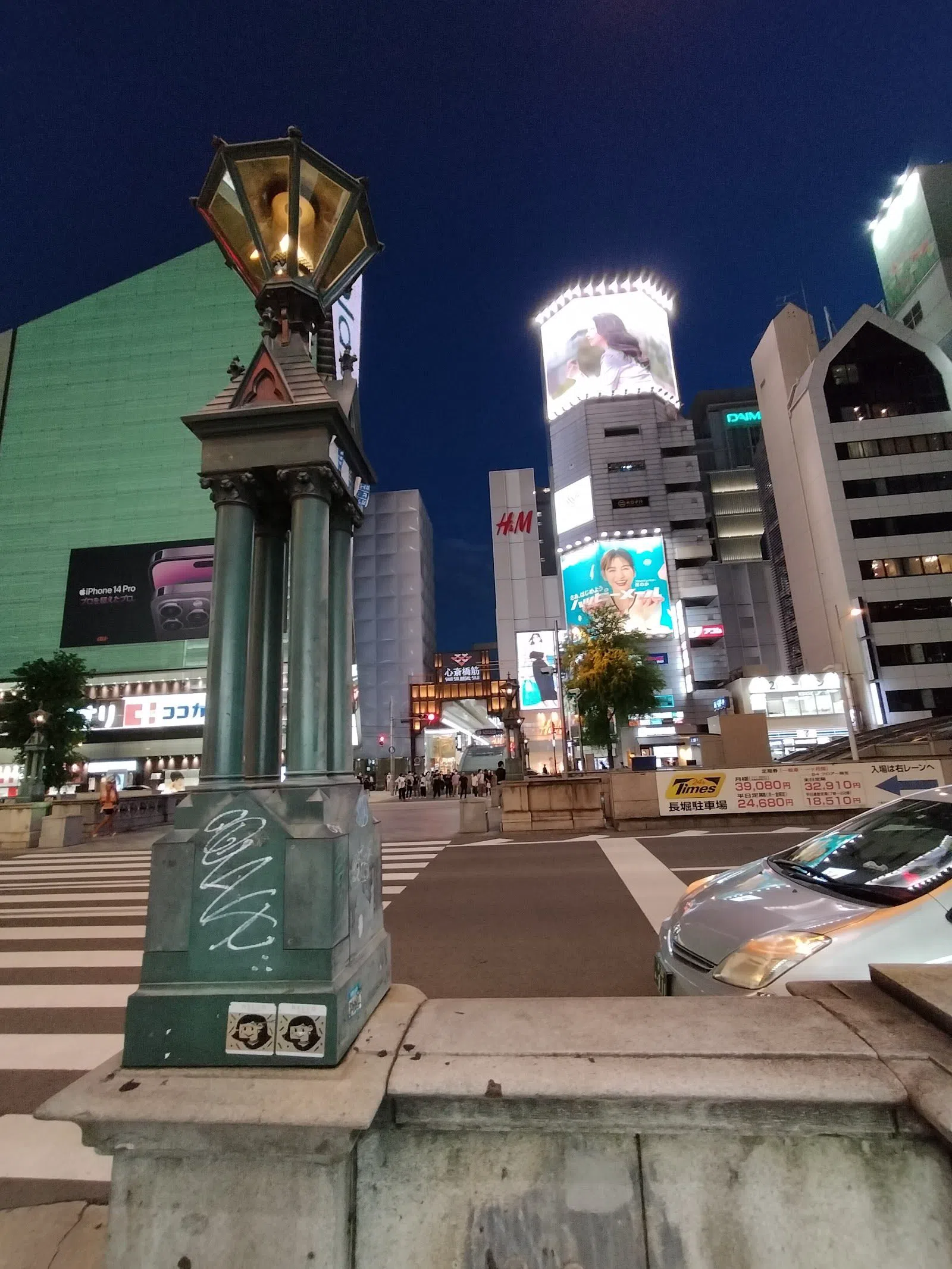
Friend groups of four to six are well served: Amemura's standing bars and late kissaten absorb that number without a reservation. Be realistic about the rooms, though. The design hotels here run small, and groups almost always end up splitting into pairs rather than sharing one unit, so price it as two or three rooms rather than one.
Central Osaka without the neon

Nakanoshima & Kitahama (riverside, between the two centres) is where I send travellers who want to be central and would rather not look at a single flashing sign. It's 15 minutes' walk to Umeda, 15 to Honmachi, with the Nakanoshima Museum of Art, open since 2022, in the middle and the RIHGA Royal Hotel Osaka, Vignette Collection at the island's west end. Rates start around ¥18,000 and run to ¥120,000, with Conrad Osaka and the Four Seasons in adjacent Dojima at the top and solid mid-range along the river.
This is a quiet-leaning address, better suited to a family or two couples travelling together than to a loud group. The riverside terraces will take a walk-in table of four or five happily enough, but nobody here is set up for a stag party and the reception you get will reflect that.
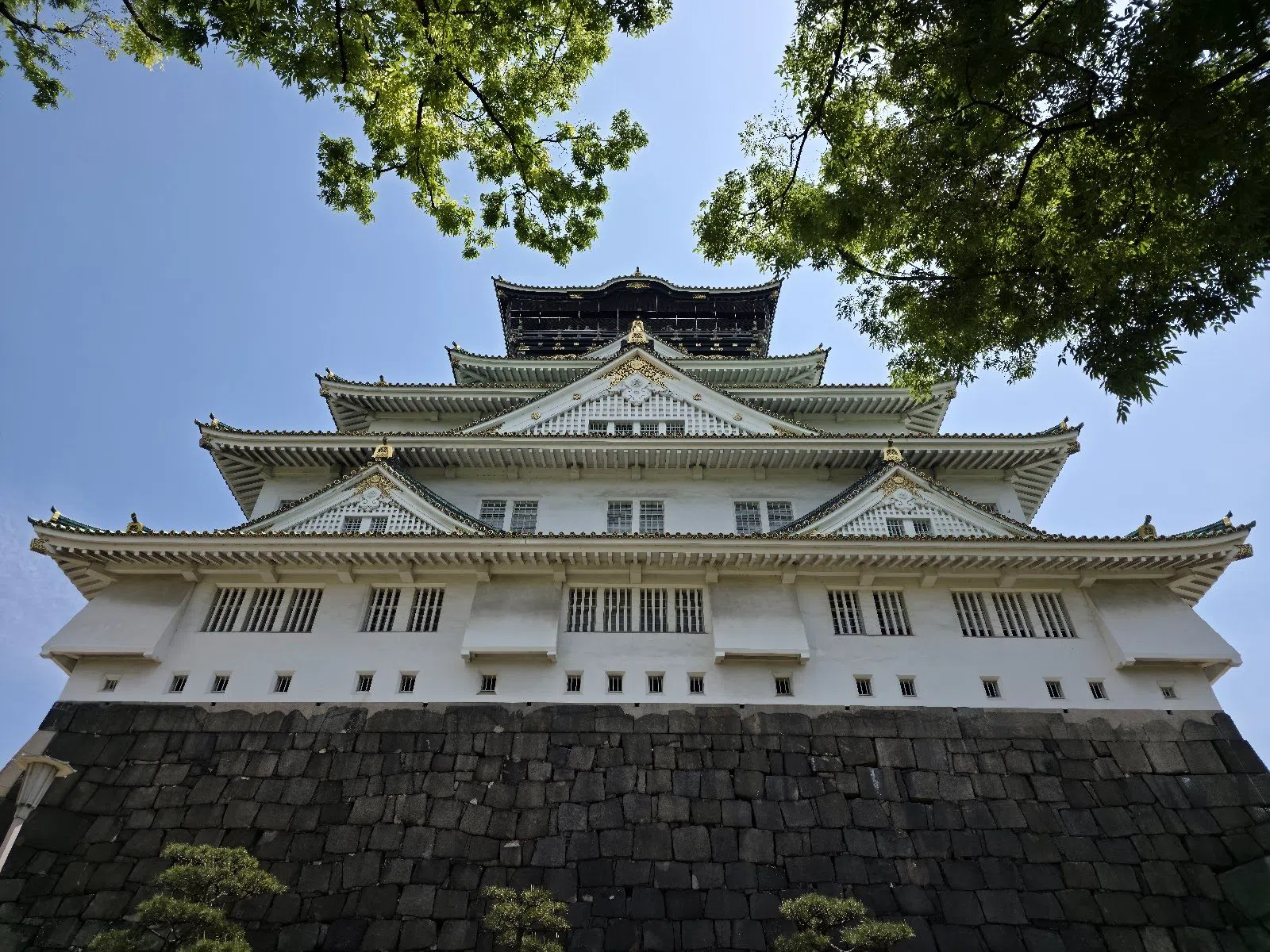
Osaka Castle & Tanimachi (parkland, east of the centre) is the calm option that still puts a headline sight out of the window. The castle grounds are free and open all day; the interior keeps 9am–5pm. Rooms run ¥14,000–¥40,000, with DoubleTree by Hilton Osaka Castle and the riverside chains sitting in the middle of that band. It is family-first territory: the park absorbs children for hours, and the chain hotels here have the connecting rooms and buffet breakfasts that make a group morning survivable. Rates run lower because you're a subway ride from the food districts rather than a walk, so plan on ending most evenings with a train.
Bases chosen for the eating
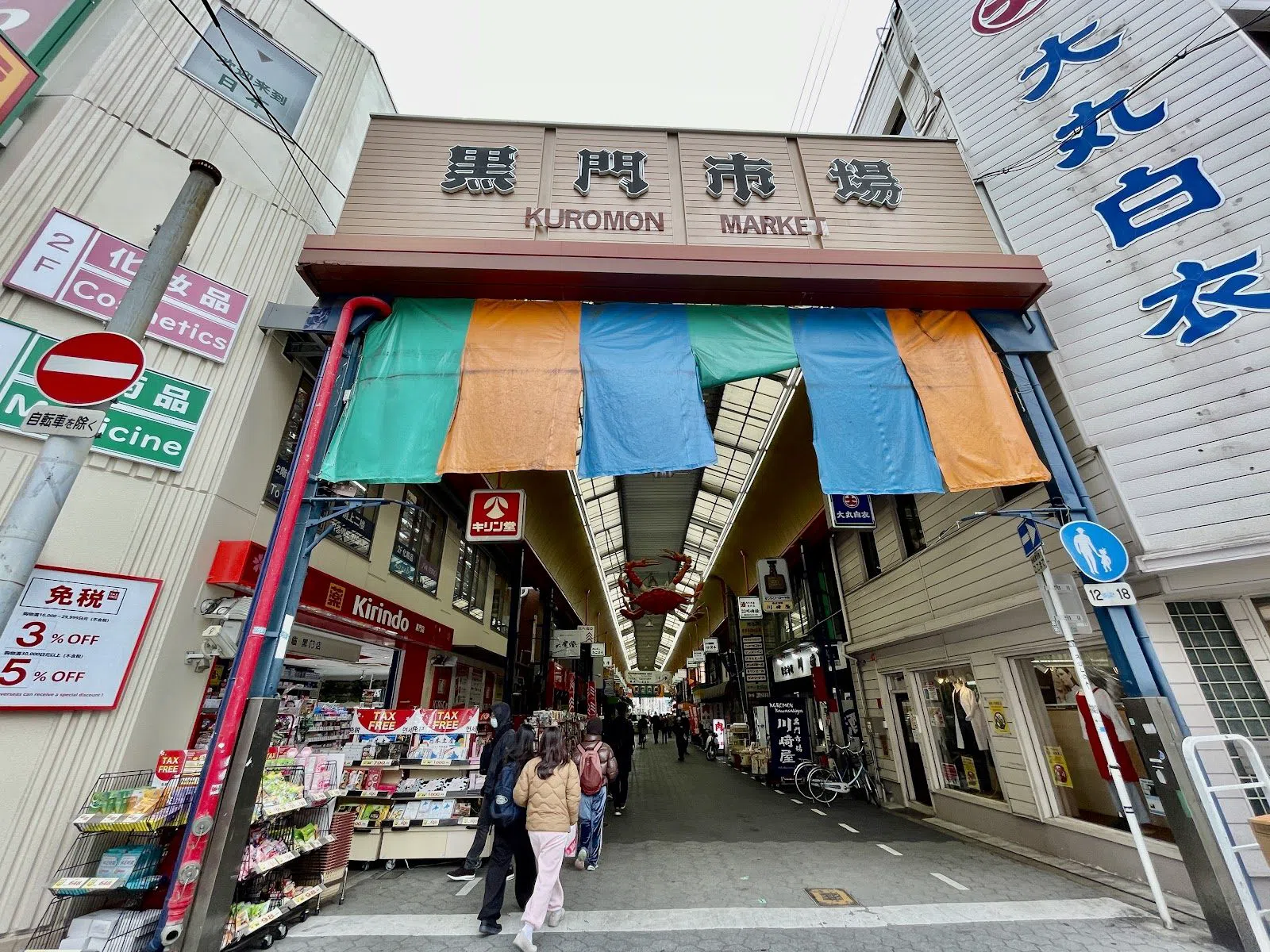
Nipponbashi (Kuromon Market and Den Den Town, five minutes south of Namba) is cheaper than Namba proper for a very short walk. Beds run ¥10,000–¥30,000, mostly business hotels and apartment stays, and you wake up beside roughly 150 market stalls and a run of arcades selling several decades of games and models. Grazing as a group works well because most of Kuromon is stand-and-eat, and the arcades will take any number of people. The stalls mostly wind down by 6pm, so this is a breakfast-and-lunch address and your dinners will happen elsewhere. Big hotel rooms are also scarce here.
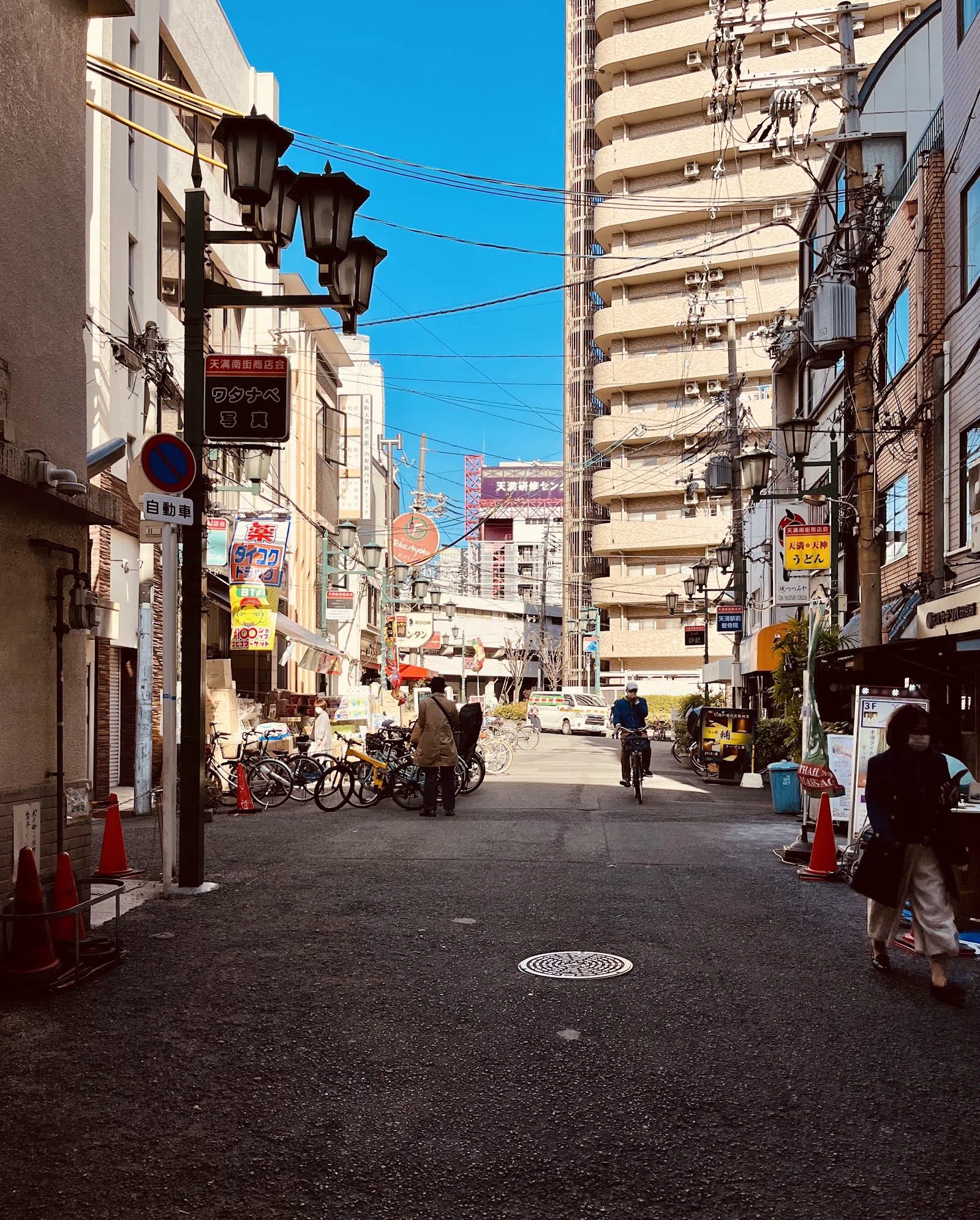
Tenma & Tenjinbashisuji (old Osaka, two Loop Line stops from Osaka Station) is the best value in the centre and the most fun after dark if you like drinking the way locals do it. Rooms go for ¥9,000–¥25,000. The arcade holds something like 800 shops on a single street, with Osaka Tenmangu shrine partway along. If you're in the city on 24–25 July, the Tenjin Matsuri takes over the entire neighbourhood, and rooms here go early. Groups do well but should expect to fragment: the standing bars and counters seat two or three at a time, and moving in small pods between them is how Tenma works.
Fukushima (one stop or a 15-minute walk from Osaka Station) has a denser run of good restaurants than Umeda itself, which is a strange thing to say about a place so close to it. Mid-range and design-led small hotels run ¥12,000–¥35,000. It's counter-heavy, so a group of six will be split up and probably seated at different times; two to four is the number that works. Many of the good places take reservations, and here it's worth making them. I'd call this a second-visit base, or a first-visit base for someone who came primarily to eat.
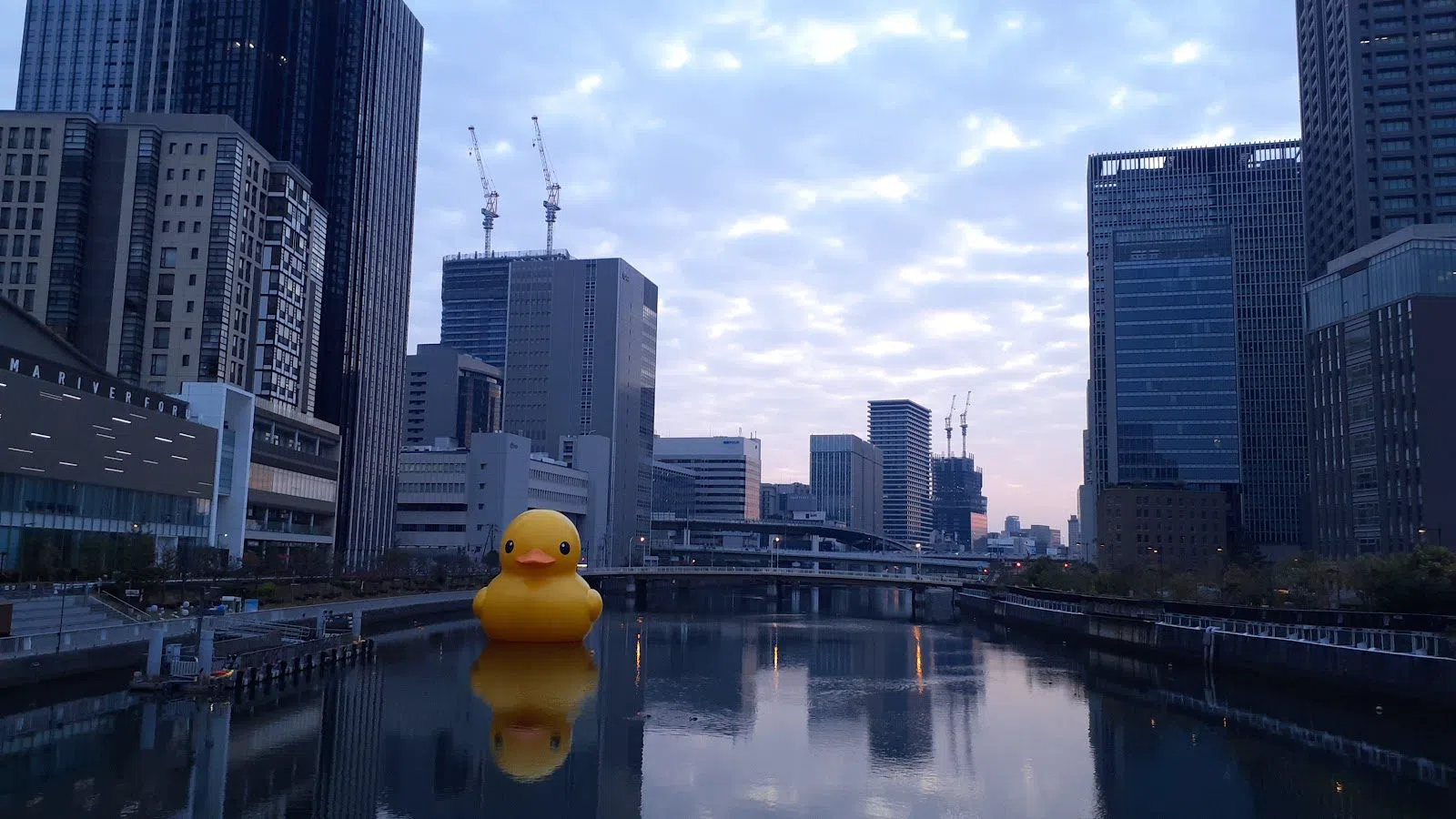
Where the rooms are cheapest
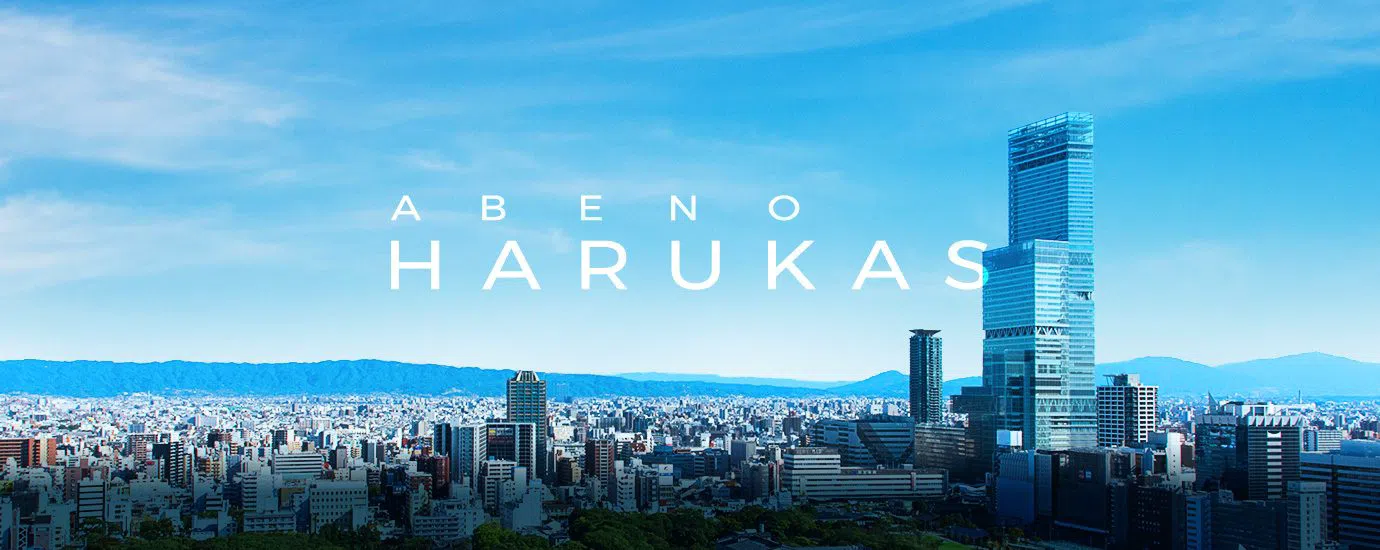
Tennoji & Abeno (southern transport hub) gives you more room for less money than anywhere central, and every line you're likely to need converges underneath it, including direct runs south for the mountain temples and east for the deer parks. Rates run ¥8,000–¥45,000, with the Osaka Marriott Miyako in the tower at the top and plenty under ¥12,000 around the station. Abeno Harukas held the title of Japan's tallest building until a taller tower opened in 2023, and the view from it is still the best in the city. Budget-conscious groups do well: the station hotels sell big rooms and family plans, and the department-store restaurant floors seat large parties without fuss. Namba is ten minutes away by train.
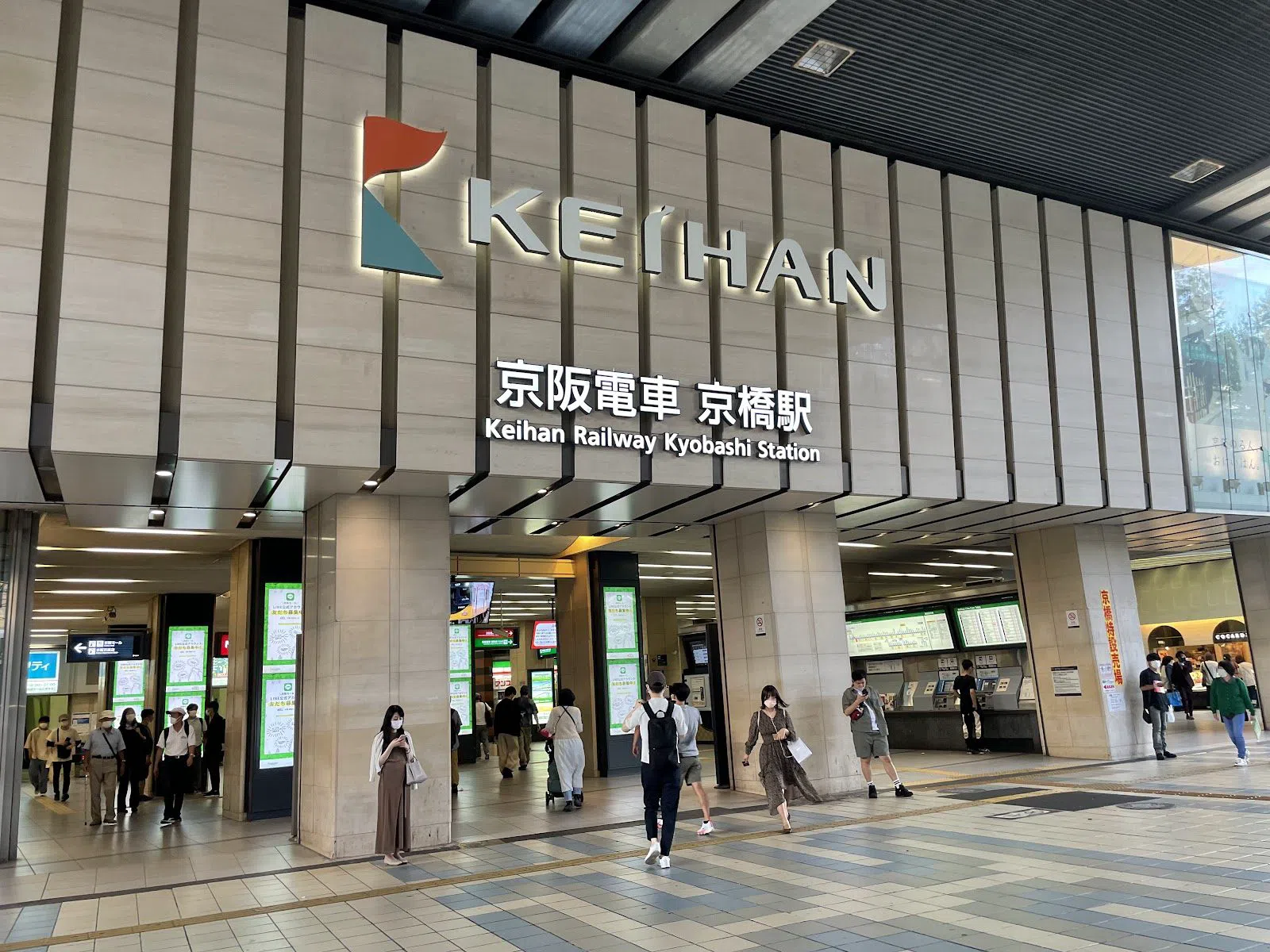
Kyobashi (working-class nightlife, by the castle park) is cheap, ¥9,000–¥22,000, with fast rail links east and the castle park a short walk away. It's very group-friendly in a scruffy way: cheap grilled sticks, standing room, tables that don't mind six loud people at 11pm. Go in knowing the area is loud, smoky and unpolished after dark. Some travellers find that the entire appeal; families generally don't.
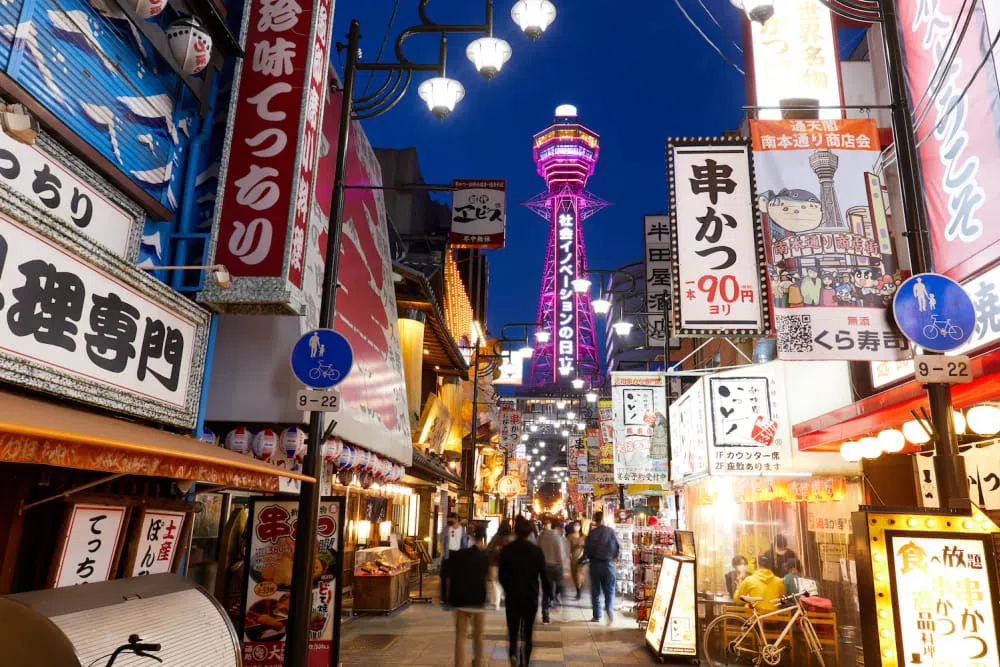
Shinsekai & Ebisucho (retro-kitsch, south) is the cheapest central option in the city, at ¥5,000–¥15,000. The atmosphere comes with the low rate: kushikatsu halls arranged as long communal counters, which suit a group perfectly, and hostels with private four- and six-bed rooms. Tsutenkaku's Tower Slider spirals 60 metres from the third floor to the basement, which some people queue for and others won't go near. Namba is two subway stops. The streets running southwest toward Airin are visibly rough, and it's worth walking with a plan after midnight rather than wandering.
Two bases with one specific job
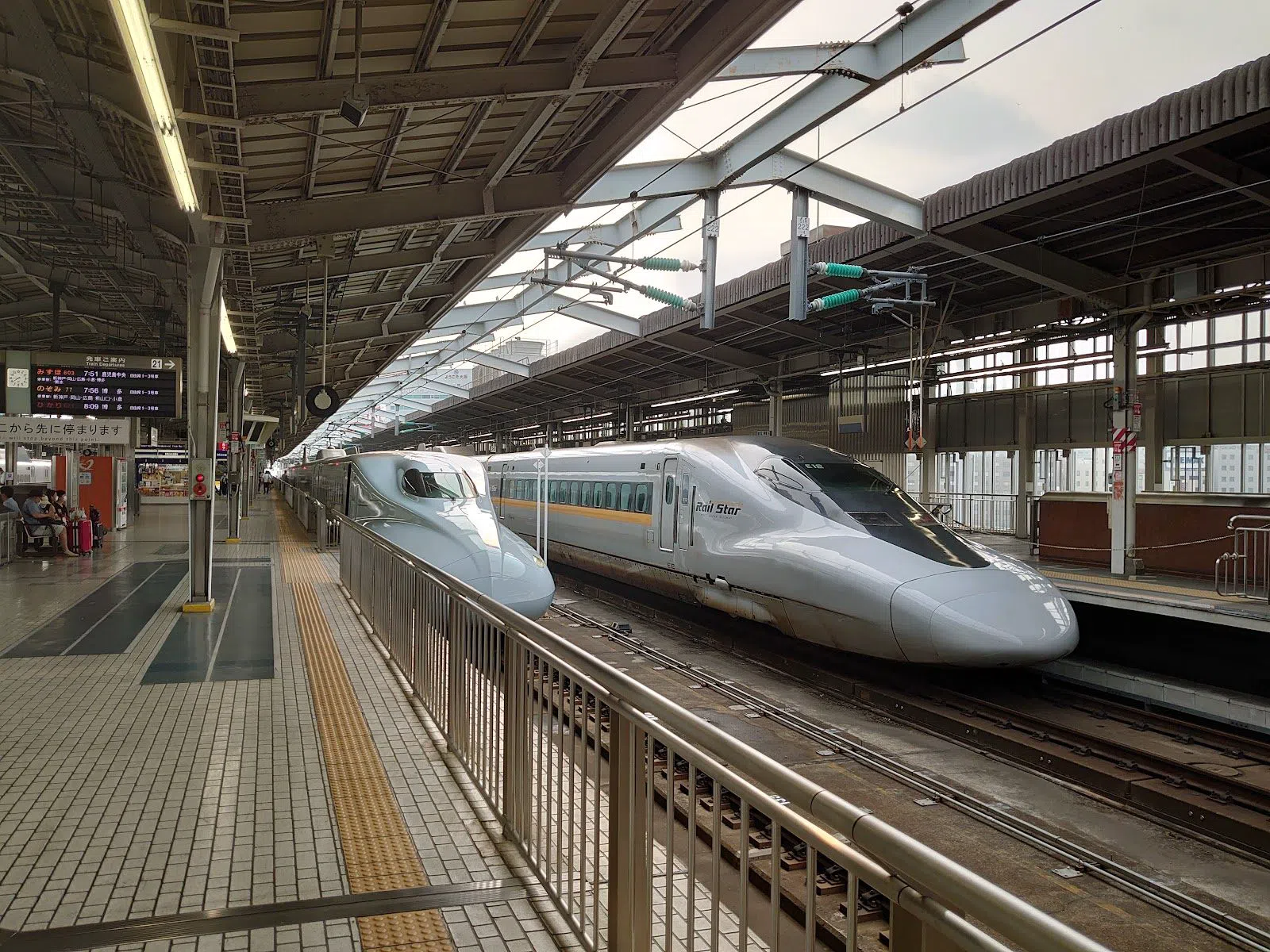
Shin-Osaka (bullet-train station, north of the centre) is practical rather than sociable. Rooms are ¥9,000–¥30,000, reliably twin, with luggage storage as standard, and it's ten minutes to Umeda on the Midosuji line. There is very little to do here in the evening and few places for a group to eat well. Choose it for a one-night hinge in an itinerary when you're arriving or leaving by bullet train, not as a base for a whole first trip.
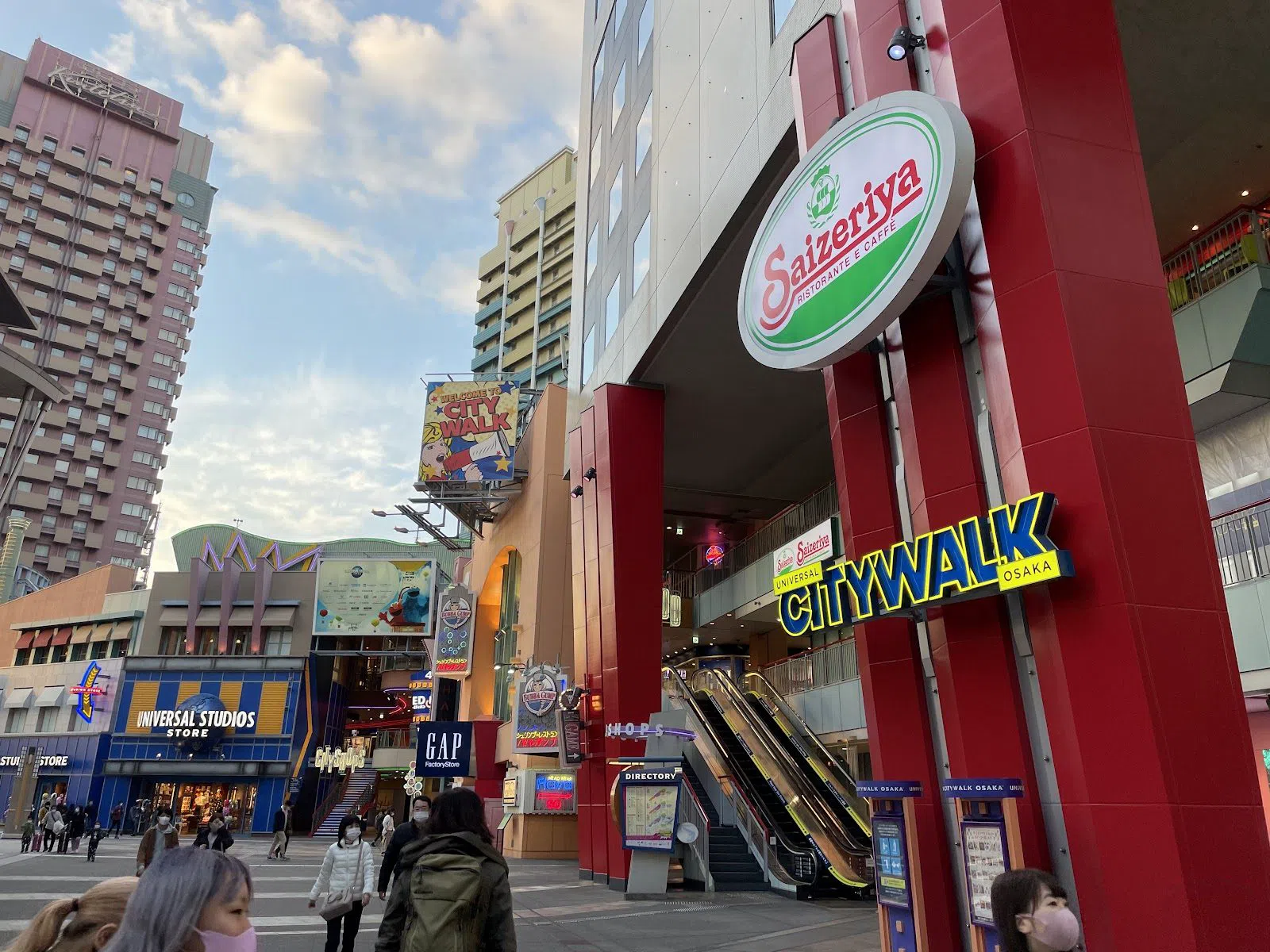
Universal City & Bentencho (theme-park base, west) is worth it only if Universal Studios Japan is a main event of the trip. Official partner hotels run ¥20,000–¥60,000 and sell four-person and themed family rooms as standard, with early park entry as the reason people pay for them; Bentencho, one or two JR stops away, drops to ¥8,000–¥15,000. The park marks its 25th anniversary in 2026, and Donkey Kong Country has been running since December 2024, so expect the gates to be busy. Otherwise stay central: it's 20 minutes back into the city and there is little else out this way.
Practical notes before you book
The Midosuji subway line is the spine of the city and links Shin-Osaka, Umeda, Honmachi, Shinsaibashi, Namba and Tennoji in one straight run; if your hotel is on it, you have solved most of your transport. Get an IC card at the airport and stop thinking about tickets. The JR Loop Line handles Tenma, Kyobashi, Tennoji and Bentencho.
Convenience-store ATMs take foreign cards reliably and are open around the clock. Cards are widely accepted in hotels and larger restaurants, but market stalls at Kuromon, standing bars in Tenma and the smaller counters in Fukushima are still frequently cash-only. Carry ¥10,000–¥20,000 in notes for an evening out.
Book early for late March to early April and for late October to November, and don't leave Tenma to the last minute around 24–25 July. Check-in is usually 3pm and check-out 10 or 11am, earlier than many travellers expect; most hotels will hold bags either side.
As a rough frame for a double: ¥5,000–¥15,000 in Shinsekai, ¥9,000–¥25,000 in Tenma or Kyobashi, ¥12,000–¥20,000 for the honest mid-range in Honmachi or Namba, and ¥40,000 upward once you're into the tower hotels in Umeda or on the river. If you're undecided, book three nights in Honmachi and let the city convince you where to spend the next three. For what to do once you've chosen, the Osaka guide covers the rest.
Before you go
Should a first-time visitor stay in Namba or Umeda?
Namba if you want to walk out of your hotel into food and nightlife: Dotonbori, Kuromon and Shinsaibashi are all on foot, and Nankai Namba reaches Kansai Airport in about 40 minutes. Umeda if you're taking day trips out of the city or travelling with several generations, since the big hotels there have real connecting rooms and everything runs from one station complex. If you can't decide, Honmachi sits one subway stop from both.
What is the cheapest central area to stay in Osaka?
Shinsekai and Ebisucho run roughly ¥5,000 to ¥15,000 a night, with hostels offering private four- and six-bed rooms and Namba two subway stops away. Tenma is the next step up at ¥9,000 to ¥25,000 and is better value once you count the eating and drinking on your doorstep. Both are honest budget areas rather than polished ones.
Which area suits a family with young children?
Osaka Castle and Tanimachi: the park absorbs children all day, the chain hotels have connecting rooms and buffet breakfasts, and rates sit at ¥14,000 to ¥40,000 because you take a subway rather than a walk to the food districts. Umeda works too if you want everything indoors and step-free. Universal City only makes sense if the theme park is a main event of the trip.
How much should I budget per night for a hotel in Osaka?
Around ¥12,000 to ¥20,000 buys a decent mid-range double in Namba or Honmachi. Budget areas such as Shinsekai, Tenma and Kyobashi run ¥5,000 to ¥25,000, and the tower and riverside hotels in Umeda and Nakanoshima climb past ¥40,000 to ¥150,000. Rates rise sharply for late March to early April and for late October to November.
Is it worth staying near Shin-Osaka station?
Only if you're arriving or leaving by bullet train and need a one-night hinge in the itinerary. Rooms are cheap and reliable at ¥9,000 to ¥30,000 and Umeda is ten minutes away on the Midosuji line, but there is nothing to do there in the evening and few places for a group to eat well, so it's a poor base for a whole first trip.